


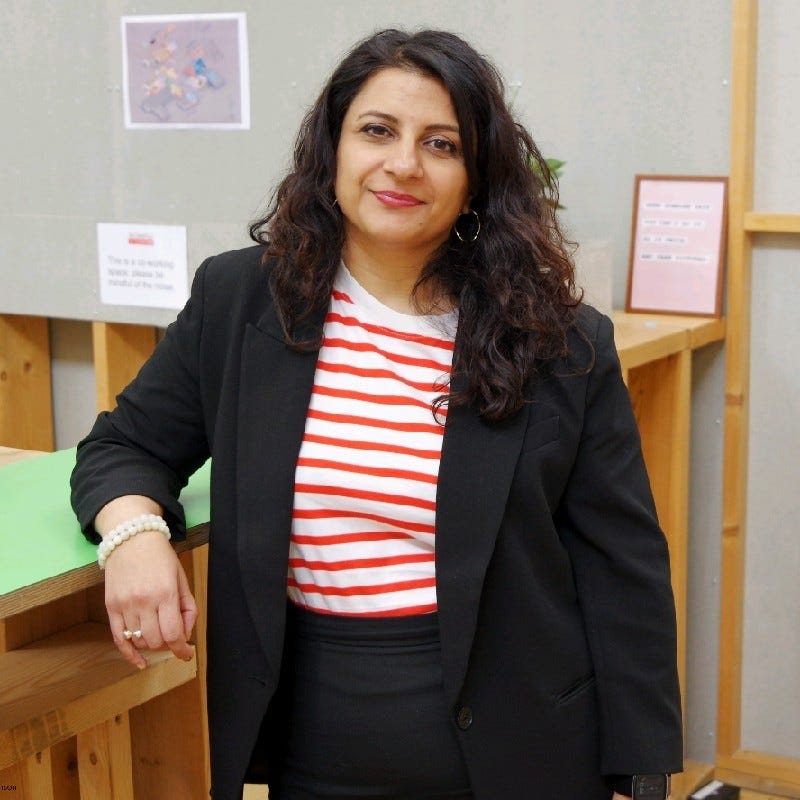
Shazia Mustafa is the award-winning founder of Third Door, a family-friendly coworking space that opened in 2010 with an onsite flexible Ofsted registered nursery, the first of its kind before coworking and flexible childcare were considered the norm. Third Door championed working parents in their careers who wished to spend quality time with their children, something Shazia herself experienced when she became a mother.
Fifteen years later, Shazia is still leading the way, not just in coworking, but in how we design, operate, and measure truly inclusive spaces. Running her consultancy, Inclusive Placemaking, Shazia helps organisations drive social impact with purpose while remaining commercially viable.
In this interview, Shazia shares the importance of social impact, how real, connected communities are built, and what coworking spaces can do to address inequalities across intersectionalities to create more resilient ecosystems.
1. What’s your journey of launching a business combining coworking and flexible childcare been like?
Shazia: I’ve always wanted to start my own business. Before launching Third Door, I worked in audience research at BBC Radio 5 Live and then at Nokia. But, after having my first child, I found myself wanting to continue working without compromising on being present for her. That’s where the idea for Third Door began.
One day, while meeting a friend who was also a new mum, we struggled to hold a proper conversation because our babies wouldn’t nap. I said, half-joking, “Wouldn’t it be great if someone could just look after the girls for a bit while we got some work done?”
That moment planted a seed.
Soon after, I came across an American space called Cubes and Crayons. Offering yoga, a workspace, and a creche, it introduced me to a new term: coworking. I didn’t know much about coworking at the time, but I became fascinated with it.
Back at work, I realised the traditional 9–5 setup just didn’t work for many parents — especially mothers. So when I was pregnant with my second child, I took voluntary redundancy and decided to pursue the idea seriously.
Our research involved speaking to other parents as much as we could. We weren’t trying to compete in an existing childcare or workspace market; we were creating a new category altogether.
Some people loved the idea. Others didn’t get it. But I trusted my gut. We launched in Wandsworth in 2010, not in central or East London (where coworking was growing), but in a residential area where working parents actually lived. That decision was deliberate. We knew our audience because we were them.
At the time, I didn’t realise how challenging it would be. Both coworking and flexible childcare were still new ideas, and bringing them together under one roof came with its own challenges, such as regulations, logistics, and endless problem-solving.
But we made it work — and in doing so, we changed the conversation about what modern work and parenting could look like.

2. What was the Third Door community like when you first opened?
Shazia: Those early days were interesting. We were marketing to working parents, who didn’t know what coworking was, so I spent my first five years at Third Door explaining what coworking was and why it was needed.
We set up a crèche and registered with Ofsted, which was fortunate, as some people just wanted to use the nursery. Once WeWork came, we were described as ‘WeWork with a nursery’!
Our reason for setting up was always about flexible childcare. We offered different products, such as pay-as-you-go and a package of hours, which quickly changed to a wide range of membership subscriptions, and a regular monthly turnover.
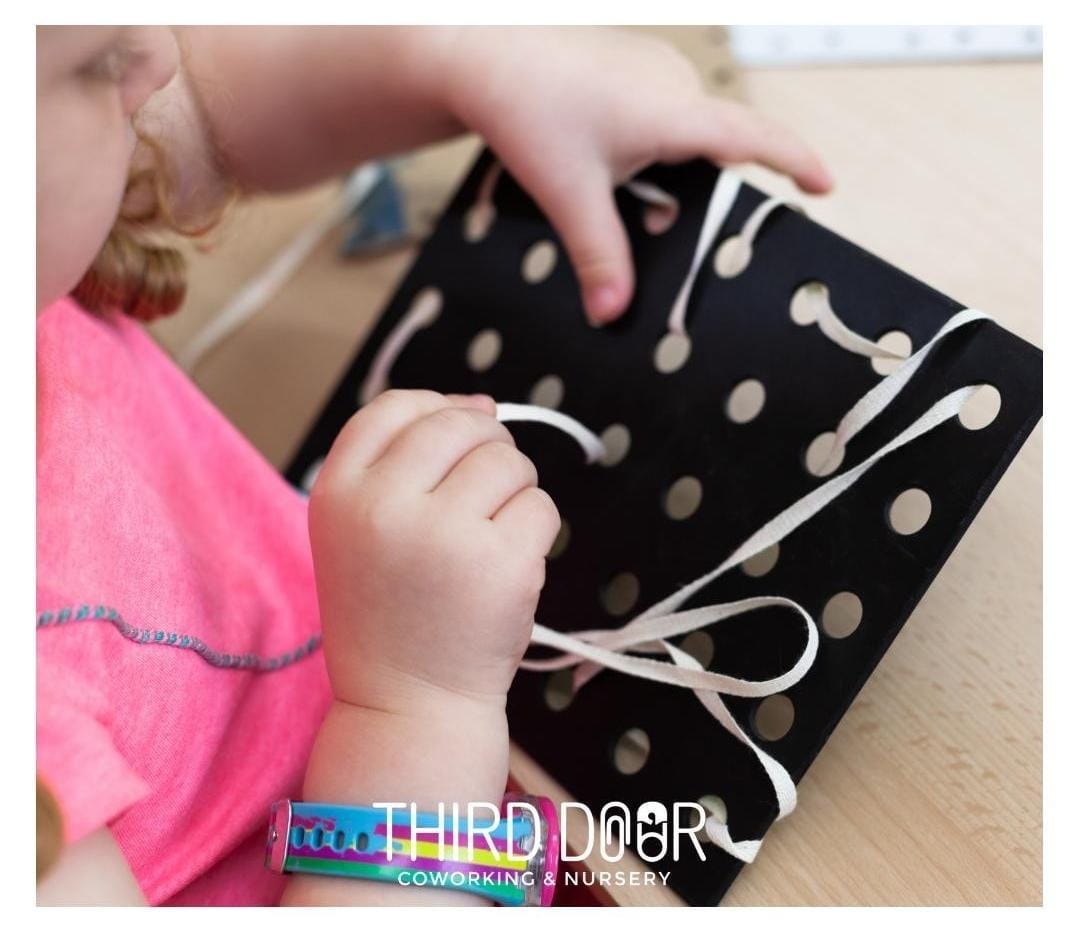
Integrating the nursery and coworking space was our foundation; everything else evolved around that core. We listened to our community, shaping the events they wanted, built meaningful connections, introduced extracurricular activities (like yoga and tennis for the children), and developed a unique pedagogy focused on nurturing confident, resilient young minds. These were all really important.
3. How did you make Third Door an inclusive space?
Shazia: In the beginning, our main focus was financial sustainability. We opened Third Door to all working parents, but quite quickly, noticed a particular group gravitating towards us: freelancers, self-employed parents, and remote workers — especially mothers. These were people who needed flexibility and a supportive space, not just a desk and a nursery space. Over time, they became our core community.
While we welcomed everyone (even those without children), our space was fundamentally designed with children and their parents in mind. It was professional but child-friendly. That was rare at the time.
As the business evolved, so did our community. Being based in Wandsworth, our initial outreach was very local, but as we started getting press coverage — including a feature in The Guardian — word spread. At the same time, I was sharing my personal experiences online: about being a working mum, navigating motherhood and entrepreneurship, and speaking honestly about equality. That resonated, especially with other mothers.
People travelled from across London — sometimes further — to be part of Third Door, because they felt it was a safe, welcoming space for them and their children, particularly for people of colour. That wasn’t by design, but it reflected the values I shared and lived out loud. People saw themselves represented in me, in the team, in how we ran things.
4. Do you think it would be as challenging today to set up a coworking and flexible childcare business as it was when you did it?
Shazia: With a background in research, I naturally approached starting the business by asking questions — lots of them. I spent time on the ground, listening, observing, testing, and refining. That’s why the product worked so well, and why we weren’t afraid to adapt as we went. We were constantly evolving in response to what our community needed.
If I could give one piece of advice, it would be: build your community first. That was the foundation of Third Door. From the nursery to the booking system, everything was designed around the needs of working parents. We didn’t just bolt childcare onto a coworking space. We built them both together from the ground up.
We were early adopters of flexibility. Parents could book childcare from as little as two hours a day or 30 hours a month, all the way up to full-time. To make that work, we built our own software — there was nothing on the market at the time that could manage that kind of flexibility.
But flexibility wasn’t widely understood then, even by staff. At first, hiring was difficult because people in childcare were used to rigid systems. I studied for the Early Years Teacher Status (EYTS) qualification, and it gave me a deep understanding of the sector, helping me recruit and lead a team who could deliver quality care in a new, more adaptable way.
Coworking was still in its infancy, but the childcare sector had been the same for 30 years. It isn’t built for modern working lives — especially not for non-9-to-5 parents. There is huge potential for innovation if you're willing to challenge the status quo and think big.
The need is still there. Childcare costs remain astronomical, and flexible, community-rooted solutions like Third Door made a real difference. Some newer workspaces are stepping up to address this issue… I’m a superfan of Oru Space — they’ve wrapped coworking, wellness, sustainability, and a nursery into one community-first offer. Their founder, Vibushan Thirukumar, even brings his Sri Lankan heritage into the restaurant menu. It’s a beautiful example of how business can reflect people’s lives and identities.
5. What could the coworking industry do to be more inclusive?
Shazia: Many people in the coworking industry say they’re making spaces more accessible or affordable, but inclusion isn’t just about price. It’s not about handing out a free desk or ticking a diversity box.
Real inclusion means asking: Who feels like they belong here? That starts with language, marketing, interior design, staffing…everything. You have to build inclusion from the ground up, not retrofit it.
When we created Third Door, I didn’t consciously design it as an inclusive space. But I was vocal online about being a working mum, equality, and my values — that drew people in. Black and Asian women, in particular, travelled long distances to use our space because they felt it was safe and welcoming. That wasn't by design, so imagine what’s possible when you design intentionally for inclusion.
The truth is, the coworking industry still isn’t inclusive. Most of it is built around selling square footage, not building community. There's little understanding of why certain groups don’t show up in these spaces. You can’t create inclusive environments without acknowledging structural inequalities, migration stories, or even the legacy of colonialism. You have to be willing to dig deep.
There are practical things the industry can do right now, like adding more female toilets or including a proper multi-faith room. It’s such a basic need, but many operators treat it as an afterthought, if they include it at all. Inclusion shouldn’t be reactive — it should be part of the blueprint.
Many workspace operators say they’re different, but if you’re not truly connected to your end user, it shows. Too often, landlords just replicate the same model, assuming everyone will come. But unless you actively engage with different communities — and empower people from those communities to lead — you’re just reinforcing the same old norms.
6. How do you see the coworking industry evolving in the future?
Shazia: The real estate and coworking industries need a serious shake-up. Too often, the same types of spaces are built without thinking beyond profit or about the true needs of the community. I’d love to see bigger players partnering with smaller, independent operators to create a diverse ecosystem where niche, community-rooted spaces can grow, and tenants can scale up into larger spaces over time.
We also need to design for the next generation. My children already live in a more diverse, connected world, but the industry isn’t reflecting that. More third spaces, like libraries and theatres, should include well-designed coworking that builds real community, not just have desks and Wi-Fi.
There’s a lot of performative “inclusion” out there, but offering discounted rates without true agency can feel patronising. Instead, spaces need to be built with communities, fostering genuine equity and belonging. Women, especially women of colour, are natural community leaders and deserve more opportunities to shape their local economies.
Coworking is evolving beyond just desks—it’s a way to organise people, care, and work in a fragmented world. When designed intentionally around equity and community, it has the power to create something truly transformative.
People Make Coworking celebrates the people who make up the fabric of the global coworking movement. By exploring the community, connection, and collaborations – the ‘co’ of coworking – this blog series shares stories from catalysts of the coworking movement and community builders.
If you’d like to share your story in ‘co’, please get in touch. I’d love to speak with you for a future feature.