


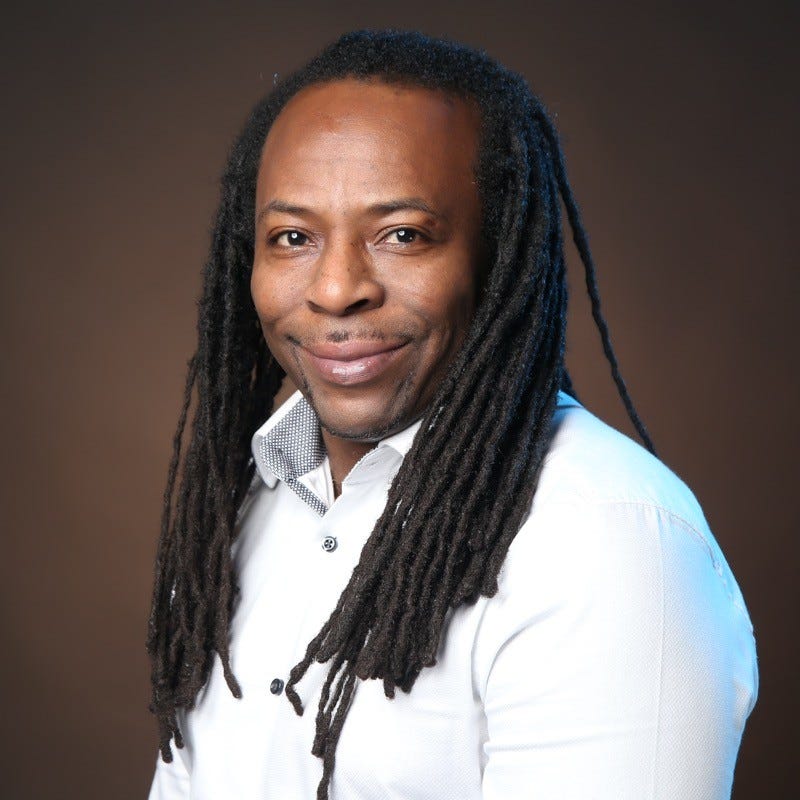
An expert in resilience and developing a business from the ground up, Kofi Oppong is the founder of Urban MBA – the University for Street Entrepreneurs – an award-winning charity based in London that delivers enterprise and employability training to marginalised and disengaged young adults.
Kofi faced homelessness at the age of 17 after being asked to leave home due to differing views on his future. This challenging experience motivated him to set goals, leading Kofi to hold key roles at Nike and JD Sports, where he honed his expertise in marketing and product management, and eventually led to the creation of Urban MBA. Kofi’s specialises in social media branding for business, strategic planning, project management, and wealth creation.
Kofi's vision for Urban MBA is to create a world where no young person is lost or left behind, providing high-quality education in a format that resonates with the current generation.
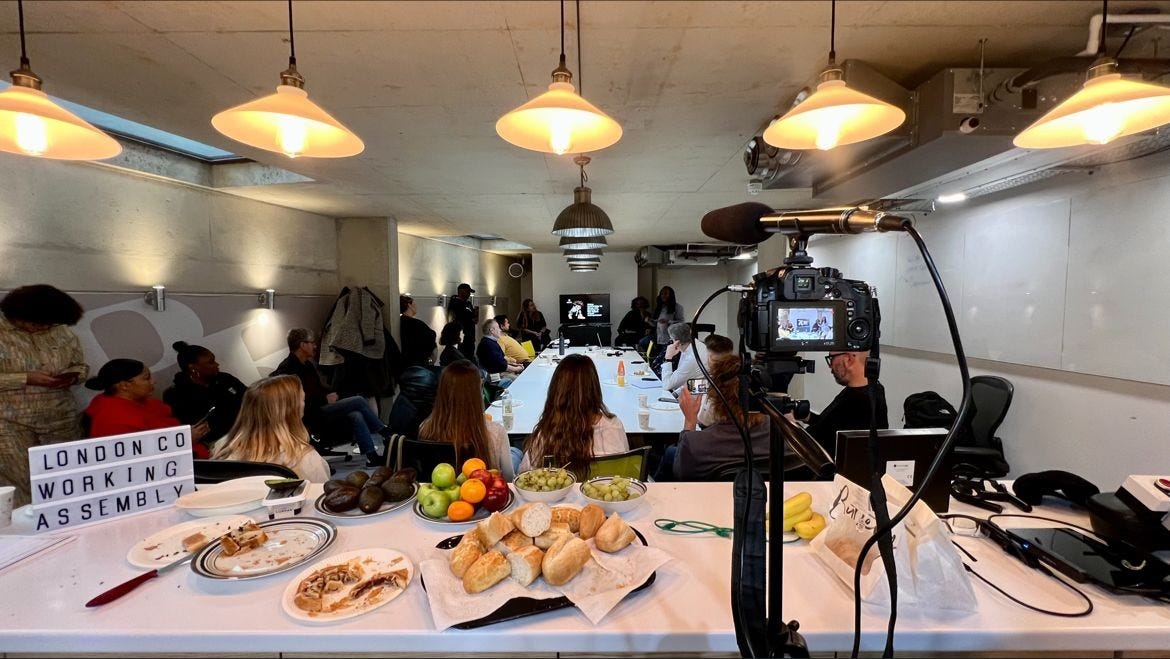
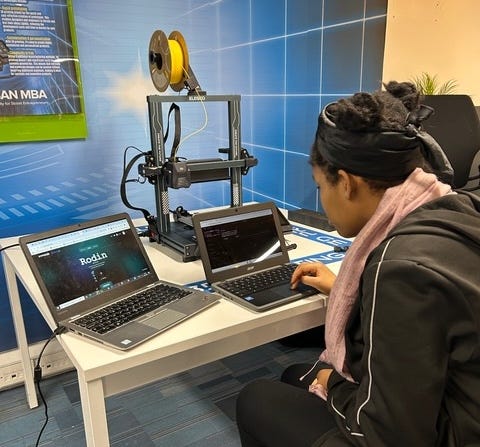
In 2024, Urban MBA became an EdTech and community hub, based in Hackney. Last week, Kofi and I sat down in Urban MBA’s boardroom to talk about how EdTech hubs support the organisation’s mission.
1. Urban MBA is an inclusive space for entrepreneurs. How do you define inclusivity, and what specific actions have you taken to ensure your space welcomes a diverse community?
Kofi: We serve marginalised communities, and have taken the Fourth Industrial Revolution that we’re currently living in, as a major and important milestone.
We’re inclusive, in that we accept everybody.
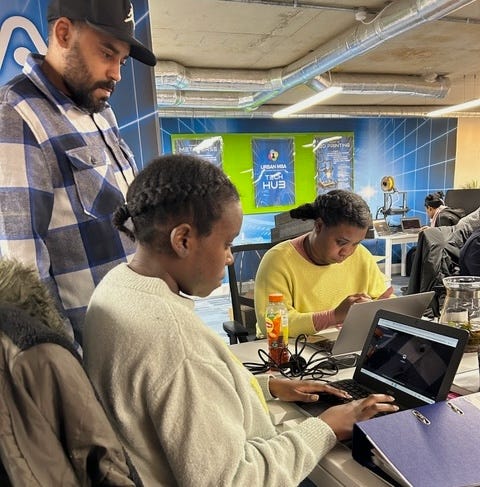
For example, a lady here has joined our marketing accelerator program. But, she's from the Caribbean, she has a disability, and she's been applying for jobs for maybe five years, and she hasn’t been able to find a job. She's been on our course, and we've integrated her into our marketing team so she can learn on the job.
We're also working with our trustee, Bernie Mitchell to help her get work and experience at Purple Goat (the world’s only disability-led, disability-inclusive marketing agency with 50% of staff members identifying as disabled).
I believe we have to serve marginalised communities because these are the people furthest away from this technological area.
People don’t understand what the Fourth Industrial Revolution really is. I've been talking about AI for years but only recently has Keir Starmer (the UK Prime Minister) started talking about it, and it's now in the mainstream.
To shape AI, we also need the right people, from an inclusivity perspective. Our tech hub allows our community to touch, feel, and understand these technologies, and better know how to utilise them.
One of the other things we’re talking about around inclusivity (because we're a digital tech hub), is how much older communities struggle to move with tech knowledge changes. They can't access council services, for example. They need access to digital upskilling, just to be able to live their normal lives, and as services change.
We run technology courses that teach the over 50s how to use AI to write letters to the council. They’re blown away – it's quite difficult for them to understand how to do that.
The type of thing we're looking for is – how can we make a difference in those areas and help improve people’s lives.
2. What challenges have you faced in building Urban MBA as an EdTech space, and how have you worked to overcome them?
Kofi: We've had every challenge you can think about.
Funding has been our biggest challenge. Black founders have a more difficult time getting funding. We massively struggle because we're not part of that ecosystem that allows us to get funding.
But, uniquely, I get more questions about how we managed to get this space than anything else because the council wouldn't help us get a space. Our forward-facing approach to what we do is another big challenge. Some councils aren’t up to speed with technological changes, we struggle when people don’t believe in us.
I wrote a white paper on education and looked at the universal basic income once people started losing jobs. To explain those things has been a major challenge for us to get this message across when we're thinking ahead into the future.
So one, funding, two, believing in what we're trying to do, and then three, we're trying to change a 150-year-old education system. It was written during wartime when the world was rebuilding. Education is now so far out of date and, because of this, homeschooling has grown massively over the last few years.
There’s been a lot recently about special educational needs, and how many children with autism and ADHD require access to them. These things were not picked up before. But it's uniquely interesting that most of the globe’s top entrepreneurs have some sort of neurodiversity, whether it's ADHD or dyslexia, like Richard Branson.
We're trying to change an old system where there’s opposition against us, and in which case, we have to disrupt. We’re not always everybody's cup of tea because we're pushing buttons. But we need to, otherwise, the community that we serve ends up getting left behind.
3. Urban MBA plays a pivotal role in shaping education for entrepreneurs. How does the EdTech hub support your community of entrepreneurs?
Kofi: Our mission is a world where no one is left aside.
We're currently running a Level Six Bachelor's course. Iris, who’s 56, is on the course. My nephew is also on the course, he's 18. We're merging the two because it's important that we have this experience in our community.
There's a lot of talk about the lack of role models – we want to mix the older with the younger generations. Rubbing shoulders together, they can do things in a much better way.
In the future, there will be significant growth in entrepreneurship. But, I don’t think the future of Urban MBA is about entrepreneurship. It’s more about life skills and education – how do people navigate life when technological changes come in? How do they navigate the world that we're in and the changes that have occurred?
We're all about the future, but the future exists because of history. You must look at history first to sort of look at what the future is going to be.
For instance, we all operate under the guise of money, but money was only invented as a tool and a mechanism of exchange. So everybody had to barter. From that perspective, young people, in particular, don't understand a world without money and, whenever I start talking about my philosophy around the future (where we talk about a future without money), people can't understand that.
But we're already starting to see different types of money with crypto and some types of new thinking with the potential of a universal basic income.
We’re researching that via the Autonomy Institute (an independent, progressive research organisation creating data-driven tools and policies to strengthen democracy and build a fairer economy). The Basic Income Conversation offers a leading voice on cash transfer schemes and forms a key component of Autonomy’s Future of Welfare research programme.
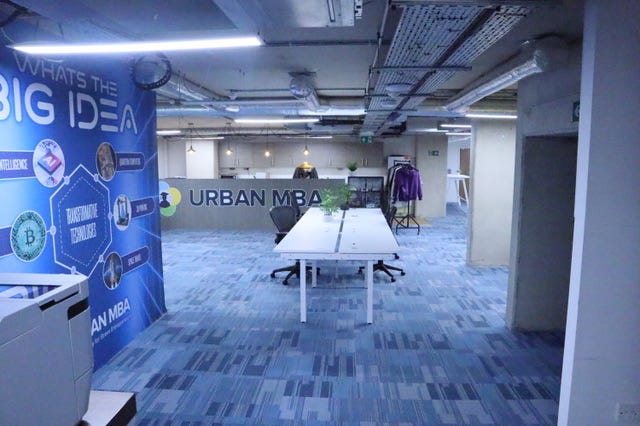
The way we’re looking at Urban MBA is: could this be a modern community or a school? We host courses in the boardroom, we have the EdTech space, but we also have the coworking space upstairs.
You could have a mother using the coworking space upstairs for business, but her son doing a bachelor's degree in education technology in the boardroom. She can do classes in the evening that give her a better understanding of education and technology. We have a public class space and meeting rooms.
4. Looking at the coworking industry overall, how do you see coworking spaces and technology continue to shape the future of work and learning?
Kofi: Coworking spaces are currently used by middle to higher classes, not so much by marginalised communities. Marginalised communities still don't understand what coworking is, and coworking spaces aren’t diverse.
Our white paper looks at the changes required of the education system, which touches on areas like coworking. But at the moment, we can't seem to penetrate that area or get the message across to marginalised communities. I think the shift will come in as people become more entrepreneurial because right now, they don't understand that these spaces are available and that they can access them.
This also begs the question: will schools continue to be relevant if they can't keep up with technology? There are 30 kids in a class, many of whom have ADHD. How do they cope? We're positioning Urban MBA as a modern school, that also serves the community.
I see a future with many hubs, in addition to coworking spaces. We have one place that builds a community together and educates people. That’s what we're utilising this space for.
There are four to five steps until we reach AGI (Artificial General Intelligence), where AI can run a whole organisation by itself. This becomes a game changer for small businesses, so more people will be able to create small businesses, which will then potentially help cowork spaces.
But, coworking spaces also have to adopt these new technologies. Will you get into a coworking space via eye scanners? Or access them at different times, even at night (like the 24-hour gym models), supporting people working for businesses in other parts of the world? What does the future of coworking look like over the next five years?
5. What can the coworking sector do better around DEI in the future?
Kofi: I don't think the lack of diversity in coworking is about cost or affordability, it’s about whether people feel like they belong in coworking spaces. Right now, that’s the problem.
Do those communities believe they belong there, and if they don’t, is that why they’re staying away from them?
I know young people who are building massive servers in their bedrooms. They should be coming to a coworking space as, sooner or later, they’ll need to take their idea to the next level.
At home, they don't have the networks or know how to pitch. Doing things alone can make them isolated, and that’s not good. But they're unlikely to go into coworking spaces because they're not sure if they belong there.
We already know that isolation impacts mental health. Humans live longer if they're connected with more humans. So we've got to make people understand that they need to come to coworking spaces or EdTech hubs to develop that next stage of whatever they want to do. They need to access those skills and advice to get into wider communities.
If you’re working in a particular industry, it’s similar to the idea that how high up you're going determines what you do and who you hang around with.
Currently, marginalised communities access less than 1% of funding. It’s even less for black women. But, we’re talking about a tech sector that’s worth billions, and it doesn’t filter into our local communities, which is why people stay under the poverty line.
We're connecting more of the community through the local association. We need to speak to them so they get the message out to the community. There's just got to be more general advertising about community spaces across the board, from the government and local councils, to point people in the right direction.
The other thing is marketing money. Bigger organisations can afford SEO and paid advertising to market their spaces. Whenever people don't do that, they’re unlikely to get enough people coming.
We now offer residency in the tech hub to several young students who work from our space. This year, we're planning to do more of that and build an entrepreneurship work culture. That’s something different that other coworking spaces don't do as much, but they could offer residency to the next generation.
Someone who’s running a really good ‘giving back’ scheme is Impact Brixton. Our approach is similar, and I’d like to see more of it from other coworking spaces in the future.
People Make Coworking celebrates the people who make up the fabric of the global coworking movement. By exploring the community, connection, and collaborations – the ‘co’ of coworking – this blog series shares stories from pioneers of the coworking movement and community builders.
If you’d like to share your story in co, please get in touch. I’d love to speak with you for a future feature.