


Sara Hipson moved to Elora, Ontario, six years ago after falling in love with the town’s “old-world charm” and access to nature. But when the pandemic hit a year later, Sara, who has a grant consulting background, found herself working remotely out of a two-bedroom apartment.
In the absence of offices and social routines, local cafés became part of Sara’s everyday life and, unexpectedly, places where connection took shape. But as gentrification reshaped the town, Sara’s favourite local coffee shop was slated for demolition, leading her to question where the community could meet. That moment gave Sara a clear opportunity to create a space where local business owners in Elora could connect and flourish.
While renovating a late-nineteenth-century house and working full-time, Sara opened CW Co-Work last February – a cosy, cabin-inspired coworking space designed to bring people together, support local businesses and embrace flexibility.
This month, CW Co-Work celebrates its first anniversary. With a year of operations and community-building behind her, Sara reflects on the realities of the first year, her plans for 2026, and why CW Co-Work has become an important resource for local businesses and professionals.
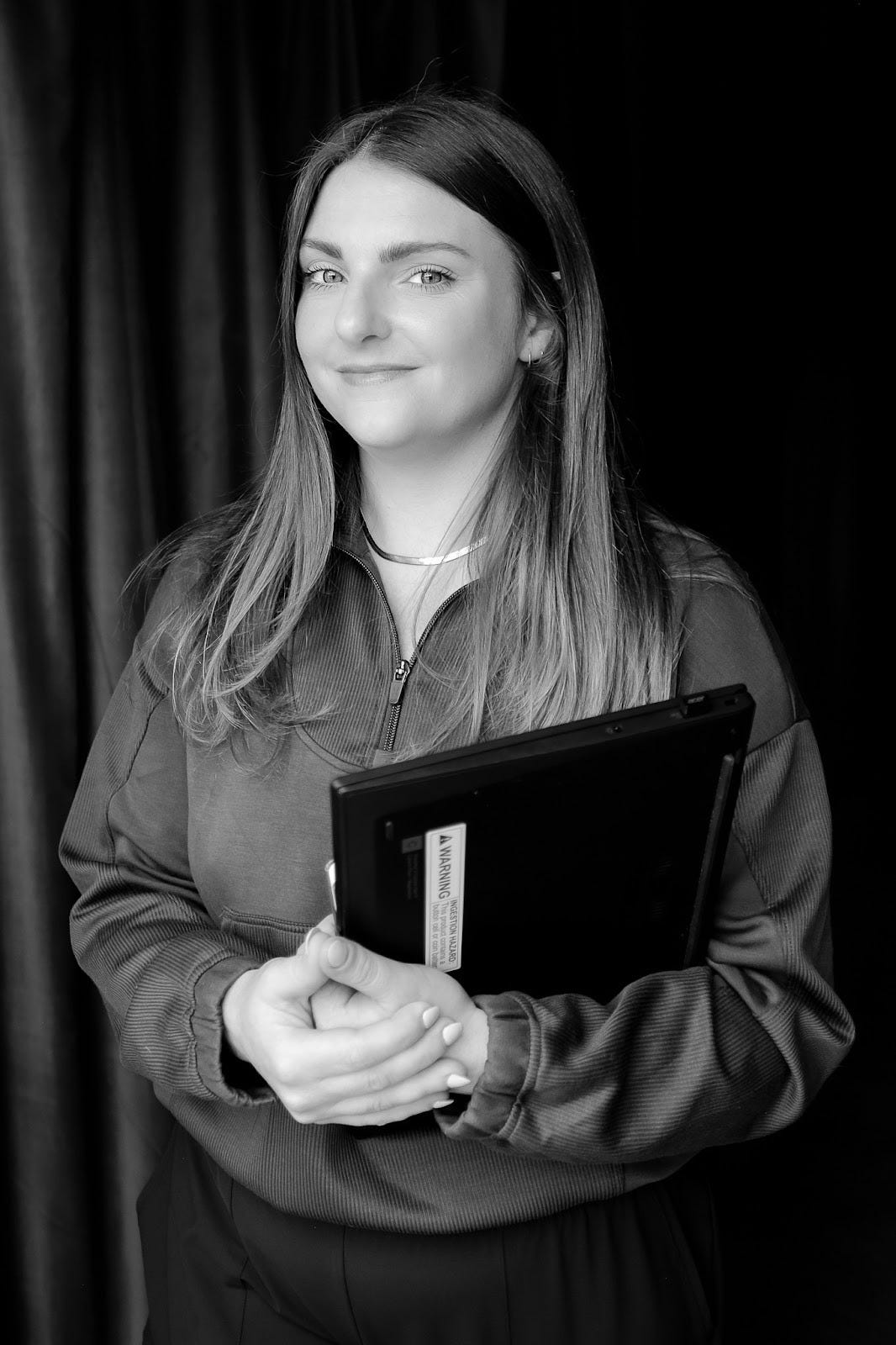
1. What inspired you to start CW Co-Work?
Sara: CW Co-Work was born out of place, timing, and a deep need for connection.
We’re based in Centre Wellington, Ontario, a rural Canadian farming community experiencing rapid change. The area is growing quickly, with tourism booming and people moving out of cities in search of a different pace of life. With that growth comes opportunity, but also a gap in shared spaces where people can work, create, and build community.
I moved to Elora in 2019 after six years in northern British Columbia, and almost immediately, it felt like home. The historic downtown, limestone cliffs, and access to nature made it feel different from anywhere I’d lived before.
Less than a year later, the pandemic hit. I went from having a highly social, collaborative career in rural economic development and grant consulting to working alone from my bedroom window for the next few years. Aside from my rescue dog, Gizmo, it was isolating. I made it work, but I missed people and the everyday interactions that make work feel human.
In 2022, while renovating a century-old home downtown and living without a kitchen for six months, I found refuge at a small local café just down the street. It became my daily rhythm. Coffee, emails, familiar faces. Over time, it turned into a natural meeting place where I built much of my local network. The Elora Café’s closure in 2024 to make way for luxury condos marked the loss of a beloved community gathering place.
Not long after, a new friend and fellow patron asked me, “Where are we going to meet now? How are we going to stay connected?” It crystallised what I had been feeling for years: Centre Wellington needed a collaborative workspace. Not just desks, but a place for connection.
I’ve always been drawn to entrepreneurship and filling notebooks with business ideas, but I’d never taken the leap. This time felt different. I wrote a business plan, asked for feedback, and followed the momentum.
In October 2024, I signed a lease on an old auto parts shop and began turning the barn-like space into CW Co-Work, often after long workdays, covered in paint and completely exhausted.
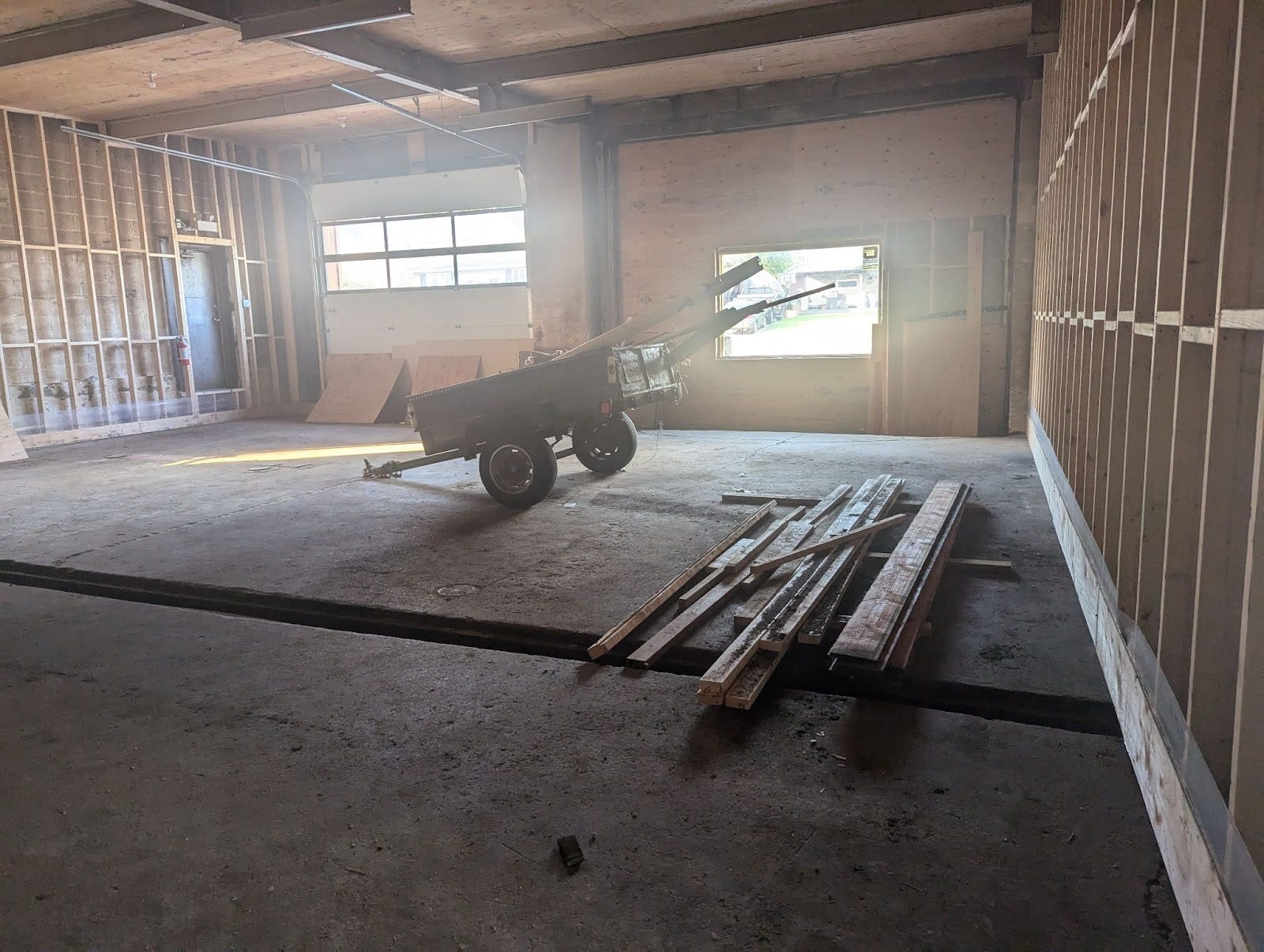
At its core CW Co-Work is a response to isolation and a love letter to this community. It exists to bring people back together and to give them a welcoming place to step away from the chaos of life, reconnect with peers, and do their best work, side by side.
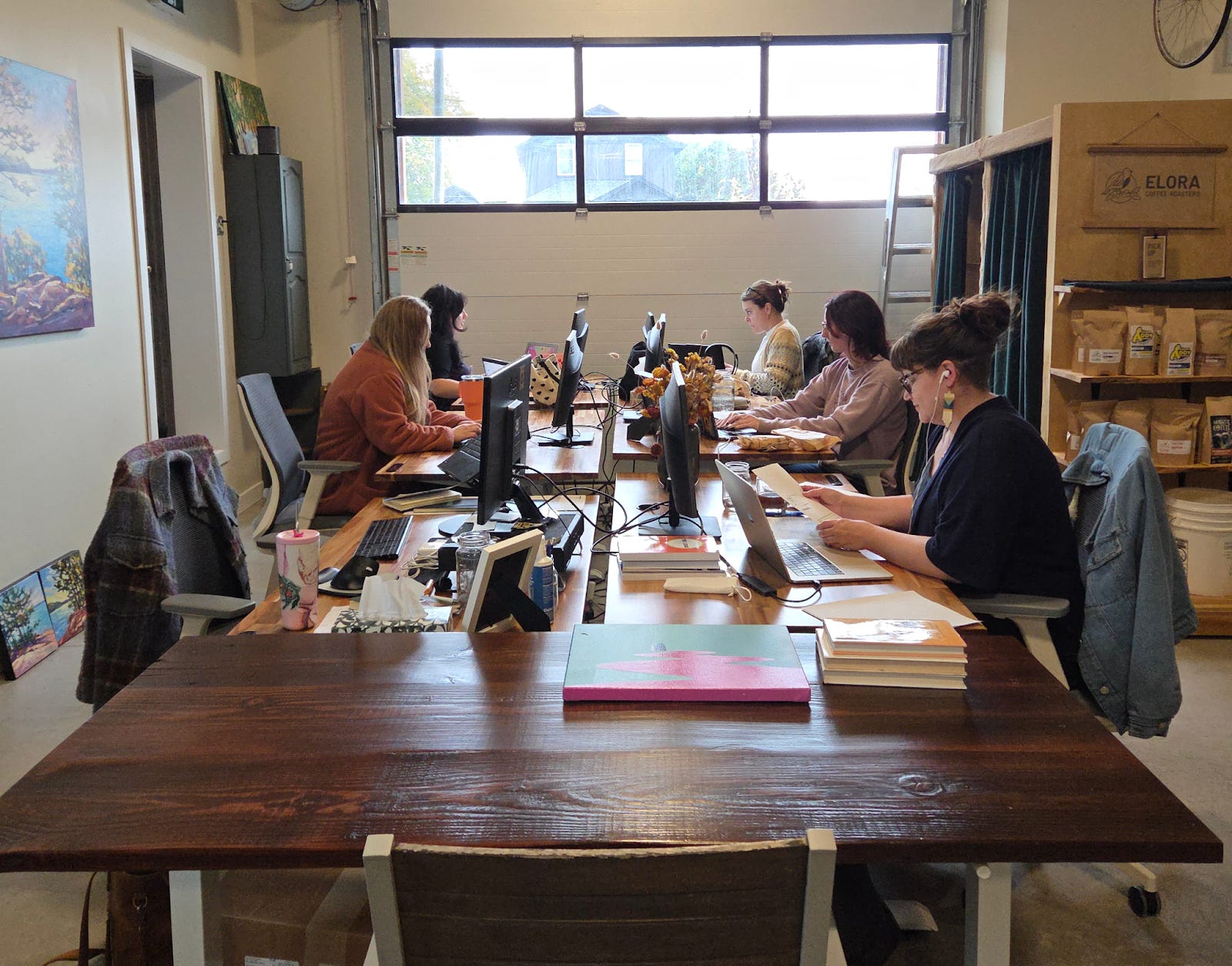
2. You’re gearing up to celebrate CW Co-Work’s first anniversary. How has your first year of operations been?
Sara: It didn’t take long to attract people who were craving something like this, often pulling them out of their basements and spare bedrooms. Hearing their stories about improved focus, productivity, and connection has been incredibly validating.
I initially expected faster uptake, but we’re a small space (about 1,500 square feet), with one flex office and two studios rented full-time by a local music school. Early hesitation seemed to stem from a mix of return-to-office policies, unfamiliarity with the coworking model, and simply not knowing we existed.
As awareness has grown, that curiosity has started converting into real traction. We signed three new coworkers in January, and we’re seeing strong word-of-mouth referrals and consistently positive feedback.
Overall, I’m really happy with how the first year has gone. Between renovating the space, launching, and building a consulting practice at the same time, it was a heavy mental load.
Once we opened, the space started to take shape quickly, and for a while, I was making weekly tweaks and upgrades. Eventually, I realised it was more important to listen than to keep guessing. Taking a step back and responding to what the community was actually asking for has made a big difference.
I’m currently deep into delivering two programmes in my day-to-day work, so I’ve brought on part-time support to help with light operations, capture content, and build a more consistent brand and marketing presence.
Getting the word out is key, especially since coworking is still a relatively new concept locally. We focus less on prescribing how people should use the space and more on helping them imagine what’s possible, given our flexibility and welcoming approach.
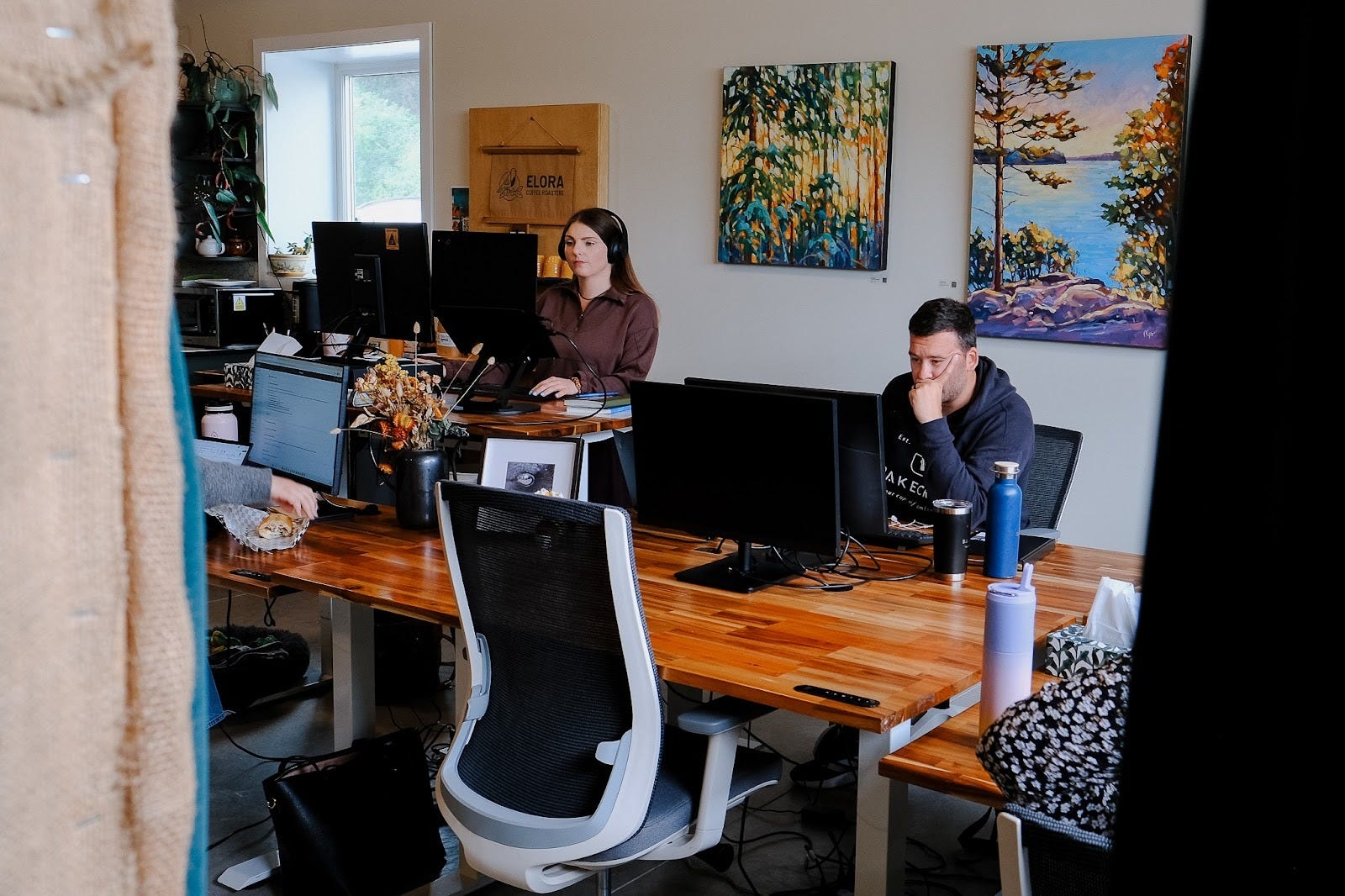
Our goal is to create a space that adapts to different types of work and evolving needs. Sometimes people aren’t sure if it’s the right fit at first, which is why I always encourage them to come in, grab a coffee, sit by the fire, and have a conversation.
CW Co-Work operates as a social enterprise. We’re building something the community can feel good about supporting and using in a variety of ways. Our mission to Connect Work and Create Impact is starting to resonate.
Coworking isn’t for everyone, and every space is different. But for those who’ve joined, they’ve found value here and made the space their own. That’s exactly what we hoped for.
3. Building a community is such an achievement - how have you approached growing it?
Sara: Because our space is intentionally small, we build community with thoughtful partnerships rather than large-scale events. Our official Grand Opening in April was a great example. We partnered with Adrian Jones Music School (one of our studio tenants) and featured performances by four of their up-and-coming musicians, which immediately brought energy and life into the space.
We also collaborated with local artist Vera Kisseleva. A few years ago, I took one of her painting classes at the Elora Centre for the Arts as a complete beginner and was instantly drawn to her work.
When we opened CW Co-Work and were faced with big, empty white walls, I reached out and asked if she’d like to display her art here. Her large canvas pieces completely transformed the space, and having them on display gave her another place to share and sell her work. She even joined us to live-paint during the Grand Opening, which felt like a really special moment.
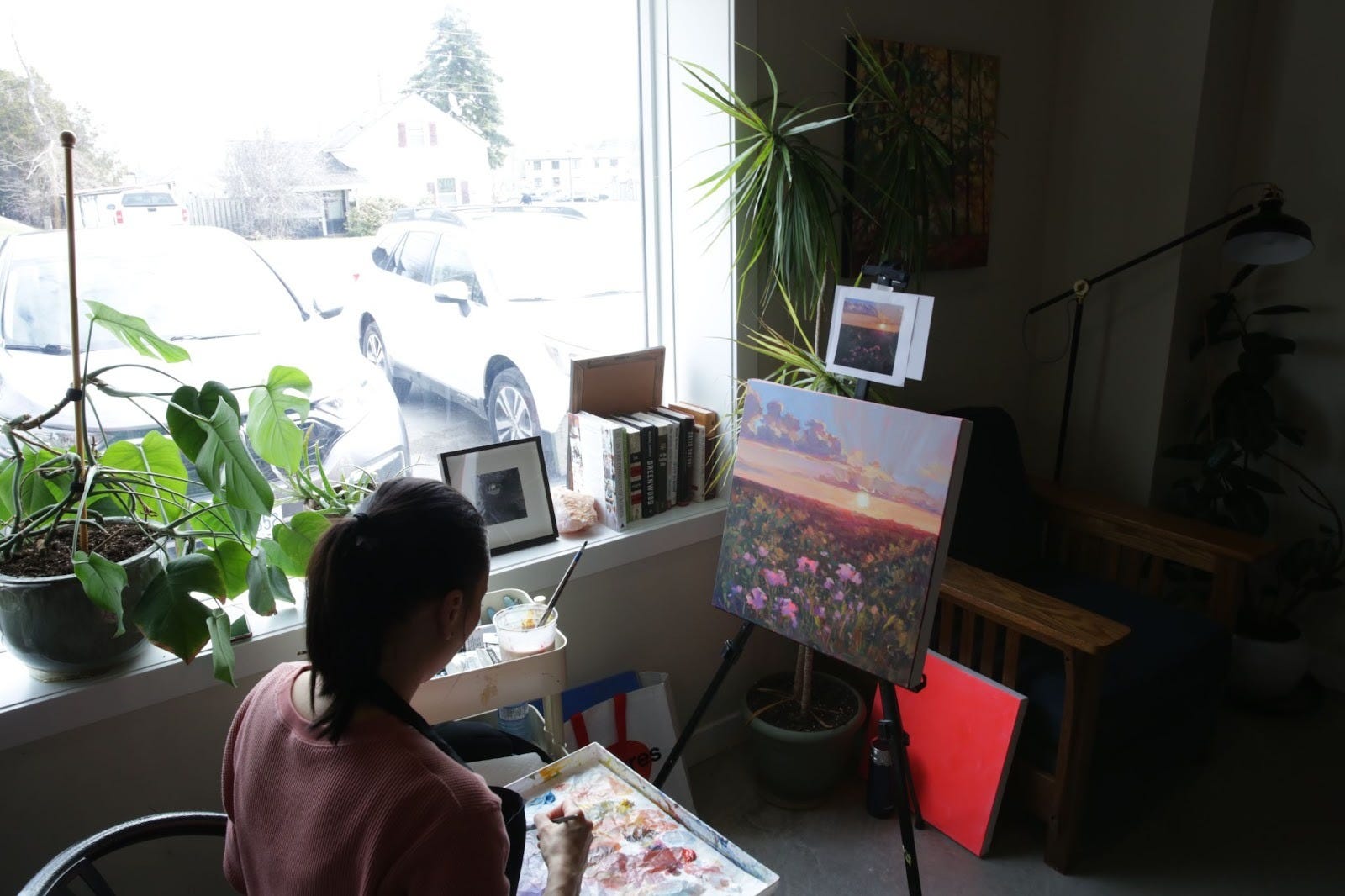
We rounded out the weekend with baked goods from Elora Bread Trading Company and coffee from Elora Coffee Roasters, one of our beloved business partners and former owners of Elora Café.
On the Saturday alone, about 50 to 60 people came through the space in just a few hours. Sunday was quieter but still included live performances and a photo booth from Timeless Photobooths, another local business.
From the start, I felt it was important to work closely with the Centre Wellington Chamber of Commerce. They already offer office space, boardrooms, and strong member services, so my focus has been on complementing rather than duplicating what they do.
They’ve been a valuable referral partner and sounding board, often connecting us with people who are looking for space like ours, sometimes before they even realise coworking is what they need.
I’ve also stayed connected through the Community Foundation and my time serving on the board of Big Brothers Big Sisters of Centre Wellington. We regularly lend the space for workshops and planning sessions, including youth programming like ukulele sessions delivered by our in-house music school. We also offer a Canopy Membership, a sliding-scale option that gives community groups, charities, and non-profits affordable access to workspace and meeting rooms.
Looking ahead, one of our goals is to promote from within our own community. We’re surrounded by talented professionals, from bookkeepers and photographers to marketers and administrators, and we’re actively building a referral model to support one another.
Creating a self-sustaining network where opportunities circulate locally is core to what we’re building.
Day-to-day, we use our social channels to amplify local businesses and organisations, share community events, and show that we’re here to support what’s happening around us. We also host workshops led by subject matter experts, many of which are open to the broader community, and we’re not afraid to try new things, like hosting puppy yoga with a local breeder this month. The desks get pushed aside, and suddenly the space feels completely different.
At the end of the day, the strongest driver of our growth has been our core group of coworkers. They’ve become natural ambassadors, sharing our story, inviting others in, and genuinely believing in what we’re building together.
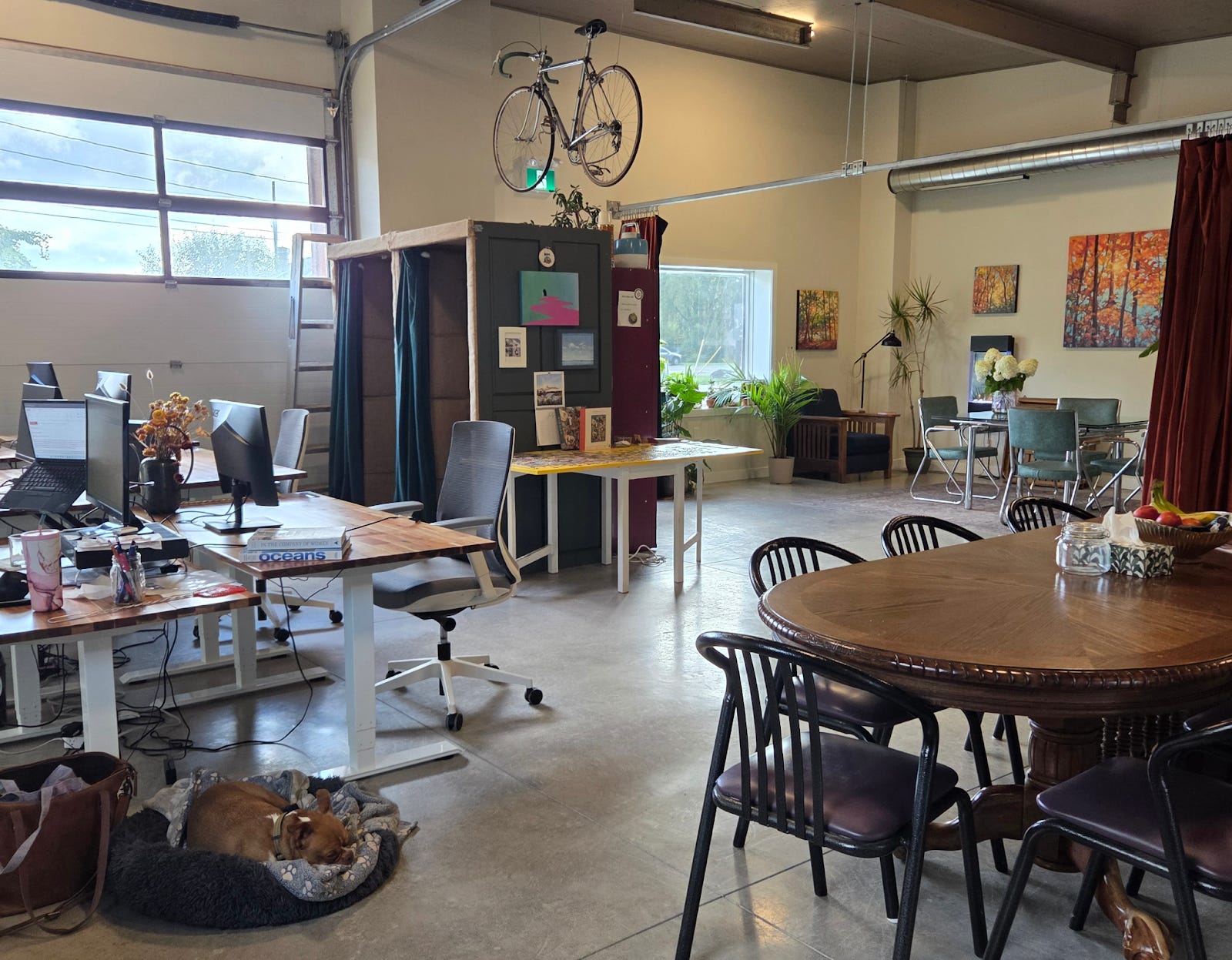
4. How have your events involved local businesses, and what impact has that had on the community?
Sara: Because Elora is a tourist town, we do see drop-ins from people visiting from Toronto or further afield who need a place to work. That’s a nice bonus, but it doesn’t keep the lights on. We’re evolving that interest into something more intentional.
We’re actively building Team Off-Site and Field Trip packages in partnership with local accommodation and activity providers, creating “Work, Stay, and Play” experiences that encourage teams to spend more time in the community and engage more deeply with what Centre Wellington has to offer.
One of CW Co-Work’s strongest value-adds is offering flexible, cost-effective workplace solutions for local small businesses. Commercial space in Elora is limited and expensive, and many businesses don’t need or can’t justify a full-time office. Our coworkers get the benefits of a fully equipped workspace without the high overhead or long-term commitments. The idea is that by staying lean and flexible, local businesses can be more resilient as markets shift.
We recently launched a new membership tier called The Cabin Club, an unlimited lounge drop-in option designed for freelancers, creatives, and independent consultants. It includes light marketing support and a monthly Co-Work Social to encourage networking and promotion.
The uptake in the first month has been encouraging, and we’re planning to continue growing this offering through 2026.
We’re also exploring a model specifically for local trade and field service businesses. Many of these teams work out of trucks or on job sites and don’t have a central place to meet, train staff, welcome clients, or sit down with their bookkeeper. We see an opportunity to offer fractional, scalable office access that supports their operations without adding unnecessary overhead.
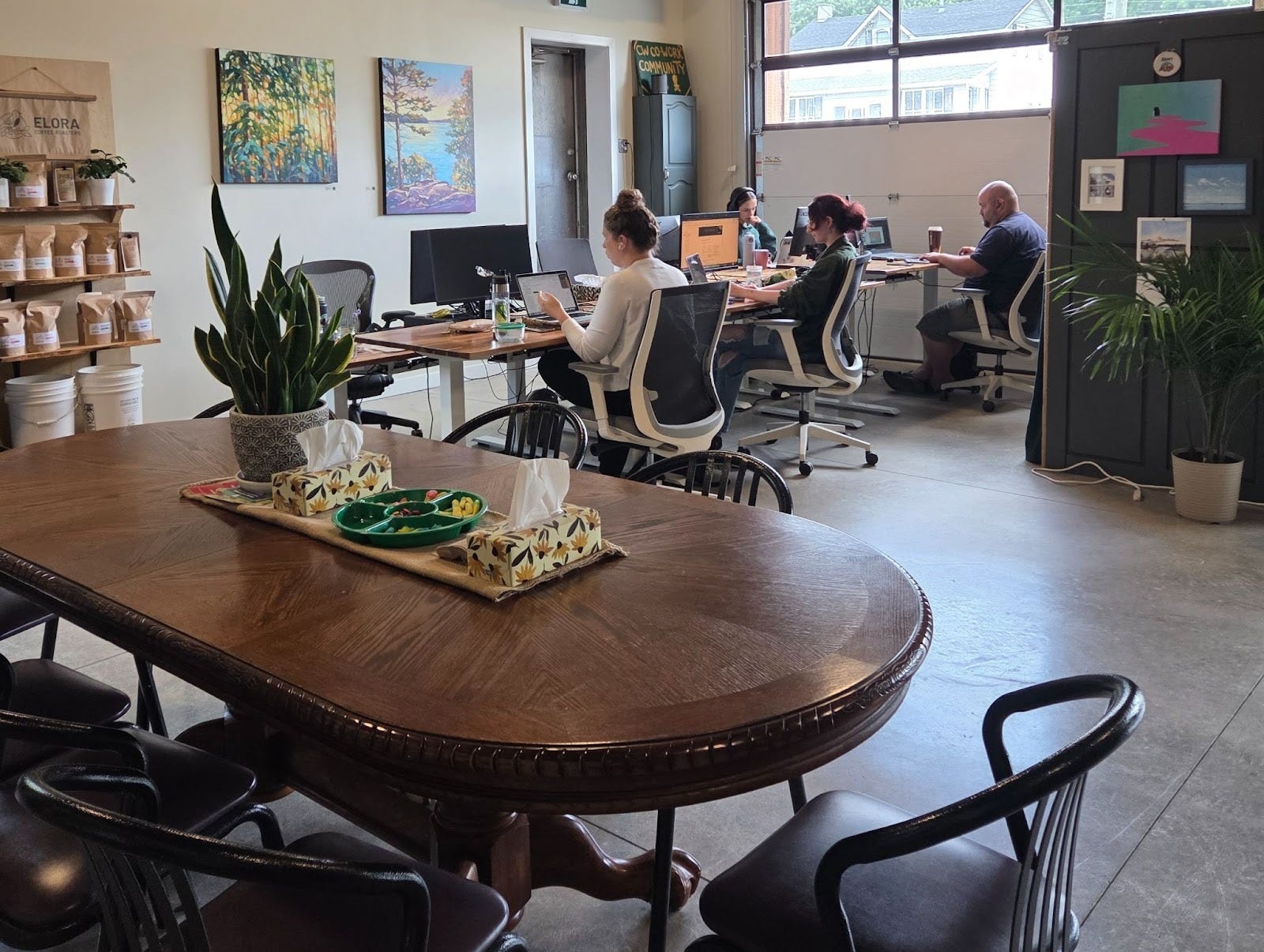
Beyond memberships, the space is designed to be flexible for local business activation. One example is Enchanta Experiences, who host immersive fantasy and fairy-tale events across Ontario, using the space to bring together local vendors, artists, contributors, and partners for community-focused gatherings.
Through CW Co-Work, Enchanta connected with Elora Writing Workshops, leading to a spoken word performance collaboration at one of Enchanta’s events last year. One of the most rewarding parts of this work is seeing those connections form organically and grow into real partnerships.
That’s the impact we’re aiming for. CW Co-Work isn’t just a place to work. It’s a place where local businesses meet, collaborate, and create opportunities together.
5. As CW Co-Work enters its second year, what are you most excited about, and what’s your main focus over the next 12 months?
Sara: As we head into year two, my main focus is growing our memberships and continuing to test what flexibility can really look like in practice.
One of the three new coworkers we’ve welcomed in the past couple of weeks is from a visual merchandising business, LA Gift Solutions & Designs. They create stunning custom gift baskets for local brokerages and businesses, and we’ll be hosting their pop-up shops on select weekends, welcoming the community to purchase their products. It gives them a new level of visibility in town and helps us demonstrate how the space can support different types of businesses.
We’re intentionally thinking outside the box. Ideally, we’ll welcome a few more pop-up retail vendors and create a small, rotating weekend marketplace where people can discover local businesses in one place.
Having on-site parking makes that possible, and it’s something we don’t take for granted.
Membership packages are an area I’m constantly revisiting. I’m always asking myself whether I’m overcomplicating things or simply responding to the need for flexibility. That’s an area likely to get a refresh this year. Our ideal audience is small business owners, freelancers, independent operators, marketers, and content creators who want community and support, not just a desk.
I’m also excited about leaning more into community-building in 2026. We’re going to host a monthly member social and build partnerships with local accommodations and restaurants to support team off-sites and executive retreats, which we plan to roll out in the spring.
Another focus is increasing visibility for our business partners. We have six large front-facing windows on a busy road, and I’d love to see more of them filled with vinyl logos, representing businesses within the CW Co-Work ecosystem.
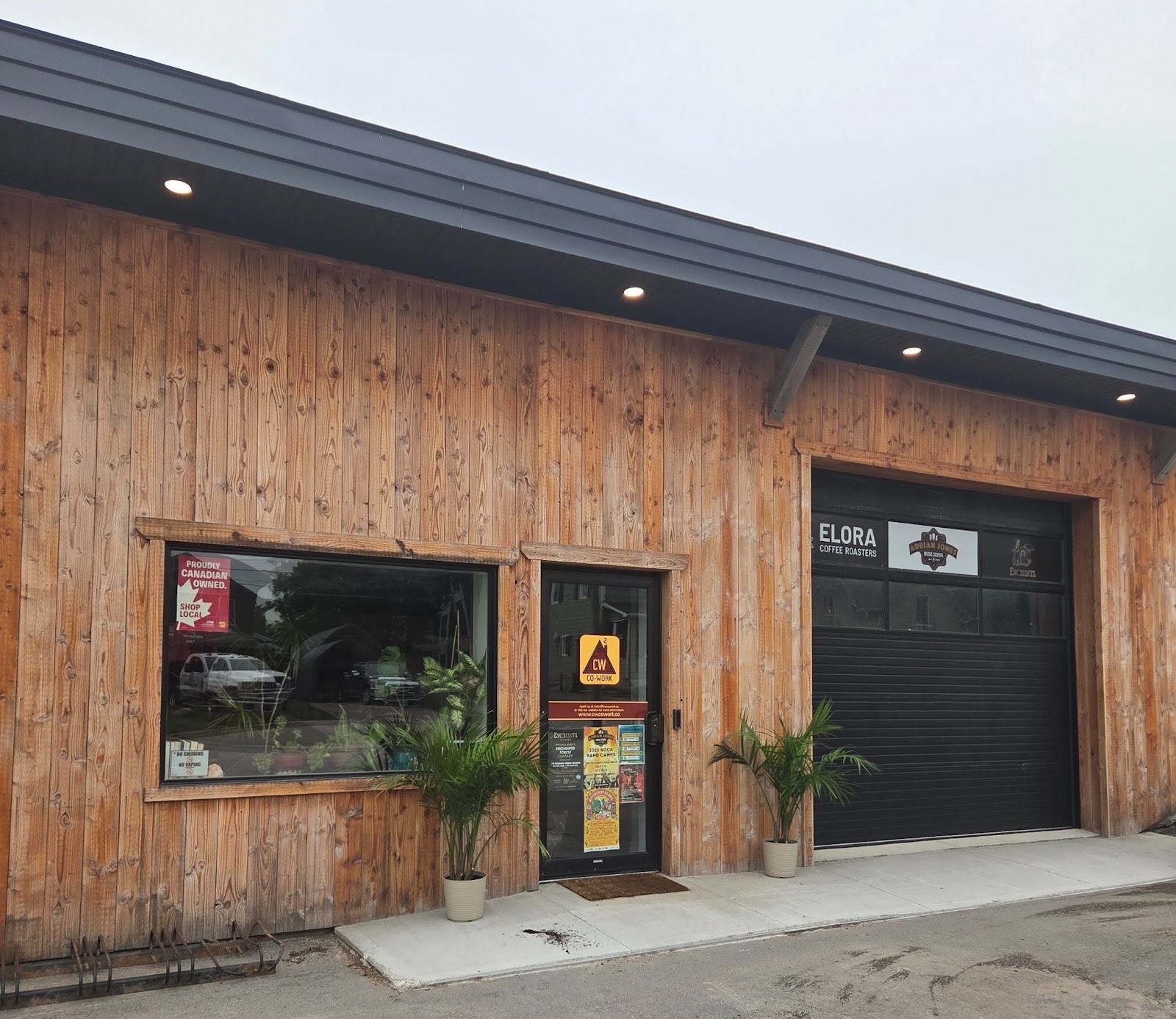
In the longer term, I’m hopeful we’ll expand into an additional 1,500 square feet, allowing us to respond to what the community is asking for, including food service and private offices, while still staying true to our collaborative ethos. Coworking will always be central to what we do, but I also recognise that different businesses need different types of space at different stages.
Overall, I’m excited. The focus now is on helping businesses clearly see the value of being part of this community and making sure we’re building something sustainable that can continue to grow alongside them.
About People Make Coworking
Celebrating the people who make up the fabric of the global coworking movement, People Make Coworking interviews coworking founders who share their journeys of building communities and workspaces.
Edition #23 of People Make Coworking interviews Sara Hipson, founder of CW Co-Work in Elora, Canada.