


Tomorrow, on 8th March, International Women’s Day 2025 is an important date to celebrate how far women have come in our march for equity. It’s an ongoing conversation that needs to be had. Although the gender pay gap has narrowed down from 8.2% in 2023 to 6.9% last year, it hasn’t closed. In most households, women bear the brunt of household tasks, and caregiving responsibilities, with many also holding down a demanding professional career or running a business.
International Women’s Day mustn’t be seen as a tickbox exercise or a day where ‘we must do something for the sake of it.’ We should always strive to champion women, and people across intersectionalities.
Women in Flex: What happened in the industry this week
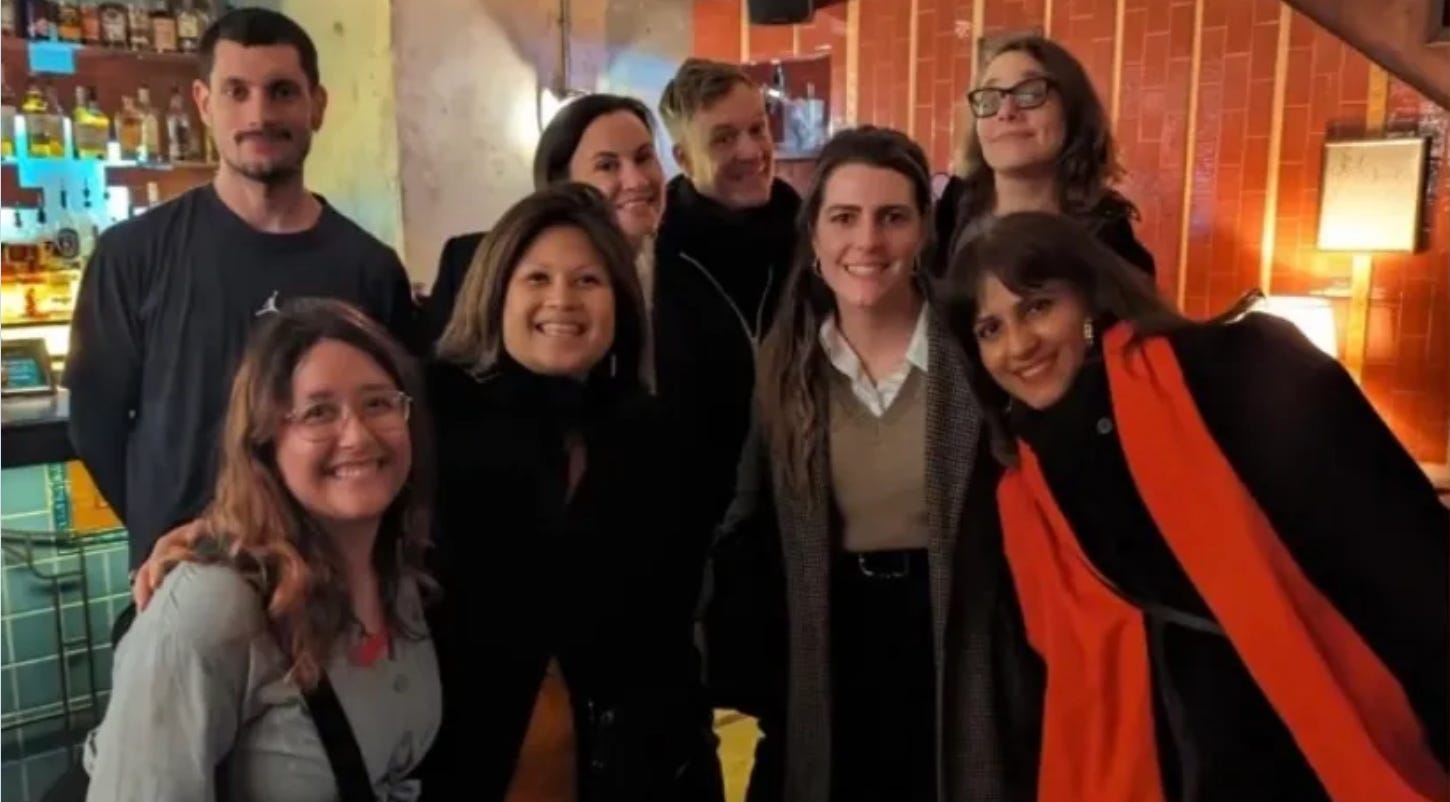
Most notably, the stand-out Women in Flex event, organised by technologywithin’s Mary Nolan, and GCUC’s Emilie Lashmar at Myo St Paul’s, was held last night, celebrating women in the industry.
Two panels tackled important topics — leadership, and building a successful career in the sector. I was gutted not to attend this event due to family commitments, but this morning saw a fantastic photo, showing how popular this event was. I look forward to attending future events on this topic.
However, I was at an industry event on Wednesday afternoon, moderating two panel discussions on ‘What does “service” mean today for the flex industry?’, hosted by the Flexible Space Association, in partnership with PONT. If I’m entirely honest, public speaking isn’t something I often do or necessarily enjoy (from time to time, I end up having what I call a ‘Bridget Jones’ moment). In the lead-up to this event, the nerves were certainly kicking in and I experienced feelings of imposter syndrome, a sad reality for so many of us.
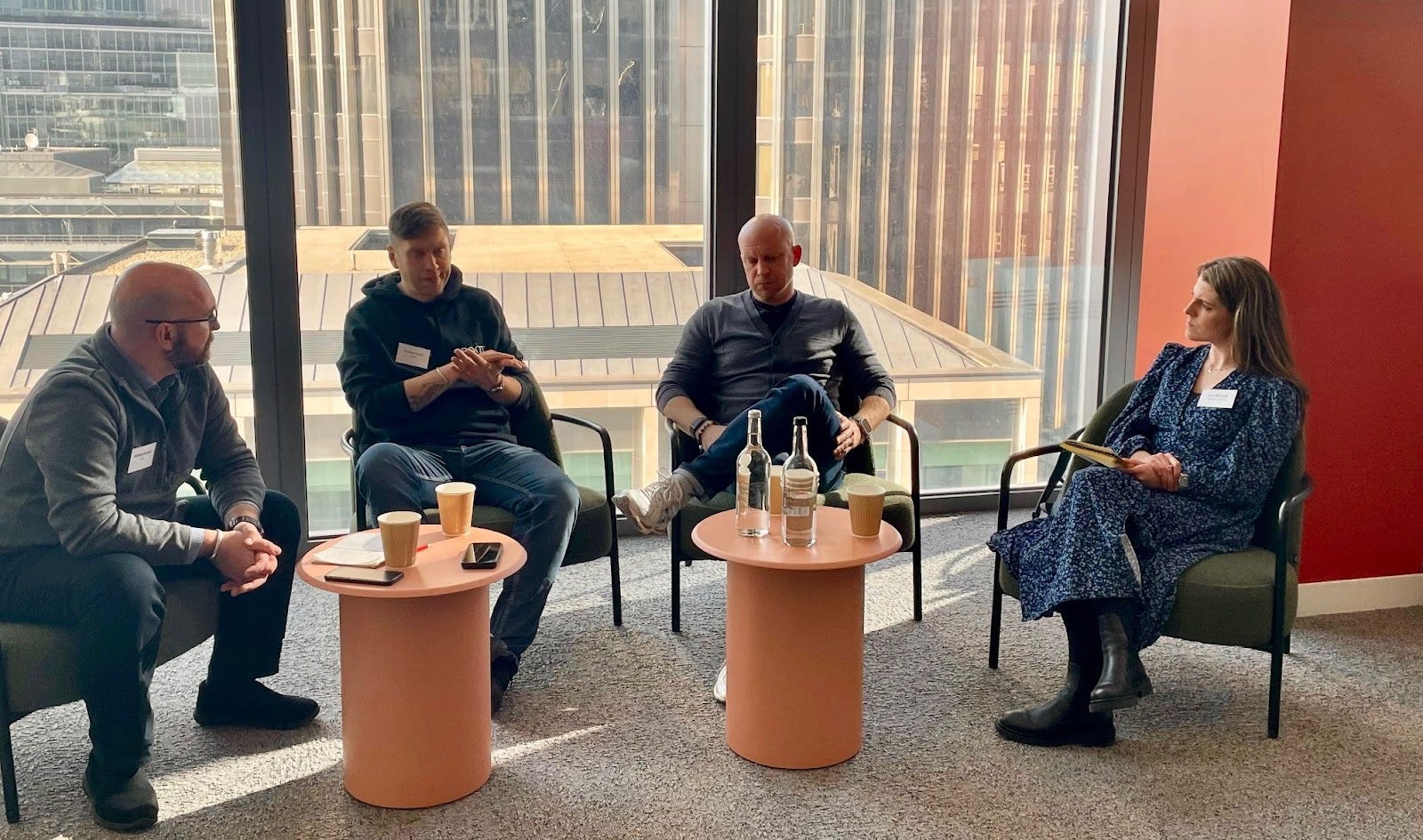
Nonetheless, I prepared and asked some insightful questions, met by the panellists with interest and debate (especially from John Williams!).
The response from the audience, some of whom came to the event to support me, and panellists was especially encouraging. They congratulated me on my efforts and left lovely comments on LinkedIn posts, including my own takeaways piece.
This feedback means the world to me, as I often struggle with validating myself. It also really backs up how I feel about this industry — it’s such a friendly and welcoming community. Someone mentioned this at the after-drinks, and I vouch for it.

People Make Coworking: Stories from female community builders
One of my main goals is to keep working in this industry as a freelance writer. I feel inspired and energised when I listen to stories from the people who make up the fabric of this industry. That’s why I started the interview series: People Make Coworking, last summer. I was intrigued to speak to the people making a difference in their coworking communities.
Out of the six people I’ve spoken to and published interviews with, four of those people are inspiring women in coworking and flex. They shared their inspirational journeys about building coworking communities and thriving businesses. To mark International Women’s Day, I’m revisiting those engaging conversations.
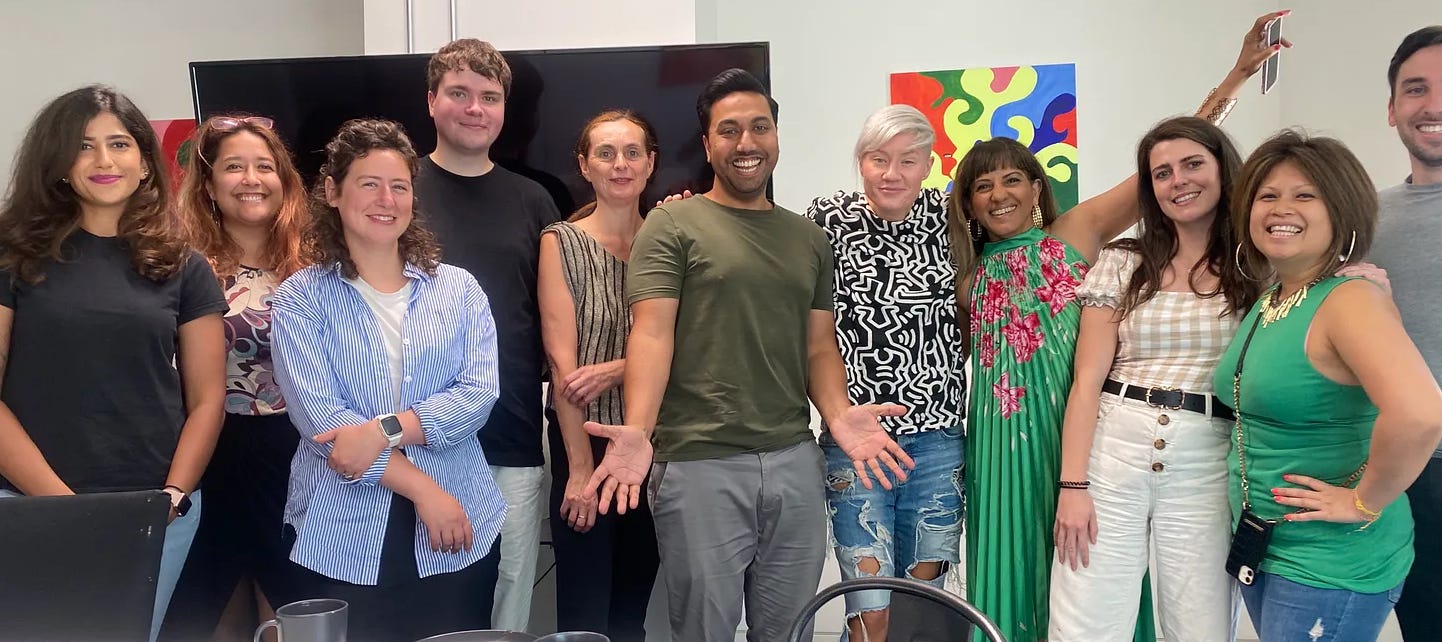
The Magic of Community
When I chat with community builders, I’m often inspired by their natural ability to bring people together, nurture and welcome people, and retain them within their communities. To Suzanne Murdock, the founder of The Hub Newry, I asked: “Can you share more about your journey of launching and managing The Hub Newry?”
Suzanne: I didn’t have a community when I moved to Northern Ireland in 2009 – the only people I knew were my husband, his family, and my 18-month-old son. I didn't understand the accent, so I felt lonely and isolated. At the time, my husband and I were working together on a financial services business, and I was juggling motherhood, a new home, business, etc. I had to find my own support network.
We also needed somewhere to work out of so, in 2011, we bought what was then the top floor of a local pub, and renovated it into office spaces.
We'd seen the coworking concept throughout Europe, it was in its infancy back then. We thought we'd give it a go. We didn't have a clue what we were doing, but coworking, certainly in Northern Ireland, was nonexistent back then.
Slowly, but surely, we were joined by some freelancers who also needed office space. They’d grown up in Northern Ireland, gone away and come back, and again, and didn't necessarily have that support network. So we were all in the same boat, and growing our businesses.
Our community just grew organically. We formed that community of common interests, and a sense of belongingness, support, and feeding off each other.
We were advocating for the coworking concept, which has evolved so quickly and massively that we were learning organically about what it is, the benefits, and how we could roll it out. We launched our second space in 2017 because our members were growing their businesses and needed a feeder space. We rolled out our newest space on Margaret Street in 2018.
Around me, we had a couple of different community networks with both our internal members, and they had their own networks. So, we would feed off each other, and into community-driven organisations, charities, and the local economy. Community is a big thing for us.
This snippet is from the interview: Finding Your Tribe: Belonging, Community and the ‘Co’ in Coworking, with Suzanne Murdock. Read the full article here.
Catalysts of coworking
I’ve only been in this wonderful industry for a few years, but the impact of coworking goes back at least a couple of decades. I’m inspired by the people who were there right at the very beginning, like Claire Carpenter, founder of The Melting Pot in Edinburgh, who answered my question: “You’ve had 20 years of experience in coworking. What has the evolution of this movement looked like?”
Claire: There’s been a massive transition in the workspace. It began as a place where you went to work for your employer and meet your colleagues, into a whole new concept to attract, retain, and develop your team and company, and make business happen.
Leases tied organisations into a minimum term of 5-10-year lease, no matter their business trajectory. The landlord had all the power and security – and, there wasn’t anything aesthetically interesting about those offices whatsoever (well, not in the sectors I worked in or visited!).
When I opened The Melting Pot in the ’00s, people couldn’t get their heads around the importance of flexibility (saving money), having a workplace as and when you needed it, and being part of a professional community (or place of interest) – all based in one place. I convinced people that ‘buying time and access to community’ was a powerful way of managing resources and supporting themselves and their people.
The coworking pioneers started coming together to learn from each other in the 2010s (initially, there were dispersed independent coworking business owner-managers). A movement started and quickly turned into an industry.
Forums started materialising around 2012-13 (eg. Coworking Europe and Coworking Spain), and different countries created federations. Then the technology began evolving, and Nexudus came along – adding another cost to the coworking space, but it was very much part of defining and accelerating the coworking product. Interest in coworking grew, with serious interest in freelancers and a ‘startup’ boom - but this was predominantly city-based.
Then we witnessed hungrier entrepreneurs and the commercial real estate sector realising they could make money from commercial real estate by offering differently on a bigger scale. Instead of serving one particular community, of either geography of interest (like most indie coworking spaces), they planned to scale to five or ten hubs from the outset. They didn’t realise it was about community and hospitality, not just flexibility. They were still just selling workspace and leases. I genuinely think it took them quite some time to understand that.
Pre-COVID, I helped operators rooted in their communities doing rural coworking as a labour of love, rather than targeting secondary towns. A chicken and egg situation emerged. A town had 30,000 people, mainly white-collar workers who were disappearing off to the cities rather than working near home. Market researchers were trying to find a building but also working out if there was demand.
It’s different in a large city, like London, Manchester, or Birmingham. You can assume there’s passing footfall as people generally don’t have enough space to work from home unless they’re reasonably well off, their children have left home, or they don’t have any. People in the city feel isolated whereas in rural areas, people live in houses with their families, without internet stability, and drive everywhere. It’s a different attraction, strategy, and need.
When COVID came, several rural projects I’d been supporting to get through their ‘pre-opening and start-up’ phase either went bust or were put on hold. If they were opening, they paused (even though people talked about working more locally). It stalled the opening of such spaces, or cut them short because they ran out of financial runway.
Then everyone started working flexibly but those spaces didn’t exist, because they couldn’t get going before COVID, and didn’t plan to scale. A coworking facility requires a certain amount of resources unless it’s on a low hospitality and self-service model.
Like in the development of any industry, its pioneering mavericks set up a movement before it reaches gradual and mass adoption. Then it’s taken over and run by large stable entities that provide such services at scale and diversify offerings, quality, and ownership.
I always encourage people to 'support local' and localism. Invest in your small indie spaces, otherwise the equivalent of 'Starbucks' will be all there is. Coworking will become normalised. I hope there is a stronger distinction and common perception between 'coworking' and flex-work places. They are different. Not all food is created equal, and not all 'flex work offerings' are, either!
Attention to detail in workspace design
The community and people in coworking matter, but so does the workspace design. When we walk into a workspace, we can either feel the energy and it makes us feel comfortable straight away, or it doesn’t. Speaking to Paula Madrid, founder of Blue Panda Office Spaces in New York City, she gets it. I asked Paula: “How have your psychology and interior decoration backgrounds influenced your vision for Blue Panda Office Spaces?”
Paula: My understanding of how environments impact mood, productivity, and collaboration influences what I do with Blue Panda. I’m mindful of what I create every step of the way, from the perspective of how people gather and come together, and how the work environment can influence that.
The color schemes, lighting, furniture, and textures set the mood for a serene place. They’re warm and inviting but also feel luxurious. I focus on serenity because it's lacking in some spaces, which feel much more crowded and vibrant. I think that’s wonderful, but it's not necessarily what we do in this space although we accomplish it through our networking efforts.
We're located at the William Vale (an iconic luxury hotel in Brooklyn). It’s very modern. So, I make sure that there's congruency in terms of the interior design here, which also has to match the new space I’m about to start the build-out process for.
The new space is a former bank – it’s just beautiful. The exterior is clad in limestone while the interiors have more of an industrial vibe, the ceilings are tin tile, very tall, with some exposed piping and some brick walls.
There are some elements that I keep thinking I need to change, but the spaces have to reflect my personality and style. Green is my favourite colour. I end up bringing green into the offices no matter what, usually with lots of plants. The new space will be mainly green and incorporate biophilic design.
People have to feel comfortable. The workspace also has to reflect what's contemporary and honour the architecture. I’m bootstrapping the entire thing, so it's a challenge. But, I love it!
I find it absolutely amazing when workspaces and hotels create their own scent. I don't have that kind of budget at the moment, but I bought a scent from the Baccarat Hotel so we can put a diffuser on every morning. When people walk in, it’s very light, and everyone loves it.
Everything goes into founding and managing a space like Blue Panda. Of course, it’s a lot as a small business. However, I feel fortunate to have found this second profession, and there are activities I truly enjoy: giving tours, designing it, debating with the other lawyers over points in the lease I don’t agree with.
It’s a constant learning curve, about marketing, running a business, managing staff, finding personal balance, and feeling like I’m doing some or a lot of it wrong or not doing anything, but also seeing the great outcomes, reviews, minimal vacancies, and after all, realising that we must be doing something right.
I recently read Will Guidara’s Unreasonable Hospitality – it blew my mind! It’s so basic and simple, that it’s become almost like a bible for me, and I think: how can I translate it into what I do? One idea was making a big deal out of people’s renewals and anniversaries. Normally, we just ask them if they’d like to renew, but I never thought about this – maybe we can give them a plant because they’ve been with us for a few years.
This snippet is from the interview: The Art of Designing a Sustainable and Wellness-Infused Workspace, with Paula Madrid. Read the full article here.
Making memorable moments in coworking
My very first interview was with Anna Chuicharoen, former community manager at Townsq Islington. The impact of Anna’s community management holds a special place in my heart — as her naturally welcoming and friendly nature led me to join and stay at the coworking space for two years. Anna was always a staunch supporter of my work and the freelancers around us. During our conversation, Anna responded to my question: “What are some of your favourite stories about how people have celebrated the power of “co” at TownSq Islington?”
Anna: We hosted a Murder Mystery night last year [2023], it brought people together who didn’t know one another. One of our members, Catherine, is really good at bringing people together, she even wrote the script for the Murder Mystery event and put herself out there for hosting the whole thing. She put so much work into it.
After the Murder Mystery event, everyone got to know Catherine, it opened up a few doors for some other people too. Like Neil, who generates AI imagery for an entrepreneur who used to be part of the space. There’s stuff that happens here that I’m not even aware of!
What’s really nice is that we don’t do business stuff socially. We’re celebrating that we’re all human and we like to have fun.
We put on a community lunch a few months ago, where I brought everyone from the workspace along and they told the group about their freelance journeys. There are successful people and then there are people at the beginning of their enterprises, it’s nice to be able to invite everyone to mix together.
There are so many stories but the crossbreed of people who came through the doors has been very special. People naturally met in the kitchen or with me and I connected them with others. Or they connected themselves. I love it when that happens organically.
How are you celebrating International Women’s Day and Month?
However you’re marking International Women’s Day 2025, and International Women’s Month this month, I hope you’re having a fabulous time and taking good care of yourself and your members.
I’d love to hear what you’re planning for this month, and how your workspace champions women.
If you’d like to be interviewed for my People Make Coworking series, please get in touch!