


Starting her coworking journey as a community manager at Spark Coworking in Baltimore, U.S., Maggie Terhune understands what true belonging in coworking looks like.
As Spark Coworking scaled from one location to five sites across four states, Maggie helped build the systems and train community managers nationwide, enabling teams to spend more time with people and less time behind a screen.
After eight years at Spark, Maggie relocated to Augusta last summer to build a creative consultancy that helps coworking operators, collaborative spaces, and third-place developers design the systems, programmes, and brands that turn spaces into thriving communities. Building her own community from scratch in a new city has deepened Maggie’s perspective on the importance of showing up locally.
Maggie continues to support Spark Coworking through fractional work. She also remains deeply involved in local and national ecosystem initiatives, including the co-founding of Baltimore Coworking Week in 2024 – an annual August celebration (in line with International Coworking Day) uniting the city’s coworking ecosystem.
In this interview, Maggie reflects on scaling coworking with intention, the often-overlooked traits that make great community managers (including why so many seem to be eldest daughters), and how a serendipitous coworking tour in Augusta led her to play a key role in planning a global ecosystem-building summit.

1. What’s your journey into coworking been like?
Maggie: I entered the industry as a community manager for Spark Coworking in Baltimore, where the job description felt like an explanation of my dream work, ticking all the boxes and putting a name to work that fit me so well that I didn’t even know existed.
From the beginning, it was clear to me that Spark Coworking was the perfect place to start that journey. I knew very little about the industry when I began; it was a happy accident. I found myself scouring podcasts, learning and following people in the industry.
I rode the wave with the community through COVID. Here in the US, all that did was enforce my love for the coworking industry.
Beyond community engagement, I learned how to launch a space from zero by paying attention to the hyperlocal and putting systems in. Later, I transitioned to a senior manager, overseeing community managers across the business, and focussing our attention on hospitality and entrepreneurship.
I helped scale Spark Coworking from one location in Baltimore to five locations across four states.
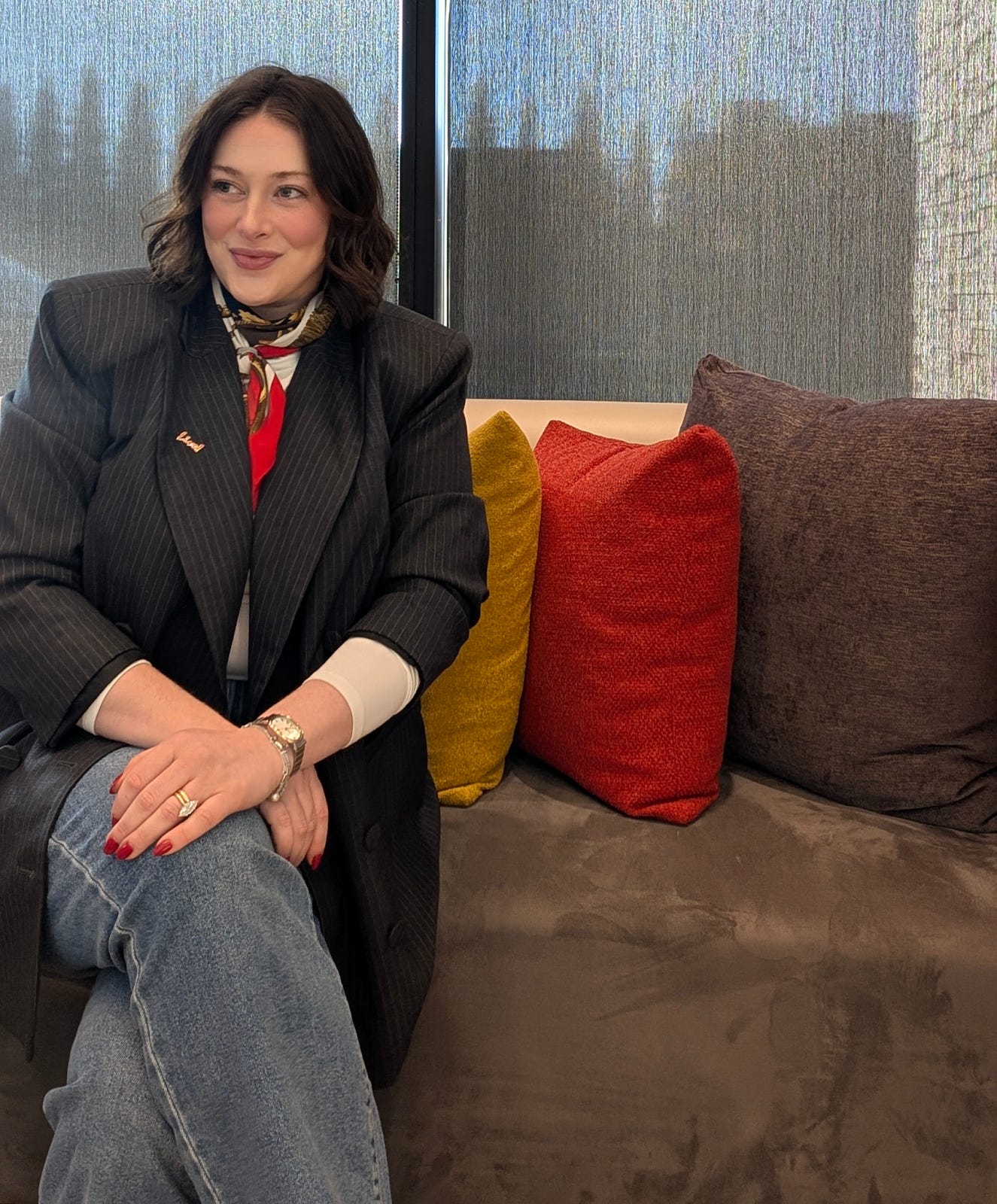
Since leaving my full-time role at Spark Coworking in the summer, I’ve moved from Baltimore to Augusta. I’ve built a creative consultancy helping coworking operators and third-place developers design the systems, programmes, and brands that turn spaces into thriving communities, focusing on community strategy, CM training, and brand development for third places.
As it was a huge transition, and we weren’t quite ready to part ways, I’m still doing fractional work with Spark Coworking.
2. What were some of the learning curves you faced when scaling Spark Coworking from one to five sites?
Maggie: We started scaling in 2020 (an interesting situation, timing-wise). When we opened Kansas City after Baltimore, it was more of a virtual launch.
The opening of Spark Arlington in Texas moulded my understanding of scalability. Leading up to its launch, I was on the ground with our national director, Shervonne Cherry, who has been with Spark since the beginning.
Shervonne is an incredible mentor and leader in the coworking world. We became hands-on in creating connections with the local community and implementing onboarding processes. We ensured that the physical space felt like Spark and was ready on day one, which involved a few shopping trips to Home Goods to make it perfect!
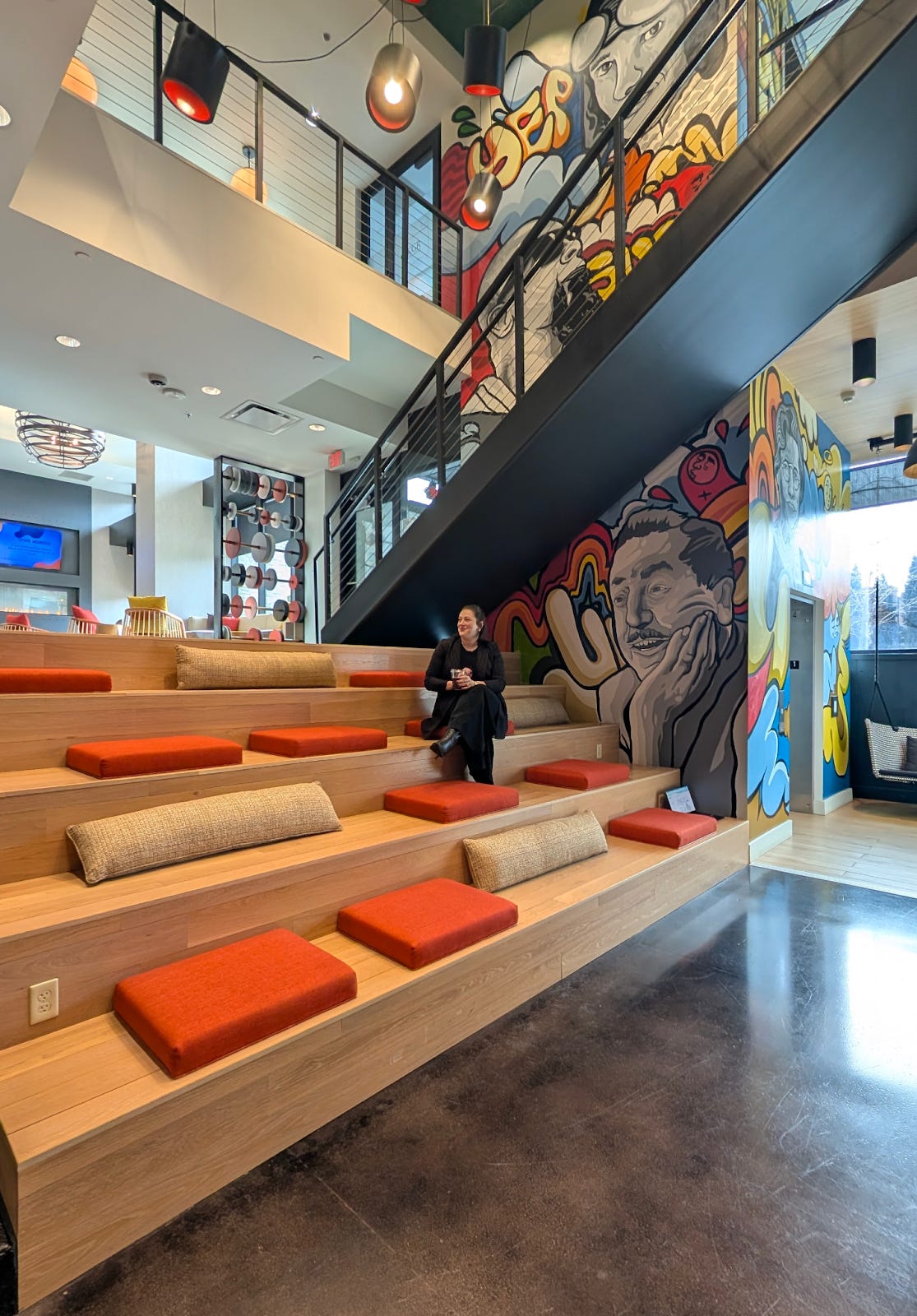
Scaling a business isn’t a perfect science, but we were conscious of hospitality and entrepreneurship. Those values were reflected in the first impressions of the community: a prospect will walk in and, within the first 30 seconds to a minute, decide whether the space is for them.
Not only do they make a first impression of the space, but of the team. Part of my work involved training and onboarding our teams. We hired a local team in the area, with knowledge about the entrepreneurial ecosystem in Arlington (that I didn’t have, coming from Baltimore).
Meanwhile, my understanding of Spark tapped into that knowledge bank and married it with their understanding of the local ecosystem. We were building systems, so our team spent less time in front of their laptop and more time with their community.
A successful community manager and operations team should spend more time working within the community than away from it. To do that, you need great systems and workflows in place on the back end, to fill the team with the confidence and time to do the real work – the human-first work.
3. What qualities do you think coworking operators should look for when hiring community managers?
Maggie: Recently, I attended the GWA immersive Summit, and I had this exact conversation with a couple of folks there. My joke is that the majority of community managers I’ve talked to in Baltimore (and beyond) have been eldest daughters. It’s telling because of the many traits that eldest daughters have.
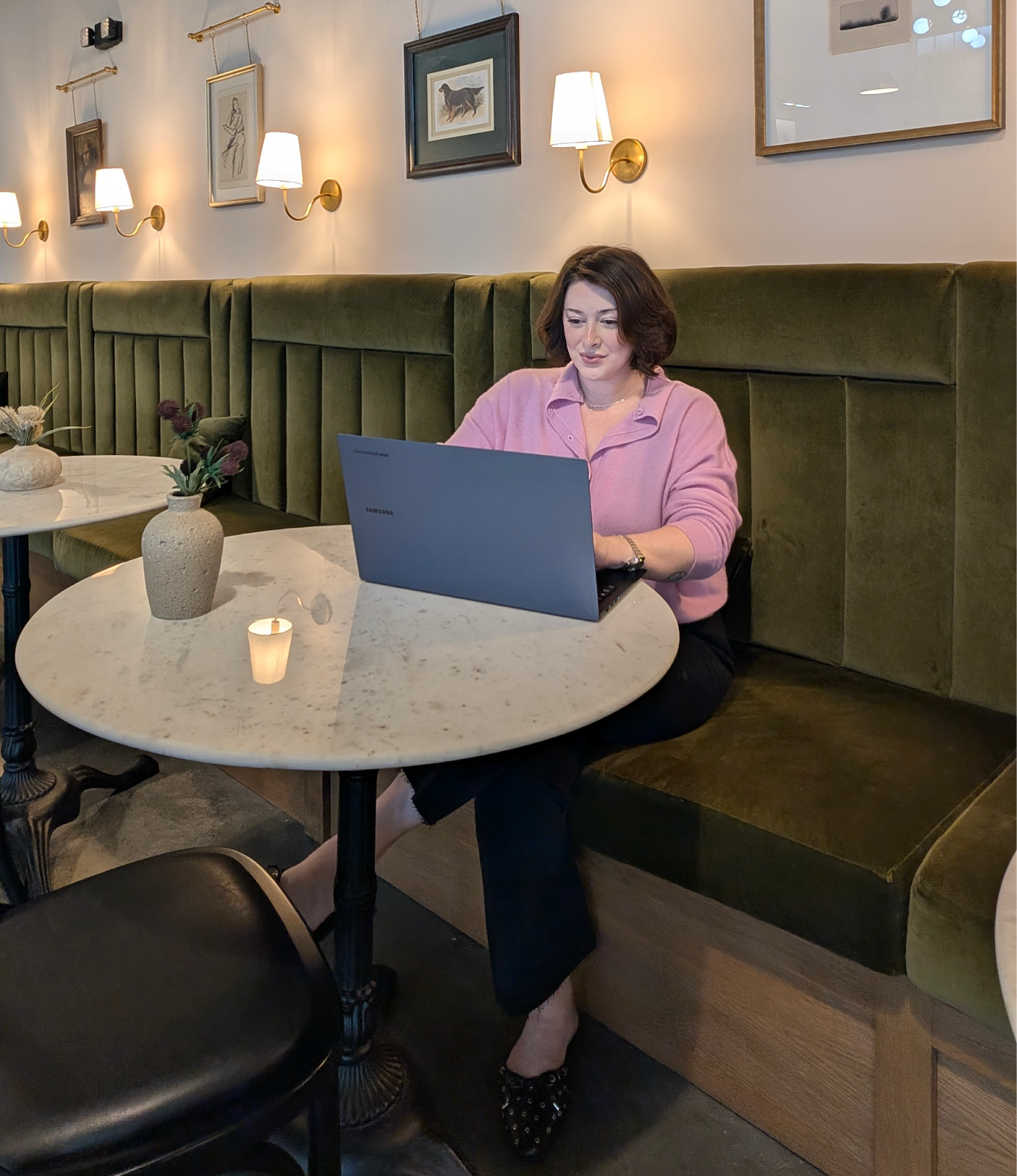
I answer this question by saying: find someone where community is ingrained into their personal ethos.
You can teach anyone how to run an onboarding session and a booking platform, but you can’t teach them how to read a room or understand emotional intelligence, like knowing when a member is having a hard time, feeling off, or craving connection, and then understanding who is the best person to connect them to.
Those soft skills have always been important in the coworking industry. As we move towards more AI and tech-focused systems, I’ve seen them become more relevant in the general hiring process, too. All of a sudden, the rest of the business world is paying attention to community, instead of calling it an audience, client or follower.
As an industry, we have a unique opportunity to raise our hands and say that we understand how to build community authentically, and we don’t want to commodify community. We’ve been doing this work for the past two plus decades.
We’re well-positioned to lead and teach people doing this work, whether it’s in a coworking space or in a different industry. It’s an interesting trajectory I’m seeing right now.
4. What did moving to Augusta teach you about community building?
Maggie: This recent move to Augusta has taught me to walk the walk. Community building and being a villager are so important in today’s digital age, and I’m viewing that from a different perspective. Now, I’m not only teaching it and talking about its importance, but I’m experiencing it firsthand.
I grew up in Baltimore — it’s a community I’m extremely comfortable being part of. I knew all of the players, and I really understood the ecosystem infrastructure: the upcoming projects, the direction the city was heading in, and how it could support startups and entrepreneurs.
Moving to Augusta, I knew how to build community, but I didn’t know anything about the community itself. The move forced me to practice what I preach. I began by connecting with local entrepreneurs and ecosystem builders (folks working in local government and tourism), and understanding the direction Augusta is heading in, from an entrepreneurial and developmental perspective.
Since moving here, I’ve found myself exploring some of Augusta’s third places, like local coffee shops and small businesses.
Putting yourself out there is scary, but if you have the confidence and clarity of who you are, you can go into a new community and authentically present yourself as an asset and an advocate for it.
5. Have you joined any coworking spaces in Augusta?
Maggie: Naturally, researching all of Augusta’s coworking spaces was one of the first things I did when prepping for the move. There are only two – one being the Clubhou.se – a nonprofit coworking space right in the heart of downtown.
I reached out to their team for a tour and met with their ecosystem builder, Lexi. She showed me around the space, and we spent an hour sitting in a conference room talking shop. There’s just a certain language and understanding of people in this industry that we might not get to chat in person very often, especially in a city with only two coworking spaces.
Lexi mentioned they’d just finished a planning meeting for the Startup Champions Network (SCN) – a national organisation for ecosystem builders, that hosts two summits a year. The upcoming summit just happened to be in Augusta.
I asked how I could help, and was invited to join the planning committee. So, only a couple of weeks after I’d moved, I was suddenly in a room with the Augusta Chamber of Commerce, the coworking space founders, and team members planning the event.
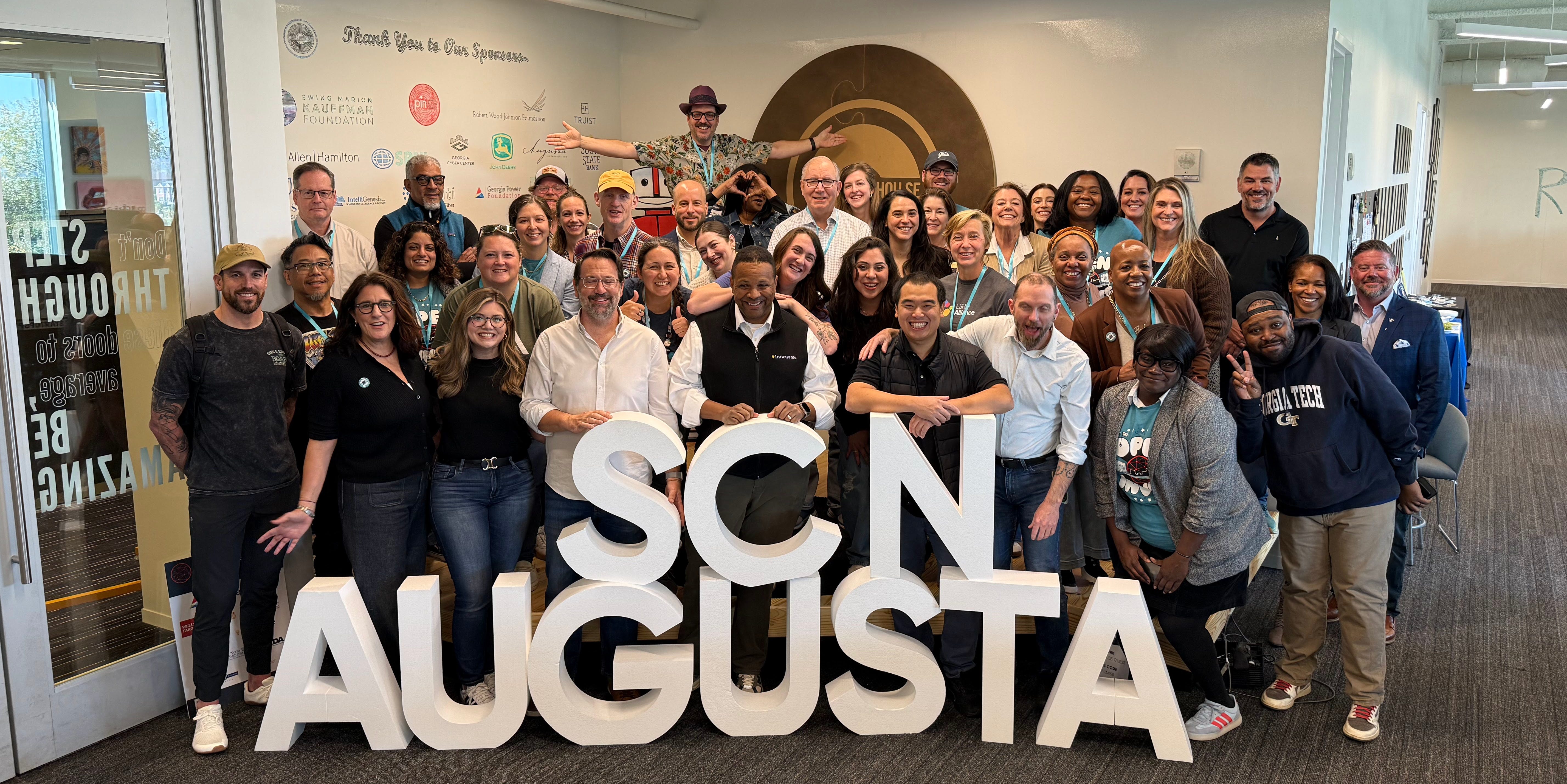
I helped execute the event in November, where we brought 85 ecosystem builders from around the world together for four days of programming, community-building events, panel discussions, and TED-style talks.
It was an incredible thing to be part of, and a serendipitous experience that led to many connections since then.
6. How is Baltimore Coworking Week shaping the local coworking ecosystem?
Maggie: This is a newer initiative that we started in the summer of 2024. There are about 30 coworking spaces across Baltimore, including makerspaces and niche spaces. Although we all celebrate International Coworking Day (one of my favourite days of the year), there was no formal alliance between the independently owned coworking spaces.
We decided to create this incredible piece of programming around International Coworking Day. Throughout the week, every space offered either free or discounted day passes, encouraging folks to check out all the different coworking spaces part of Baltimore Coworking Week.
We organised daily programming across all the spaces, with four spaces participating in the inaugural year. One evening, for example, we hosted a member panel with members from all the different coworking spaces, about how coworking and being a part of their home coworking space supported their businesses.
We also had a TED-style talk around placemaking in coworking and its impact on the local entrepreneurial ecosystem.
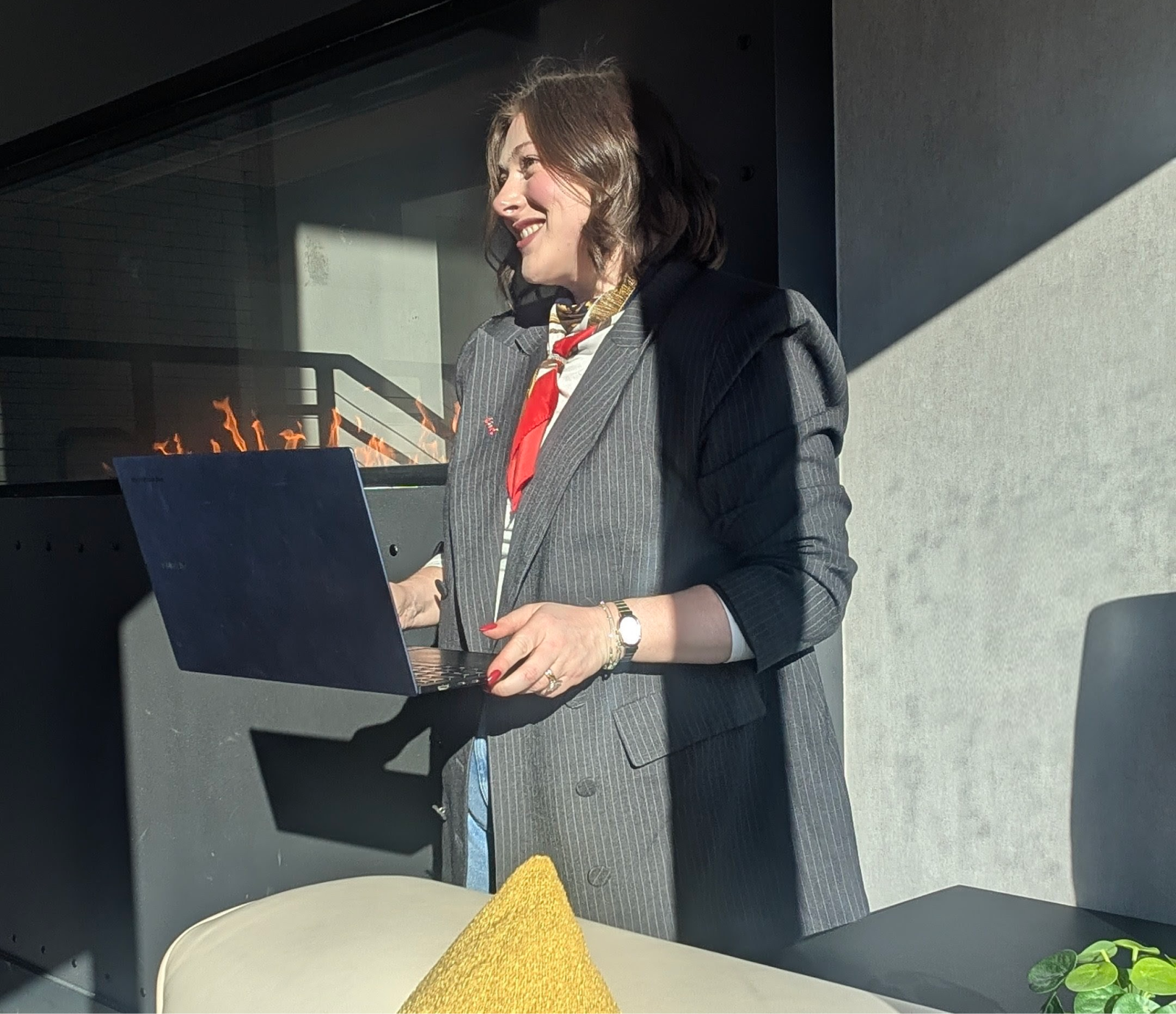
Throughout the week, we supported each other across the different events. Baltimore Coworking Week propelled a local understanding of the ecosystem – many people who’d never coworked before visited all four coworking spaces in one week.
They gathered information about what type of space would be best for them and made new connections, which helped them make a good decision about the type of coworking space that they wanted to join.
For the coworking teams participating, Baltimore Coworking Week was a great reinforcement of one of our industry values: collaboration over competition. Despite some people working in the industry in the same city for years, they hadn’t even met each other. The event was a fantastic opportunity for those teams to talk about their shared experiences in coworking.
We’re all building community, and it can be easy for people who support communities or ecosystems to forget that they need support as well. Having conversations with someone who knows the situations that we deal with on a day-to-day basis helps.
Not only did Baltimore Coworking Week give our teams a chance to collaborate, but the greater community experienced coworking and understood the coworking spaces they could access across Baltimore.
We had our second year in 2025, and we’re continuing to build the initiative.
About People Make Coworking
Celebrating the people who make up the fabric of the global coworking movement, People Make Coworking interviews coworking founders who share their journeys of building communities and workspaces
Edition #22 interviews Maggie Terhune, who has set up her own creative consultancy. Follow Maggie on Instagram (@mag.terhune) or shoot her an email.
If you’d like to share your story in ‘co’, please get in touch. I’d love to speak with you for a future feature.