


After more than 35 years working in hospitality, Stephen Phillips moved to El Nido in the Philippines in 2023 with his wife Kate, initially planning to spend a year there.
But having experienced the challenges of working remotely in a town known for unreliable internet and power cuts, he saw an opportunity to create something that was missing: a professional coworking space for people living and working in El Nido.
Stephen and Kate opened Neighbors and Nomads around 18 months ago, bringing his experience of running restaurants to a different kind of business. Their aim is to create a space that welcomes nomads and local Filipinos, while helping people connect with El Nido’s wider community.
In our conversation, Stephen talks about what a background in hospitality can bring to coworking, the practical challenges of building a local community in a destination better known for short-term tourism, and Stephen’s ambition to make “coworking in paradise” a model that could work in other nomadic destinations.
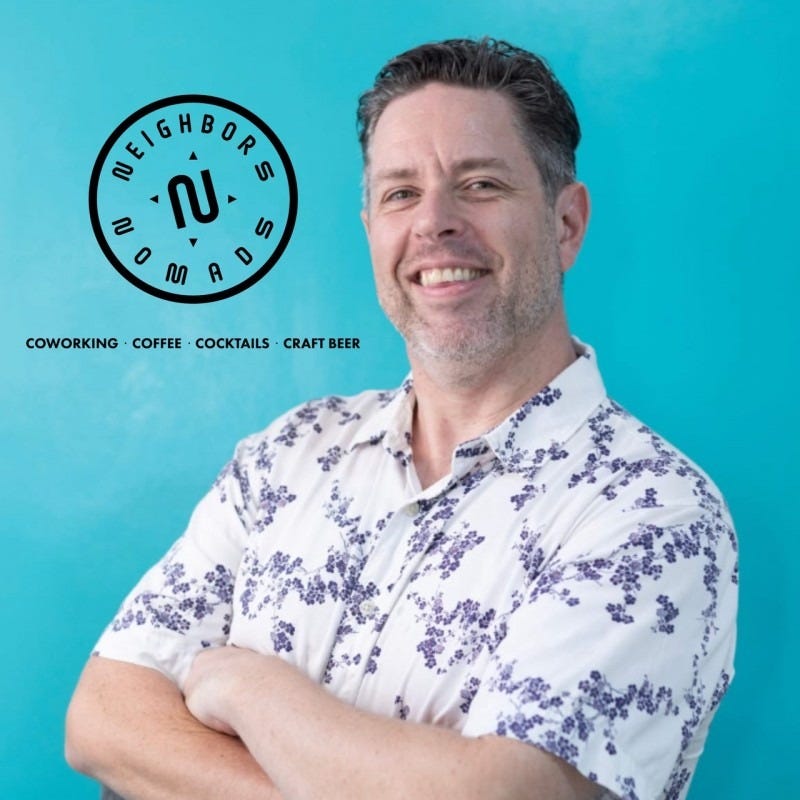
1. Take me back to the beginning. What were you doing before Neighbors and Nomads, and what led you to El Nido?
Stephen: I have 35+ years of hospitality and casual dining, progressing through kitchens, as I trained as a chef, and front of house, before ending up in some recognisable UK high street chains over the years.
More recently, I was COO of Marugame, a joint venture with a Japanese udon company. We launched 13 restaurants in the UK just after COVID within 18 months. That was pretty intense.
In February 2023, my wife, Kate, and I got married in the Philippines. She’s half Filipina, but lived her whole adult life in London, which was where we met. When we went on our honeymoon, it felt like a massive decompression of the wedding planning being over and the restaurants open and trading.
We ended up doing a life reassessment, which is an odd thing to do a few days after getting married, because you think you’ve got a plan. We felt we could bring our retirement opportunity forward, and go to the Philippines for a year.
We chose El Nido where we got married. It’s a touristic area, which is why we thought our hospitality skills would be applicable here (my wife’s a hospitality trainer). I resigned and set up my own consultancy company in hospitality, Umami Consulting, knowing that the work would be fairly niche and could be done remotely. Kate’s boss allowed her to carry on working remotely for another year.
Being a remote island destination in the Philippines, El Nido is one of the most famous places in the world for bad internet and power outages. Although I had a decent home office setup with a generator and Starlink, I wanted to get out and about. Yet in cafés, you experience tourists in the background, noise, dogs, and scuba divers clanging tanks around behind us.
That’s when we realised there was nowhere to cowork in El Nido. There was no café that focussed on people working. I started looking into the nomadic lifestyle and the type of people working here — there was this exodus of people leaving Manila to come and live here and they had home offices.
At the same time, I could see the trend of working near home already starting in the UK. The idea of not commuting into London five days a week on a sweaty train, nine to five, but also not sitting in my spare room five days a week looking at the same four walls with the same distractions.
I knew the Philippines would follow suit, but we couldn’t find it, so we thought that starting a coworking space was a good idea. Our whole ethos of moving here was that we wanted to do something that would make a difference and add value to the local community.
We chose the hard route. The budget we put into this versus that same budget going into accommodation, would mean we’d probably be sitting on the beach for half a week now if we’d gone down that route. But this feels much more purposeful.
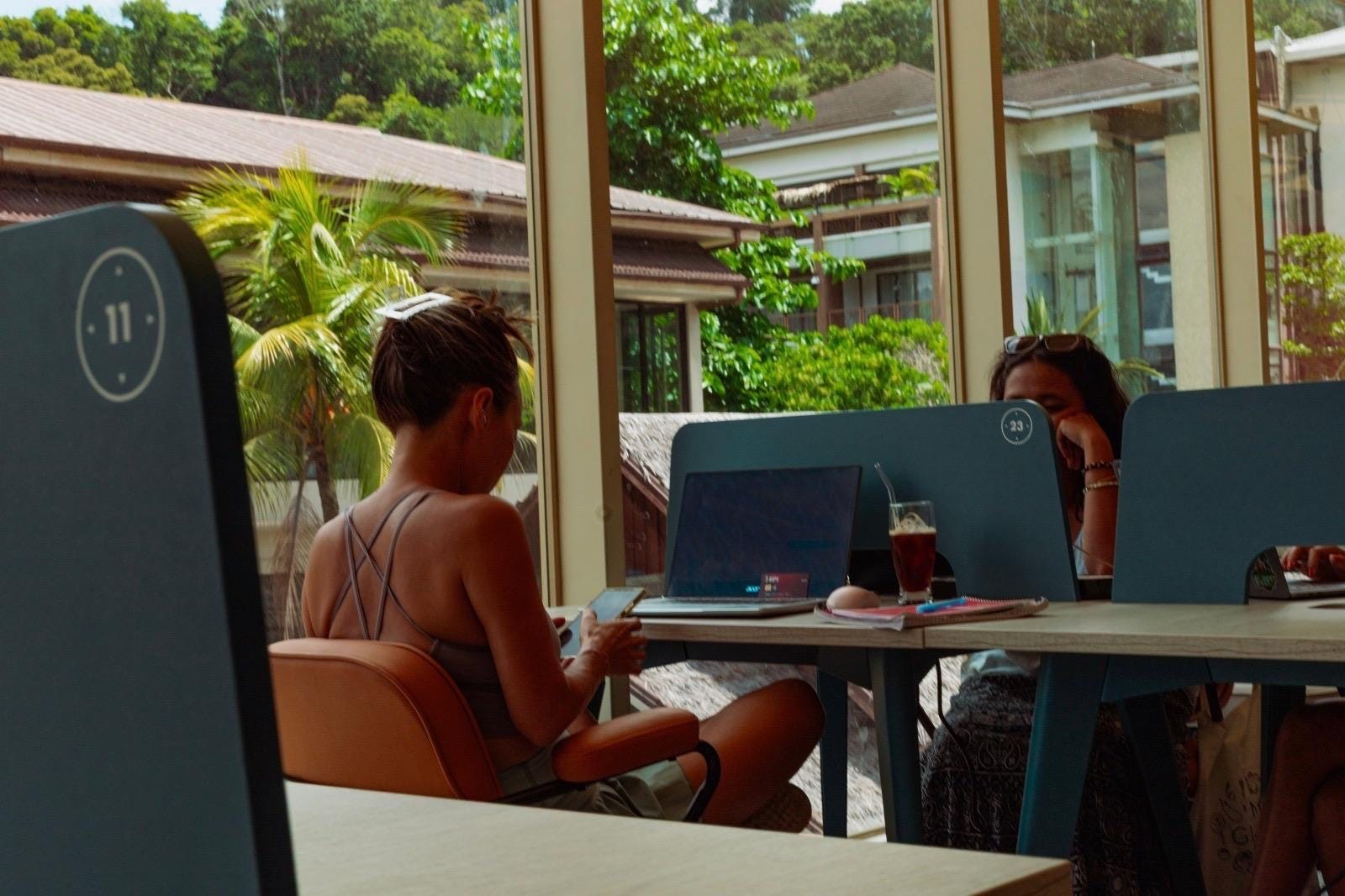
2. What are people looking for when they arrive at Neighbors and Nomads?
Stephen: I’ve got mixed feelings on the word ‘community,’ maybe because of its overuse and the way that it’s banded about too flippantly in coworking circles, in my opinion.
What we realised was that you can’t just create community. It’s like a business culture — you have to start with a vision and build on it.
We’re 18 months old now, and I always say: “Have we built a community?” Well, I wouldn’t say we’ve built this amazingly popular community, however, it’s all part of our values.
Our name ended up being a fantastic way of describing what we’re trying to achieve. I found a lot of coworking spaces, especially in Asia and touristy places, becoming little bubbles for expats. Kate came up with the name of Neighbors and Nomads, because we wanted to make sure that we’re genuinely a place for both.
Although there’s a socio-economic restriction for some people, we try to solve that in different ways. On the whole, we’re trying to encourage local domestic Filipinos to mix with non-Philippinos that live here, such as nomads. That in itself is our community, albeit it’s a bit more transient because we’re in a tourist place.
On average, the nomads stay here for about a month which, versus the tourist stay, is enormous (the tourist stay here is around four days). It’s a very transient place where people come to see the sights, go out into the lagoons, beaches, and do the boat trips before moving around the Philippines.
Our nomads tend to stay in more localised places and make more connections with locals. Their money stays on the island. They’re not going to a hotel with its head office in Manila.
They’ll often get a trike driver on the first day, take their number, and end up using the same trike driver to get back and forth. The nomads have even ended up going around their drivers’ houses for dinner. It’s much more integrated and a better way to connect.
Filipinos are the best people to connect with. They’re naturally warm and hospitable people, so there’s no barriers, especially with English being very well spoken and understood.
18 months on, we’ve experienced one high season and two low seasons and we’re starting to really see the space flourish now.
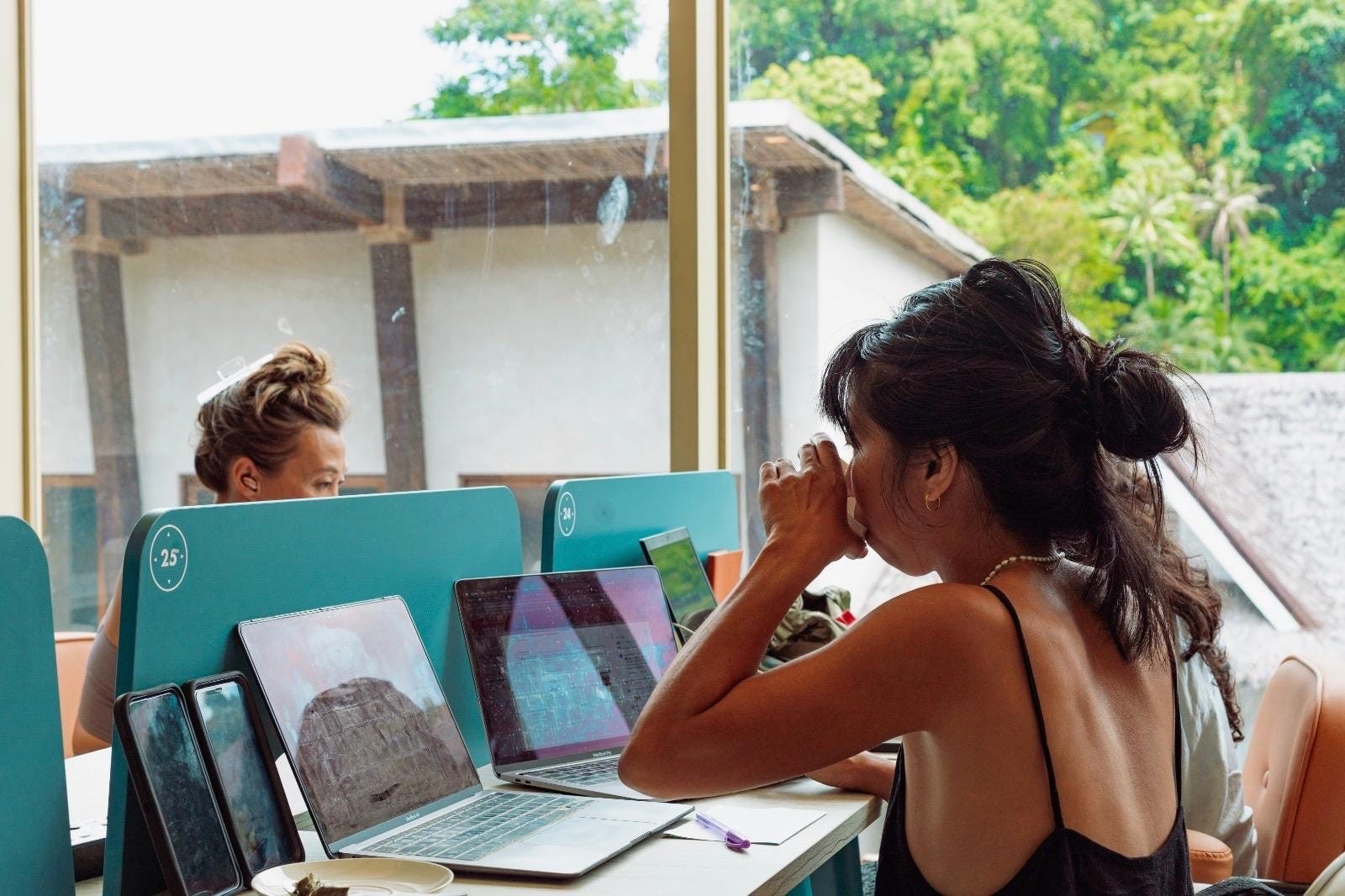
3. Have you found your hospitality background has contributed to the success of the space?
Stephen: We’re biased, of course, but our backgrounds contribute to the space enormously.
Ultimately, coworking is about making people feel at home — that’s what we’re taught in hospitality and restaurants in the first place.
Doing my research, I found a lot of businesses with offices bumping on coworking. It’s really just their office with extra desks. I found it odd because they’re leasing space as commercial property agents and that’s what the space ends up feeling like.
One of our biggest inspirations was Oru Space. When I first had the idea for Neighbors and Nomads, I was put in touch with the space via Bernie Mitchell. That gave me so much inspiration; it’s incredible what they’re doing.
When hospitality people do coworking, the space feels like a restaurant. What’s beautiful about it from our point of view is that you don’t get the same pressure you get when you’re working in a restaurant. Here, people are coming back and if you drop the ball, people aren’t nearly as upset as someone is in a restaurant.
The horrible bit about hospitality is the pressure, so this part of coworking is lovely; it’s a key differentiator.
Going back to my ick on community as a word, we’re trying to build a community reputation but we’re doing hospitality. We’ve done that from the start. The community will probably take a couple of years of evolution before we can comfortably tag ourselves as a community space, but that’s what we’re working towards.
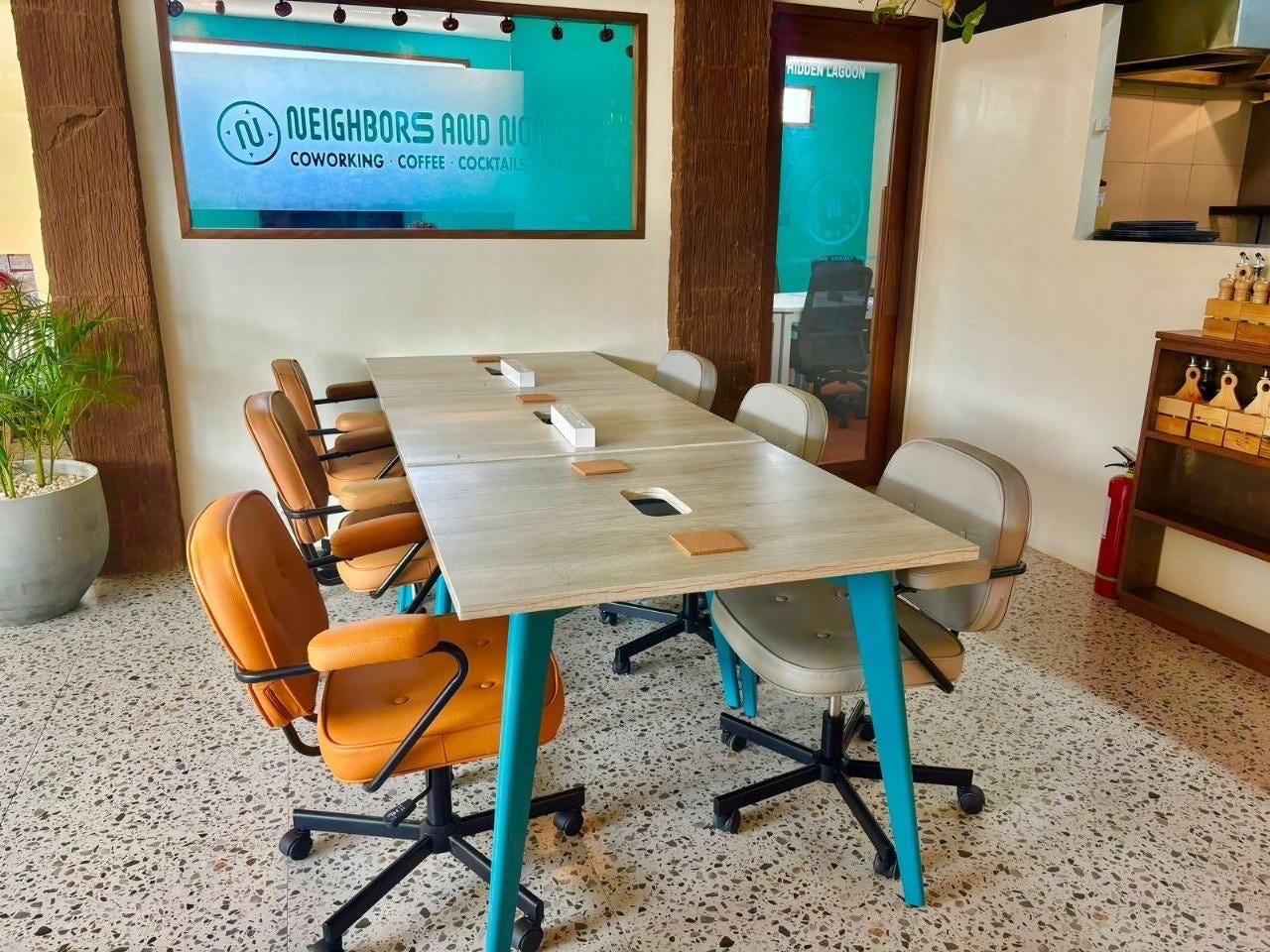
4. How do you build a sense of community when the nomads might only be in El Nido for a month or two?
Stephen: You can’t just copy someone else’s activity because it’s almost like they own it once they start it. You have to think about what people want to do that no one else has ever done, and then own it.
We try to run activities that no one else is doing, such as trivia nights, which often get people reared up to find the right questions that suit everyone. You’ll get a good bit of debate.
We‘re also the owners of the El Nido Hike Club — that’s a great one for bringing people together because it doesn’t cost much money. Everybody wants to do it, and you’re with each other doing a challenge, chatting, and passing the time for a couple of hours.
We started a WhatsApp group for the town, which bizarrely had never been done before. It’s a community group that we keep as uncommercial as we possibly can, and it acts like a news bulletin.
We’re also just starting some food walking tours. We’re discounting these for locals as part of a pay it forward system where nomads are paying slightly more, but that enables the locals to join them, and maybe eat in some places they can’t normally afford to eat in.
We’ve got a community manager — a local girl whose role is one we’re finding out what that means for ourselves and working it out together with her.
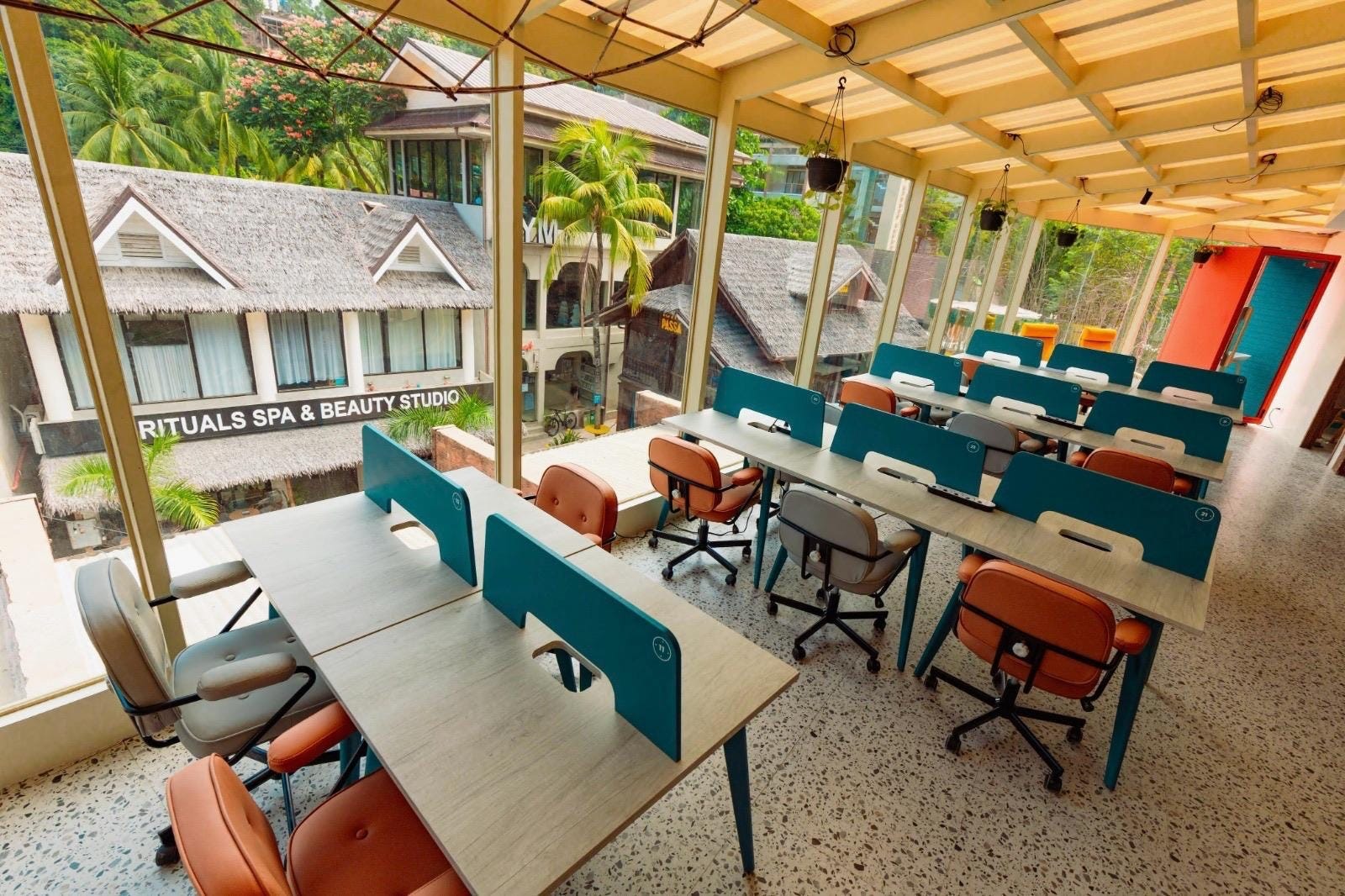
We aim to introduce people to each other as naturally as possible. Once someone comes into the space, even if we’re bringing them to one of the shared desks (all of our desks are hot desks in banks of six), we’ll sit them down and introduce them to the other person on the table. It immediately breaks down any barrier and causes conversation.
That person will then introduce the new member to another person, and we just see it snowball. That’s been quite a big thing for us.
We have to accept that we need to sell ourselves on El Nido first, infrastructure second. Someone googling El Nido looks at it because it’s a beautiful island, then they figure out whether they can work here. They can’t lose a week’s worth of calls because of an unreliable internet connection.
Thankfully, all our reviews do the work for us on that — we’ve been super reliable. We now know that it’s El Nido first, infrastructure second, and then someone might look into the community. When they come, they’re pleasantly surprised.
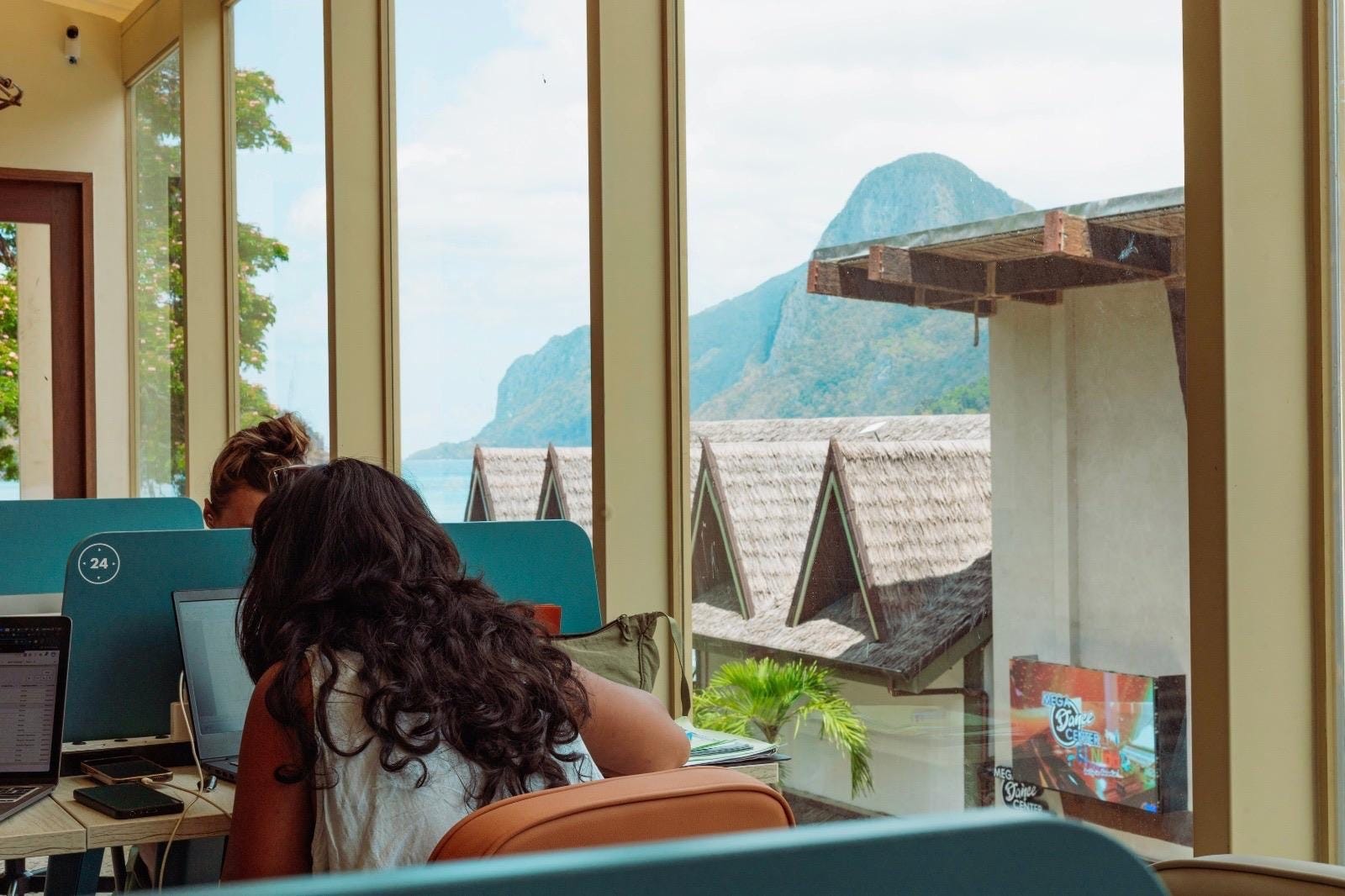
5. You chose a name that puts neighbours alongside nomads. How do local residents and businesses interact with the coworking space?
Stephen: That’s been really hard. When we opened, we expected wealthy expats and domestic Filipino business owners to flood through the doors. But it’s a typical story: every last penny went into construction over marketing, then you open the doors, and no one knows where you are or what you do.
As we weren’t doing accommodation, a restaurant, a spa, or boat tours, we were viewed as a weird business in El Nido to a degree. But we’ve been in the town for 18 months now and you get to know everyone quite fast because it’s a small town.
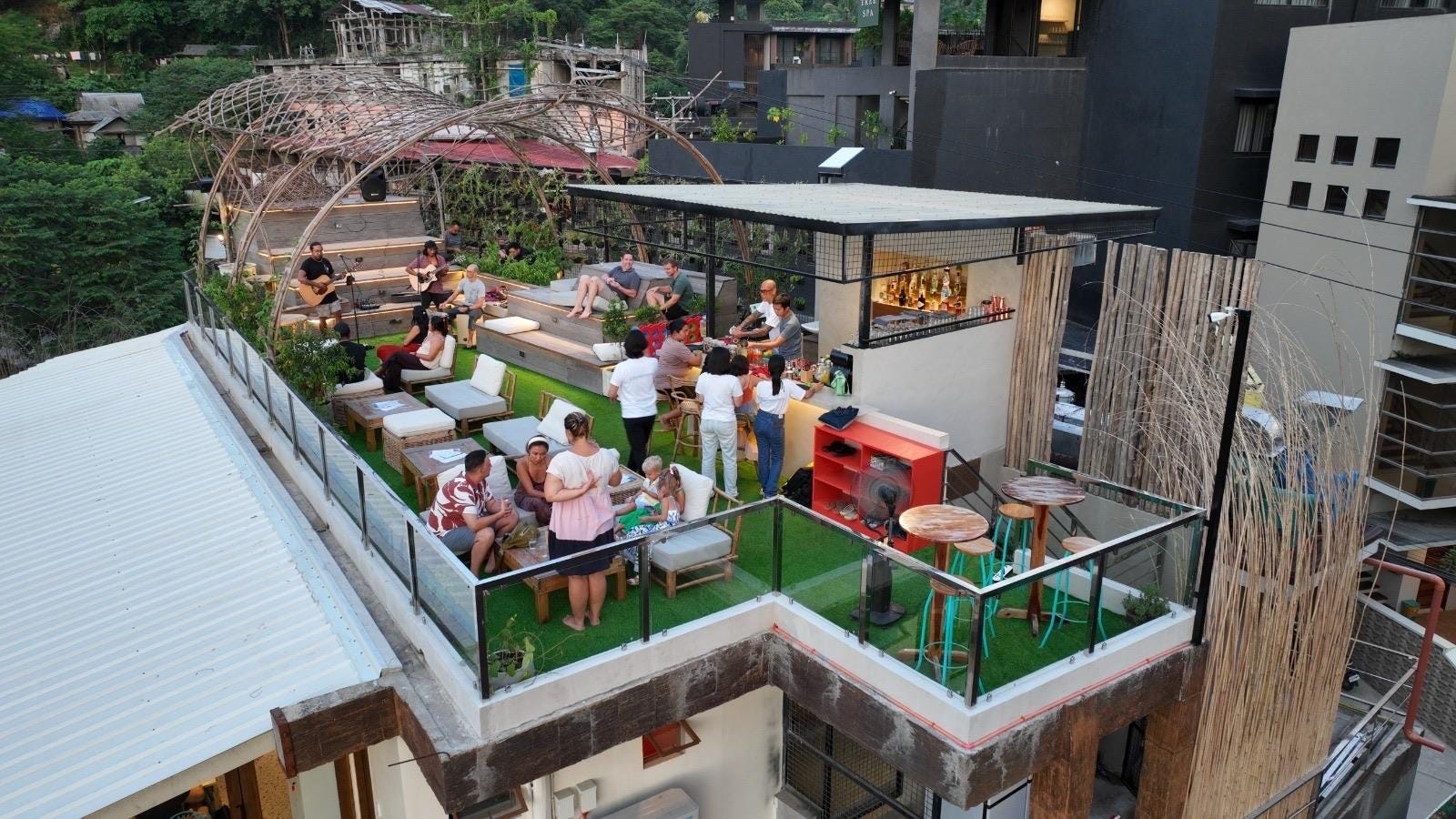
We just started doing local events, even giving people discounts to host their birthday parties here at our rooftop bar or in our little café on the ground floor. That was my marketing, because people had to walk through the space, and they were bringing their friends, who were all expats that worked from home. If they showed any interest, we’d just show them around the place. Slowly, but surely, that really started to work.
You’ve got very different levels of income here. The middle class Filipinos work for Western companies, so they’re earning a decent living by local standards but not in comparison to European or American standards.
To accommodate people working in different time zones, we decided to open 24/7, realising that we could make that work relatively cost effectively. We introduced an overnight rate for those working for American companies. They have reliable internet here so they don’t need to be at home where their family are trying to relax, eat or sleep.
We started filling up quite a lot at night. Although we introduced a special rate, we didn’t get anywhere near the same amount of income from it, although it more than paid for the wages of our night staff.
About a year in, we did something that was quite brave at the time, and I’m really glad that we did: we went over our pricing and structures. A lot of people here will offer a local discount of around 10-15%, but it’s a bit under the table. We decided to print it everywhere.
The team was horrified, because they weren’t sure how to explain it. But we wanted to bring these people together. We have two ways of looking at it: it’s either a neighbour on significantly less income who can now afford to come here, or maybe they’re wealthy, and should get a reward as a local for coming more regularly.
We may get that day where a nomad or visitor questions why they’re paying more for exactly the same service but that’s relatively easy to explain. If it can’t be understood, it’s probably more of a reflection of the customer and maybe we don’t want them in our space.
6. If people can work from almost anywhere, could the community around a coworking space become a bigger reason to choose a destination than the destination itself?
Stephen: We’re at this point in our life cycle where we’ve got to accept that the destination, location, and infrastructure drives people here.
But the more people come and experience the vibe, what we’re about, and what we’re achieving, it will snowball to a point. We’re not a million miles off it, and maybe it’s starting to happen, where someone will hear about us before hearing about the destination. El Nido is building a great reputation for coworking and community.
We’re always going to be one of the world’s most amazing, pristine, and just incredible locations where the highlights include being out in the lagoons, on the islands and beaches. It’s world class.
We can match that with a world class coworking venue: a place where nomads and neighbors can reliably and regularly work. That’s the ultimate dream and, if we can pull that off, then it’s probably something we can repeat. It’s making coworking in paradise a thing.
Whether that’s having a few more places in the Philippines or elsewhere, there’s scale in it if we can get the model right.
About People Make Coworking
There are many incredible people who make up the fabric of the global coworking movement. People Make Coworking spotlights coworking space founders and community builders as they share their journeys of how they bring people together.
Edition #36 of People Make Coworking interviews Stephen Phillips, co-founder at Neighbors and Nomads, a premium coworking and community space in El Nido, Palawan in the Philippines.
Read more coworking stories and get in touch if you’d like to be featured in this series.