


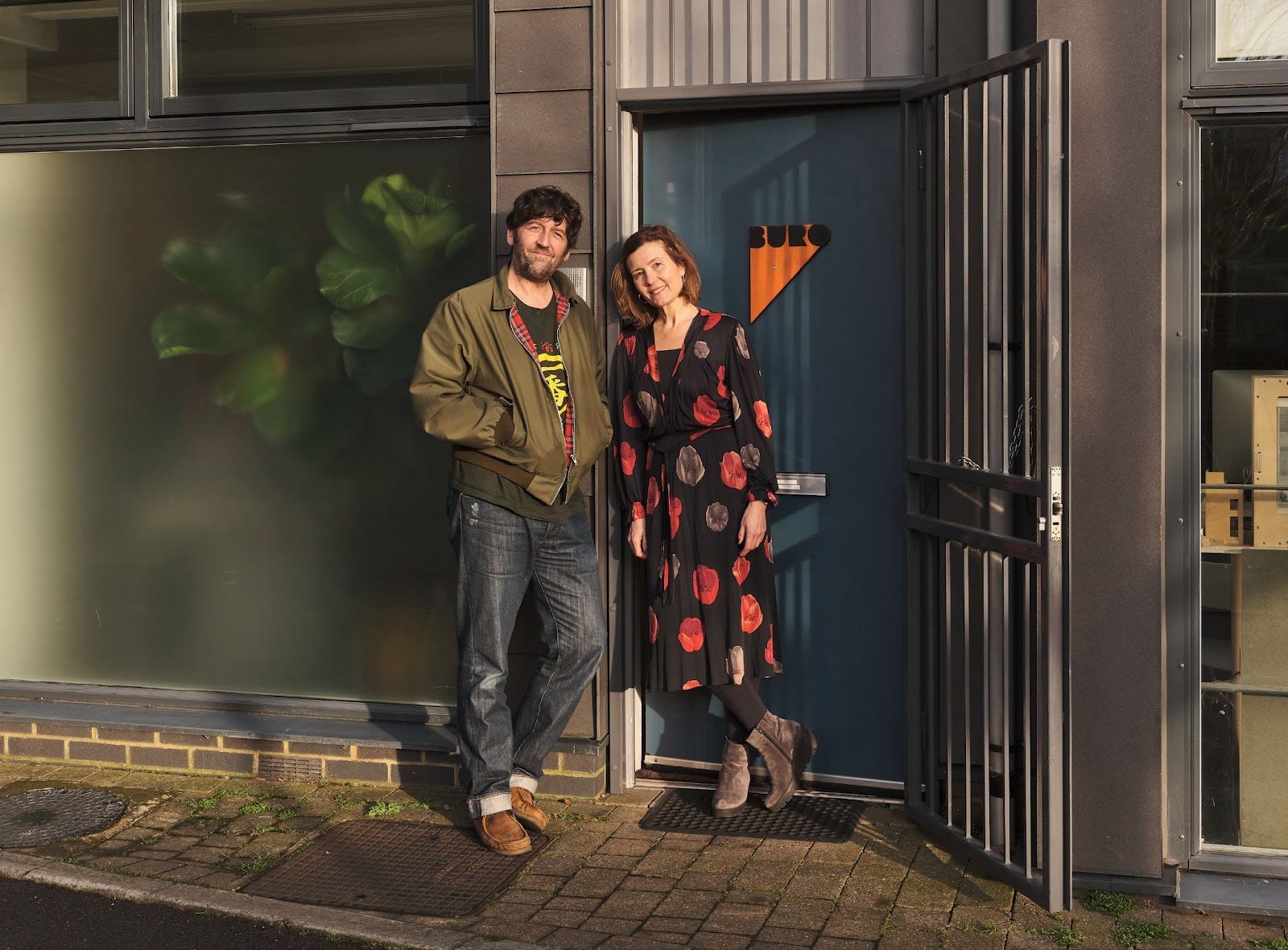
Over the past seven years, Sarah Greene and Phil Fisk have been quietly building Buro – a hyper-local coworking space for creatives nestled in Brockley, one of London’s residential neighbourhoods. Thoughtfully designed from the ground up, Buro’s evolution draws on Phil and Sarah’s creative backgrounds in photography and events, with a strong emphasis on sustainability.
Sarah and Phil’s commitment to keeping things local is woven into everything they do, and their dedication to nurturing a creative community speaks for itself — at least half of their members have been with them for over five years.
In this conversation, Sarah and Phil reveal how ongoing, human-centered improvements propel Buro’s growth, why circularity is a foundational principle shaping everything at Buro, and how small coworking operators can embrace simplicity, authenticity, and hyper-local connections in their spaces.
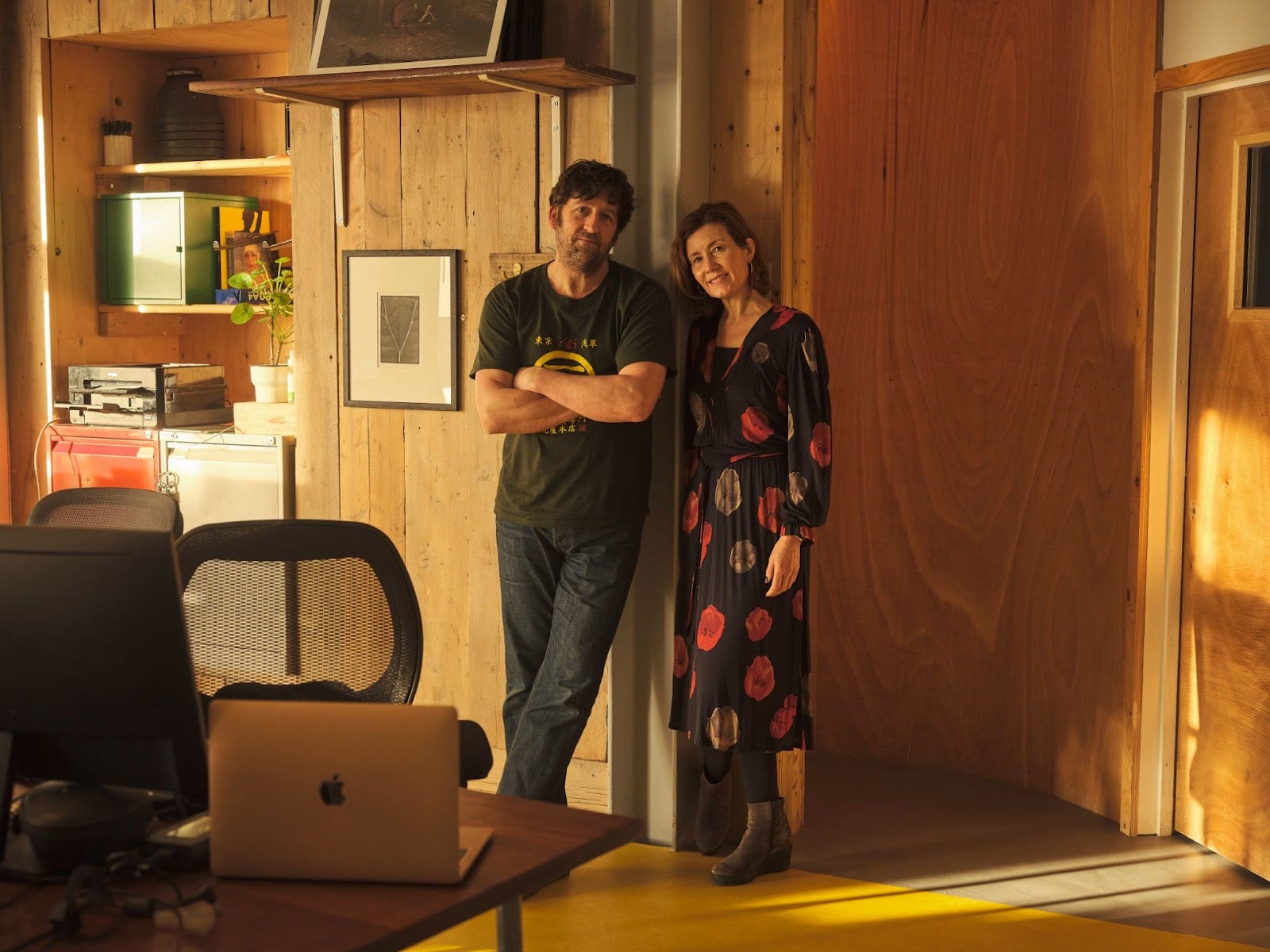
1. What's the journey been like in establishing a neighbourhood coworking space in London?
Sarah: Ours is a typical story where the developers had committed to a certain amount of social housing, and were planning to transform a few units into private residential. The units were previously artist studios where Phil had been shooting as a photographer. As he studied at Goldsmiths in Brockley, Phil knew the area really well and could see the neighbourhood was changing at that time.
We were looking for additional income streams, so the idea of building a coworking space was serendipitous, as it gave us a place to work. Before our space came up, we’d both been in coworking spaces — we always liked its principles.
I saw other coworking operators provide communal meeting spaces. When we first opened Buro, we invested in a studio and communal space for our community to bring their clients here. But we quickly realised they weren’t bringing their clients to Brockley, so we reconfigured the space.
I look at what other coworking operators are doing, and think they must put in a lot of work in to run their spaces. We’re keeping it simple: one flat price, no upselling, no extras – and that's worked for us, although it might not work in other spaces.
It's got to be the right space in the right neighborhood. It’s been seven years now. We started off with great people, who have stayed with us as we’ve grown.
Phil: We’re lucky, because the amount of space we took on doesn't exist anymore, and anyone trying to do it now would struggle. The authorities are building more housing, but smaller industrial sites are being taken over. I’d like to see councils making space on every ground floor of residential flats for small businesses.
You also need to build a space that can adapt, because there could be another pandemic, or heat waves, or a change in the clients you bring in. That’s what we’ve focussed on at Buro.
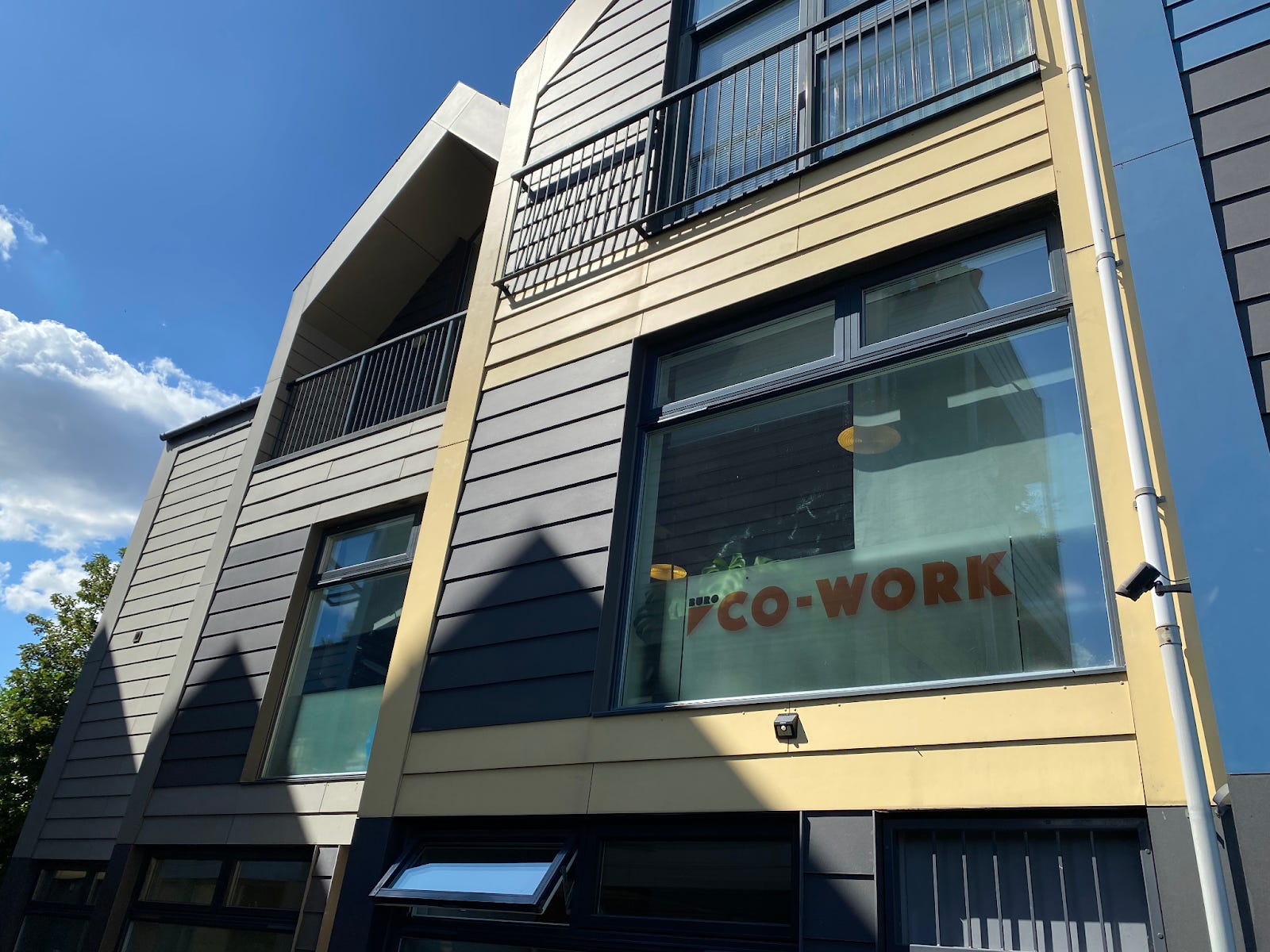
2. I love your approach to sustainability in workspace design — can you share more about your circularity focus?
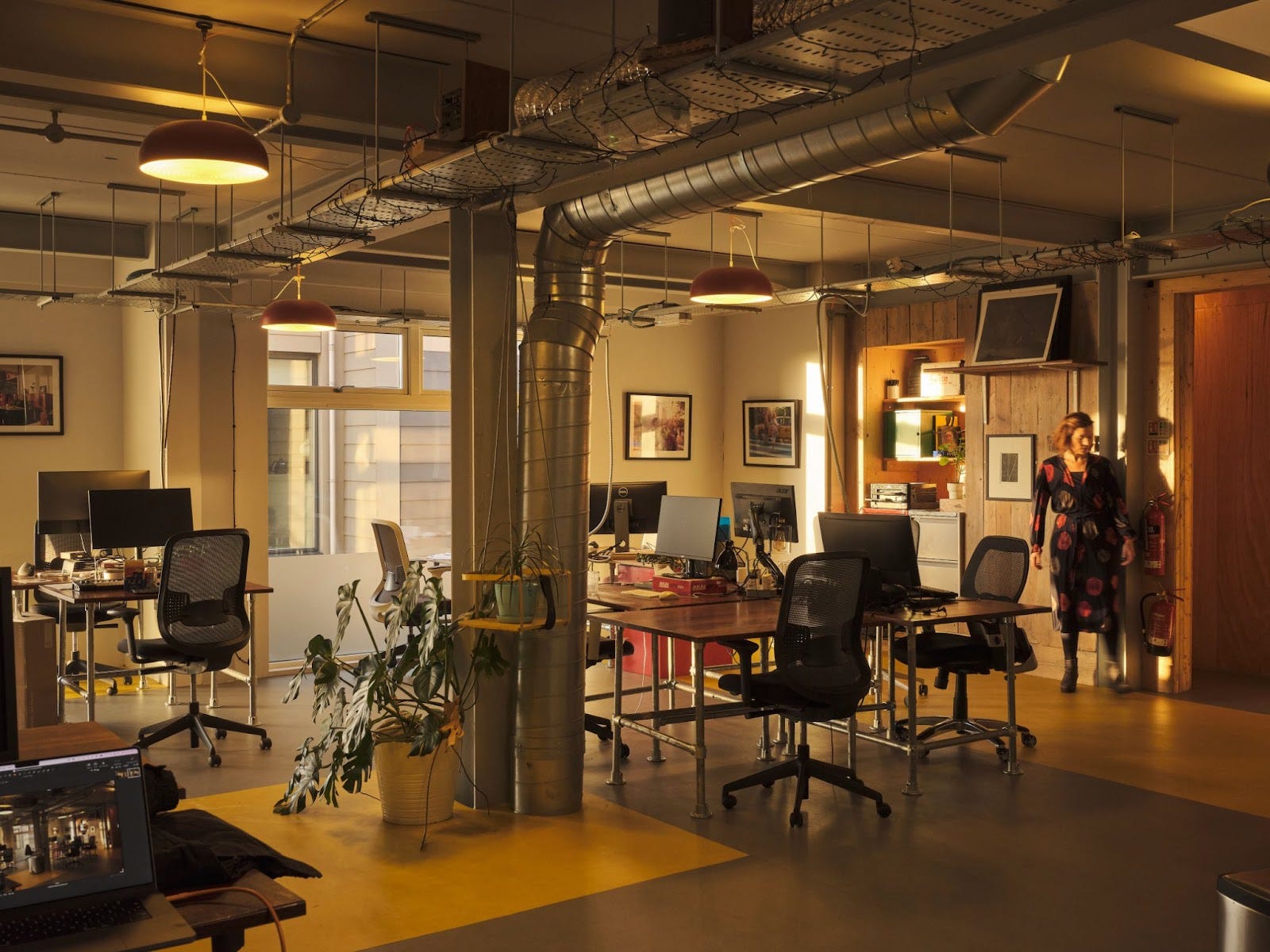
Phil: Buro was a shell when we started. To fit it out, we went to reclamation yards and adapted the space. For example, we reused all the panels from the artist studios to make the dividing walls. For the walls, we used old floorboards and scaffold boards, and even reclaimed a 70s Puffin bookcase for our library. There’s a ‘chic’ look to these pieces.
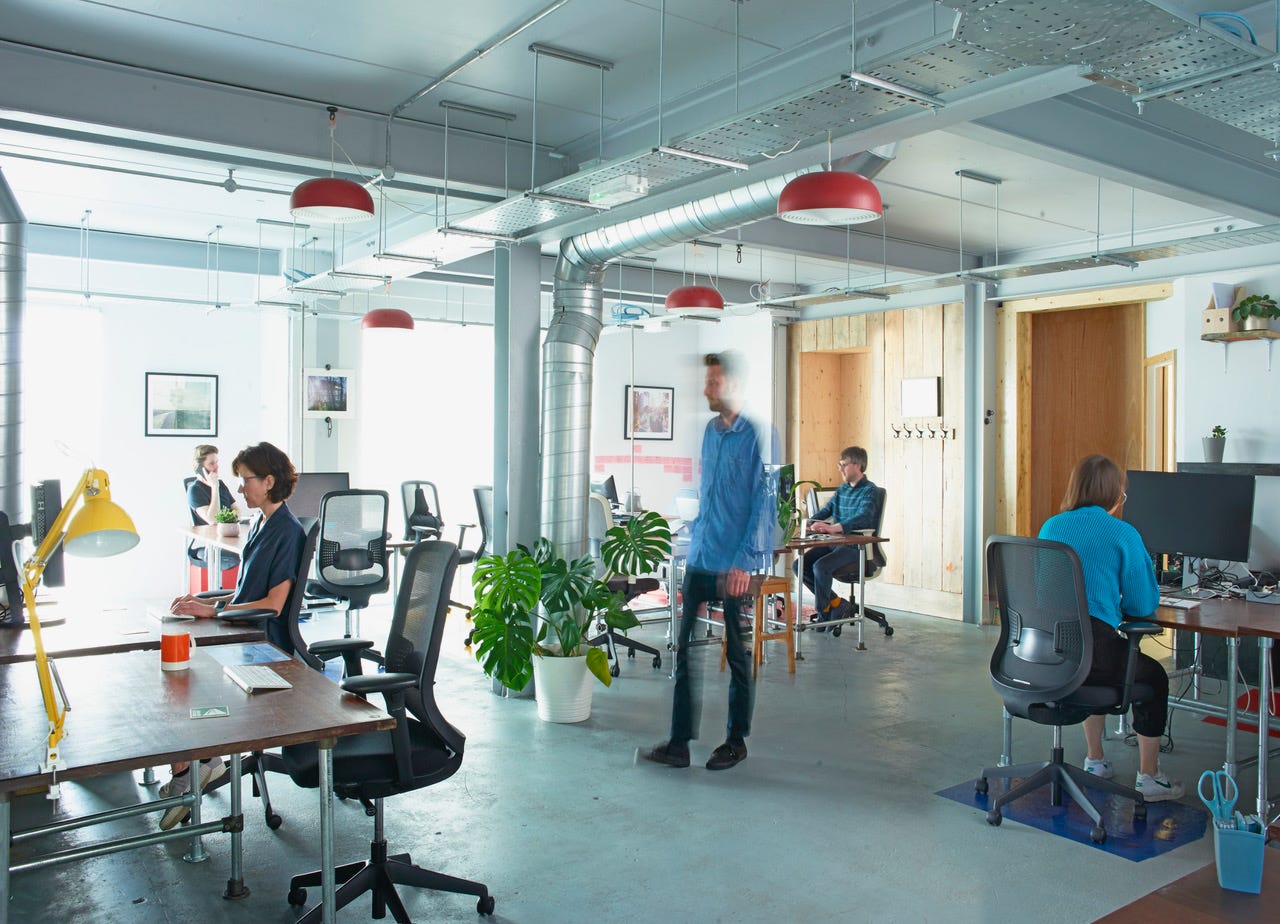
We know many ex-artists, so we brought them in to help fit the space out. We never pack people in – we had massive desks, and were generous with the space, as I know how photographers and animators like using two screens. Those big desks really served us well in COVID.
Sarah: The circularity focus has always been there, and sustainability aligns with our values. I've looked at our whole procurement – we’ve switched to more ethical tea, coffee, and milk brands. We'll always try to buy local or from B-Corp companies for things like our washing and cleaning materials.
Reusing things is the right thing to do, isn't it? Phil has brought creativity to the space – his pictures are hanging on the walls. We’ve also brought in plants and other theatrical touches.
We can be quite self-indulgent with Buro, but we try different things, and the reaction is lovely when people come into the space. After all, we're coworkers too, and we've created a space that we'd like to work in.
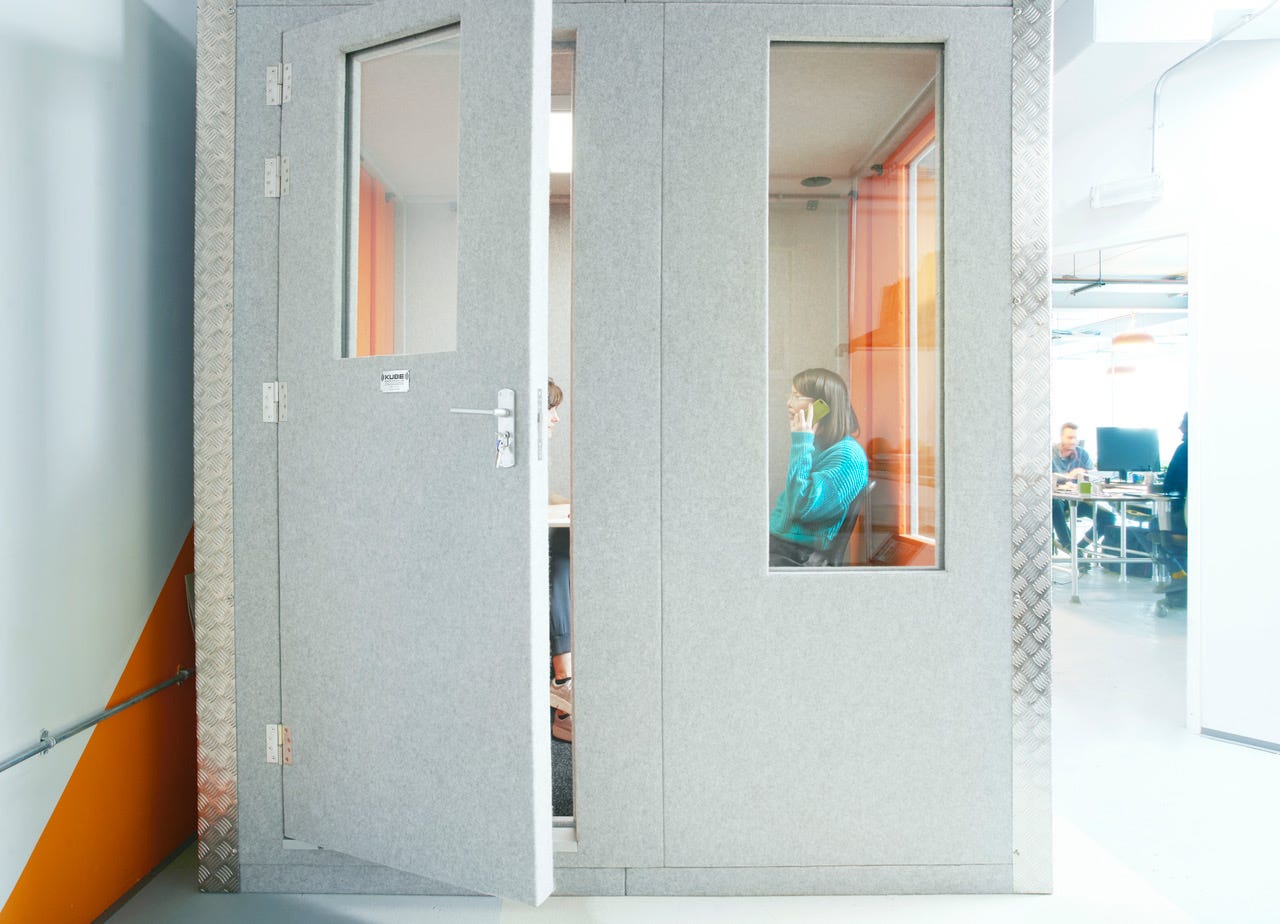
We're always trying to make the place nicer, rather than perfect. For instance, if our artists have art books, we'll build them shelves. We’ve got a soundproof booth for video conference calls, which we put a second screen in. We make constant improvements. In the hospitality business, it doesn't have to be one size fits all. We know everybody pretty well, and most of our community has been with us for a really long time — it's personal and boutique.
There’s no air conditioning or built-in heating in the space. Although we resisted for a few years, we realised that you can’t work in those conditions. A couple of times a year, we rented an AC unit and used old-fashioned heaters. But our running costs were through the roof.
We've always been self-funded. Recently, Lewisham council gave us a small green grant for a new heating and AC system. Although it’s a five-figure investment, it’ll bring down our monthly costs. In seven years, we’ve never closed, but we’ve just shut for a week to install it.
It wasn’t until I started working with the council, which looks at circular models, that I realised the extent to which coworking is one of the most circular business models.
3. How do you engage with your local community?
Phil: We’ve always worked with the local brewery when we host parties. Mont58 Coffee in Brockley delivers all our coffee; they started a coffee grinding business from their garden around the same time as we launched (we were introduced by a neighbour). On our street, there's a bakery, where we encourage our coworkers to buy their bread.
Sarah: We've always tried to work with local suppliers, like for our annual Christmas party, I'll find catering from a ‘mom and pop’ food trader. We've opened up low-rent desks to community and arts spaces. If we can, we’ll always offer a concession if people can’t afford the rate card.
A couple of years ago, Lewisham launched an amazing green audit programme. We scored quite well on the fact that most of our coworkers are local and cycle, walk in, or use public transport.
We’re a commercial entity and not on the high street. People don't necessarily know we're here because we’re a B2B space. However, supporting local charities, school fetes, and arts organisations has been good for business – it’s how we find our clients, like people whose kids go to one of the local schools.
Phil: Our neighbourhood coworker is typically someone in their mid-thirties with two young kids. They’ve got to drop off and pick up, so they need a place where they can work intensely for about 6.5 hours before running out the door to get to school in 5 minutes (without hopping on a hot bus). They might come back to the space after putting the kids to bed, or come in on Saturdays. Local coworking isn’t about table tennis or those “fun” things.
Our community makes connections in our space. After chatting in the kitchen, one of our members hired an architect (another member) to get his extension done. A few of them also get together outside of work to socialise.
Sarah: These kinds of things happen organically, and people support each other. For example, one of our members spoke at the local Telegraph Hill Festival, and some of our coworkers went to support him.
We see other coworking spaces hosting weekly events, and we’ve thought about what we offer beyond desks. We host a Christmas party where our coworkers can bring their partners, and we’ll have a few beers together in the summer. But we’re not doing forced fun. Ultimately, the costs of these things get passed on to our coworkers, even if an event appears to be free. People don’t always want that.
4. How have your professional backgrounds shaped your community?
Phil: I used to work in magazines where we’d do 2-3 shoots a week and then travel back to a lab. Photography felt like a job that always got me out of the house. But when the industry changed, you no longer needed to go out to develop films. I ended up being out on shoots less often, around every 2-3 weeks, and spent the rest of the time working at home. But when I work from home, I’ll find just about anything to do except the thing that I need to do! Now, when I make the journey into Buro, I’ll do 8 hours of solid work.
I knew that running a coworking space couldn’t be a vanity project when we started. I wanted it to be a bit more diverse and a place where I could work. I don’t know if anyone really notices, but I like to put different photos up on the walls, like an exhibition. My philosophy is that I want to walk into a space that I would like, and everyone’s first impression is: “This is a really interesting space.”
Sarah: We spend very little on marketing, but Phil creates great images, and our children are good with social media. We’re about to launch on TikTok because of one of the teenagers!
I've been in the events industry for 30 years, starting with a company in the US, and I now work with brands delivering large-scale events, such as the big UK festivals. The events industry thrives on doing the right thing locally, environmentally, and sustainably. My background is all about understanding what audiences want.
Coworking is a hospitality business – where we make people feel comfortable, provide delicious coffee, and that connection piece.
People want to work with interesting, creative people. Brockley is changing, but we’re doing as much as we can to maintain our creative community. Most of them are freelancers, are gender diverse, and from a mix of backgrounds.
Phil: As we’re attracting more FinTech and UX people, we’re constantly investing in how the IT and the electrics work, and thinking about how the space could work a bit better.
The cost of living and rising house prices in London are unfortunately pricing out its creatives. People sell their London homes and move out to places like Hastings and Margate, thinking they can work from the garden, but they still need those connections.
5. It sounds like you really put your community’s needs first. How do you go about this?
Sarah: When the government called for businesses to shut down and employees to work from home during lockdown, coworking was on a limb. We decided to close and freeze everyone’s payments – it felt like the right thing to do. One member said he just couldn’t work from home, so we wrote a COVID policy for him to come in. Within two months, everyone else in our community begged us to come into the workspace. They lived in small flats or had children. Working from home isn’t all it's cracked up to be!
To accommodate, we brought in measures, such as separating the toilets, but we weren’t policing them. That’s the vibe in our space – we have a mix of cool, interesting people who are very respectful of each other. Coworking spaces attract a certain sort of person.
Phil: Our prices are affordable, and we’ve always been understanding of people’s financial situations. Although we have a policy of no part-timers, we’ll work around it if someone has been with us long enough.
Sarah: Recently, we had someone come back from maternity leave who is with us part-time.
We have a great bunch of welcoming and diverse people. You can put in all the nice things like cool desks and plants, but ultimately, it’s the people who make a coworking space interesting, and that’s what makes them stay.
We’ve almost always been full, and at least half of our community has been with us for over 5 years. People either leave for financial reasons or they move from the area. Our very first coworker is now one of the deputy editors at the FT – I was so proud when I read one of her articles in the paper this weekend.
Phil: One of our claims to fame is that the second series of the BBC TV show ‘Motherland’ was written in our space.
Sarah: We follow our coworkers on social media, and we see their success. We’ve become incubators for a number of creatives who have gone on to set up their own studios. It’s great to feel like we’ve helped them work out their business models and progress their careers [at this point has something in her eye].
About People Make Coworking
The interview series where coworking founders share their journeys of building communities and workspaces. People Make Coworking celebrates the people who make up the fabric of the global coworking movement.
Edition #14 of People Make Coworking interviewed Sarah Greene and Phil Fisk, co-founders at Buro, Brockley’s only dedicated coworking space in London.
If you’d like to share your story in ‘co’, please get in touch. I’d love to speak with you for a future feature.