


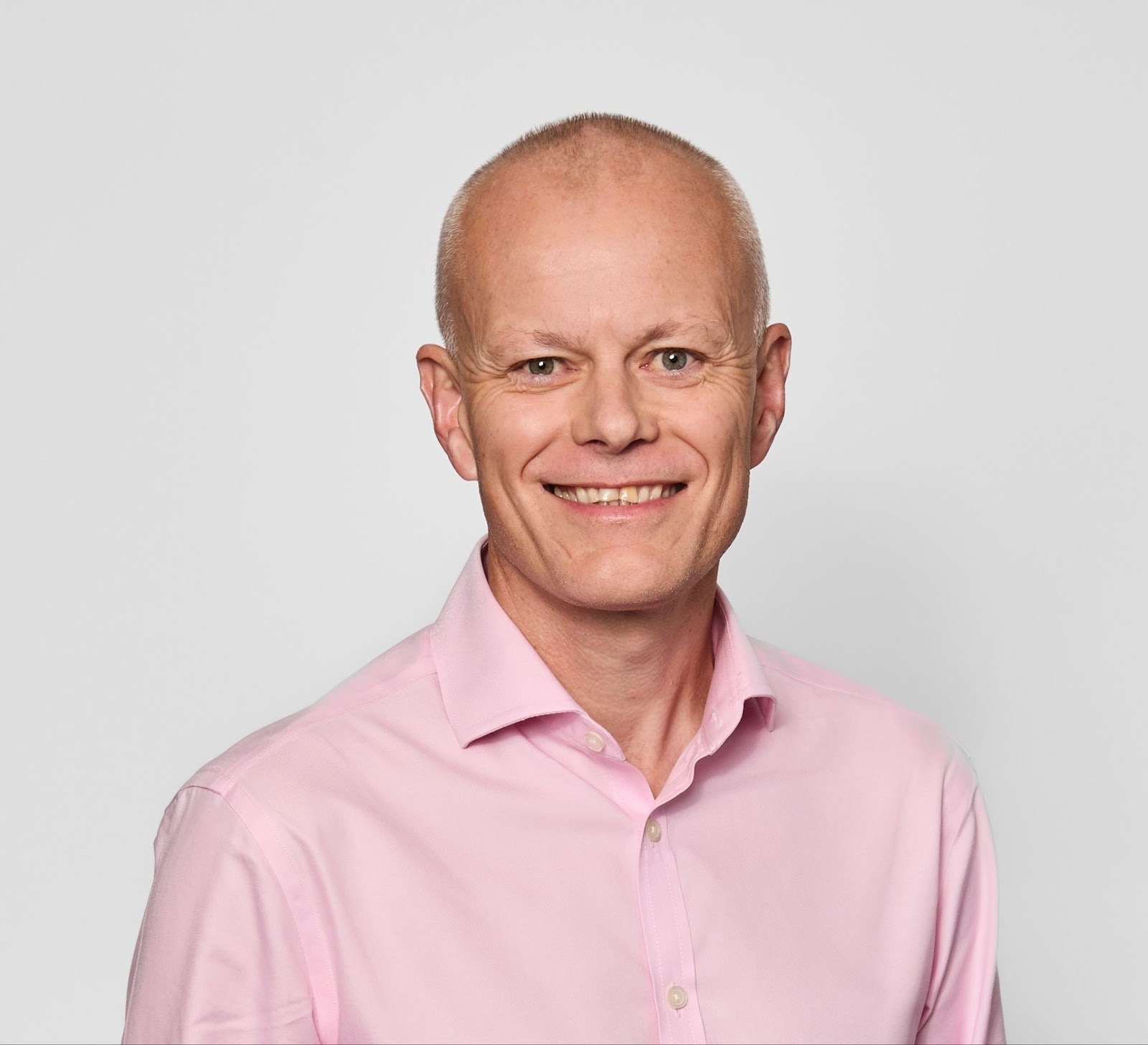
Before John Preece joined Hub Australia, he built a career in traditional real estate working at CBRE, DTZ (now Cushman & Wakefield), and Knight Frank. Alongside that, John was one of the early voices researching and writing about the emerging coworking movement. This laid the foundations for his eventual move in 2018 into an industry he became passionate about.
As Chief Operations Officer (COO) at Hub, Australia’s leading flexible workspace operator, John’s focus is on scaling nationwide as a hospitality-first model that blends premium design, thoughtful amenities, hospitality-led service, and a strong sense of community and brand. While the buildings and services are important, John is clear on what makes Hub thrive: their people.
In this interview, John shares how the Hub brand has scaled nationally without losing the essence of hospitality and community, how Hub implements important environmental and social impact initiatives, and what’s next as the workplace continues to evolve.
1. What’s your journey in the coworking industry been like, and what brought you to Hub Australia?
John: My tuning into the coworking industry was progressive. I started my career in traditional commercial real estate, spending my early years with CBRE in the UK and Europe, before moving to Australia to join DTZ in 2003.
I sparked an interest in the coworking industry around 2009-2010, and started paying attention to what was happening in the US. At that time, the Australian coworking industry was very small, but the market was shifting and the use of office space changing. Coworking was becoming a growing trend, and I sensed that there was much more to it than the simple sharing of space.
This interest led me to write a few papers about coworking targeted at a real estate audience, my clients, and colleagues at the time. Through that work, I got to know some of the Australian coworking operators who were just getting going, along with more traditional serviced office operators. One of those coworking operators was Brad Krauskopf, the founder of Hub. We began collaborating on a few papers and conferences together, including GCUC.
Fast forward to 2016, I was Head of Office Agency at Knight Frank, and leased a whole building in Sydney to Brad for Hub Hyde Park. Around that same time, Brad had secured private equity investment for Hub and was building an executive team to help with its growth. This created an opportunity with equity in what I believed was the best operator in Australia at the time. I would, with bias, say the very same thing today, of course!
Hub was a great combination of a good company, with a clear growth trajectory and capital behind it, in a sector that I'd really grown passionate about. When the excitement didn’t subside, I made the leap from agency into coworking in early 2018 when I joined Hub.
2. How has Hub Australia grown into a leader in workspace experiences, and what key principles guide your team in creating personalised, community-focussed spaces?
John: Hub’s journey began in 2011 in a very modest 200 square metre space, in a quirky Melbourne building called Donkey Wheel House. Around this time, a new wave of freelancers emerged around the globe, stemming from the 2008 global financial crisis. Whilst this was before my time at Hub, I understood that it was lovely and the people were great, but it was pretty tough to make profit. From a financial perspective, it unfortunately didn't work.
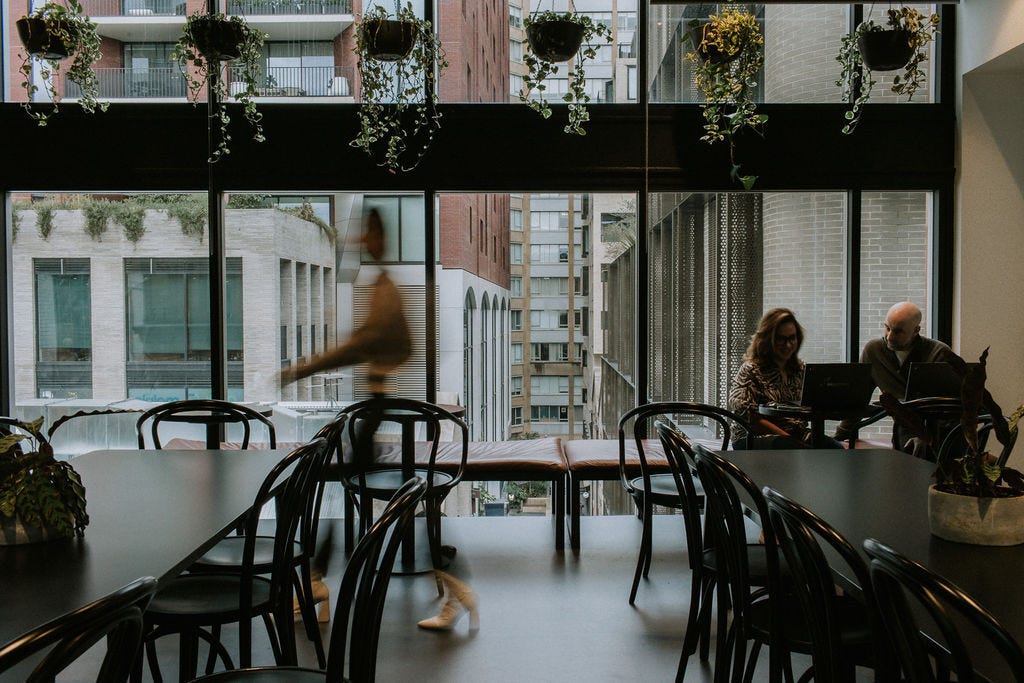
The real turning point came when Brad proved that a hospitality-led service model, with a good range of amenities, a superior member experience, and placing food and beverage offering at the centre of that hospitality experience, actually worked, and was scalable for Hub.
Throughout 2016, Hub Southern Cross in Melbourne, a 4,000 square metre space, was designed and built, opening in January 2017. Ironically, it’s directly opposite Donkey Wheel House. At the time, Hub Southern Cross was the largest coworking space in Australia, and certainly the first to have F&B central to the hospitality offering. That was a bit of an industry game-changer.
WeWork only arrived in Australia in late 2016, but its model woke up a few investors to the opportunities in the Australian coworking sector. That allowed Hub to raise capital and roll out more of the larger format, amenity-rich, and hospitality-centric spaces, the start of Hub’s growth trajectory.
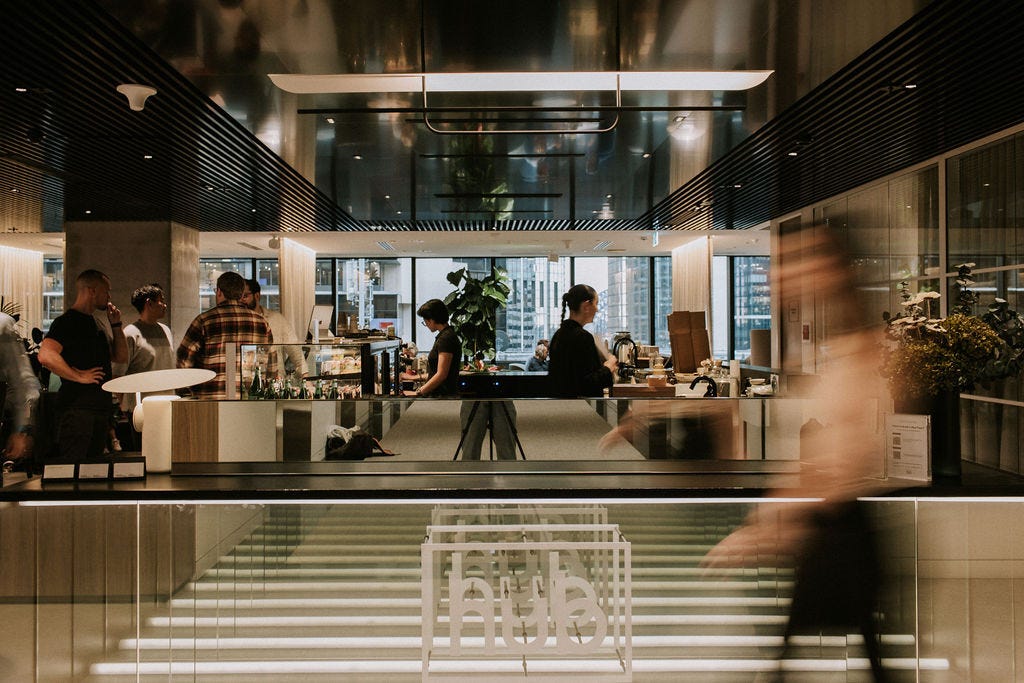
We're a hospitality business, first and foremost. The desks are what people think they're buying from us, but that's just a commodity. The real value of what we do is the experience we provide.
We offer a broad range of amenities, great service, flexibility, and we make sure that all of our customers, their guests, our landlord, partners, in fact, anyone that steps foot across the threshold of a Hub space, have a great day at work. That’s what really underpins everything that we do.
And no surprise, what brings that to life in all of our spaces is our people.
3. How do you prioritise environmental and social impact in Hub’s daily operations?
John: For many years, impact has been an important part of our brand proposition. We genuinely believe that businesses can and should be a force for good, beyond just making a profit.
We were one of the first businesses in Australia across all sectors, and definitely the first coworking operator, to become a B Corp. That provides a really good framework for operating an impact-driven business, and holds you to high standards of social and environmental performance, transparency, and accountability. It's intentionally quite challenging, but that's something we've maintained year on year since 2013.
This resonates with our customers because it provides them with a tool for attracting talent to their businesses in the knowledge that they're in a space with values beyond just making a profit. It’s equally important for attracting employees to our own team.
Every one of our locations has been carbon neutral since 2020. We manage it through the Australian Government's Climate Active Programme. This is again valuable for our customers and employees.
There are a few other layers that sit around that. From a social enterprise perspective, we have a Flexi Impact Program, where we give away 1% of our desks every year to not-for-profit and social enterprises. They can come into our space, enjoy the benefits of the community free of charge, and grow their enterprise or not-for-profit. We're always over-subscribed for that, which is really nice.
We've also got a Reconciliation Action Plan, endorsed by Reconciliation Australia. That's our pledge to build meaningful relationships with indigenous-led businesses and communities, supporting Aboriginal and Torres Strait Islander people.
4. As Hub expands to new locations, how do you ensure each site reflects the mission and core brand values while adapting to local needs?
John: We've got 16 locations right now, and are growing steadily. We’ve recently launched our first Perth location, we have a second location in Adelaide opening shortly, we will open a second site in Perth in February, and we've just signed a management agreement for a second site in Canberra.
We aim to balance the scale of a national network while retaining local identity and the warmth of local clubhouses. It means that people in their own community and in their own space feel like part of that community, in that space, but also have access to the full national network.
We’ve taken a place-based approach, so we intentionally don't adopt a one-size-fits-all approach. We invest in understanding the character of the building, the likely customer demographic, the location, and the city it’s situated in.
For instance, Hub Collins Street (Melbourne) is in a beautiful old heritage building. Hub Hyde Park (Sydney) is an old department store with character. Meanwhile, it’s a different climate at Hub Anzac Square (Brisbane, Queensland), where we have a heavily popular rooftop. Parliament Station (Melbourne) is designed in the Le Corbusier style. In contrast, Hub Elizabeth Quay in Perth is a brand new office development.
Different customers like different things. In Sydney, Customs House is right on Circular Quay — a state heritage building with heaps of character. We've designed it with a darker edge. But, just around the corner, is Brookfield Place – a modern, premium-grade glass tower. Those two customer bases aren’t going to like the other building. So, customer demographic really plays into each of our locations.
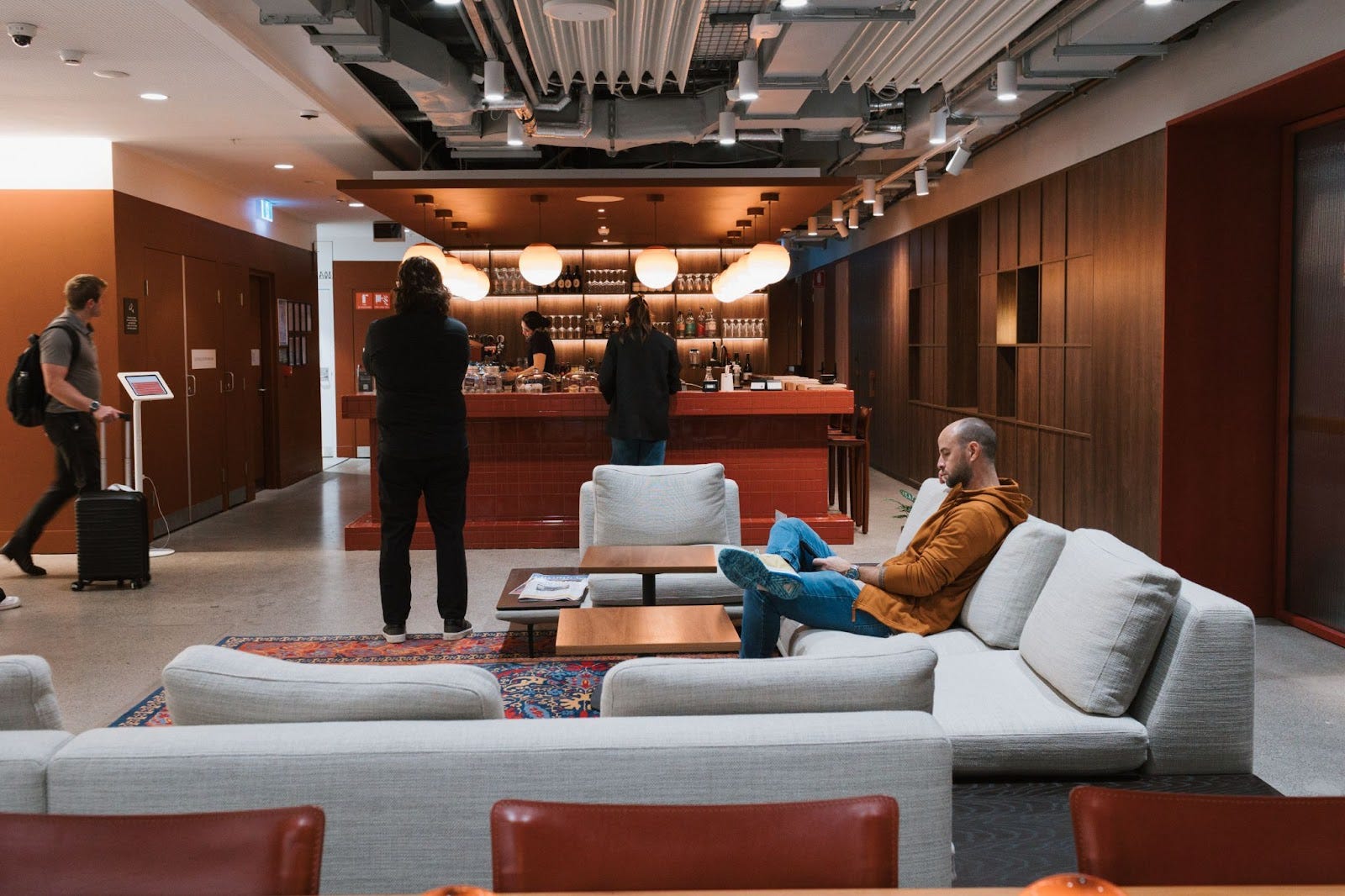
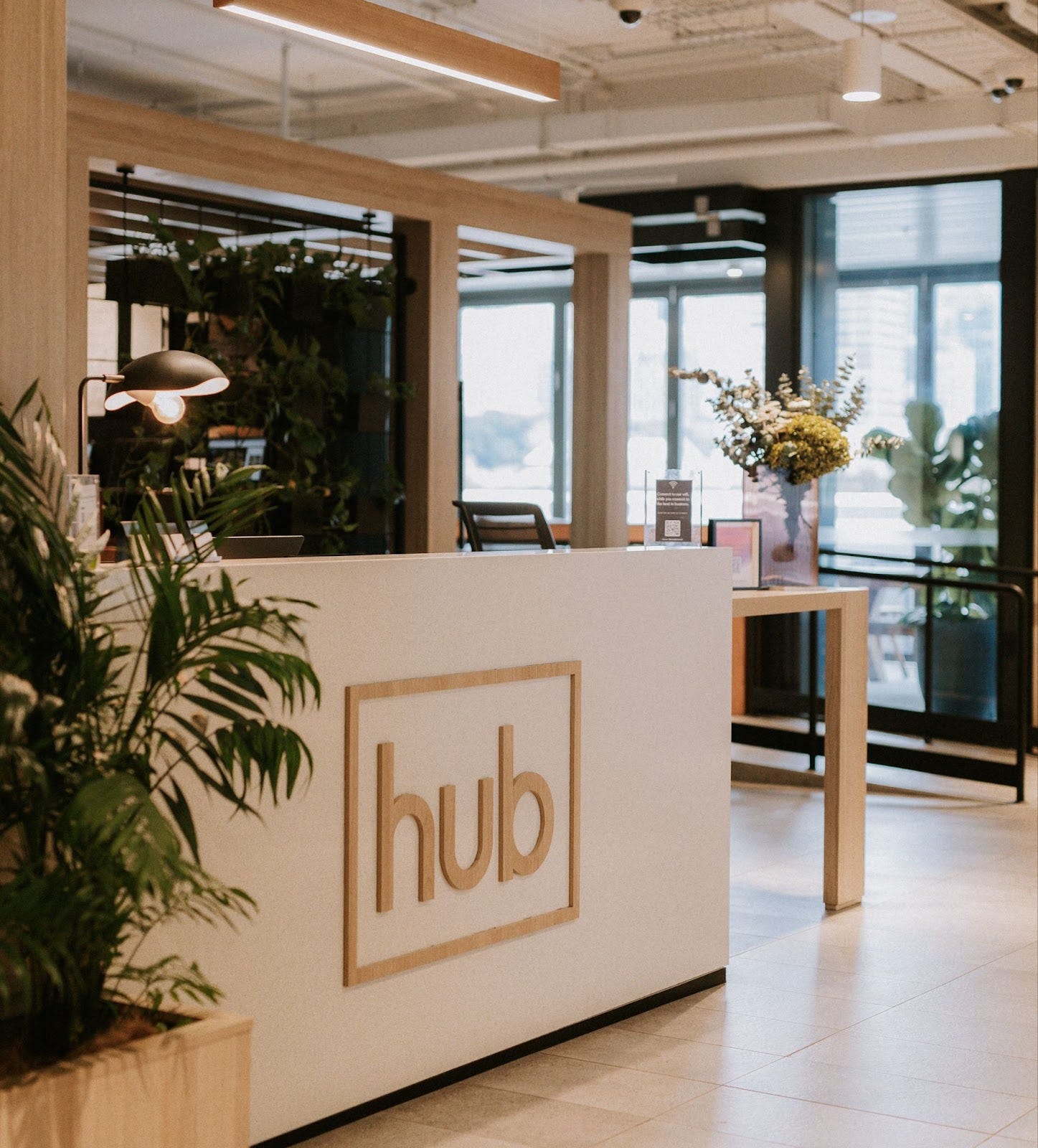
From a design perspective, they've all got their own unique character. But if you walk into one of our spaces, it should feel like a Hub. Not just because there's a sign on the front desk, but because of the consistency coming through the hospitality and service, along with the functional backbone of the space. Our customers can go from site to site and intuitively know how the space works and how to find their way around.
We're growing at such a pace that we can afford to spend the time to engage the right designer for the right asset, and the right community for that space. So, they've all got their own unique flavour and spin on what is essentially Hub, but they're all in different locations, in different buildings with different communities in them. So that's been really important to us.
We've pivoted now in how we approach partnerships with landlords. When you're doing a management agreement, the landlord has a greater say in various things around how you run the business and how you design the space. Those partnerships are fantastic for us, providing us with a different spin on how we interpret some of the brand aspects.
For example, we're about to open our second site in Perth in partnership with Brookfield Properties, calling it ‘One Two Five By Hub.’ It’s a sub-brand that allows us to be a little bit more creative on the design side and work with what Brookfield desires for that particular asset and their tenant base.
5. Are you seeing any new types of amenities that Hub customers are asking for?
John: You've got to be careful when you put great weight on what people ask for, because you do get some weird and wonderful requests. You've got to consider what’s a gimmick and what has genuine meaning for customers.
Some of our amenities are a baseline offering, like gymnasiums - or what we call ‘move rooms’ – along with relaxation and wellness spaces, parents' spaces, recording rooms, and a range of lounge and meeting spaces. But we're also experimenting with listening rooms that are linked to wellness — a place you can go to switch off, relax, and listen to music with record players, vinyl, and an immersive theme. In some of our spaces, we've got our food and beverage offerings, cafes, and bars.
Looking further afield at some of our competitors, we’ve seen things like golf simulators and games rooms, but they don't fit all spaces. When I go overseas, I'm always intrigued to see what other operators are doing. I'm heading to Chicago for GWA next month, and I'll be getting around as many spaces as I can to see what's happening. London is where I’ve been most impressed – the market is really mature, and the intense competition drives creativity.
I love the design of some of the wellness spaces and shared spaces. For example, open auditoriums where you don't have space to enclose them, and then dealing with privacy through technology, microphones, and noise-cancelling headphones. We tinkered with a silent disco room a few years ago, but that didn’t last very long!
Because every square metre is so valuable, it either has to generate revenue or be an amenity for the customer. If it's not doing either of those things, then that's a problem.
We’re always keen to experiment with what’s next. For us, it’s doubling down on getting the hospitality, F&B, and business lounges right first, before focussing on the amenities around that. We’re keeping an eye on the broader expectations of the workforce, not just in flexible work, but also what we’re seeing in some of the amazing workspaces that corporates are delivering for themselves in leased spaces. We can definitely lean into that.
6. What are you most looking forward to about the future of coworking and flexible workspaces?
John: The evolution of the office sector is fascinating. Changes in work practices are well documented (there's still a binary argument around that), but it’s forcing a change in how office space is used and what landlords need to provide to attract quality tenants. Obviously, that's where flexible workspace can really add value.
The office used to be a sort of production line for tasks; now, businesses see the office as a strategic tool. For some of those businesses, that still means a traditional lease on a long term, but they're probably designing and using their spaces in a very different way. For others, it means pivoting into the flexible workspace sector, or it’s an element of both – some traditional office space for headquarters while utilising flex space for projects and branch spaces.
I find that shift and evolution in workplace practices fascinating. The outflows are only positive for the flexible workspace sector. Alongside that is the flight to experience, impacting landlords, who can't just provide white box office space anymore.
There's also the amenity play, the service, the workspace hospitality. What does that mean for buildings? Coworking operators are really well placed to step outside of the usual bounds of flexible workspace and into that whole building amenity and service offering.
Operators are developing strength in the brand, consistency in the brand offering, and what that stands for to them and their customers. We’ve seen that already, but I can only see that really firming up.
We look at the flex space industry and the coworking sector, like we do with hotels, and you'll know a hotel that you would love to go on holiday tomorrow if you had the money, and you know a hotel where you’ll stay if you're on a business trip. They're probably two different things, for a reason, because your needs differ, and those hotel chain brands offer different things. Likewise, brand in the flex space sector will become paramount - businesses will be drawn to workspace brands that align with theirs.
But on top of all of that, coworking is in a really great spot at the moment. It was tough coming out of Covid, but we're on the other side of it now. Demand shifts have changed the very nature of work and how workspaces are used, and now we're seeing opportunities growing out of that.
All of this, absolutely everything, is really positive for the sector, so we’ve got a lot to be upbeat about.
About People Make Coworking
Celebrating the people who make up the fabric of the global coworking movement, People Make Coworking interviews coworking founders who share their journeys of building communities and workspaces.
Edition #15 of People Make Coworking interviews John Preece, Chief Operations Officer at Hub Australia, the country’s leading flexible workspace operator.
If you’d like to share your story in ‘co’, please get in touch. I’d love to speak with you for a future feature.
Thanks for creating this wonderful summary of our conversation Lucy, I thoroughly enjoyed the time we spent discussing our great coworking industry!