


Stacey Sheppard discovered coworking around 2008, as she was exiting her career in publishing to focus on writing about interior design. After building a multi-award-winning interior design blog, Stacey reached a pivotal moment in her career where it was time to pursue what she felt was her life’s purpose: bringing people together. In 2020, she launched The Tribe, a coworking space for women, in the rural area of Totnes, Devon.
The Tribe was intentionally designed as a small, sensory, home-like workspace that naturally encourages community interaction. But there’s a deeper purpose to it: addressing systemic barriers women face, especially for those starting and running a business.
Coworking can lead to business growth, connection, and personal development, not just for women, but also for people facing unemployment in an increasingly AI-driven world. Alongside running The Tribe, Stacey is also co-founder and editor of Athena Magazine, supporting women in business across Devon.
In this interview, Stacey reflects on launching a successful rural space for women, why coworking can create pathways for entrepreneurs in the age of AI, and how the coworking industry should evolve to empower more people in the future.
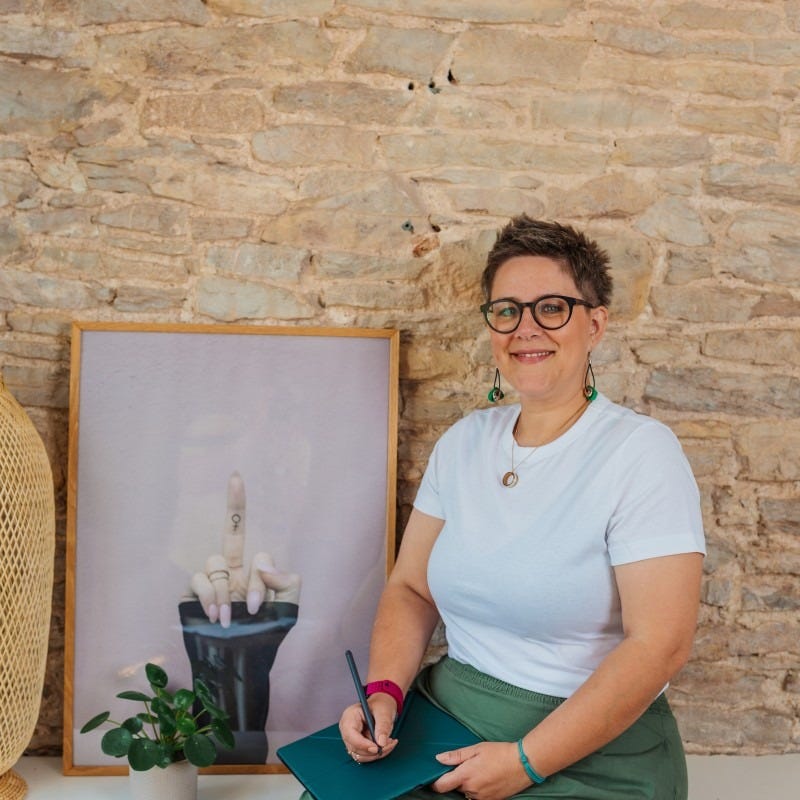
1. How did your previous coworking experiences influence you when you founded The Tribe?
Stacey: I discovered coworking by complete accident around 2008, when I read an article about it, and straight away knew this was going to be the future of work. I had no idea what coworking was before that. I just had a strong, bodily feeling that this was going to be huge, and everybody should know about it.
At the time, I was hatching a plan to exit my job in publishing and focus on my freelance interior design writing and my interiors blog. I decided that in the absence of a team, a coworking space was just what I needed, so I started googling and found one to try.
I had such high expectations for what the space could be, but as I sat at a desk, looked around, and saw people dotted around the room, I just thought, “How am I going to interact with those people?” There were so many invisible barriers; it felt like I’d be interrupting them if I went to talk to them.
The space once hosted a coffee morning where we were all ushered into a glass office for forced conversation. I enjoyed it, but we just went back to our desks afterwards. The coworking space just wasn’t living up to my expectations, and I got really disillusioned with it and eventually left. Shortly after, the place shut down. I wasn’t that surprised, because it just didn’t offer anything other than desks and Wi-Fi. I was so disappointed that coworking didn’t meet my expectations.
I looked for another coworking space and found a creative space. It was better, with more of a buzz and sense of community than in the first place, but again, I sat by myself and struggled to integrate. It felt like a waste of money because I was alone most of the time, and no one welcomed me. So, I left that one and almost gave up on coworking altogether. It was obviously not working for me in any of these spaces.
I didn’t really think about it much more until a couple of years later, when the first WeWork spaces opened, as it reignited my interest in coworking from a design point of view. It felt like an advancement because the WeWork spaces looked great, and I really believe that workspaces shouldn’t have to look like a boring corporate office. It got me quite excited, although I didn’t want to go to a WeWork.
Then I started seeing the female-led spaces popping up in New York and London. I really wanted one here in Devon, but I felt that no one’s going to try that in Devon. It just doesn’t make any sense on paper. But I quite like a challenge, and thought maybe I could make it work.
At the time, I was speaking to a business coach to figure out my next move in my writing career. I’d reached all my goals, written for the publications that I wanted to, and won lots of awards.
He said to me, “Go home and think about what you really want to do.” It quickly became apparent that what I really wanted to do was open an all-female coworking space.
2. What was The Tribe like when you first opened?
Stacey: Our first space was a converted house above a bookshop, which was completely inappropriate for a coworking space. The main office was probably the living room, and the smaller office was a tiny bedroom. There was a precarious staircase up to a toilet, and a kitchen downstairs.
If I were looking for a coworking space, it’s totally not what I would imagine, but it was all I could afford at the time.
I’d worked online as a writer for so long before that, I really doubted whether I could even run a bricks-and-mortar business, and I was petrified at the thought of paying all these bills every month. I needed something small to test the waters and see if I could even do it.
The Tribe opened in January 2020 and, obviously, shut down in March 2020 when the pandemic hit. We struggled to access government help because I was still in the handover period of my lease with my landlord (who was still down as the business rates payer and received all the relief). It took ages to undo all of that, but we survived the pandemic.
In 2023, we’d built the momentum again, and I felt like we could take off. But my landlord then announced they were selling the building. Luckily, they were buying a new building and said we could move in there, but there were legal complications throughout the process, and the move kept getting delayed.
I somehow managed to keep the community together; we worked in coffee shops together once a week, which was awful because it wasn’t what we were used to.
Six months after we moved out of the first space, I was ready to give up, and I was quite angry about it, because I really felt like this is what I’m meant to do with my life.
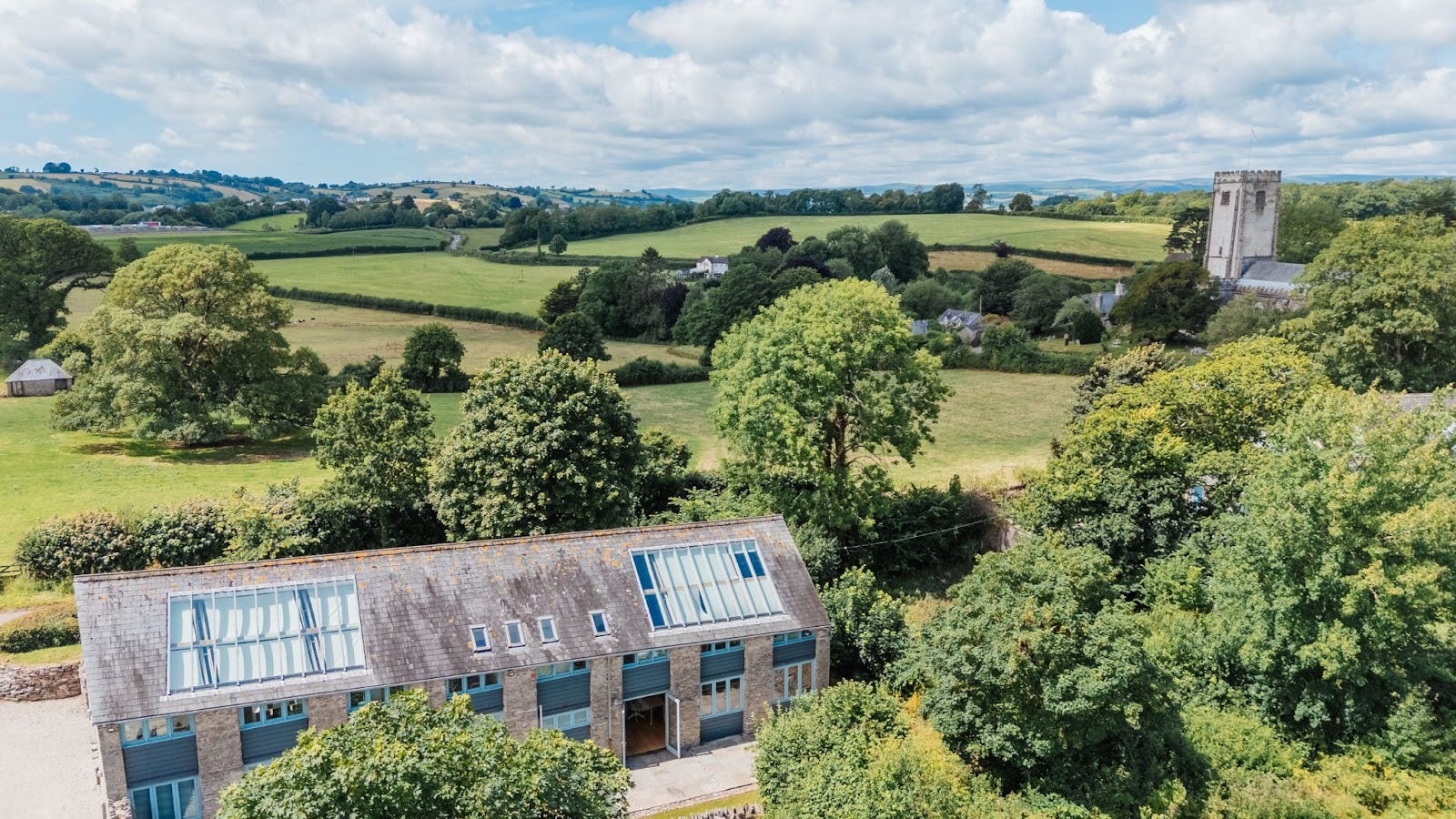
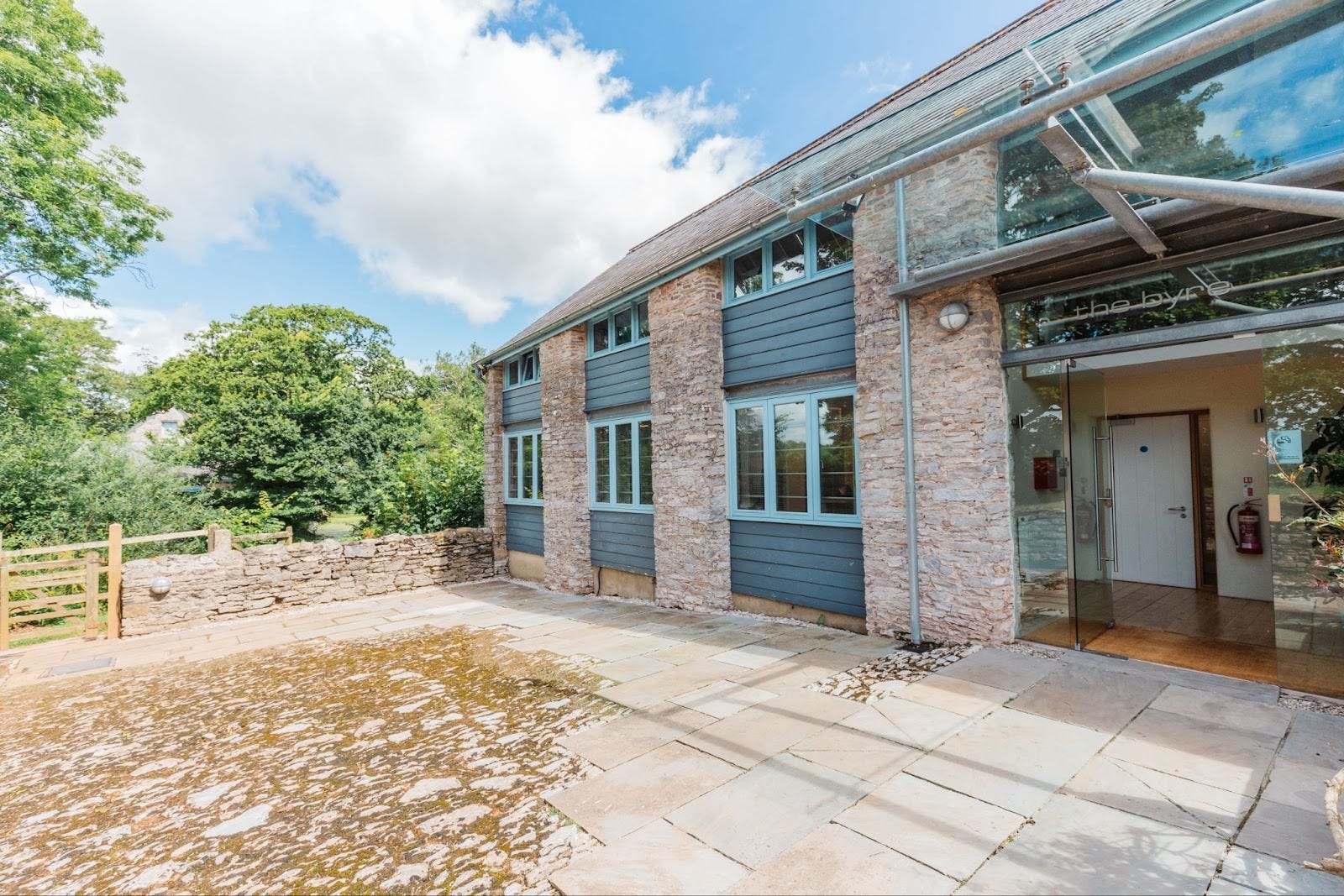
But instead of giving up, I looked on Rightmove and found the place we are in now. It’s an incredible converted barn in the middle of a beautiful rural village. I can’t tell you how wonderful it is.
I’d realised that I’d actually looked at this place after the pandemic, when I realised everybody needed a Zoom room, and we had no space for one in the old place. At the time, I wasn’t thinking of moving, but just had a look around. This place was way too expensive, but they’d just reduced the rent, which made it slightly more affordable. All of a sudden, it became a possibility.
3. How do you design a coworking space that naturally brings people together?
Stacey: It was really intentional for me to find a tiny space, because I didn’t want to get into a situation where you’ve got a vast open space and no one talking to each other.
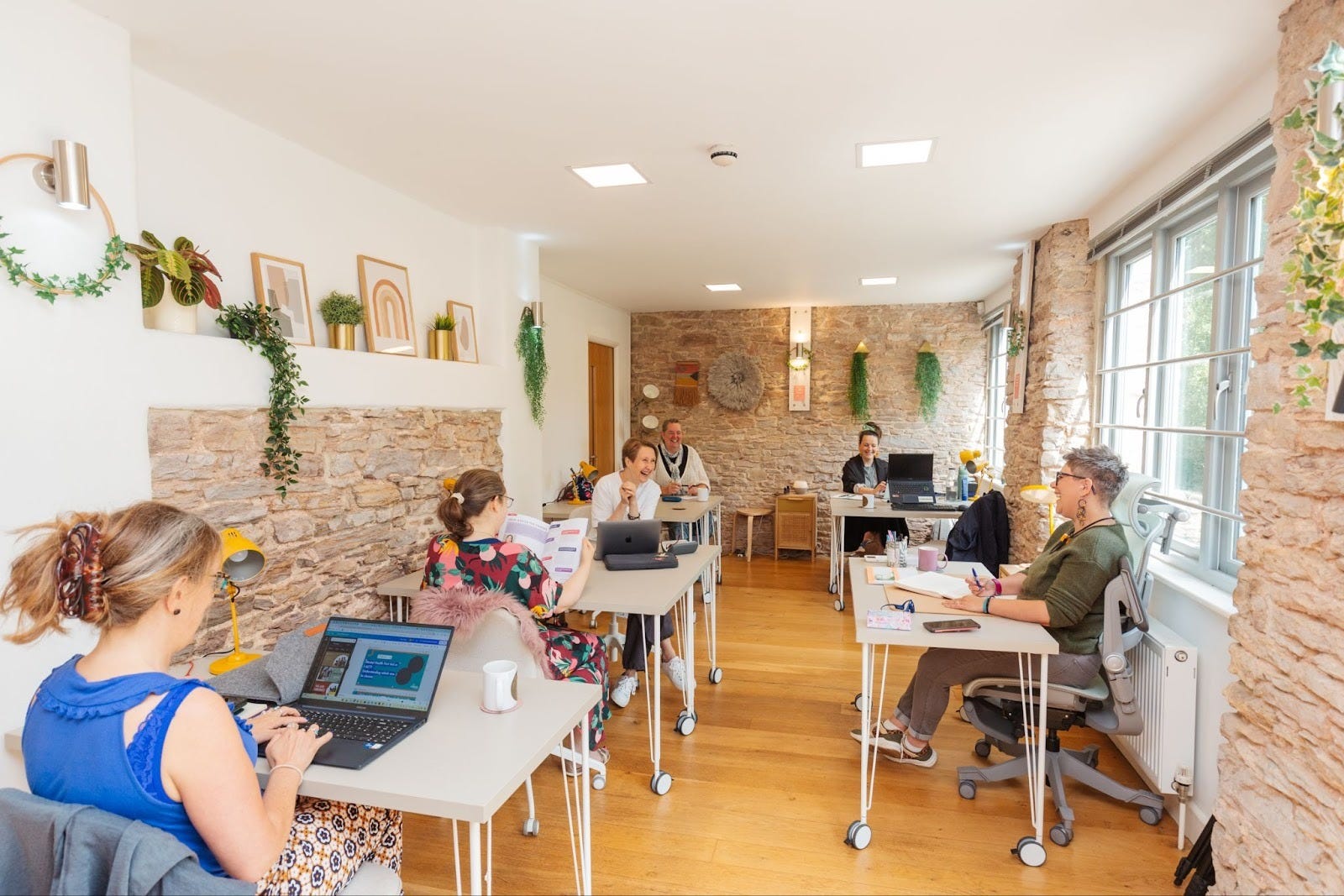
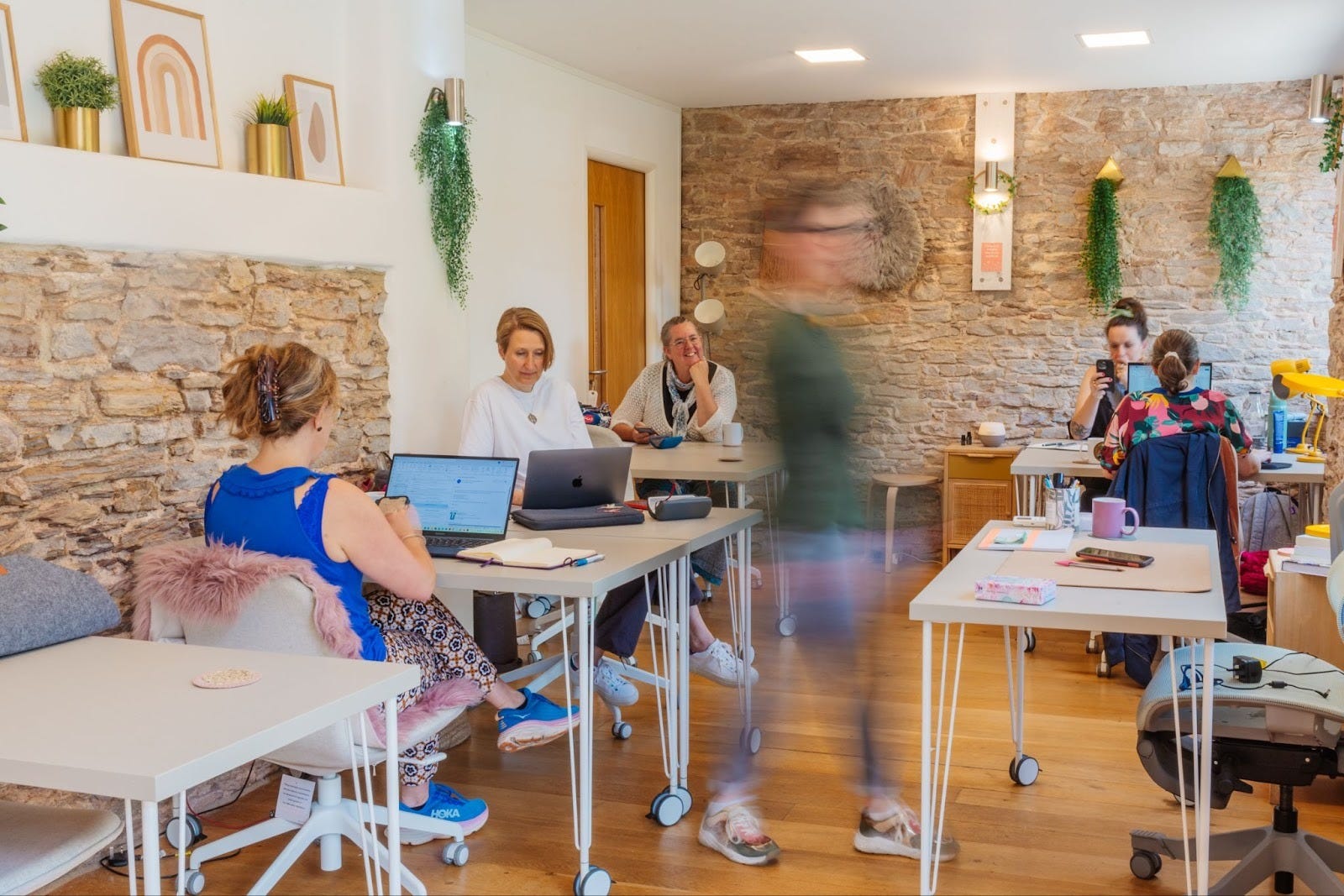
We only had eight desks in total – five in one room and three in a slightly smaller room. People had their own individual desks, but they were sitting right opposite or right next to someone. There was a small gangway between the desks, and you had to walk past everybody else in the room to get to your desk. I wanted to make it so that you would be more uncomfortable not talking to the people in the room.
As it was small and could only hold a certain number of people, they got to know each other quite quickly. You can scale a community once you’ve got a community, but it’s much harder to build a community from an array of strangers in a giant space.
From a design perspective, I was obsessed with biophilic design and bringing the outdoors in. I just hated working in sterile corporate offices (it’s just so inconducive to creativity). It seems ludicrous to me that everyone designs workspaces like that.
I wanted my coworking space to feel like someone’s home office, with really earthy, grounded, natural colours. But the light in the room meant that it didn’t work out. So, I used pink instead; I didn’t want it to be a pink coworking space for women, but it just turned out that way. I also brought in lots of natural materials and plants to give the space a sensory feel.
4. What key business challenges do women face that The Tribe is specifically designed to help with?
Stacey: When I was researching whether or not it was a crazy idea to open a space for women, I came across Natwest’s Rose Review, which details the main barriers and challenges that women face when starting and growing a business. My first thought was that I can’t solve this. It’s systemic.
There are major barriers, such as caring responsibilities. Obviously, it’s better to have a coworking space with childcare, but I couldn’t afford that, nor did I have the space. But, when I stopped to think about it properly, I realised that there were plenty of things a female coworking space could do to support women overcome these barriers.
Challenges like risk aversion or risk awareness, for example. It’s not that women don’t take risks, but we take more calculated risks. Sometimes, this can stop us because we worry we might fail, so we might decide not to do something. When you’re in a room with other women who believe in you, they can peer coach you through that and help you see that you can do that thing or absorb that risk.
There’s also the perceived lack of experience or skills, and imposter syndrome. We can peer coach each other through that, too. Another one was a lack of relatable mentors, role models and networks. I can become that version of me who thrives at a networking event, but I don’t enjoy it, and I feel drained long afterwards.
Coworking is networking, but it’s more intense, more in-depth. You’re not just turning up to give your elevator pitch on the third Thursday of every month, and then you can’t remember all the people you’ve spoken to. With coworking, you’re sitting with those people for eight hours a day, which drastically speeds up relationship building.
You get to know your coworkers on a much deeper level: what do they want from their business? Who is their ideal client? What are they working on next? What kind of support do they need? You get to know that intimately, and then you can advocate for those people in the rooms that they’re not in, because you know them well.
When a new person comes into our space, and someone asks — “What do you do?” — they don’t realise, but they’re actually practising their elevator pitch. In the beginning, they can’t articulate it, and downplay their achievements or what they’re trying to do. But over time, I see them getting much more poignant and tight with their pitch. It’s really nice to watch these women grow in confidence.
I knew I didn’t have an abundance of resources or the financial backing to help women in the way they really needed. But I knew that even starting with the very basics would be enough to make a tangible difference to local women. I decided I’d rather do that than not try at all.
5. With AI changing the way we work, what role do you think coworking spaces can play in creating pathways for entrepreneurship?
Stacey: Honestly, it’s integral. If the mass unemployment prediction transpires to be true, I don’t think people will just sit around and accept it. A lot of people will start their own business out of necessity.
If you’ve been employed your entire life and aren’t born with an entrepreneurial spirit, or that feeling that you’ve always wanted to start your own business, you’re going to struggle to navigate that journey.
Government research has identified that there’s no defined pathway to entrepreneurship in the UK, so where do people go for support? There is support out there, but it’s from disparate organisations, offering a variety of business support programmes, a six-week bootcamp here, a one-to-one there, or a free meeting with this expert here. You’re getting the knowledge or training, but there isn’t really any ongoing wrap-around support.
The way I see it is that support is found in your local coworking spaces. It’s in your community, your town, your city; it’s local to you.
It’s permanent, so you’re not waiting for that monthly networking meeting to find like-minded people, or someone who can give you a bit of perspective, or celebrate those wins with you.
Coworking spaces are open all the time, and they’re in all different niches. My coworking space is for women, but in Devon, we’ve got a network of over 20 spaces overseen by the economic development department of our local council. One workspace down the road from us is for social enterprises. There’s another one which is big on outdoor pursuits and wellbeing, and another that offers a tech community.
There are all these different niche coworking spaces, so you can choose the one that meets your needs, and work alongside people who have already done what you’re hoping to do. Coworking spaces can offer that wraparound support, which is so badly needed.
Coworking spaces are the pathway to entrepreneurship. The coworking industry knows that, but I’m not sure people beyond the industry realise that yet. I just wish that the educational institutions and various business support organisations would signpost more to coworking spaces, as workspaces already have an entrepreneurial community and offer ongoing support.
We definitely need to be making more noise about the benefits of coworking and the role that these spaces can play in bridging the gap for entrepreneurs. We have a huge opportunity to show that coworking is the pathway to entrepreneurship, but to make this happen, we need to work together as a cohesive ecosystem.
6. What would you like the coworking industry to do better in the future?
Stacey: The coworking industry needs to come together more as one singular voice to position ourselves a bit better. At the moment, we’re all treading water and trying to survive in this challenging economic situation.
I don’t think coworking is the most profitable business model; it’s tough. But we definitely have an important role to play, and the industry needs to make this much clearer.
With AI, there’s going to be a whole piece around upskilling people for digital inclusion; people will need to get on board and learn these new skills so they don’t get left behind.
But AI is quite intimidating, and while online courses are available, there are a lot of people who may need a more hands-on, in-person training, which could be delivered to people in their local coworking spaces.
There is so much potential to embed the network of coworking spaces more deeply into the entrepreneurial ecosystem in a way that benefits the wider economy and our local communities.
I hope that we can come together to capitalise on this in the near future.
About People Make Coworking
Celebrating the people who make up the fabric of the global coworking movement, People Make Coworking interviews coworking founders who share their journeys of building communities and workspaces.
Edition #20 of People Make Coworking interviews Stacey Sheppard at The Tribe, a coworking space for women, in Totnes, Devon.
If you’d like to share your story in ‘co’, please get in touch. I’d love to speak with you for a future feature.
Brilliant piece on how coworking beocmes an entrepreneurial infrastructure when traditional employment paths fragment. The observaton about mass unemployment potentially driving necessity-based entrepreneurship really got me thinking. Mosst business support is episodic (bootcamps, one-offs), but what entrepreneurs actually need is persistent community context where they can test pitches daily and learn by osmosis from peers who've walked similar paths. The contrast with your early coworking experiences is telling, almost like comparing forced networking to organic relationship building through shared daily rhythms.