


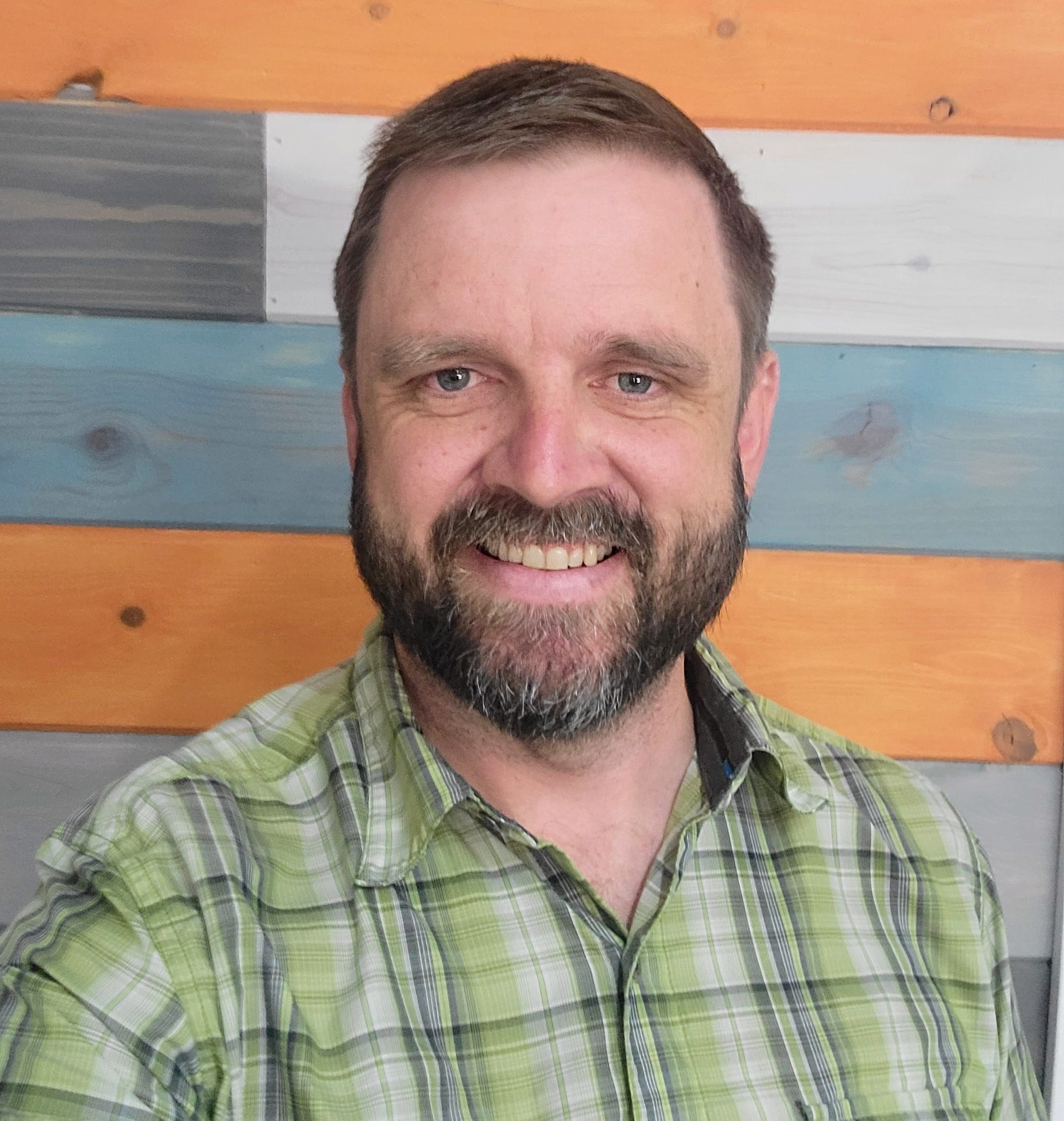
Shortly after returning to his hometown in the stunning Kern River Valley in 2016, Justin Powers launched Kernville Cowork, a rural coworking space operating under the ethos: “Work Where You Play”. Kernville Cowork attracts a growing community of remote workers drawn to the incredible range of outdoor activities that the region boasts.
Kernville Cowork’s strong community roots have led to the development of Justin’s second space – Sierra Shared Spaces – built specifically for its community, by the community. Its mission is to expand the impact of shared spaces in the Kern River Valley and other rural communities, as Kernville Cowork has evolved into the region’s leading startup hub.
When Justin isn’t managing a busy coworking space and entrepreneurial coworking community, you’ll find him out on the mountains and lakes of the Kern River Valley. In this interview, Justin opens up about his remarkable journey in rural coworking.
1. What inspired you to establish coworking spaces in rural areas?
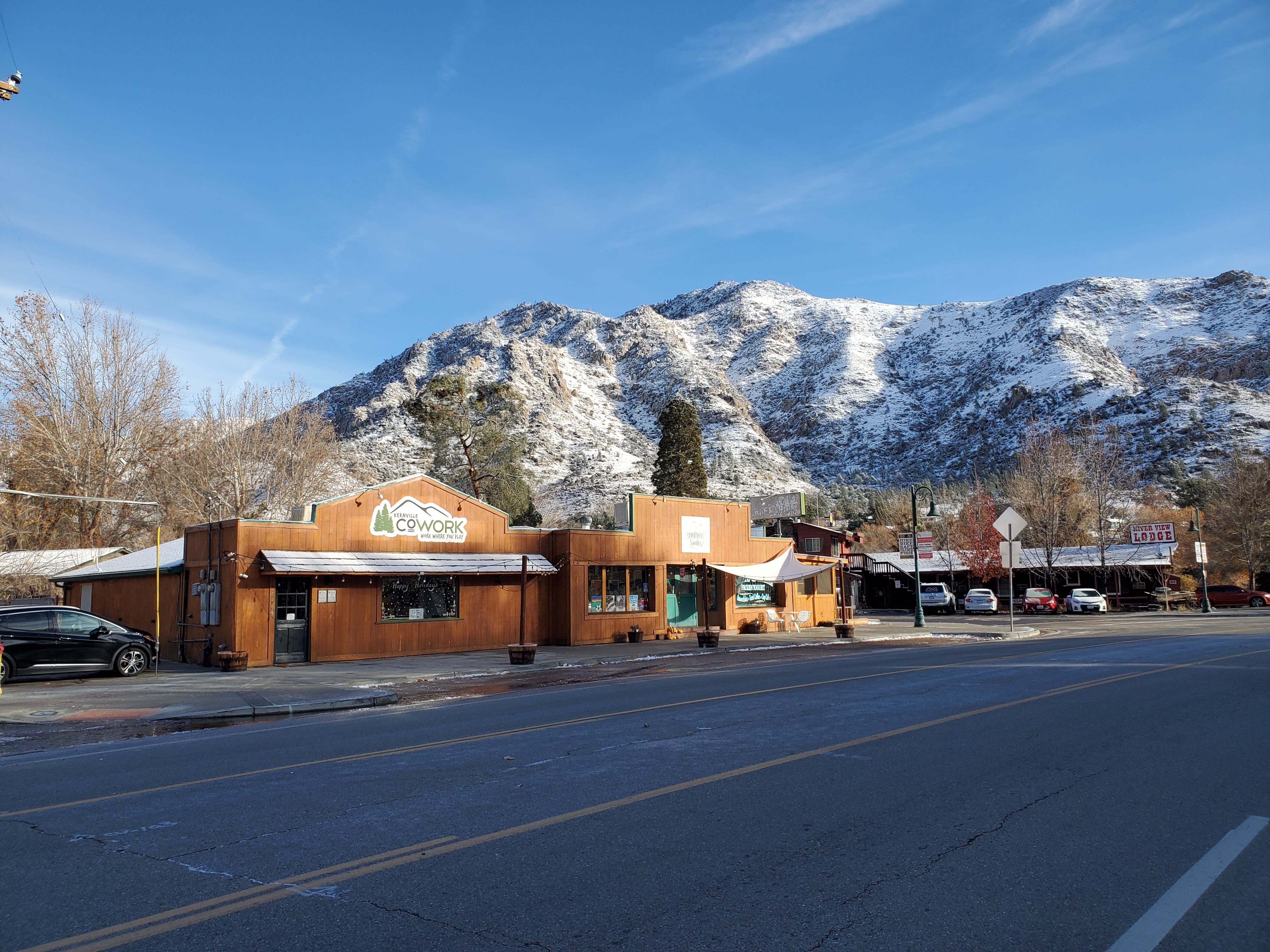
Justin: Kernville Cowork is in the rural California town of Kernville, where the Kern River flows through the Kern River Valley. It's in the mountains in the Southern Sierra Nevadas, and Lake Isabella is in the centre. We have world-class whitewater, mountain biking, climbing, fishing, camping, hiking, lake sports, wind sports, off-road, and many other outdoor opportunities; it's amazing.
I’m the seventh generation of my family to live in this area. I grew up here, but ended up moving out of town to Sacramento for about 10 years until I got a great remote job enabling me to work from anywhere. That’s when we moved back to the Kern River Valley – there was no reason to keep living in Sacramento. I couldn’t think of a better place to raise my kids with all these outdoor opportunities here.
After moving back, I was sitting in my little home office, staring out the window and thinking: “It'd be great if more people had access to this.” I’d regularly be on video calls with my coworkers based all over the world, and I’d show them videos of the area. They’d get excited and say, “I want to live there!” This was almost always followed up by “How’s the internet there?”
This was back in 2016/2017. There were lots of other changes I wanted to see in the valley around education and entrepreneurship, etc. But I couldn't figure out how to drive that change. At the time, I wasn't aware of any other rural coworking spaces. Of course, they existed, but I had no idea if this would work.
Meanwhile, my friend in Bakersfield was building a coworking space. I’d never heard of coworking before. So I watched what he was doing. Eventually, I got the feeling that coworking was the right vehicle for the change I wanted to see in my local area.
We organised a ‘Jelly’ meetup at the local coffee shop for anybody who wanted to work together during the day. We had a decent number of people show up, and felt that coworking was something we could do. I rented a building, bought a bunch of IKEA furniture, and the rest is history.
2. How did you approach the idea of "a space built by the community, for the community," and what role do your members play in shaping your spaces?
Justin: We opened Kernville Cowork to accomplish our mission in 2018 and moved locations a little over three years ago, which involved a large renovation. Based on our success with such a tiny space and the impact we’ve seen in the community, we're now working on a larger project to build a larger community hub: Sierra Shared Spaces.
We’ve experienced different transitions – from building the first coworking space, to building and outfitting the second space that we relocated to, and then this community hub, which will be on the other side of Lake Isabella.
When it comes to ‘how’ to build the space, this is one of those areas I try to turn my brain off. I'm very deliberately trying not to brainstorm about names of what we're going to call the new community hub once it's built, because I believe the community is going to come up with a name for it, and they’ll probably come up with it on a different timeline than I would expect. So I'm not forcing it.
Our goal was always that this space would be by and for the community. As we’ve gone along, we’ve learned more ways to involve the community. It's like raising a kid – it’s really exciting to see them grow up and, as they get older, see them developing a personality, tastes, interests, and which direction they're heading in.
In building a coworking space, there are some kinds of ground truths that I know. For example, needing a certain number of private offices and different amenities. But we allow our members to make decisions and take charge in certain ways.
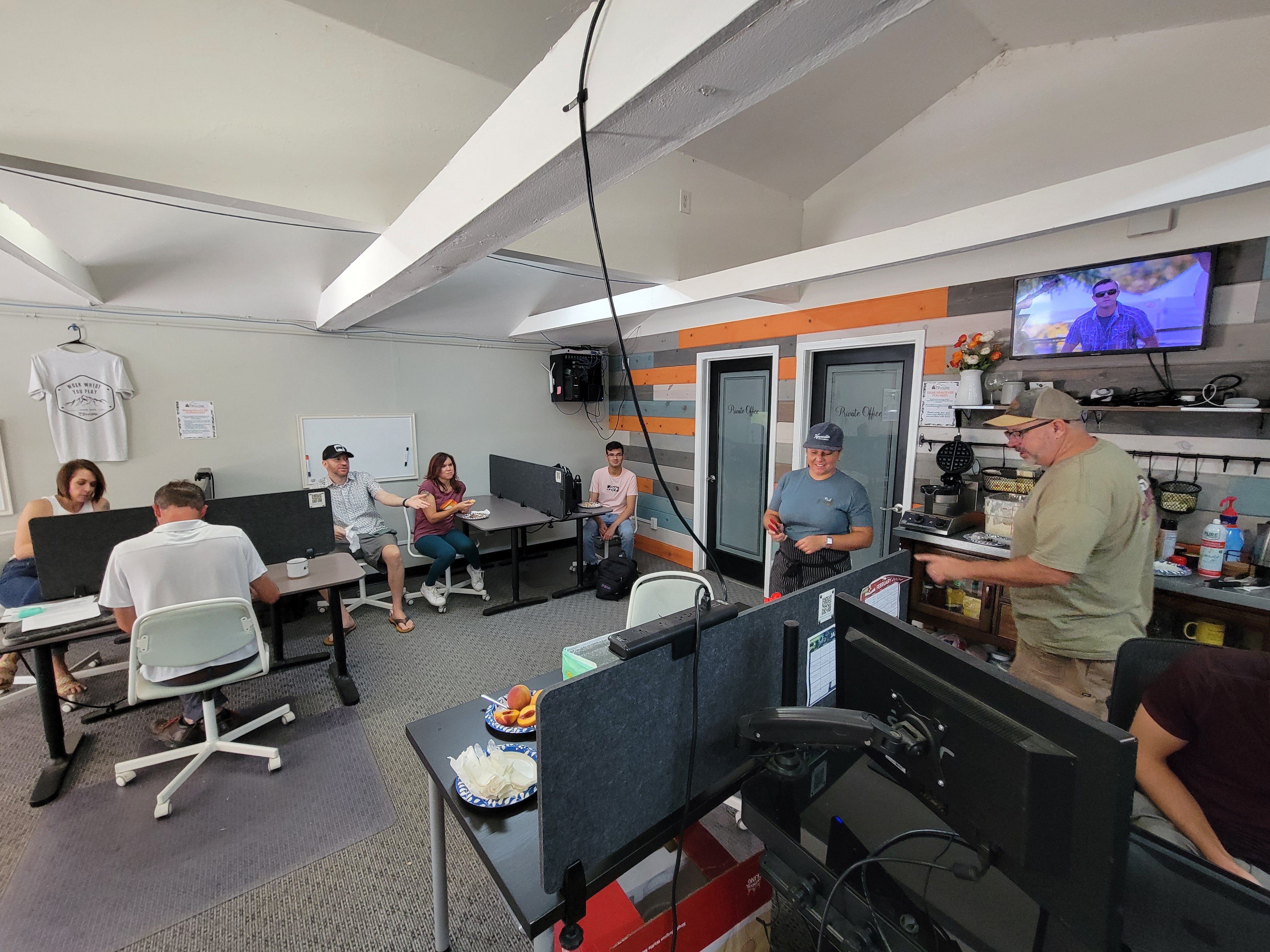
In our current space, some of our members have taken the lead on the interior design and the visuals – they went in a totally different direction than I ever would have thought of doing. It looks phenomenal, and everybody who walks in is taken aback by it.
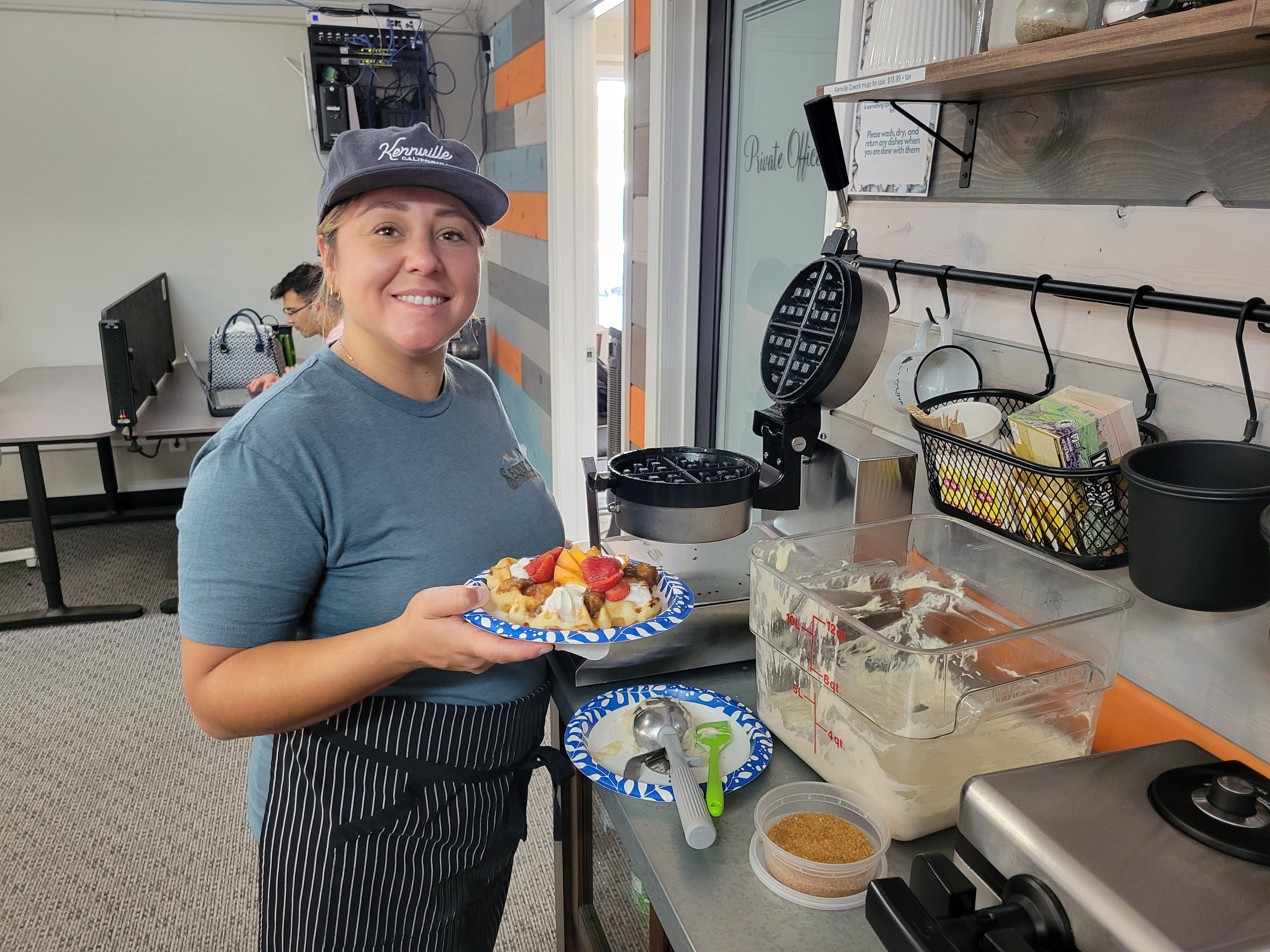
In our first building, we were surrounded by wood, which felt authentic to the area and its mountain community. For the new space we’re in now, the members had this great idea to cover an entire wall in wood, taking our brand colours – dark green, rust orange, and dark blue – and doing a beautiful white wash piece across the whole wall. The wood feels like it belongs here (in a rural community) and that splash of colour shows that we're doing something new, something you haven't seen before…it's a cool feature.
We're currently in the planning phase for the new Community Hub. We’re getting the community together, hosting co-creation events, and trying to allow different ways for people to provide feedback as much as possible, whether through conversation, putting ideas on post-it notes and attaching them to different places on the wall or on tables, building with Legos or drawing, or using all their senses, written word, and poetry. We're finding ways for the community to share what they want and need, about how the new space will look and feel.
3. In what ways do Sierra Shared Spaces and Kernville Cowork support local entrepreneurs and small businesses?
Justin: Tourism is the major economic driver in this area. We've got what I believe to be the best whitewater west of the Mississippi, with a fairly defined season, because the Kern River starts up on Mount Whitney (the highest point in the lower 48 states).
When the snow melts, the water rises to a level where you can raft on it around mid-April, and, depending on how much snow pack we get on Mount Whitney, it may last a couple of months. Many businesses cater to those tourists and get the majority of their revenue within a few months of each other in the spring and summer months.
Seeing that people were generally only able to come up here two or three days at a time, I had this idea that if we give them a place to work, they would spend longer here, and maybe eventually, they’ll question why they’re driving back to their “sardine cans”. They’ll consider living, working, playing, and spending their money here while getting their paycheck from LA, San Francisco, or Silicon Valley.
That's where our motto: ‘Work Where You Play,’ came from. We're seeing it year after year – people will come up on a Friday expecting to take their last call in their RV, or their hotel room, and it just doesn't work out – the kids are running in, and the WiFi isn’t working, and there are all sorts of issues.
They run into the coworking space with 15 minutes to spare before a call and ask to work here. We set them up, and they fall in love with the idea, with the community. They go out to coffee or lunch with us, and the next thing you know, they've come back later that summer, or they’ve planned their vacation around having a workspace.
By expanding the time guests stay in town, we're supporting local businesses. More directly, we've organised entrepreneurship meetups and created entrepreneur resources. We're starting to see growth in local business startups, too.
As we're catering to micro businesses, startups, entrepreneurs, remote workers, laptop vacationers, and digital nomads, the coworking business side of things is really interesting. There are wild fluctuations where, as soon as the rafting season starts, a lot of customers come in for the summer and use day passes. This isn’t very common in coworking.
I’ve also seen this new trend of white water raft guides who raft on weekends, but during the week, they’re marketers, accountants, and web developers. Coming here, they can keep their day job and be a weekend warrior out on the river.
4. What unique challenges have you encountered while establishing and growing coworking spaces in rural areas?
Justin: The Kern River Valley is beautiful and amazing; it's one of my favorite places. But there are many challenges. It's not easy, and I don't think anybody would get into what I do to make money because it's very difficult.
In terms of population, about 15,000 people live around the lake. The potential customer base is significantly lower than if we were in a city, meaning we have to focus on building relationships, because we can't afford a lot of turnover. If members leave, it's really hard to replace them because there aren't many more people here who have businesses or who are remote workers.
One of the issues is that this area is very geographically isolated, and the closest city, Bakersfield, is an hour away. If you want to start a business or you need any other kind of assistance or support, you have to drive through Kern River canyon, which is very curvy, and people are quite frankly afraid of it. Bakersfield has all of the resources, many of which we rarely see come up into the valley. I often say it feels like it's about five times further from Bakersfield to Kernville than Kernville to Bakersfield.
We're unincorporated, so there's no city government here, with the closest thing being the county government (and Kern County is massive). We don't have a local champion to help us find funding, and, as with many rural communities, there's generational poverty.
Maybe 30 years ago, this area was thriving, but it has seen a lack of investment and creation of new businesses. At this point, the median household income is $35,000 per year in the Kern River Valley, with half of households making less than that. 54% of our children under 18 are below the poverty line.
There are certainly issues common to being rural, in terms of having to think differently, build differently, and diversify income streams to try to patch together a business model that'll work.
After having many conversations with folks who run rural coworking spaces, I keep hearing that when you have a coworking space in a rural community, you become the area’s de facto economic development agency. We've really seen it – over the last few years, we’ve transformed into an economic development partner for our community who want to start projects, ideas, or businesses. That's been pretty exciting.
5. How do you envision the future of rural coworking?
Justin: When we started this in 2018, I told everybody I could that we're living in a time now where you don't have to live where you work. You can work where you want to live. I must have been really good at spreading that message, because right around March 2020, everybody got the same message.
I've seen it referred to lately as the future of work, where we're seeing this pendulum shift back and forth between fully remote and full HQ, where everybody is in the same place. The loudest voices in the media say that everybody needs to be back in a single company office. Oftentimes, those voices are from people with a vested interest because they own the real estate in those office buildings.
It paints a very different picture than what's going on in terms of the average company. Even in terms of how smaller companies choose to build. A trend we’re seeing is a model where you have an HQ as a hub, and then you have satellites scattered around smaller towns, enabling more people to experience rural coworking.
Rural coworking also has the power to change the narrative around isolation in our communities. I really admire the work that Tony Bacigalupo of New Work Cities is doing on overcoming loneliness and the power of communities (when we think about the future of coworking communities). Nearly every week, Tony and I speak about how coworking spaces tackle the loneliness crisis.
Then, there’s how rural communities can provide incredible work/life balance, with incredible access to the great outdoors and all the activities that go along with it. I can walk across the street from the coworking space and go whitewater kayaking on my lunch break (without any of my coworkers knowing). My kids love the fact that on the way back from school, we can just pull up at the bottom of a rock, get a rope out, and go climbing. Or go hiking on the nature trails.
You have to travel to access those kinds of opportunities in urban areas, and I suspect access to nature is something most people are looking for.
People Make Coworking celebrates the people who make up the fabric of the global coworking movement. By exploring the community, connection, and collaborations – the ‘co’ of coworking – this blog series shares stories from catalysts of the coworking movement and community builders.
If you’d like to share your story in ‘co’, please get in touch. I’d love to speak with you for a future feature.
Oooh! Looking forward to reading this.