


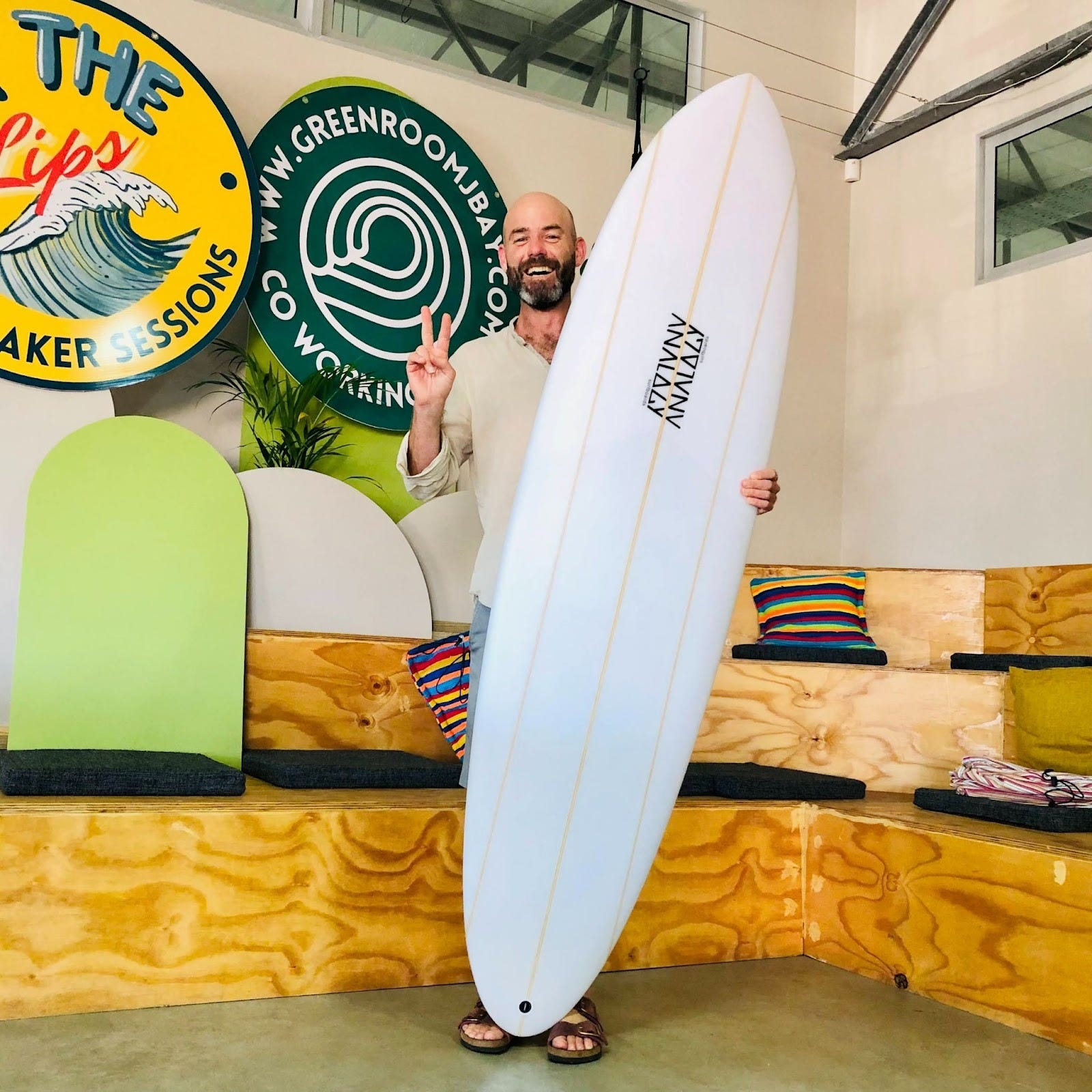
Growing up near Jeffrey’s Bay (JBay) along South Africa’s famous Garden Route, surfing and the ocean were central to Michael Sternberg’s life. Throughout his formative years, Michael was largely influenced by surfing magazines and sustainable business practices.
After moving abroad for work and launching Angola’s first coworking space in 2015, Michael found himself back in Jeffrey’s Bay during the lockdown. It was then that, quite serendipitously, he stumbled across a huge building facing the ocean that can only be described as a surfer’s utopia.
Michael founded Green Room JBay — a coworking space for digital nomads, tech entrepreneurs, ocean conservationists, and creatives who all share a passion for surfing, sustainability, and the ocean. This influences everything the space does, from being surfer-friendly with all the amenities you could ask for, to supporting initiatives that protect the ocean and coastal ecosystems.
In this interview, Michael shares his remarkable story of starting Green Room JBay, what an “ocean-minded” culture looks like in practice, and how the workspace gives back to the local community, injecting new revenue into the local economy.
1. What inspired the founding of Green Room JBay, and how did you get started?
Michael: I grew up surfing in a city near Jeffreys Bay (JBay). I recall on weekends, it was always such a treat to head to JBay to go surfing. In JBay, the waves are long, tapered and beautiful. It’s the best surfing set-up in South Africa for sure, perhaps one of the best on the African continent.
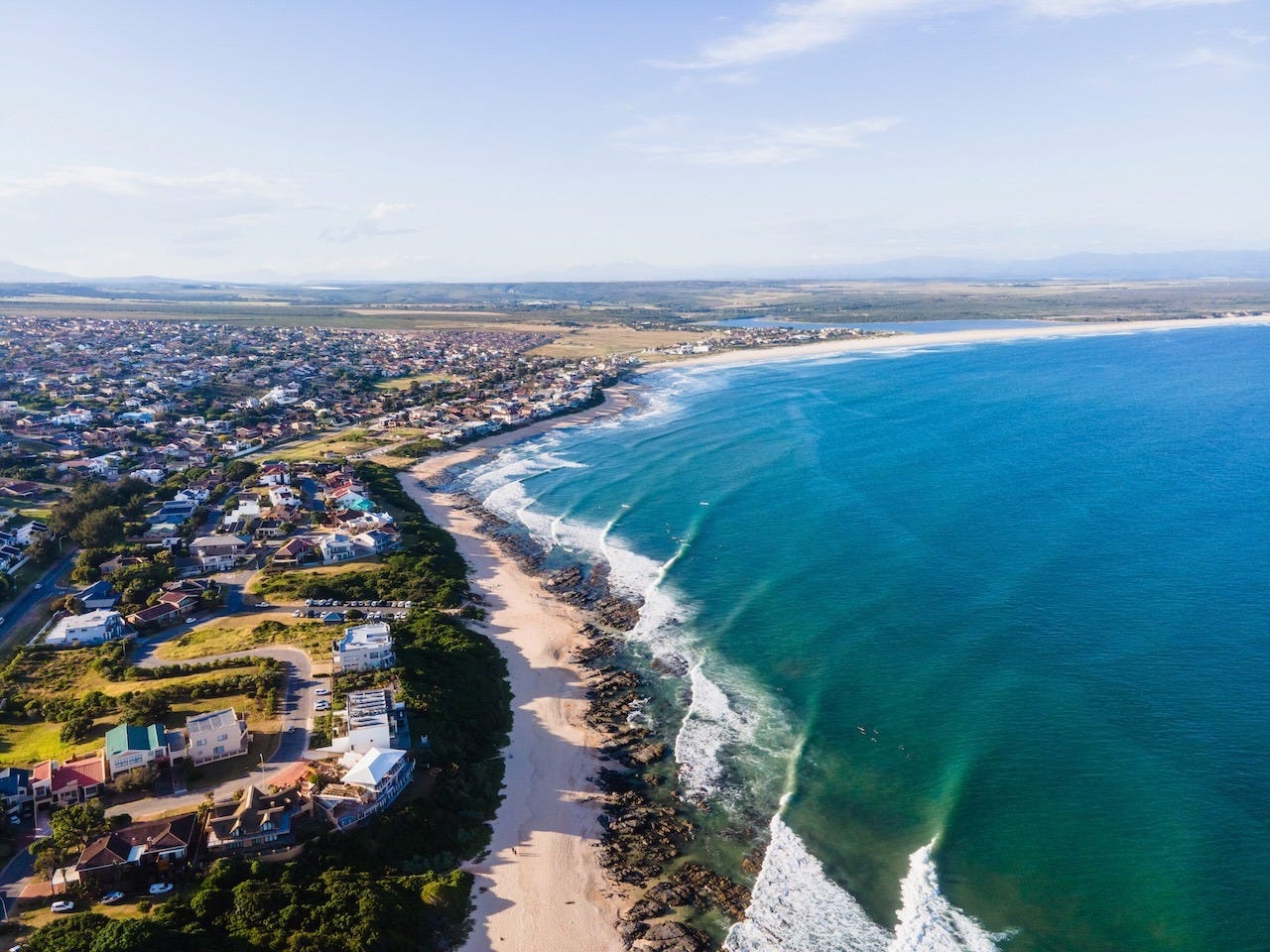
After school, I left home to study, work and travel. I started my first coworking space in Luanda, the capital of Angola, in 2015. When COVID hit in 2020, I decided to return home near JBay to spend some time with my elderly parents. Of course, I went surfing in JBay.
Whilst I was there, I connected with someone who owned a large, recently vacated building in town, who had heard about my coworking space in Angola. I had no intention of staying in JBay, but decided to visit the building out of curiosity.
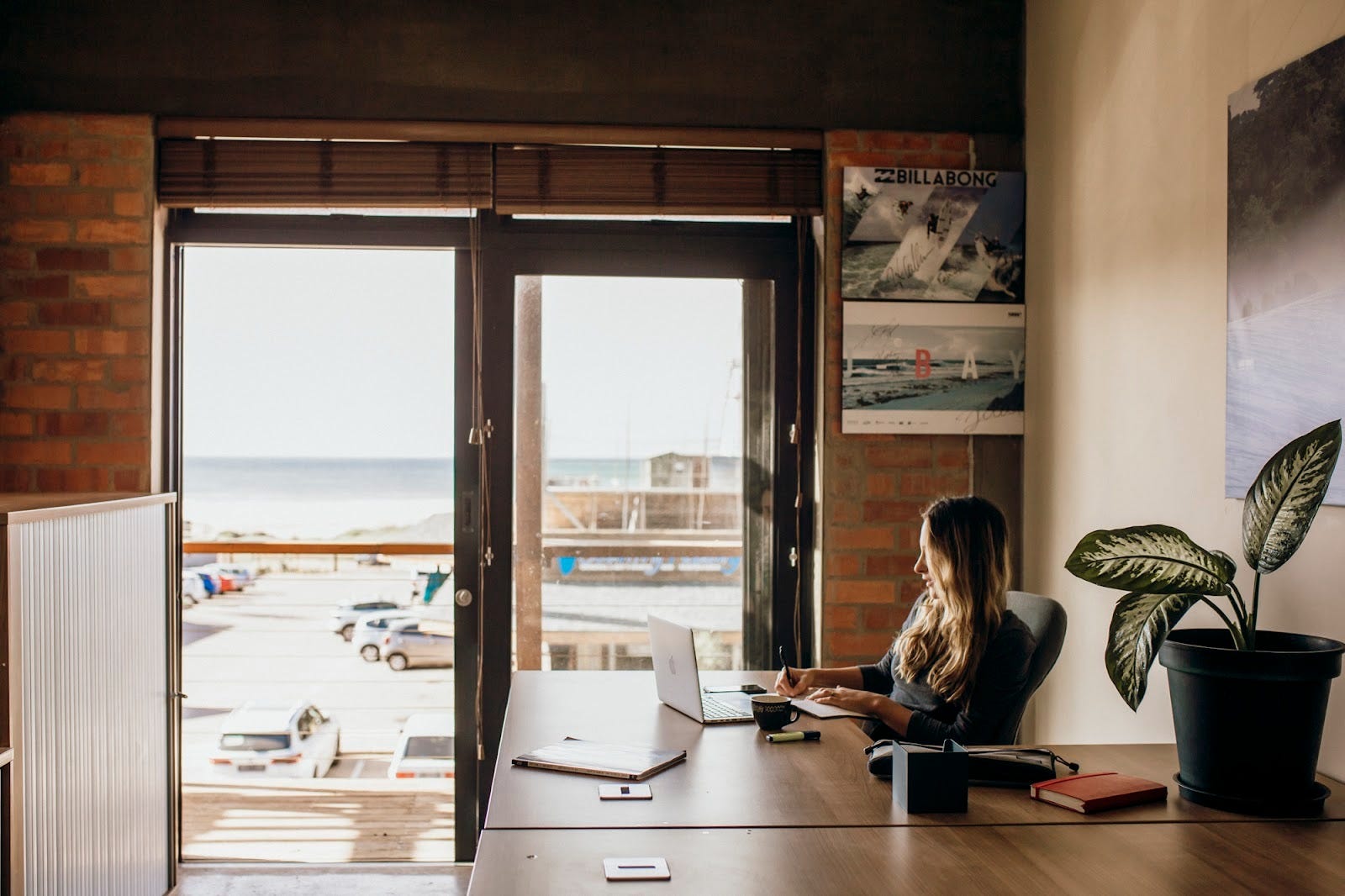
Turns out the building in question was the South African Head Office for the global surf brand, ‘Billabong’. They had done what any well-capitalised global surf brand might do: build a big, beautiful, warehouse-style office at the beach overlooking a surf spot. They then filled it with incredible surf nostalgia, surfboards and imagery, much like a surfing museum. It was pretty much the ultimate office for a surfer.
I used to love reading an American magazine called Surfer Magazine, which had a section right at the back called ‘People Who Surf’ – about incredible working professionals who also happened to surf. That was my favourite section in the magazine because I’m not a very good surfer, but I could relate to that.
I’m also influenced by Patagonia founder, Yvon Chouinard’s book: “Let My People Go Surfing: The Education of a Reluctant Businessman.” It’s mostly about finding more balance and sustainable ways of running a business, where profit doesn’t cost the surrounding environment and communities.
Standing there, looking at this big, empty office, it was easy to imagine a sustainable coworking space full of super-interesting professionals who also happen to love surfing.
It could be, in a way, the physical manifestation of ‘People who Surf’ and ‘Let my people go surfing’. It had the potential to be the ultimate coworking space for the working surfer. That’s what really inspired me to do this!
Billabong had been JBay’s biggest employer, but its head office and manufacturing operations had recently been moved out of the area. The rest of the town mostly revolved around the tourism industry.
In 2020 (mid-COVID), things were looking pretty grim. There were no other businesses in JBay big enough to take the whole space. Even if there had been, at that stage, it wasn’t entirely impossible that no one would ever want to return to the office. The landlord was understandably nervous.
I made a very opportunistic offer to take over the lease because I had nothing to lose. The landlord and Billabong agreed, on the basis that we’d start recruiting from the people who’d been laid off from Billabong, which we did.
It was very much an opportunity to bring a positive impact to the area I’d grown up enjoying. Who doesn’t want to do that?
2. What sort of things make your coworking space uniquely “ocean-minded”?
Michael: The magical thing about Jeffrey’s Bay is the ocean. The town is built on a hill overlooking the bay. You can see the sea from almost anywhere, and you’re never more than a few minutes from the beach. There’s no industry or port nearby, making the water beautifully clean and full of sea life; it’s quite extraordinary.
Almost like clockwork, in the morning and evening, the water is usually teeming with pods of dolphins. Then there’s the long, tapered waves.
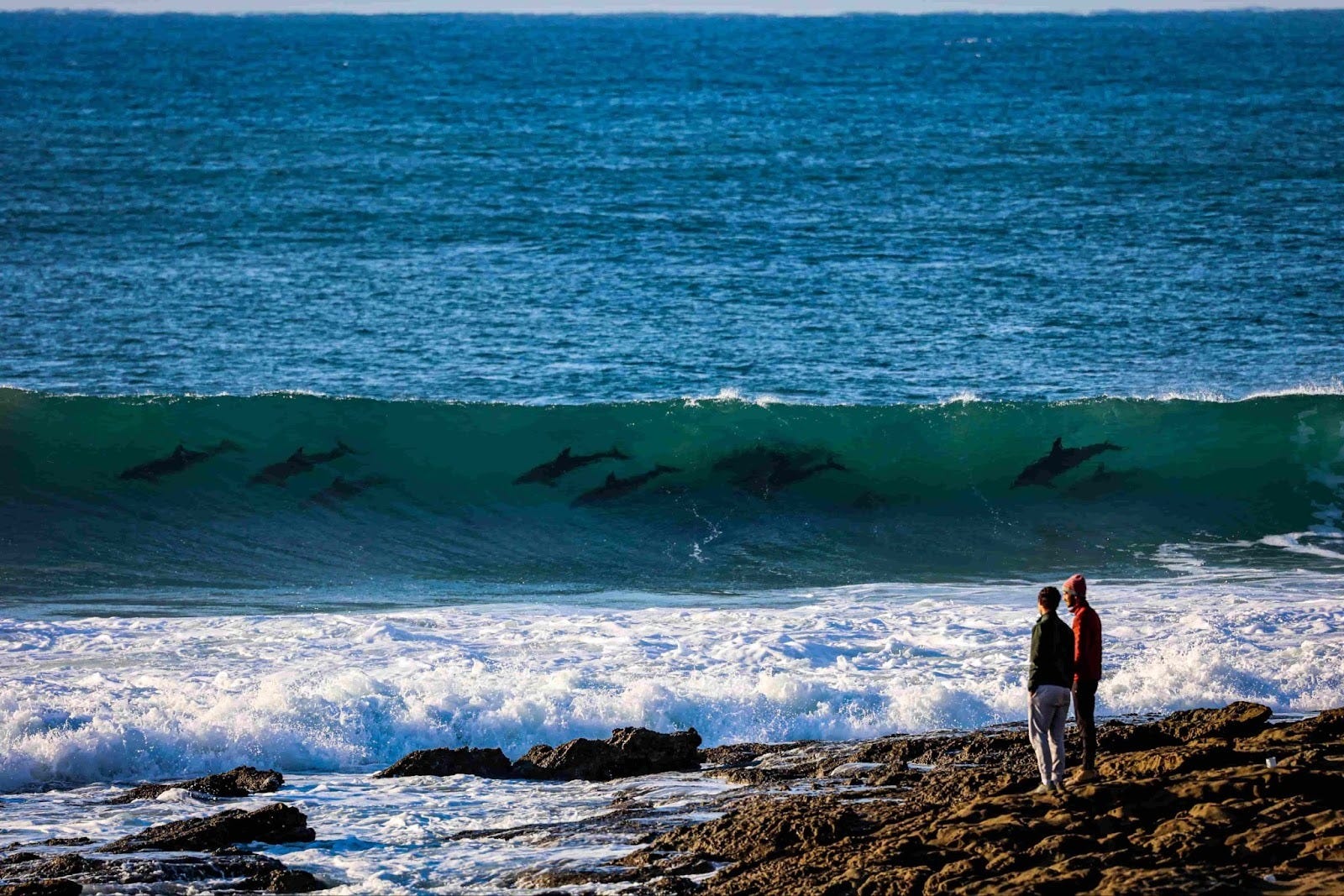
People come to JBay because of the ocean, and we really wanted to embrace that. We decided that everything we do, even though we’re in the office, has to somehow relate to the ocean. I think the more people use, see and think about the ocean, the better they understand it, and ideally, the more they feel inspired to conserve it.
An “ocean-minded” space was made easier in practice because we inherited the office from Billabong. It’s right next to the beach with these floor-to-ceiling doors and windows overlooking the ocean; it’s impossible to ignore! It’s not unusual to be distracted during an online meeting by a breaching whale or a perfect wave.
We’re exceptionally surfer-friendly – we have ‘surfboard-parking’, showers, wetsuit drying racks and warm showers. We make it totally acceptable to arrive at the office in a dripping wetsuit; actually, it’s encouraged! It’s quite common for members to quickly go for a surf at some point during their workday.
When you’re surfing, you appreciate the quality of the ocean first-hand. We really want to support ocean and wilderness conservation. So, if you’re doing anything related to conserving the ocean or our coastal areas, you’re welcome to work here and pay what you can (or nothing at all).
We have several local conservation organisations based at the Green Room, and various initiatives come from the space. For raising awareness, it’s really helpful that there is a ready audience and a wide range of skills in-house, often willing to lend their assistance.
For any event, exhibition or residency we host, we try to connect it to or be inspired by the ocean. All of our internal communication in the space with members has a little hint of the ocean. For example, you’ll always see a little seagull peeking out of the corner of all of our internal messaging. The kitchen has a big poster showing all the marine bird species found in the area. We have a 16 metre mural of a school of fish. At our reception store, you can buy merchandise from a local craftsman who makes handmade surfboard fins in his garage.
That’s what we mean by being “ocean-minded” — everything we do is, in some small way, connected back to the ocean.
The most unusual way I’ve heard of people finding us was a group of friends from Berlin who were looking to escape the German winter. They opened Google Maps and followed their Central European time zone southwards, looking for a place where they could work somewhere warm, in the same time zone, but specifically in an office with an ocean view. Our space floated to the top of maps. They saw some pictures and booked for a month!
3. Your philosophy of measuring success is a little different. Can you share more about it?
Michael: From the first time I saw the space, it was hard to imagine that this was ever going to be a super-profitable business, especially in Jeffrey’s Bay. So that was never the goal. It’s definitely much more of an experiment to prove whether a big coworking space can make a difference to a small town.
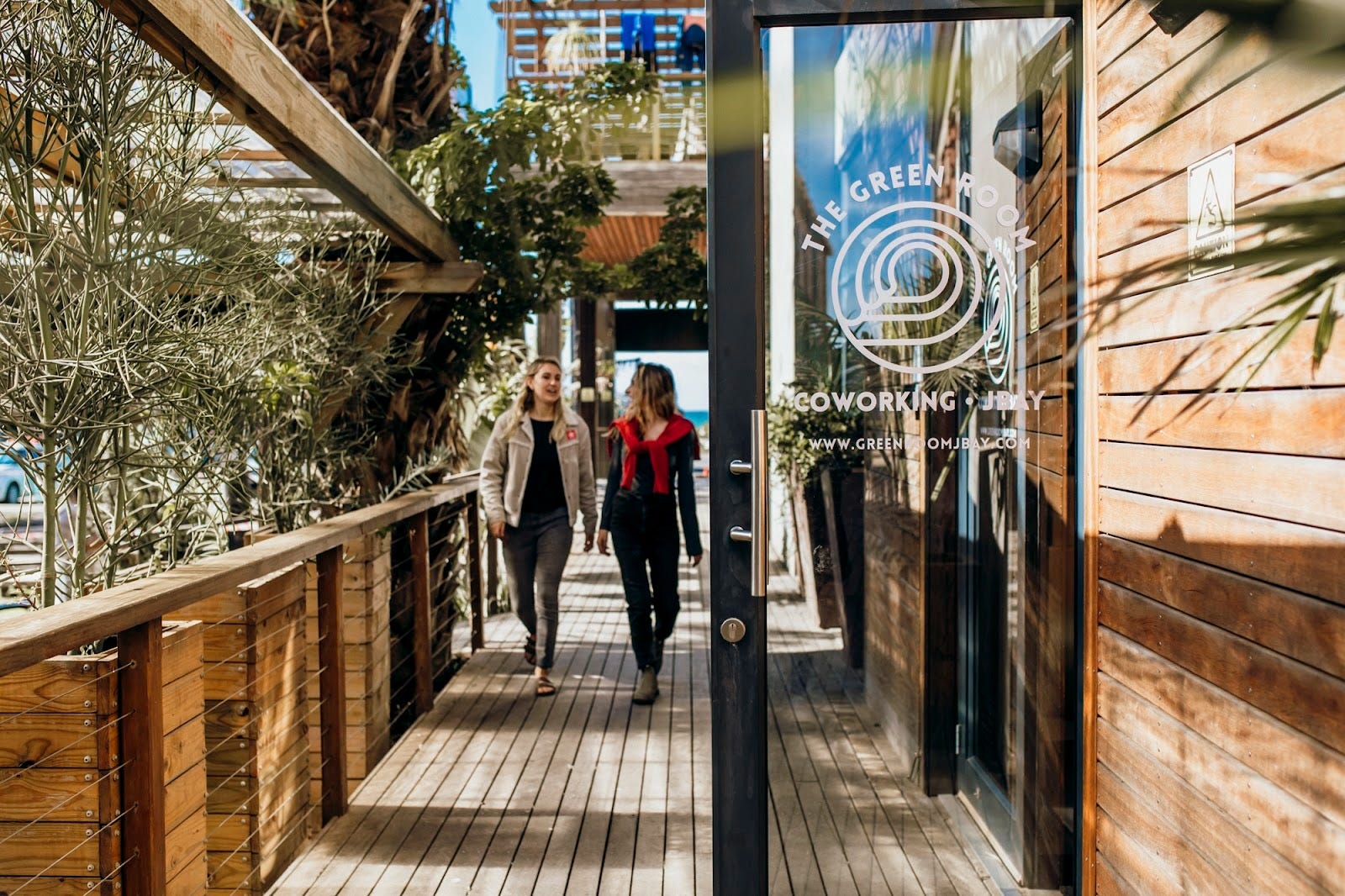
Based on this, we defined success across three things. Firstly, we wanted to bring money into the local economy that wasn’t there before, especially because so many people had just become unemployed, and tourism was struggling after COVID.
We saw the project as a way to attract a new type of traveller to town, somebody who stays for longer, with a decent disposable income.
Secondly, we want the space to bring experience and expertise to JBay that weren’t there before. We do this by attracting skilled working people to JBay, and then providing a platform to share their experience with others. Instead of coming just for a week of surfing, we encourage them to stay for a month or three months, make local connections and exchange their skills.
Recently, one of our local JBay automation labs started producing training content for a German company after the founder spent some time at the Green Room.
Finally, we see it as a way of setting an example in the town of what a sustainable business might look like. We knew the space would attract attention, and hoped that other local businesses might copy some of our practices.
Those were the main differences we thought we could make with the space. Financial sustainability is obviously ideal, but profit maximisation has never been the main goal. When you position your metrics like that, instead of maximising profit, staff make decisions in a different way. It’s subtle, but customers really notice something different.
4. What are some of the challenges you’ve had in building Green Room JBay?
Michael: The most daunting challenge was that Green Room JBay is a big office for a small town. At around 1,300 square metres in a town of around 40,000 people, and many people who only visit during the holidays, it was hard to imagine filling the space.
Thankfully, one of the old Billabong staff, who was busy closing things down, mentioned in passing that he’d been approached by quite a few people who were curious about using the space in some way. He kindly gave me a list of their names and numbers, and that became our first customer list.
Evidence of so much interest gave me confidence that our initial footfall was sufficient to start the momentum. Five years down the line, some folk from that list are still members!
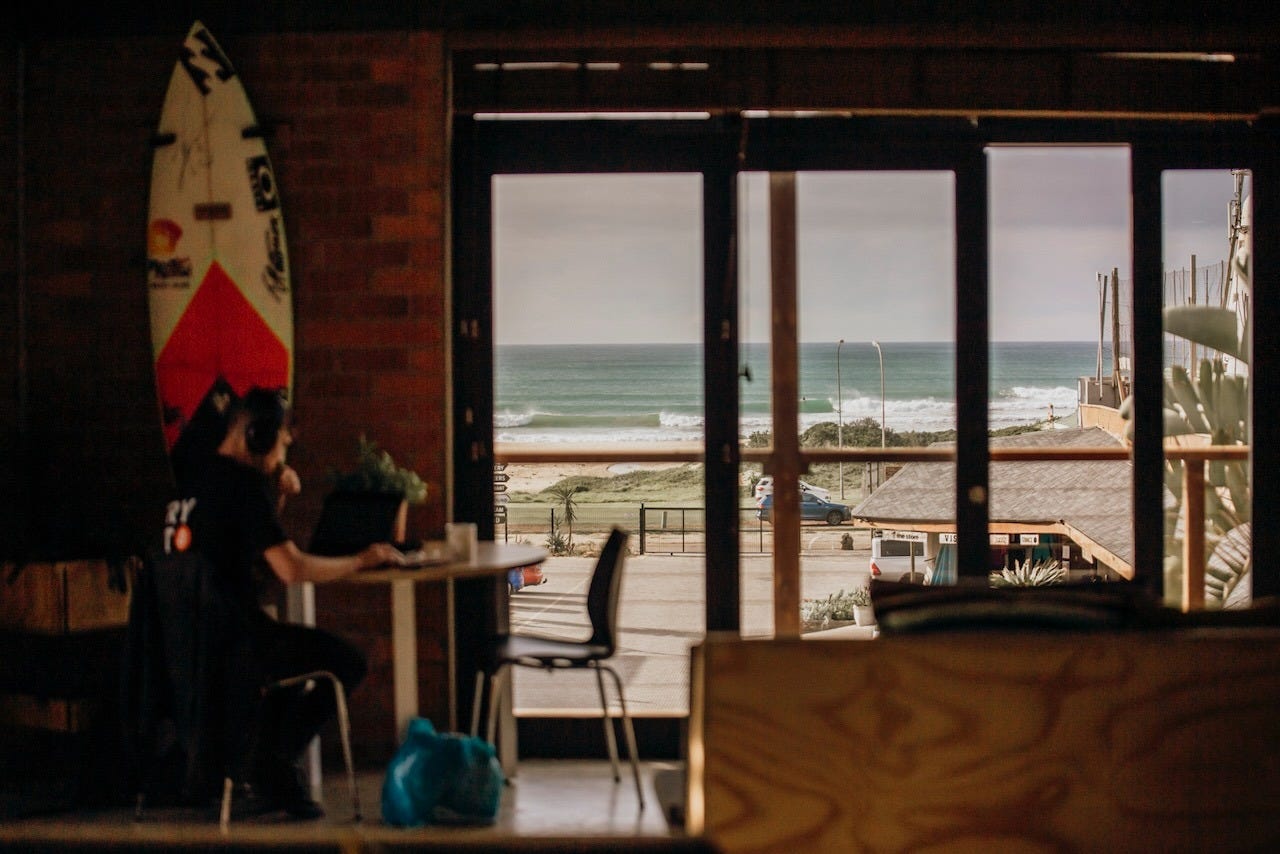
Setting up the workspace on a tiny budget was the next challenge. Even though the office was left in a state that was almost ready-to-use, converting it to coworking required some intervention, which we needed to do on a tiny budget. We connected with some super-talented local artists and carpenters who, like much of the town, weren’t really motivated by money.
When they heard about our idea and the change we intended to make to the town, they wanted to help make it happen. Many local creatives volunteered their time to bring the Green Room to the state of ‘minimum viable product’ as a coworking space, and they did an amazing job. Curiously, almost all of them have subsequently received a bunch of work from people impressed with what they did in the space.
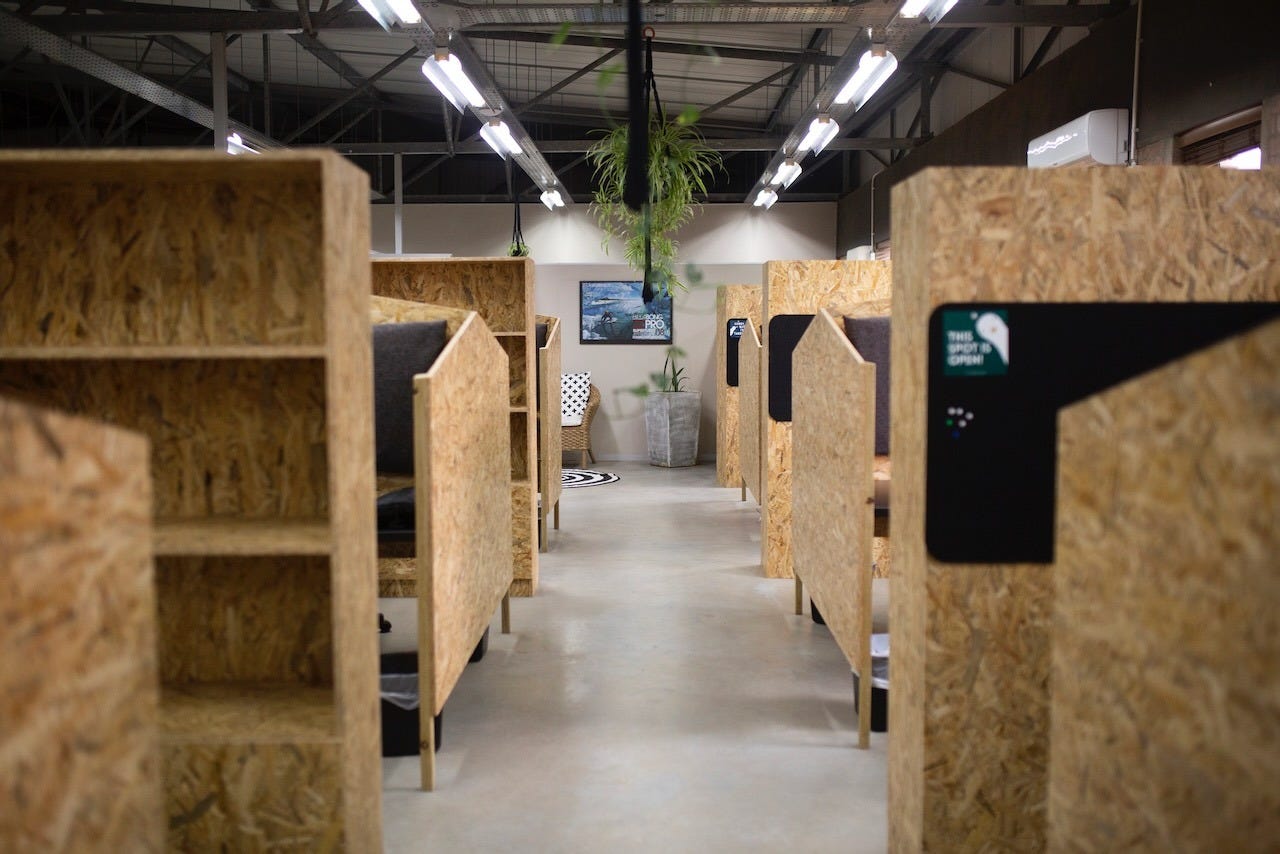
Finally, JBay is quite an affordable place (which also means that locals generally aren’t willing to pay much for stuff!). We had to find a way to attract local people and make enough revenue to sustain the big space.
To do this, we targeted people from outside of JBay who are used to paying more for a coworking space, and then played around quite a lot with the discount on the pricing of the longer-term packages to accommodate the locals. If you’re living in JBay, the long-term packages are much more affordable; that’s our ‘baseload’ of members, which has very low turnover.
5. In what ways have you seen Green Room JBay affect your local community?
Michael: I would say the space is definitely having an impact on the type of community that the town attracts – it’s definitely a bit more cosmopolitan. That said, JBay is still largely undiscovered and not a “digital nomad town” by any stretch of the imagination.
At any point in time, we might have a handful or two of nomads around. There have always been several international surfers visiting, but now you start to see more international surfers who have remote jobs. They stay for longer, spend more at local businesses and tend to integrate better with the local community.
We try to create a platform in the space for everyone, both local and international, to share their skills, stories and expertise. For example, every Thursday lunchtime, we facilitate a TED-style talk for people to share something they’re working on or are super passionate about. We call it “Off the Lips” — a play on words for a well-known surfing manoeuvre.
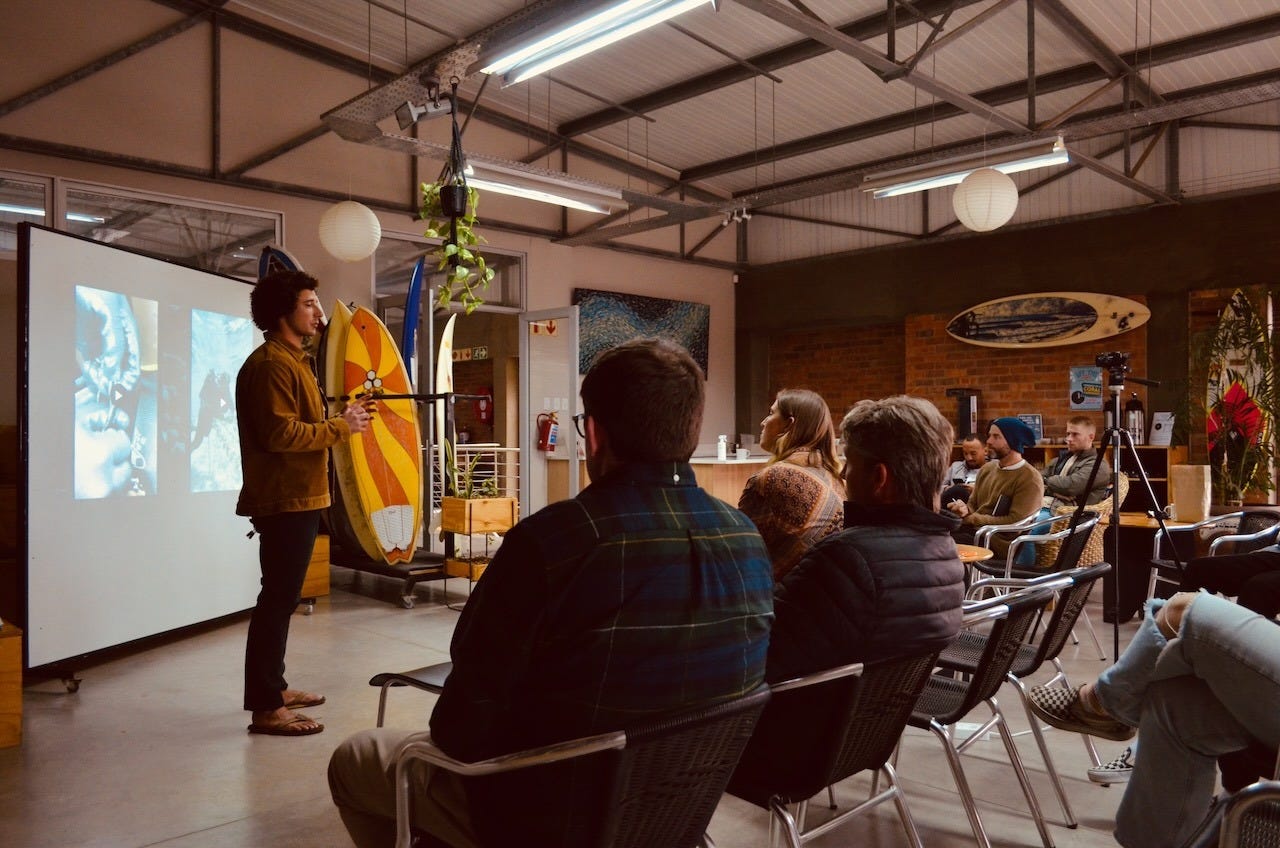
In line with our objectives, you don’t need to be a coworking member to attend the talks or any of our events. It’s completely open for people in town to walk into.
We’re really proud of how this has worked out – you’re in this little town near the southern tip of Africa, and you can walk into this space, and learn how an expert marketed Denmark as a niche destination, or how someone from France is replanting coral reefs in French Polynesia. It’s an opportunity to learn about the rest of the world, and conversely, for the rest of the world to meet and interact with our local community.
In the space, we have a large “common room”, which is probably one of the biggest indoor venues in town, so we get approached by people wanting to use the space, often for surf movie premieres or events. We’re always very open to that - we’re happy that the whole town can benefit from this space.
6. Has anything else evolved from the coworking space since opening?
Michael: We started noticing a trend where we had a few international travellers come through the space who could afford a nicer Airbnb, but instead of staying alone, they wanted to stay in a low-stress environment and community.
I first heard about “coliving” from visiting members, who mentioned how they’ll always search for a coworking space before accommodation. Around the same time, an old villa with sweeping views across the bay came up for sale. That’s where we had the idea of ‘JBay Coliving’ - the first coliving space in South Africa outside of Cape Town. Based on our insight, the coworking space would be a lead-generator for the coliving space.
Curiously, whilst setting up the Green Room, I’d also been adopted by a cat. The available villa was next door to where I lived, and I noticed the cat really loved playing in the villa garden. Knowing I still needed to travel to Angola, buying the villa next door and starting a business there was going to be really helpful to ensure there would always be someone to look after the cat when I travelled. I think the cat was actually more the reason I started JBay Coliving, rather than the business case!
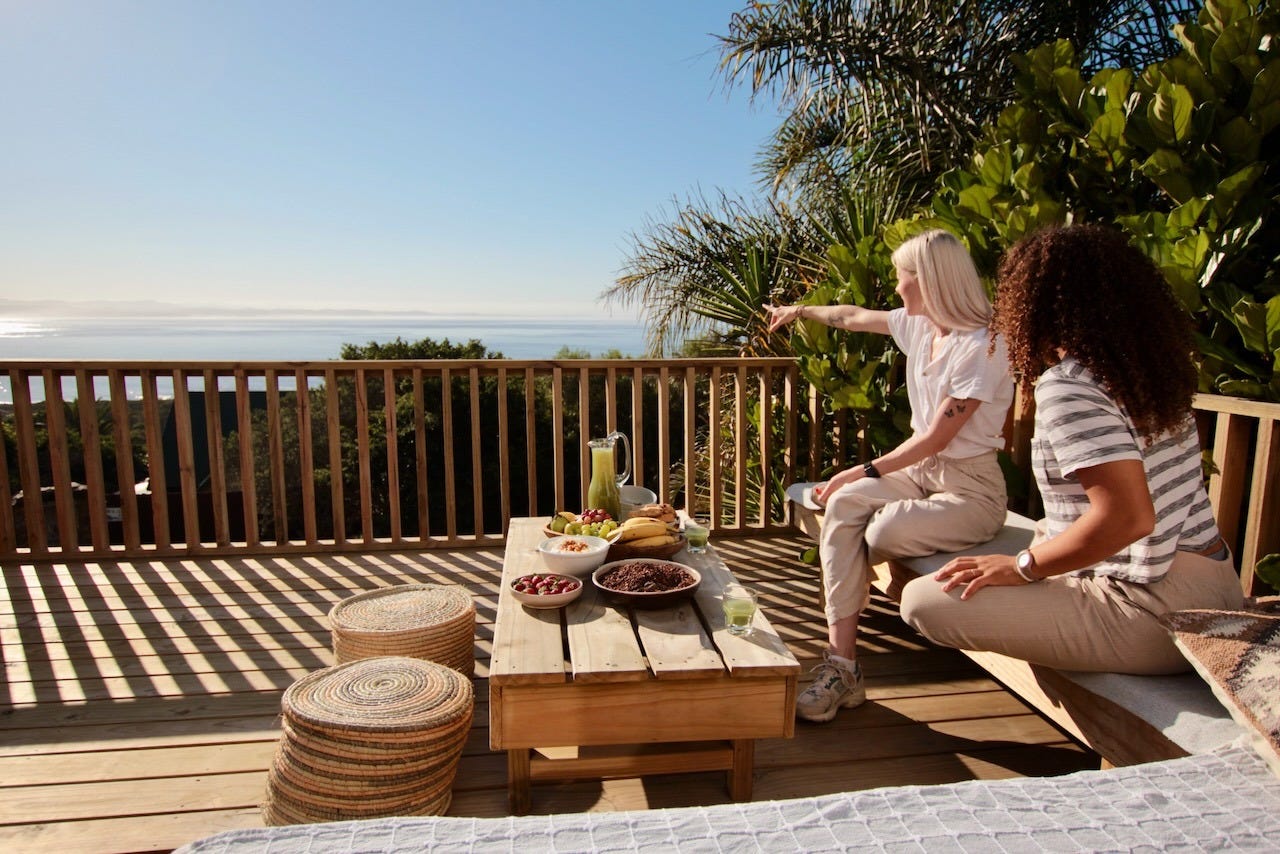
It worked out well - the coliving space has been a great success and a very cool project. The cat adapted well to his new home and was loved by everyone. Sadly, he has since passed away, but his spirit still lives on in the villa. JBay Coliving has definitely been the biggest “side effect” that’s evolved from the Green Room.
More recently, we’ve also taken on some space next to the coworking space to create a maker space. There are many creative people in this town, including the people who helped us set up the space, who use it.
At the Green Room, it’s very complementary to have people who work with their hands work alongside people using laptops. Our coworking members provide an instant audience for the maker space, and the makers benefit from the coworking members’ skills. That’s our latest project.
About People Make Coworking
Celebrating the people who make up the fabric of the global coworking movement, People Make Coworking interviews coworking founders who share their journeys of building communities and workspaces.
Edition #21 of People Make Coworking interviews Michael Sternberg, founder of Green Room JBay in South Africa.
If you’d like to share your story in ‘co’, please get in touch. I’d love to speak with you for a future feature.
I use affiliate links to help fund this newsletter and support indie bookshops. Thanks for supporting both!
This is such a great post Lucy! The Green Room really is a community where people work, connect and thrive.