


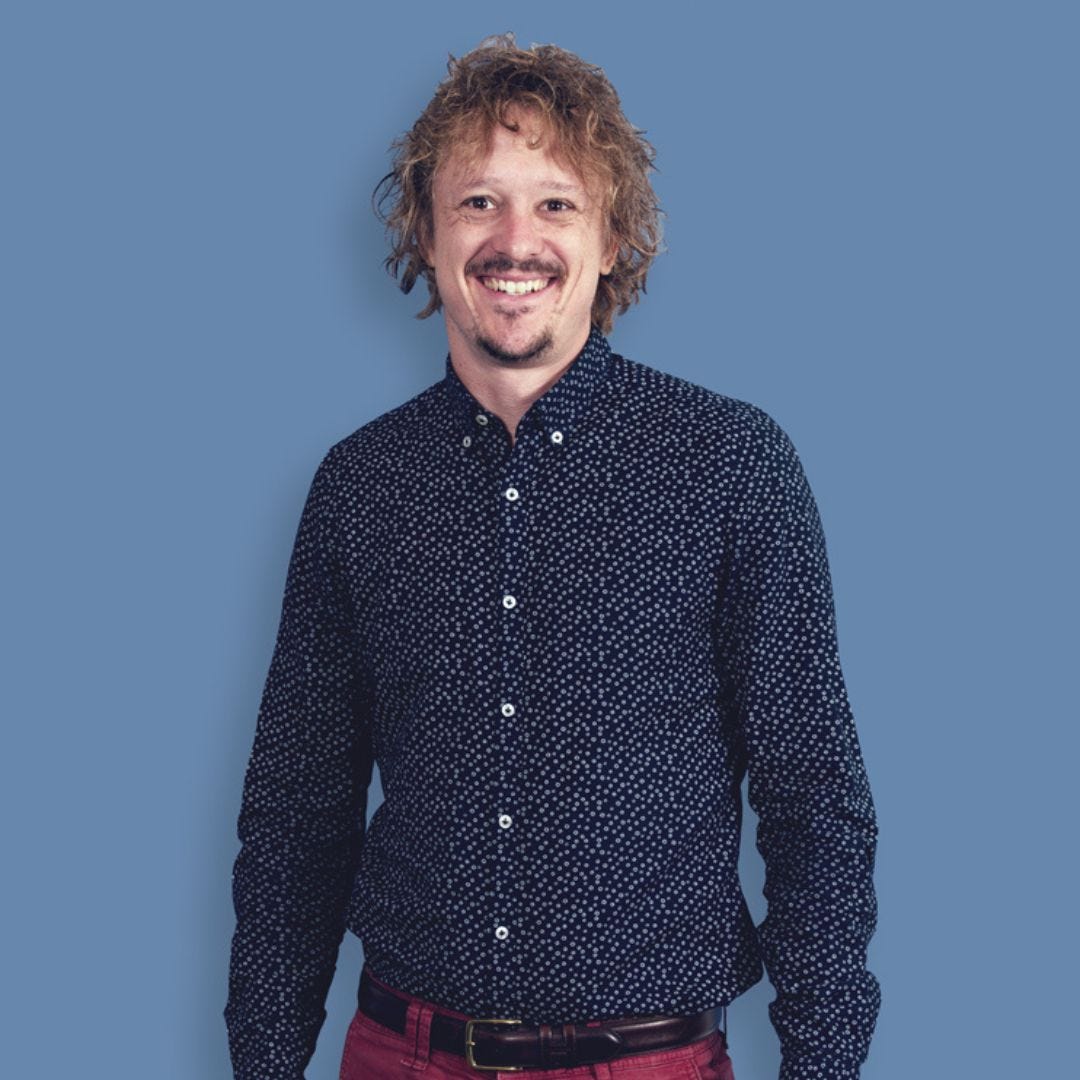
Source: Christian Schmitz
People Make Coworking celebrates the people who make up the fabric of the global coworking movement. It aims to explore the community, connection, and collaborations, the “co” of coworking, by talking to individuals integral to the sector.
Christian Schmitz is a key player in the “co” sector. He is the Global Lead Workspaces at SALTO (part of SALTO Wecosystem), with a specific penchant for cultivating partnerships with community-first businesses across the workspace and shared living sectors.
Recently, Christian has centralised his work with SALTO on the flexible workspace industry. Towards every project Christian works on, he focuses on how ‘Community is the Key’ and why ‘The Future is Human,’ converging technology with community and innovation.
Christian and I have collaborated together over many years, exploring the topic of community in the coworking and coliving industries - I was so excited to speak to him a bit more about his journey!
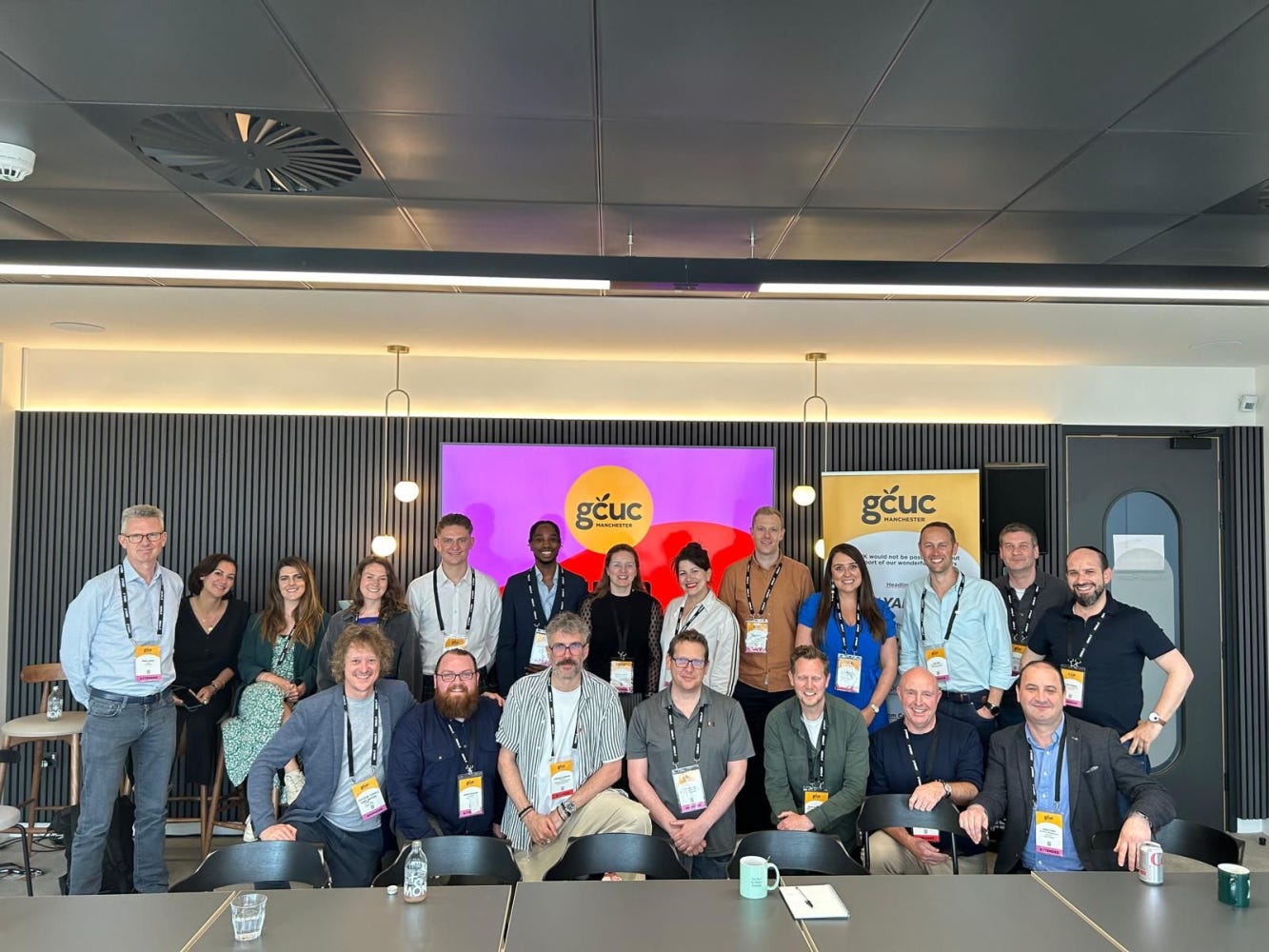
Christian at GCUC UK Manchester (June 2024). Source: technologywithin
1. You’re a major player in the coworking and coliving sector. What are some of the overlaps of these two “co” sectors, and where do they differ?
The ‘co sector’ has become a buzzword, especially since Covid. In my experience, we need to differentiate between space and place. A place you call home has a different notion than a place where you stay for a night. In the living sector, we’ve seen hotels becoming more residential, rather than having clinical, white walls and being unwelcoming.
A place you call home is where you feel a sense of belonging because you’re around your neighbourhood, family, and friends. But, what’s that sense of belonging like in a work environment? And, why is nurturing a sense of community so challenging? Building a community requires some core ingredients, that’s why, if you force community, you will never win. That was one of the biggest learnings in coworking at the beginning, where I saw community managers forcing a community process by offering, and pushing amenities as much as they could.
We’re now seeing how communities build by themselves, which are true communities. Unlike a physical place built with bricks, a community is built upon human experience. Within that community, everyone has different feelings, desires, background, etc. – these are some of the factors that define communities.
The coworking industry has steadily built a great reputation because it’s focussed on curating communities, not maximising value-based ROI metrics. Generally, in coworking spaces, there’s a certain niche of people who are attracted to go into that particular space, use those services, and be around like-minded people. This has changed over the years, because a coworking space with a certain niche, like for bakers, for example, wouldn’t have been feasible 10 years ago. Now, rather than buying your own oven to test out recipes, you’d join a space with the amenities that enable you to do that.
2. Your work at SALTO has always been driven by community-led partnerships. Can you tell me more about your ‘Community is the key’ mission, and why you value industry collaboration?
I believe that black boxes are outdated. That counts for everything.
If you want to keep something for yourself and your own benefit, you’ll never grow. Growth requires an openness to mentor your work colleagues and help everyone to grow, which will automatically lead to combined growth.
Externally, it’s very similar. Customer demand cannot be fulfilled by black boxes provided by single suppliers. The entire UX journey is too complex for a single player regardless of the size to fulfill. It requires collaboration and cooperation between different touchpoints and a very good understanding of what data can do more and where it can be helpful for other touchpoints.
That’s why we take care of secure and convenient access but at the same time, (Our) data opens the door for way more applications of the holistic UX ecosystem.
The SALTO Wecosystem has a workforce of 1,700 people – we have a huge talent and experience pool, so making use of it wisely is key. That requires building internal communities.
Externally, people aren’t interested in black-box solutions. They’d like to be connected, and scalable and that’s why Community is the Key.
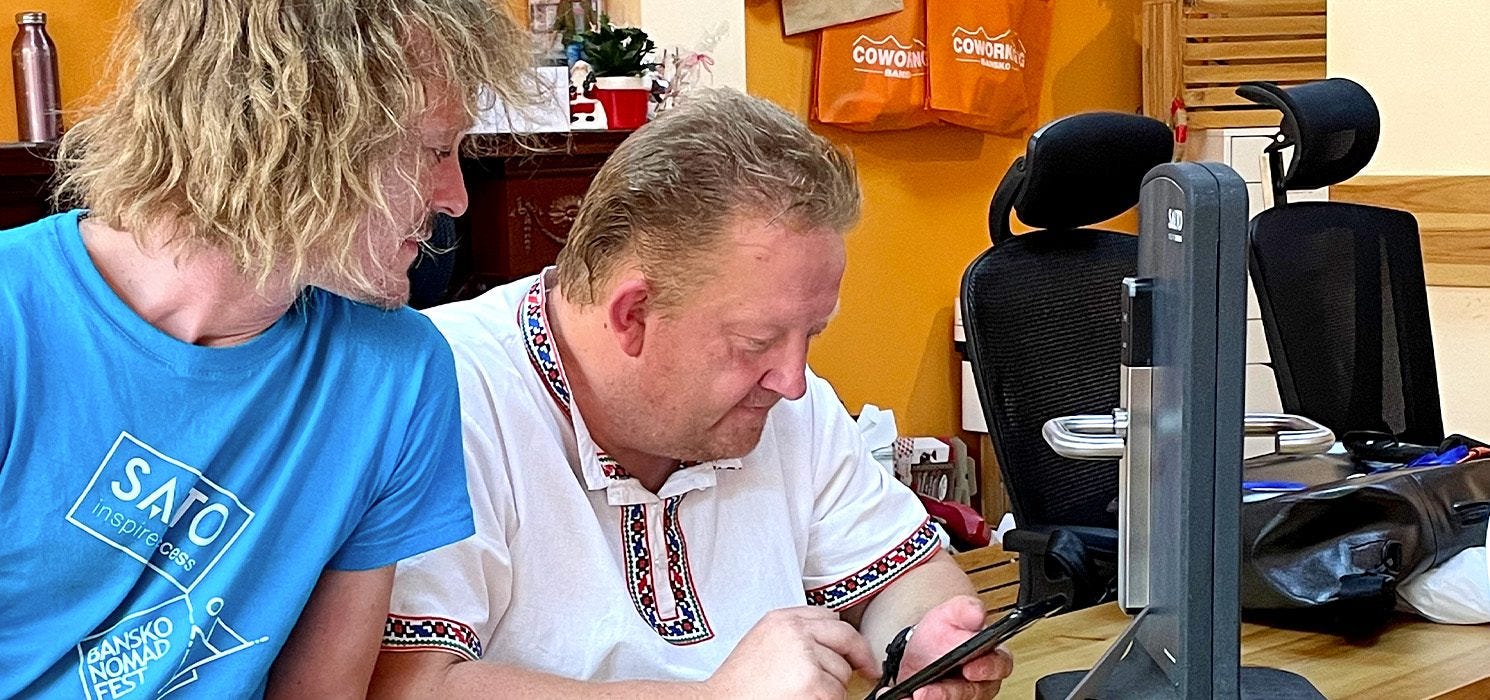
Christian with Matthias Zeitler testing out SALTO locks at Coworking Bansko. Source: Christian Schmitz
3. Do you have any favourite stories to share about these partnerships?
For several years, SALTO has partnered with Matthias Zeitler, the founder of Coworking Bansko, Bansko Nomad Fest, and now Coliving Semkovo. Coworking Bansko is one of Europe’s largest nomad hubs, integrating SALTO technology across their workspaces – encompassing the Gondola, Quiet Space, community hub, lounge, social spaces, and even outdoor spaces including a garden and rest space.
One of my favourite stories from our partnership with Matthias is when Cate (Maiolini) and I went to Bansko Nomad Fest 2021 to kick off our partnership with Coworking Bansko. We intended to explore the future of access management of coworking and coliving, and a passion for community and togetherness. Cate stayed throughout the festival, brainstormed lots of ideas with the nomad community, and even organised some photoshoots with a bright orange 40-year-old Lada jeep. It was a really fun opportunity!
More recently, Matthias spoke to Bernie Mitchell, on an episode of his Coworking Values podcast (we’ve collaborated with Bernie to run a series around ‘Community is the Key’). Going back to how he built his community, Matthias is a strong participator within his own community and their activities. That’s why it can’t be forced. It’s not like he’s introducing something completely out of place in Bansko for his community, his activities (whether that’s skiing, hiking, or eating potluck together) are all part of the community experience, and why someone chooses to stay in Bansko.
We’ve also partnered with Matthias to co-host the coworking bike tour during Coworking Europe for the past three years. In 2022, we cycled around Amsterdam, and last November we visited the hilly town of Porto – where we saw a range of spaces, from coworking spaces, flexible offices, and fab labs (fabrication laboratory), including Opo’Lab. There, we met Irena Ubler, an industrial designer, and the group went on to sponsor her research in developing sustainable materials and a biopress project, which saves and reuses natural resources and drives sustainability forward.
Just last week, we brought a group together to look at coworking spaces in Sofia, marking the start of Coworking Europe 2024. The snowy weather turned the bike tour into a walking tour – but we had a great time seeing some of the city’s most inspiring workspaces!
By opening up, you can take us and the customer to unforeseeable and unpredictable levels together making it the best of the best.
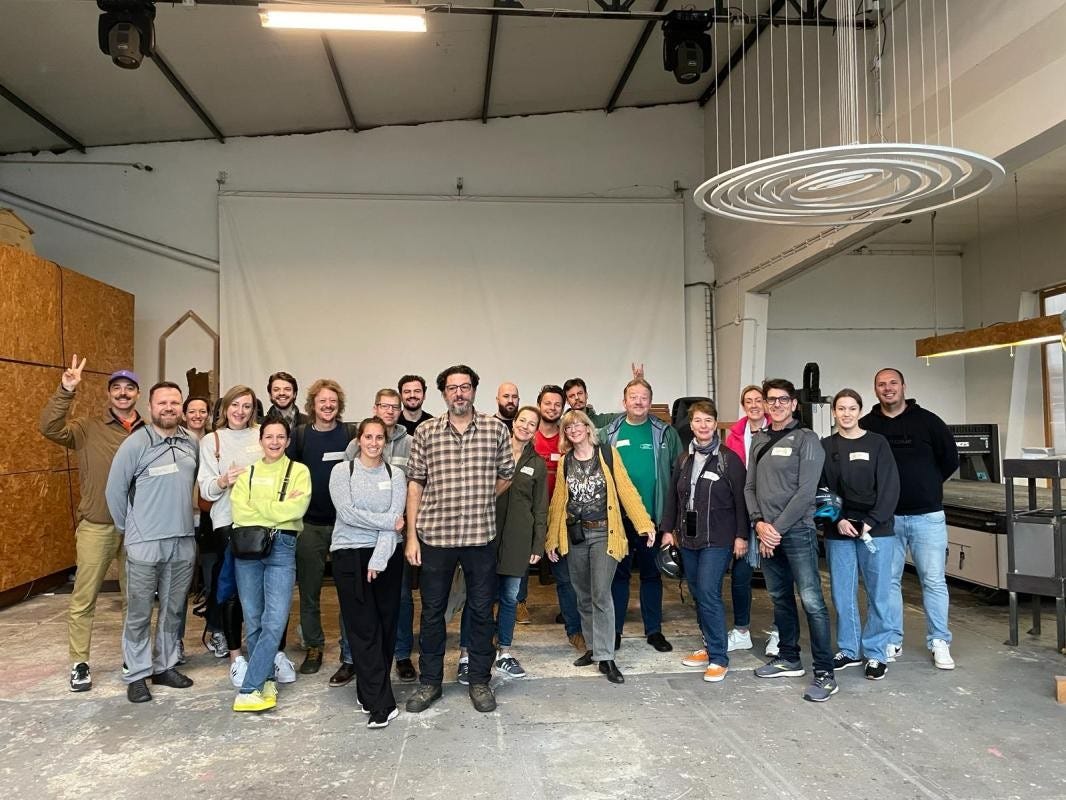
Group photo from the famous Coworking Europe 2023 bike tour at Opo’Lab, Porto, organised by SALTO WECOSYSTEM and Coworking Bansko. Source: Christian Schmitz
4. With SALTO being an innovative technology company, what are your thoughts on how tech facilitates community, connection, and collaboration in workspaces?
Our big mission is to help everyone understand that tech is a key player for everything that we use day-to-day, whether that’s in our personal lives or at work. But, with so much technology available at our fingertips, we have to be careful not to use tech just for the sake of it. Yes, SALTO has important products and connected product solutions, touchpoints within buildings, within greater networks, and cities. But, across micro and macro levels, the scope of SALTO is industry agnostic.
Customers don’t want to buy any more products, they want solutions. In the workspace, tech facilitates community, collaboration, and connection – we ‘re aiming to empower and connect with our technology partners to serve people globally and make operators agile and efficient. With everything we do, we have a super customer-centric positioning.
At SALTO Wecosystem, our core visions are: Proximity to people, a passion for innovation, connection to each other, agility in thinking, and integrity in every step – a commitment to creating a positive impact wherever we are.
Where do we see ourselves without our innovative tech? How can we facilitate our community from a higher level and not always as the main front end for coworkers? These are important things to consider, that we’ve embedded in our day-to-day that we don’t have to be on the forefront but we’re still leading and helping together with tech partners towards this goal that everyone says this is a nicer experience to make use of the total solution.
5. On that note, Clay is a cool space that brings these elements together – community and technology. Can you tell me more about that?
Clay is now a Cloud work department, elevating it from its existing strong identity. The DNA of the people (who we call ‘Bricks’) working there started almost 10 years ago, when the Cloud was a completely new thing that wasn’t seen as relevant, we even had trouble explaining the Cloud to other people. I think that mentality has changed as people use it without questioning it.
The Clay Office in Amsterdam is a futuristic workspace – with open desks, it’s like working in a flex space or coworking environment because we have an office manager in a community manager role, running events and creating community. We hire people from all over the world, so if they’re new to the city, proximity to people applies. Our team is super heartwarming and open to building relationships. This leads to higher motivation and stronger loyalty towards the company brand. That’s something that can apply to every coworking space – when you create a strong community not just because of the space.
In that department, we have around 50 seats but over 75 team members, so more members than seats. Technology allows us to plan, book, and have an overview of who is coming together to utilise the space as best as we can. Remote work is a daily lived and embedded process.
Due to our branding change and introduction of the SALTO Wecosystem earlier this year, we’ve closed some doors but in a positive way for greater connection. The Clay office has a special DNA which is still alive compared to the original sales department.
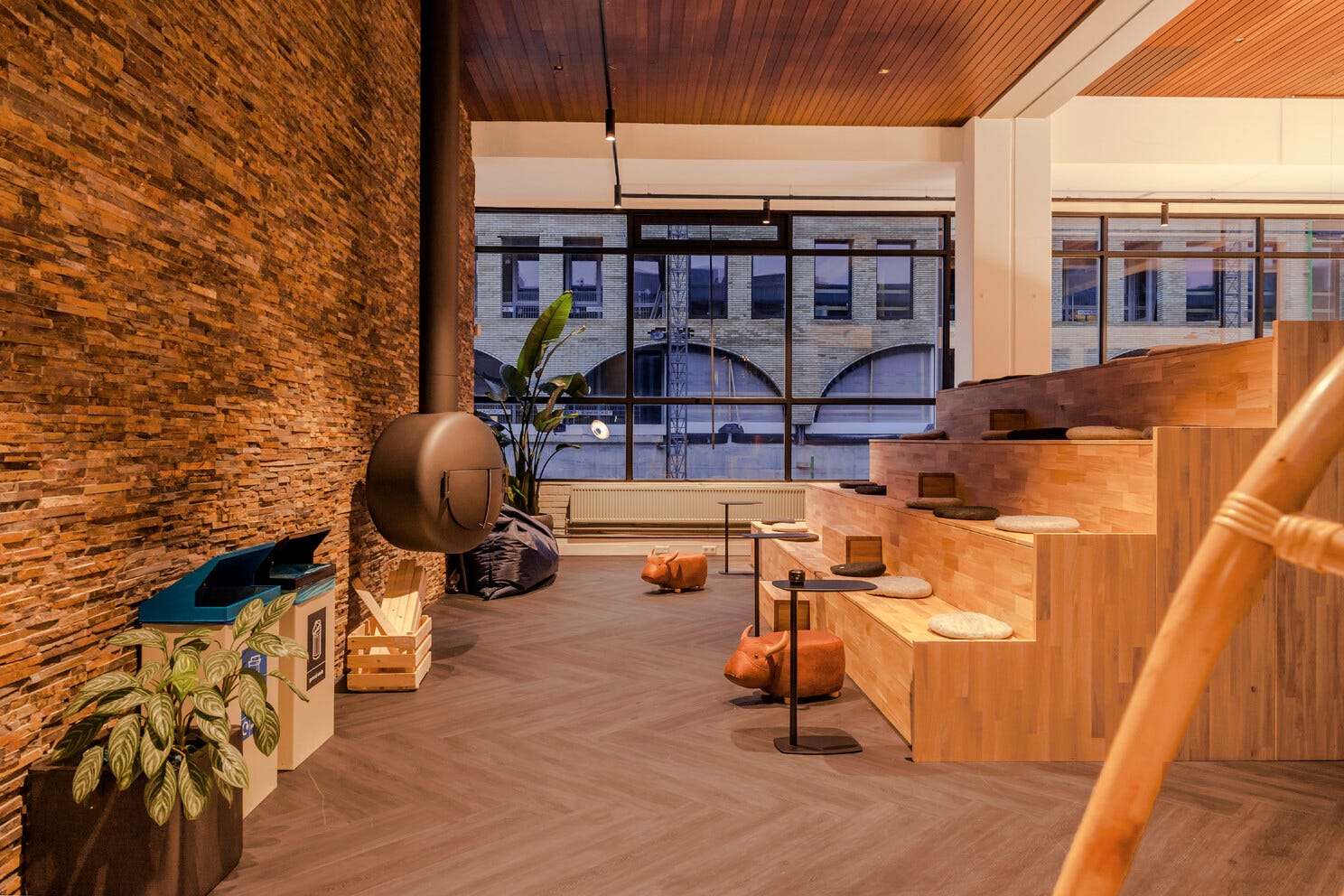
The Clay Office in Amsterdam. Source: Clay Solutions – A SALTO WEOCYSTEM company
6. What would you like to see more of in the coworking industry, or what could the coworking sector do better?
Coworking is the solution to all new talent pools, niche markets, and focusses of this new world of work. Firstly, coworking is not just for freelancers and SMEs, it’s for corporates too. The SALTO Wecosystem is a corporation, but it doesn’t mean we have to be old-fashioned, and wear a suit like we used to 10-20 years ago. Yes, corporate workers need to do their job, and many are historically driven, but they can be exposed to new ways of thinking that bring in new talent. I’d also like to see a bit more dedication to corporate needs in coworking, and operators can be ready for that shift.
Equally, the city has changed from what it was 50-60 years ago. It’s not just a place to go to work, and not everyone wants to live there. The purpose of the city is changing. It requires a new mindset too, and authorities driving that change. I’d like to see it change and adapt to these new demands.
In certain countries, like Germany, I’d like to see more rural coworking. At the moment, remote work doesn’t give that much business for coworking in rural areas to be viable. The question is – every country and government is investing money but where is the investment in this infrastructure and this future - for children, educational programmes, to how we will work and live in the future? By 2030, around 65% of the global workforce will be millennials, that’s only in 6 years time, and they’ll be a totally different mindset. How do we prepare ourselves to make that work?
Huge thank you, Christian, for your time and insight into this topic!
People Make Coworking is a regular blog post series celebrating the people who make up the fabric of the global coworking movement. If you’d like to share your story in co, I’d love to speak with you for a future feature. Please email me to get in touch.