


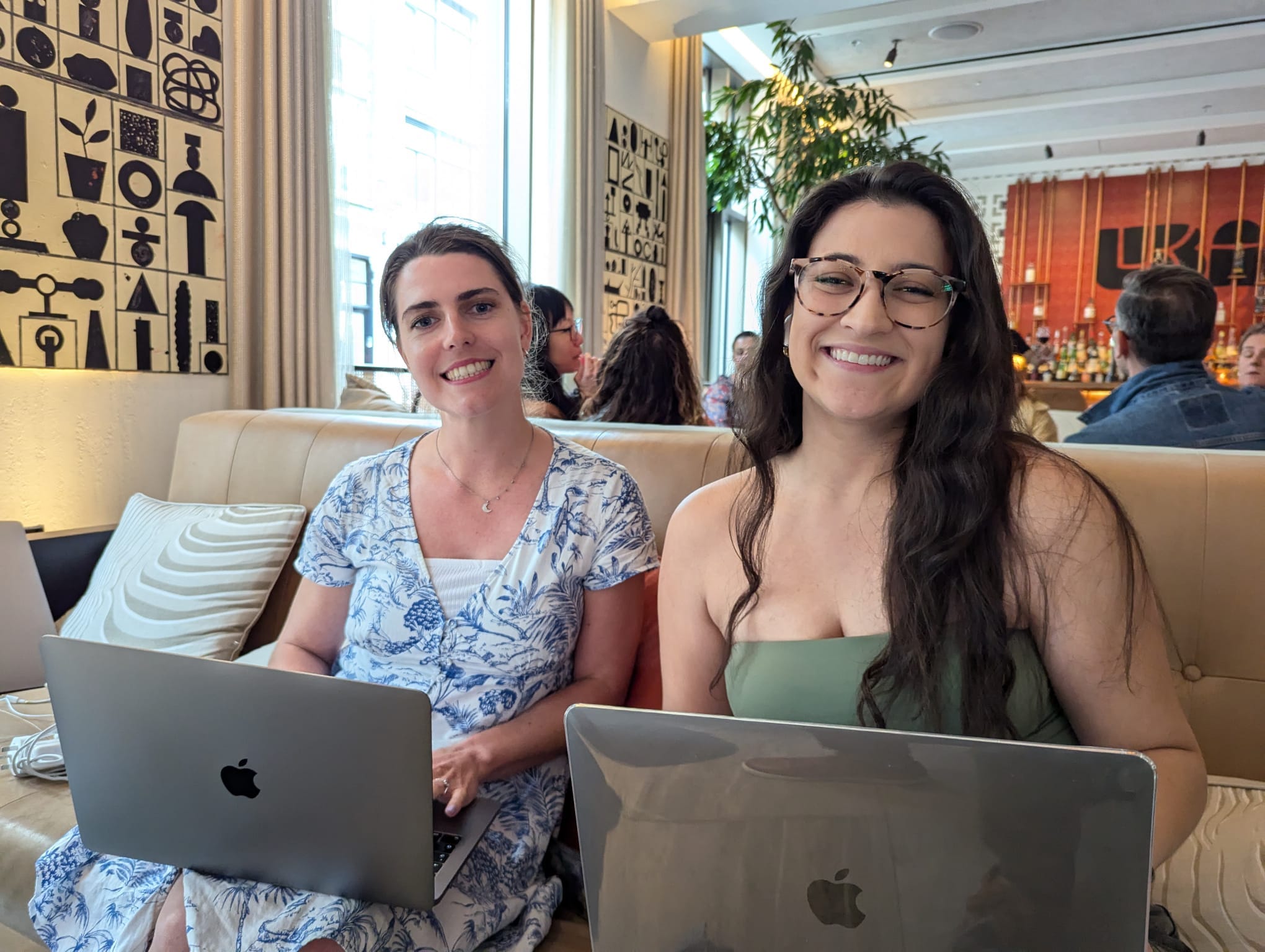
Source: Vikash Chohan. My friend and coworking buddy, Alicia, and I coworking at Hart Hotel in Shoreditch
Join me on 4th December at the Coworking IDEA workshop, where we explore this topic in greater depth. Read more about the IDEA challenge.
I’m a huge advocate for coworking and being around other people.
In fact, my first coworking experience empowered me to get out of the house and overcome loneliness during strict lockdown rules in Scotland. Then, a few months after moving to London, I met two groups of like-minded freelancers through coworking, and those people continue to support me through the ups and downs of managing a freelance business. I can now say some of those people have become my closest friends.
But I can’t deny there’s one aspect of coworking that frustrates me: I simply can’t concentrate in a shared workspace, and I struggle to achieve focus work of any kind.
Now, I’ve tried many different workspaces and third places. I’ve worked out of cafes, hotel lobbies, fitness centres, on the go in the airport, and while travelling across the country aboard trains. I’ve joined several coworking offices and enjoyed free taster days and coworking trials.
But I’ve never been more productive than working from home, alone, playing my favourite music, sans distractions (I often have to put my phone in another room and close all tabs on social media channels to achieve this).
Are coworking spaces unproductive for everyone, or is it just me who finds them an Aladdin’s cave for distractions?
My brilliant coach, Claire, encouraged me to write this piece, to explore what makes a productive workspace so, please forgive a little bit of self-reflection while I explore this topic — whether personality type impacts how we experience coworking.
The productive, or unproductive, nature of coworking
The global coworking industry celebrated International Coworking Day last Friday (9th August, marking when, in 2005, self-proclaimed pioneer of coworking, Brad Neuberg, published a blog post about coworking .
In that piece, he claims that the benefits of coworking include a sense of community and structure – overcoming the lack of freedom found working in a traditional office, and feeling lonely and developing bad habits, including unproductivity, while working from home.
I thrive when I’m working from home, namely because I’m all alone. But, say you’ve got children, or pets at home, or regularly take deliveries, or have building work done at your house, or your neighbours are really loud, maybe you don’t have a dedicated office space or efficient office equipment…the list can, quite literally, go on.
When I interviewed Anna Chuicharoen in my last blog post, for instance, Anna told me: “I’d rather find a professional workspace,” than work from home or in a third place, like a library. These details matter. With every distraction, it takes 10-15 minutes to regain flow in our work.
In fact, research conducted by Forbes found that 26% of employees who work from home experience distractions, 19% have reduced well-being, and 15% struggle to come up with new ideas. It seems then, that the coworking experience could be divided up between people who can concentrate and achieve work tasks in a shared workspace (and thereby flourish in these spaces), and those who get easily distracted.
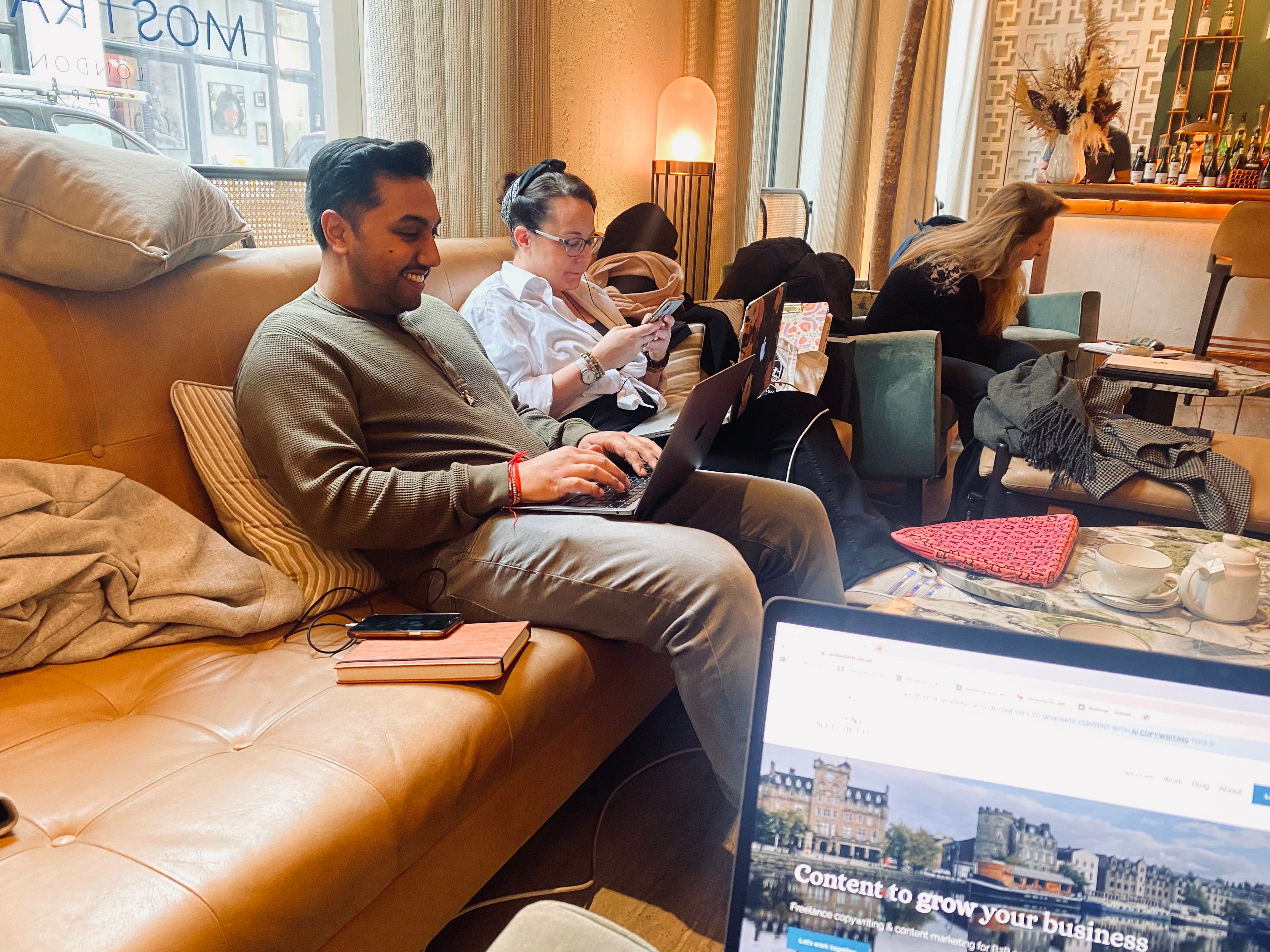
Another coworking session at Hart
How does personality type play into workspace productivity?
I know plenty of people who claim to be more productive in workspaces, many of whom thrive off the energy of people around them and enjoy coming into the office for this very reason.
This was once requested to me as an article pitch, where I researched whether personality does indeed impact the way we work in certain environments. Interestingly, people typically fall into one of the ‘Big Five’ personality types, which covers the following:
Openness: Curious, imaginative creatives who are open to try new things.
Conscientiousness: Organised, competent, and self-disciplined individuals.
Extroversion: Social butterflies who gain their energy being surrounded by other people.
Agreeable: Someone who treats others with empathy, trust, and altruistic behaviours.
Neuroticism: Anxious and stressful people.
Even more, many people are split between extroverted and introverted characteristics, which typically define whether you feel energised around others (extraverted), or you need some time away from people (introverts).
In a super engaging podcast on ‘how to love your job,’ productivity guru, Ali Abdaal reckons that “generally, everything is more energising and fun when we do it with more people around us because we’re more social creatures.” He goes on to say that when he was studying, working with his peers in the university library enabled him to “Tap into the energy of the people around you”. Ali recommends everyone should work around other people to boost their productivity.
But, I don’t think Ali has considered introverts, who often need time by themselves to regain energy before being around people again, and can find social events tiring.
While extroverts typically thrive in shared spaces, such as coworking spaces and offices with big, open spaces, introverts don’t. But, as a BBC article explored, “some people simply have dispositions and personality traits that enable them to better adjust to the new world of remote work than others.” Many people who can and choose to work remotely identify as introverts. But, how do we design more inclusive workspaces for introverts?
Design tips for a productive workspace
While speaking on a recent podcast with Bernie Mitchell, interior designer for the flexible workspace industry, Dean Connell, discussed how big open workspaces can be distracting, especially if they have a barista cafe and enable people to walk up and down the space.
Again, he says how an individual thrives in that space is situation-dependent. For example, a 22-year-old living in a house share might work well in this environment, finding it more productive than their bedroom office (going back to our introvert vs extrovert discussion), while someone with a more productive home office setup possibly won’t.
Someone who is introverted perhaps, or neurodiverse (accounting for 15-20% of the UK population). In fact, a survey published in the Journal of Research and Personality found a link that “open bench seating was…detrimental to momentary focus for those high on neuroticism.” Equally, David O’Comin, founder of Nook wellness pods, expressed how the nature of coworking “can be challenging to a quiet mind” because of the comings and goings, and regular changes and events in a space.
This is why David designed Nook wellness pods, to create places of calm in workspaces (and other public buildings like schools and hospitals), specifically catering to neurodiverse needs.
Additionally, implementing a sensory design approach supports “everyone’s opportunity to receive information, explore the world, and experience joy, wonder, and social connections, regardless of our sensory abilities.” For example, a space filled with natural lighting, neutral colour tones and soft, furnishings that absorbs background noise. If you’re designing for the neurodiverse community, these elements of the entire space can be considered.
Both introverts and extroverts might wish to have a range of workstations to use – from breakout spaces with comfortable seating to collaboration booths, and desk space. It’s important to consider who you’re designing for and how they’ll thrive.
But, overall, every individual has different needs and preferences. By communicating with your community, you can understand what factors will help and hinder their workspace productivity, empowering them and their businesses along the way.
I talked about this topic a few months back with Bernie Mitchell. Listen to our conversation here.
For more musings on the coworking industry, follow me on LinkedIn.