


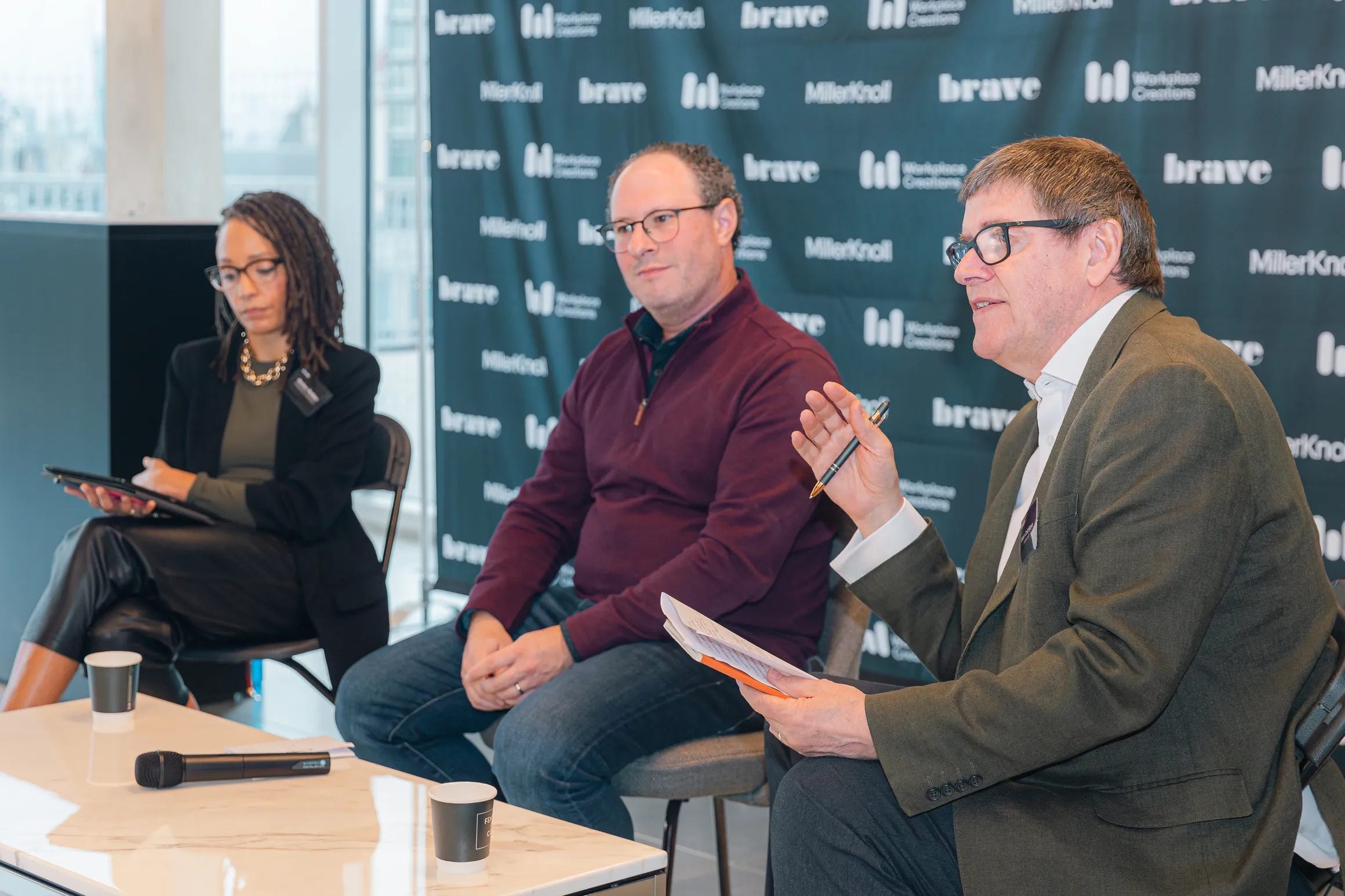
The workplace isn’t just about the space, it’s not necessarily about the location or the furniture. ‘The essence of a workplace is the people,’ said Mark Catchlove at Culture First: Leading the Way in Commercial Real Estate – an event hosted by Brave Ideas at the brutalist beauty, Space House in Holborn, a couple of weeks ago.
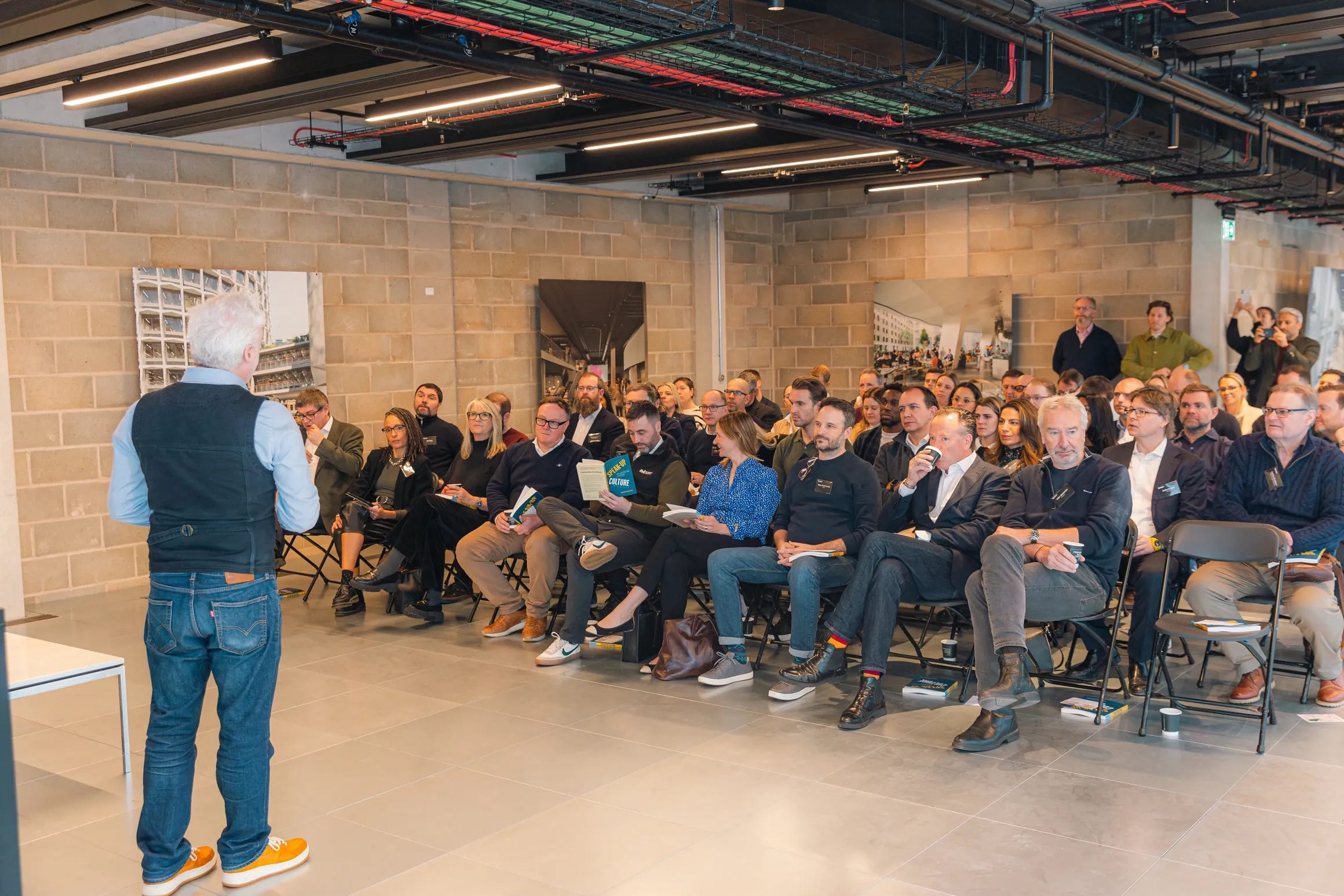
Organised by Caleb Parker (Founder, Brave Corp), with MC, Tim Burke (Editor at EG News), the eye-opening discussion around culture, values, and community in the workplace, featured keynote speaker and author of ‘Speak-up Culture; When Leaders Truly Listen, People Step Up,’ Stephen Shedletzky (introduced as ‘Shed’).
Leaders set the ‘heartbeat of workplace culture’
In your coworking community, can you identify the people who show up week after week, the people who strive, and influence others? Those people can be described ‘leaders,’ introduces Shed. These individuals attempt to lead people in the world.
Typically, leaders possess the following characteristics:
Decisive: Leaders are quick to make a call on something
Compassion: An understanding and level of kindness defines a compassionate leader. While the ‘empathy’ trait is something you might expect leaders to possess, Shed explained how empathy can sometimes cloud judgment.
Confidence: A confident leader is influential, but arrogance is a form of insecurity that derails confidence.
When I worked in the coliving industry, operators were always banging on about having a ‘star player’ – a resident everyone naturally gravitates towards. That person was typically extraverted, but not cocky. Their opinions were respected and they spoke up, but they weren’t too overbearing.
Similarly, one of my friends organises a weekly coworking meetup at a hotel lobby in Shoreditch. He always shows up. In fact, he’s usually the first person to arrive, and the last to leave. I would say he possesses the attributes of a leader because he is quick to make decisions (ever making a decision about where to go for lunch, he’s already putting a cafe into Google Maps). He can sit and listen to one of us talk about the struggles of freelancing, or a business problem, for ages, and he’s confident in his own abilities.
My friend has built a large group of coworkers around him. Applying this to a coworking context, there’s probably at least one individual in your community who you can identify as your ‘star player.’
The question is – how will you nurture and empower that individual? I’ve got a few ideas:
Try and spend some time with that person, get to know them personally, and ask for feedback.
If that person has an awesome idea (like for an event or social), roll with it!
Allow that person to bring in new people into your workspace and accommodate that, within reason. For instance, can you organise regular open days where your members bring in their friends to your workspace?
Incentive your members if they bring in another full-time coworking member (such as offering a free month).
What is culture, anyway?
The official definition of ‘culture’ is: “the arts and manifestations of human intellectual achievement regarded collectively.” According to Shed, a strong culture is a combination of values and behaviours, and the power of influence, impacting how we feel.
But as we’re all too aware, culture can be good or bad.
In one of my last pieces, I wrote about the truth behind a ‘good vibe’ in coworking spaces, following Dr. Louise Suckley’s insightful talk at the RGCS symposium in Milan. It explored how people and communities in shared workspaces can create a positive atmosphere, or ‘vibe,’ which “is created by the people who use that space. They bring the value, the experiences, and the cultural values that all tie together.”
In coworking, we’re often quite fortunate that our communities are typically made up of friendly, positive, and respectful people. However, this can’t always be said in other work environments. For instance, on Shed’s first day at his corporate job, 1,000 employees were let go. The ‘vibe’ was pretty unhealthy, to say the least. Not only that, but he explained how the company values didn’t filter down amongst employees, and the organisation became a breeding ground of resentment.
Leaders can set a particular culture by how they show up and lead. In fact, Shed expressed: “leaders set the heartbeat of workplace culture.” Many businesses have the intention of creating an awesome culture, but it doesn’t always translate. Sometimes, it’s down to factors like lack of trust (RTO mandates, anyone), narcissistic bosses, and simply not living and breathing their values.
The impact of workspace design
Workspace design can also have a huge impact on workplace culture. Bringing in two design experts – Mark Catchlove (Director at MillerKnoll) and Marissa Wallder (Senior Creative Designer at Workplace Creations) — Shed invited them to share their experiences around workplace culture, and the influence on workspace design.
Take table tennis as an example – a fairly recent addition to shared workspaces. While consulting with a company that had a table tennis in the workspace, Marissa learned that no one used it, however, it was taking up valuable space that could be utilised for other purposes, such as a breakout space, which she identified that they still needed somewhere in the workspace.
According to Marissa, there are four key factors impacting culture in a workspace:
Pride of image
Privacy spaces
Community and people – woo!
An enjoyable place to work
A staggering 40% of people in the workplace are introverted, said Shed. Typically, they don’t thrive in busy, vibrant workspaces, (especially when there’s a table tennis ball constantly bouncing around!). I’m super sensitive to distractions too, and in an open-plan office, it can be really challenging to have a productive work day.
Not everyone struggles, however, those who do typically end up working from home in order to focus. When people are physically missing from a company or workplace community, this impacts culture. It also affects the individuals who don’t feel comfortable coming into their physical work environments, so they work remotely. However, remote workers can feel left out and lonely.
Creating serendipitous moments (with cranberry muffins)
Surprisingly, cranberry muffins can be the solution. Shed explained: if you and your coworkers both reach for a cranberry muffin at exactly the same time, an interaction ensues, often a funny one. This interaction may continue past this moment because you’ve broken the ice, so to say.
Where will a cranberry muffin moment take you?
This week, Sarah Travers (CEO at Workbar) shared a LinkedIn post about how she met her husband, in a shared workspace. It made me think back to Shed’s analogy about the cranberry muffin — you really don’t know who you’ll meet and where that moment will take you, but if you’re working from home 100% of the time, you won’t have these same interactions with people.
Back when I started going into a coworking space in 2022, my friendships with several other freelancers in that community formed because we all tried to sit at the same table every day.
This got so competitive that we’d arrive at the workspace super early to try and get a seat (there were only four desks up for grabs). The hilarious thing is that these desks were no different from the desk next to them. It was just something about how that moment began that turned into a joke for the entire duration of my membership there.
Even though we’ve almost all left that workspace community, our Whatsapp group chat name still remains: The Cool Table.
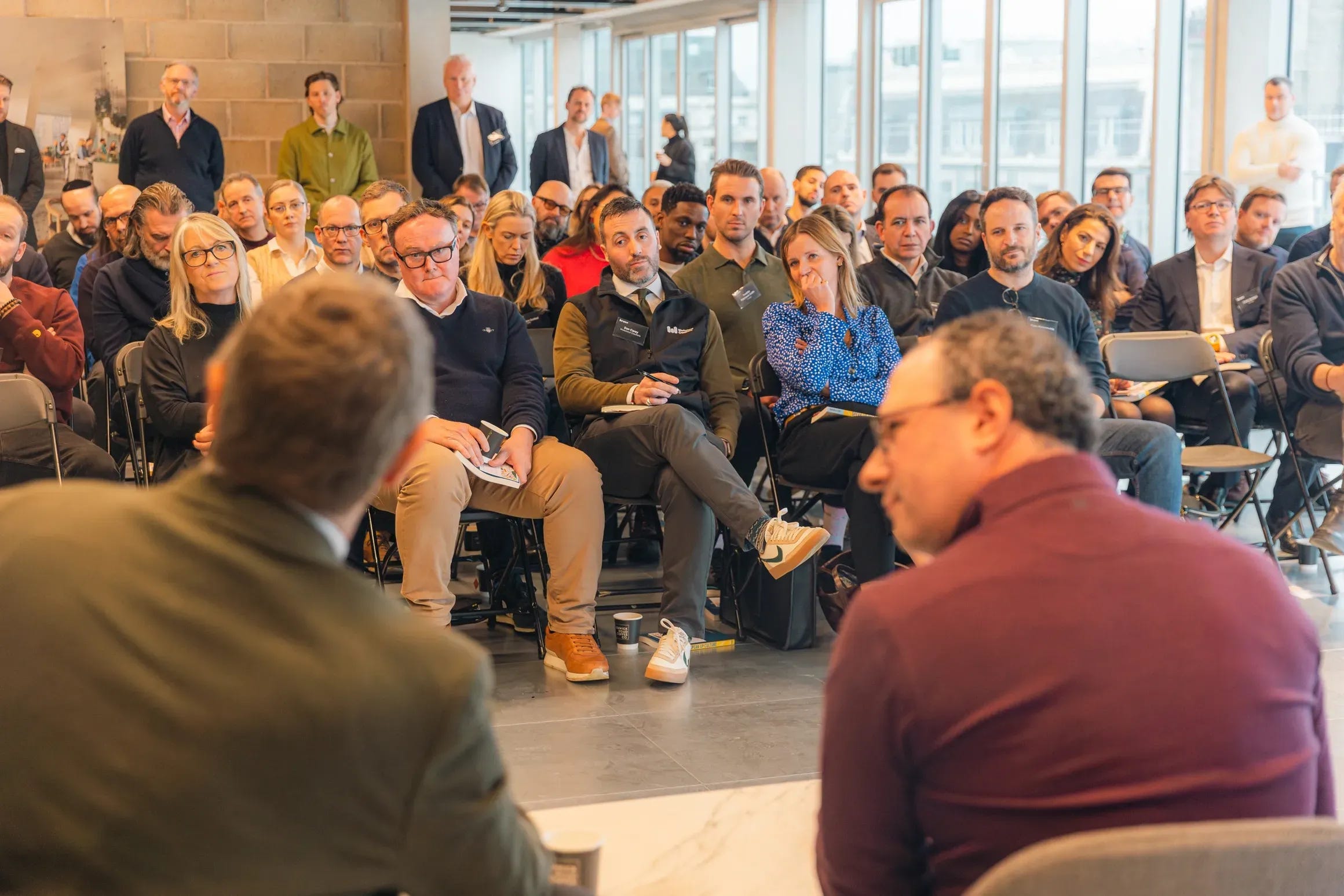
This nicely segues into my final point about the importance of storytelling. Shed asked the audience: ‘How many stories are you creating every day to nurture your values amongst your customers, and your teams?’ Another question promoted: “If we want people to build relationships, how do we create cues for serendipity and social interaction?”
Shed shared an example of taking a walking meeting on the Nike campus within a labyrinth – a circular maze that is often associated with contemplation. He remembers it well, but the space itself was designed to cue certain interactions and emotions.
Value, culture, and community
‘The workplace is always in beta mode’, says Mark, quoting author and blogger, Neil Usher. The world is constantly changing, but businesses can strive to make a positive impact on the world, and other humans. When you act on positive, open, and transparent values, this filters down to your team and customers’ behaviours.
How is your workspace making an impact on your communities, what are you striving for, and how are you putting your values into practice to empower your leaders while creating a fabulous community of human beings?
Get in touch, I’d love to hear how you’re getting on.