


Charlotte Kirby is the entrepreneur behind The Village Hive, a community-focussed coworking space that came about after Charlotte had a chance encounter with a coworking space ten years ago.
Now, Charlotte is managing three coworking locations in Canada and partnering with landlords to bring vibrant coworking spaces into communities where people crave connection. She believes that coworking creates meaningful opportunities for people to work, connect, and thrive—by transforming underutilised spaces into welcoming, flexible environments that support local entrepreneurs, remote workers, and small businesses.
In this article, Charlotte shares The Village Hive’s remarkable growth journey, her outlook on hospitality (and the importance of hiring the right community manager), and what she finds most rewarding in running a coworking business.
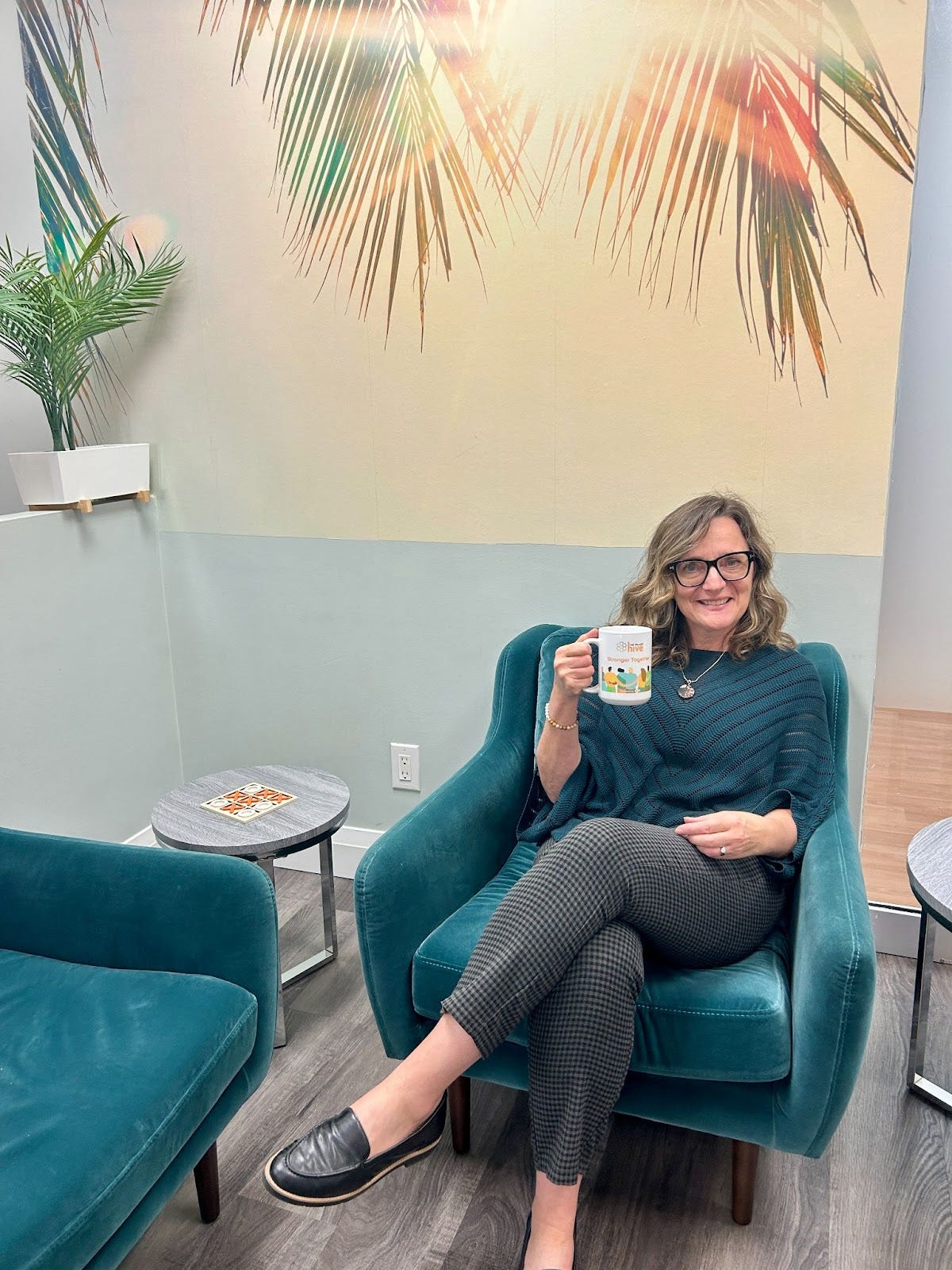
Photo credit: The Village Hive
1. What inspired the inception of The Village Hive, and how has the community evolved as you've expanded across three locations?
Charlotte: Each year, I used to attend the TED X talks in Toronto, but in 2015, they sold out. I heard they were broadcasting live at the Center for Social Innovation (one of the first coworking spaces in Toronto). Back then, I had no idea coworking spaces even existed, but I went there to watch the speakers.
It's a good thing I didn't get that ticket for the TED X Toronto, because going to this coworking space changed my life. I was really intrigued by this workspace – it was an old historic building in Toronto with tables, chairs, a little cafe, comfy couches, offices, boardrooms, meeting spaces, and people working in different areas of the space. Some people were focused on their work, others were chatting and connecting…I thought it was a really cool concept.
At the time, I worked part-time in healthcare as a Director of Medical Affairs at a local hospital, and part-time as a consultant (which I loved). But, I didn’t like working from home when I wasn’t in the hospital. I found it lonely.
When I had children, I could work from home after my maternity leave, which was great on one hand, because I could pick my kids up right after school or daycare. However, I missed the water cooler chat and connecting with people in person. I’d also feel guilty if I hadn’t done anything around the house, like the laundry, cleaning, and even getting dinner ready at the end of the day.
After visiting the coworking space in Toronto, I wondered if other people working from home craved connection and a change of scenery, and if such a space was needed in Markham (the city where I live). The ideas kept popping into my head, and I began looking for other opportunities beyond working at the hospital.
There was this beautiful schoolhouse that intrigued me. I drove by it many times, and always wondered what was going on inside. Then one day, I noticed a ‘for lease’ sign come up. I went to look at it, and thought: “I wonder if I could open a coworking space here?” Shortly after, I left my job at the hospital and opened up my first coworking space in Markham in January 2016, and haven't looked back since.
I've always felt drawn to entrepreneurship and building something centered around human connection. Even in my previous roles—whether in human resources, career counselling, or advising—I was focused on helping people, fostering collaboration, and supporting community. Creating a coworking space felt like a natural extension of that passion.
Unfortunately, because of office closures during COVID, I had to let go of some of my space in my original Markham location. But, I had already been approached by a landlord in Toronto who was considering bringing coworking into one of his vacant offices. Despite the uncertainty of COVID, we opened up my second space in North York.
We kept opening and closing, but it gave us some time to slowly build the business, get all the policies and procedures in place, explore the needs of our members, hire the right community manager, and get a good grasp of what this space could be.
Seeing the success of our North York location, the landlord was open to bringing coworking to another one of his office buildings in Midtown Toronto, where one of the tenants was leaving. This is how The Village Hive has evolved and expanded to three locations. It’s been an amazing journey.
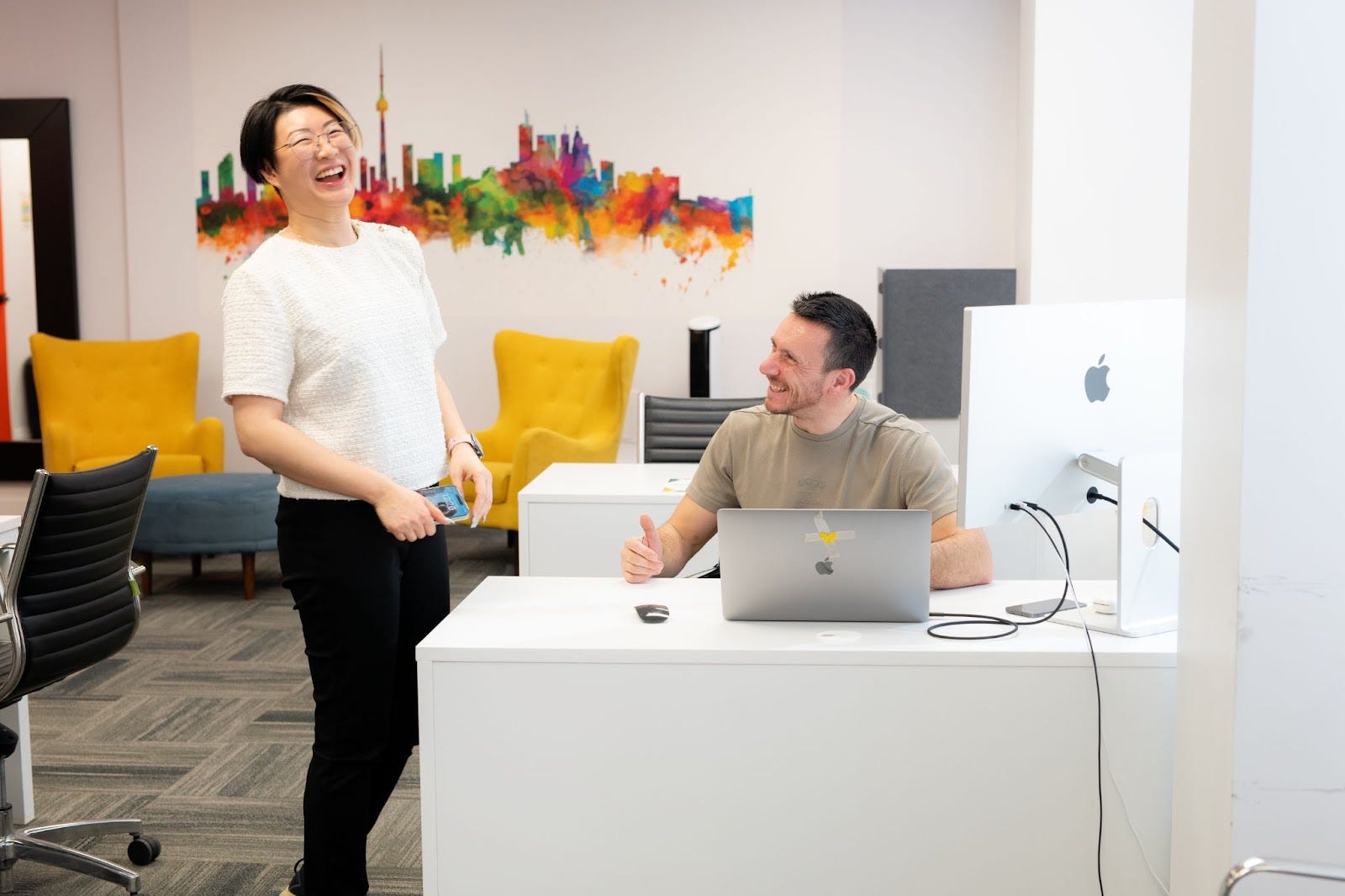
Photo credit: The Village Hive
2. Community-driven programming is a key part of your coworking model. Have there been any stand-out events or initiatives?
Charlotte: We’ve had hundreds of events since opening our first space. During COVID, we ran online member events with different guest speakers, and even coworked online together (as many of our members felt isolated at home).
There have been many standout events, particularly those organised by Monica, my amazing community manager, who loves hosting. She has German heritage, so every year, she organises Oktoberfest, and people absolutely love it. We set up a barbecue outside, my husband comes to barbecue, and Monica decorates. It’s probably our biggest event of the year.
Monica comes from the hospitality industry. That's a background I highly recommend for anyone hiring. Community managers need to be more than just organised – they must be warm, outgoing, and excited to bring people together. It's not just about hosting a social event, it's about creating an atmosphere where members feel welcome, engaged, and like they’re part of something special.
Our members also host a ‘lunch and learn,’ where they can share their expertise. For example, one of our members runs an e-commerce company, and he’s on top of things with AI, which everybody wants to learn about. They're not selling their businesses. They're just offering support, whether for CRM or marketing, or, in Filip’s case, AI. These events are really well attended.
Today, we're having a ‘make your own sandwich bar and social’ while at another location, one of our members (who's a psychotherapist), is running an event on ‘how to connect, take advantage of being in a coworking space, and make connections beyond your desk’. It’s really cool when our members get involved.
I'm exploring opening up a coworking location in other suburbs of Toronto, and I've been getting positive feedback about the need and desire for a coworking space there. Next month, we're hosting a pop-up coworking event at an art gallery in the city of Aurora to see how that goes. If we see high demand, then we'll look at properties to open up a coworking space. We’ll approach the municipalities, economic development, the Chambers of Commerce, and the boards of trade to see if there's interest in some sort of partnership.
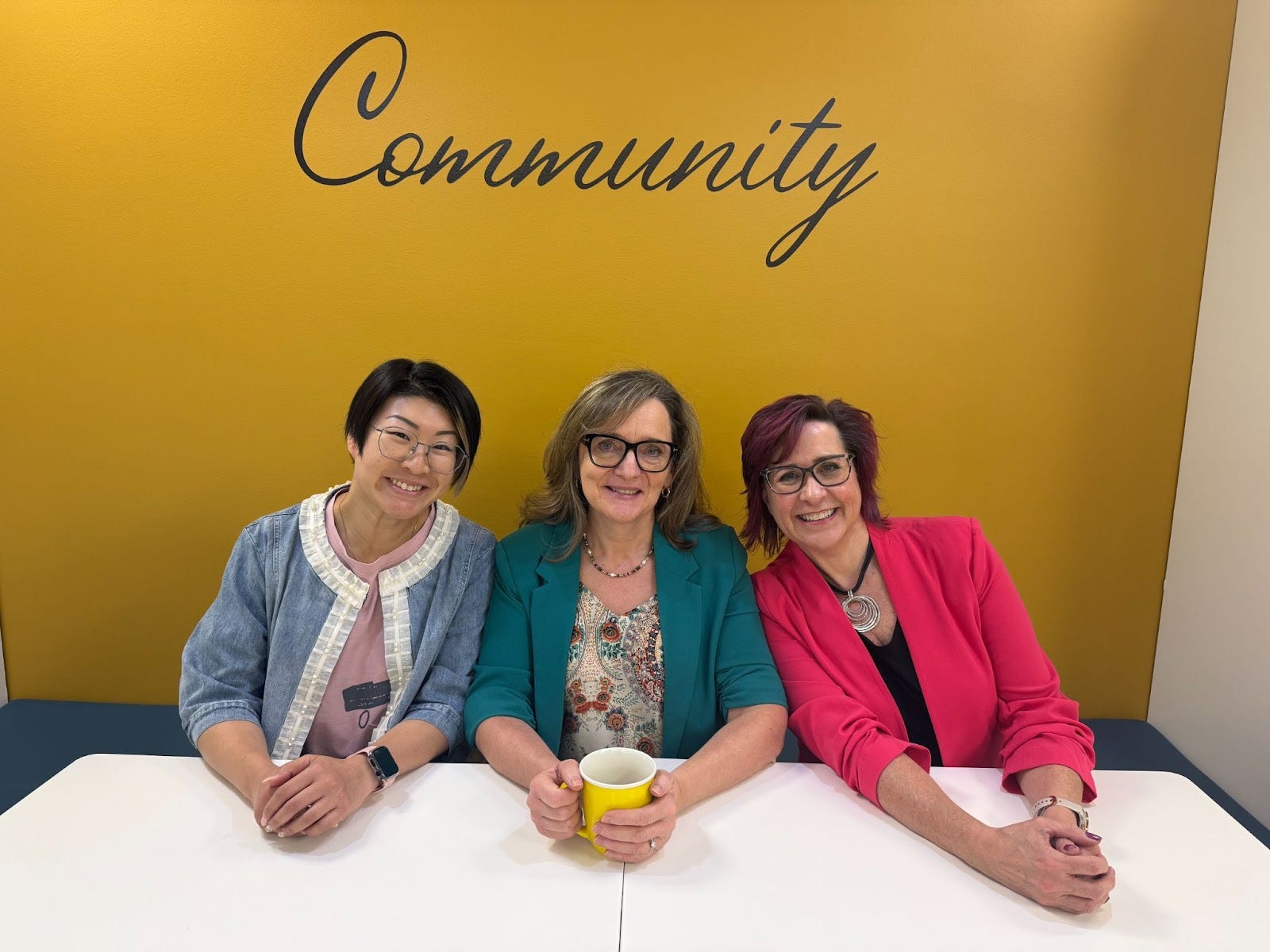
Photo credit: The Village Hive
3. What’s the most rewarding part of watching your members grow professionally and personally through the connections made in your spaces?
Charlotte: Some of our members will jump from space to space and fully take advantage of connecting with people at each location. Recently, I met one of my members who had been at one of our locations and moved to another. Just catching up with him, and talking to him about his kids, and what’s new with him, created moments of excitement.
I went into the kitchen to make a coffee yesterday, and my heart was full seeing people chatting and laughing with each other. Those conversations don’t happen if you're working from home, or even if you're just sitting at your desk all day.
We have many software developers and people in the tech industry at one of my locations. What started as a group of strangers has become a supportive community—now they're collaborating on projects, offering advice, and helping each other troubleshoot tech issues. They're sharing meals, ideas, and inspiration. That’s exactly why I created these spaces—to spark meaningful connections and community.
The revenue that comes from renting desks and having event and meeting spaces isn’t why I do this. It's all about seeing the laughter through the bad times and celebrating the good. The most rewarding part is the genuine connections, trust, and friendships built over time.
4. In your experience, how does coworking transform underperforming properties, and what role does community play in this transformation?
Charlotte: I've been operating my coworking business for coming on 10 years now, and have been approached by many landlords and realtors with offices for lease or sale who are interested in bringing coworking into their buildings. It’s kind of morphed into doing consulting work and working with an American colleague in the coworking industry on some projects where companies come to us with vacant space to fill. I’m loving this work.
Coworking has the power to breathe new life into underperforming properties by turning unused space into hubs of activity. For example, my North York location is part of a larger warehouse that houses a self-storage facility. When we first opened, the storage team included us in their newsletter, and some of their customers realised they could also use the coworking space for meetings or as a dedicated office.
What was once a single-use property now supports over 20 businesses—bringing energy, foot traffic, and a stronger sense of community to the area. That’s the transformation coworking can create—not just for the building, but for the entire neighbourhood.
At our midtown Toronto location (which is in an executive office building), my business partner (the landlord) has noticed more vibrancy in his building. He’s been fixing up offices to accommodate the current needs of the changing work environment. Nobody really wants to rent out or sign 10-year leases anymore – landlords are realising that flex space is what people are looking for and are being more flexible in terms of leases or having flex space or coworking in their portfolios.
If you have a vacant office, and so many do, why not bring coworking in and test it out? If it doesn’t work out and a large tenant comes along, there’s no loss – the idea is flexibility. Be open to trying new things and observing the demands of the office market. The struggle is finding the landlord who’s open to that idea, because they prefer one company signing a 10-year lease. It's not happening.
Our original space in Markham is very close to Main Street, so our members will walk over to buy lunch and come back. Coworking brings vibrancy, not just to commercial buildings, but to communities and neighbourhoods.
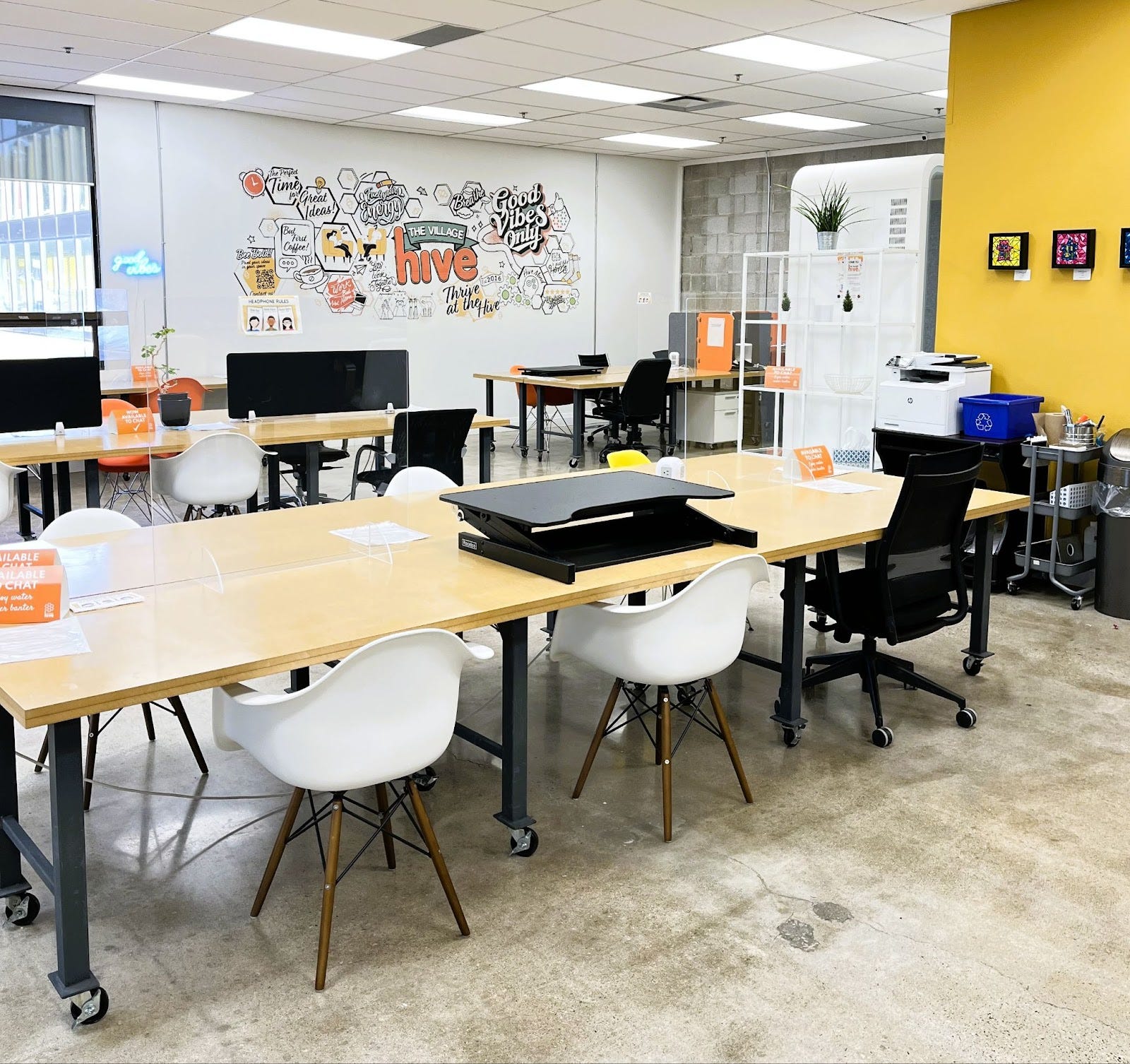
Photo credit: The Village Hive
5. What future innovations or trends do you imagine will shape how people connect and collaborate in coworking spaces?
Charlotte: Hybrid work is here to stay, although many companies are calling employees back to the office. I hear this a lot: “Nobody wants to go back to the office.” However, we're meeting a lot of people who miss going to the office.
Going to a coworking space is a little different because you're choosing where and when to go to work, and meeting people from different industries. In larger cities, you have a choice of which coworking space you can work from. People like different spaces for different reasons.
Even though our members can work from home, they choose to come to a coworking space because they crave connection. I'm glad we can use Zoom, because if not, then conversations and connections wouldn't happen, but if I really wanted to get to know someone, I'd rather meet them in person.
Hybrid is here to stay, but people crave connections. A lot of big companies have let go of their main headquarters, and their staff work remotely. They're coming in and using our meeting space or event space for team building events, and they love it.
They get to see each other once a week or once a month and use the space, but they don't have to worry about covering their monthly overheads and expenses in an office. It’s easy to book, and we've got the best staff to make their time more enjoyable and seamless – we're enjoying having these bigger companies coming in more regularly.
More than ever, people crave the opportunity to bounce ideas off others, especially remote workers, small teams, and entrepreneurs. That’s where the role of a community manager becomes so important. It’s not just about providing a desk—it’s about curating experiences that spark conversation, creativity, and a sense of belonging.
You can easily sit in a coworking space all day without talking to anyone, but a great community manager creates those intentional moments that bring people together—through wellness initiatives, networking, and cross-sector events. I’ve been lucky to have incredible staff who really understand how to build that kind of vibrant, connected environment.
I see opportunities to work with municipalities to open up coworking spaces in cities where maybe there aren’t any, and where people don't want to travel far. For instance, if you live in the suburbs of a big city, you're not going to hop on a subway or train and go downtown to a coworking space. In the future, I see more local coworking spaces popping up, whether independent or in collaboration with municipalities.
We often hear from new members that they appreciate our personal touch. Many have tried larger coworking brands, but found something missing—like being greeted by their name or feeling genuinely welcomed. At The Village Hive, our community managers go beyond front-desk duties; they create meaningful connections and moments that make people feel seen, supported, and part of something. Our 5 start Google Reviews all talk about how great Serene and Monica are.
What I see continuing to happen in the coworking industry is the continued rise of independent, hospitality-focused coworking brands in communities and neighbourhoods closer to people’s homes, where people can connect and come together for collective causes and support the local economy.
People Make Coworking celebrates the people who make up the fabric of the global coworking movement. By exploring the community, connection, and collaborations – the ‘co’ of coworking – this blog series shares stories from catalysts of the coworking movement and community builders.
If you’d like to share your story in ‘co’, please get in touch. I’d love to speak with you for a future feature.