


More than just a place to work, HurstWorks is redefining what a high street coworking space can be. Nestled in the picturesque village of Hurstpierpoint in West Sussex, HurstWorks is the brainchild of Rob Fisher and his wife Rachael, two community-minded entrepreneurs on a mission to breathe new life into local high streets through their Better High Streets vision.
Since its opening last year, HurstWorks has evolved far beyond its origins as a coworking space, anchoring a growing ecosystem of wellness spaces, meeting lounges, and community-driven initiatives that blend productivity with connection, creativity, and care. Whether it’s hosting art exhibitions, supporting men's mental health, or helping freelancers find their community, HurstWorks plays a transformational role in local placemaking.
In this interview, Rob shares his journey from the corporate world to community changemaker, the lessons learned from launching a village coworking space, and why coworking spaces are sparking a powerful high street revival.
1. What inspired you to start HurstWorks, and what gap in the market were you filling?
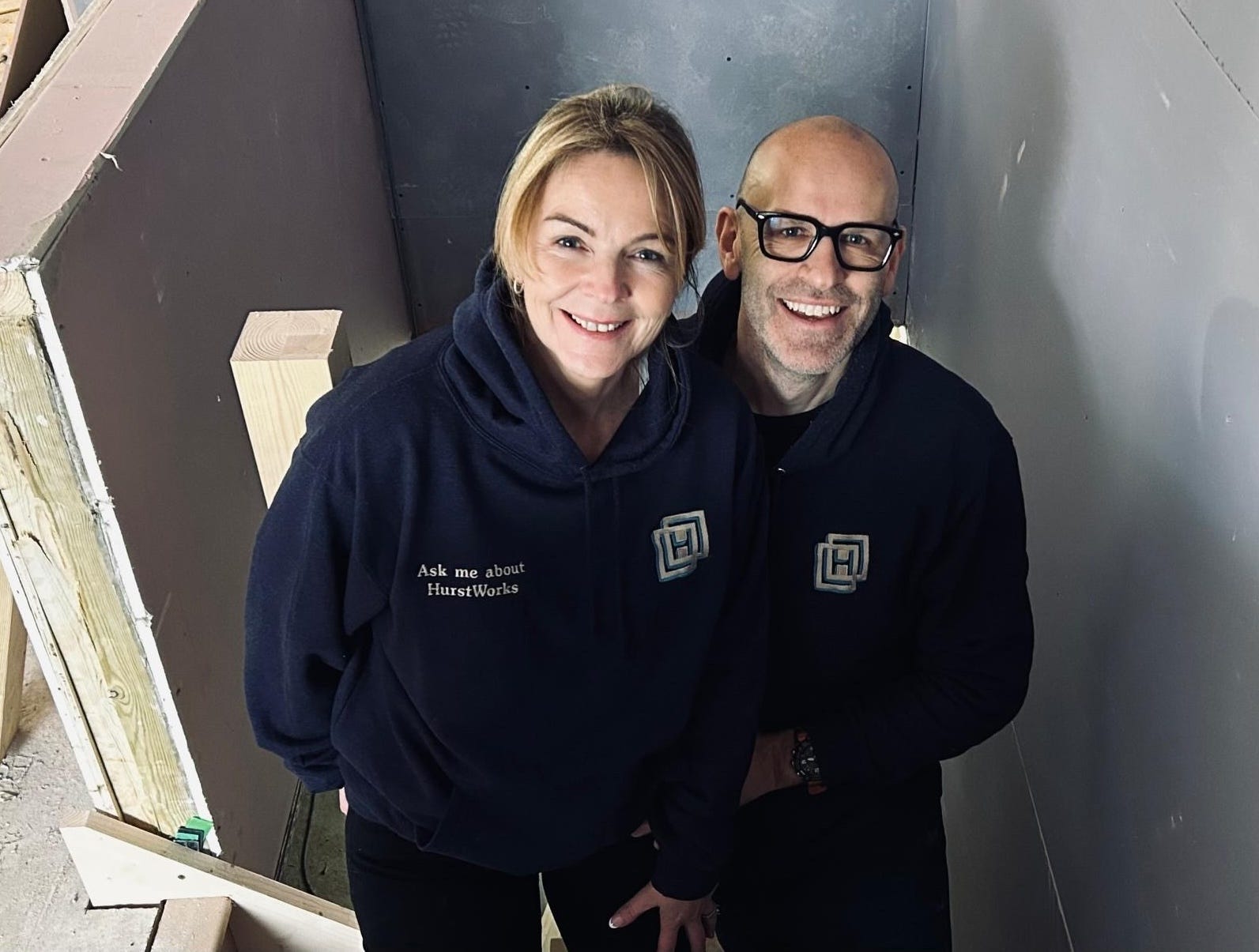
Rob: A few influences led to the opening of HurstWorks. With my wife, Rachael, we develop out-of-love high street buildings as part of our Better High Streets vision. Our point of reference is – what can we do in our small way as property owners and developers (and people interested in helping the local community), to take vacant premises on the high streets and renovate them.
Part of this work involves understanding that the circumstances are different for each high street. We’re relatively blessed here in Hurstpierpoint. But even in an affluent place, some of our local businesses have struggled with high rates and the cost-of-living crisis.
It’s important to offer a variety of experiences and update those on the high street to the way the modern consumer works. That's been the inspiration behind the scenes.
A large number of villagers commute to Brighton or London, and we have a lot of freelancers, small business owners, and scaling entrepreneurs. There was a coworking space here before the pandemic, but it unfortunately didn't survive the stresses of the COVID era. We identified a local market for coworking, so we thought we’d give it a go, and alighted on opening a coworking space.
We use the real estate to meet local needs as best we can. When we acquired our premises for HurstWorks, we ended up developing two units — one for coworking, the other for wellness — side by side as a symbiotic business model. Alongside coworking, we have two other premises on the same high street — one that offers treatment rooms and a therapy room, the other is for movement classes and a cafe, featuring a larger work lounge. It means I can now incorporate off-sites or bigger group meetings for up to 20 people, whereas previously, we were restricted to four or five in our relatively small meeting space.
I started to call time on my city career because I wasn't spending enough time with my children and didn't really know the community. Whereas these days, I feel very much connected to our community, which is wonderful.
2. How does HurstWorks fit into your ‘Better High Streets’ vision, and what role do you see coworking spaces playing in revitalising local communities?
Rob: The purpose, value, and power of high streets is this combined place where people meet, collaborate, work, and live together. For high streets to compete with online shopping and out-of-town shopping spaces, you've got to create experiences and service-type businesses that give people a reason to come.
It's part of a delicate balance of other factors. Is there accessible parking and transport links? Are there places for people to get food to eat? There’s an ecosystem on every high street, but there are also opportunities – a coworking space was an obvious gap here, and there was a need for it.
An awful lot of people struggle with working from home. Feelings of isolation are probably most often cited, as well as the productivity challenge. I certainly found it difficult to work from home towards the end of my corporate career. There are many distractions, and the setup doesn't necessarily enable a separation between your work and home persona. Too much of a good thing can become a bad thing, if you like.
It's important to become part of a community. When we look at properties and high streets, I think that coworking will remain a mainstay idea, because it acts as a real focal point and a magnet. You can also use the space for other things.
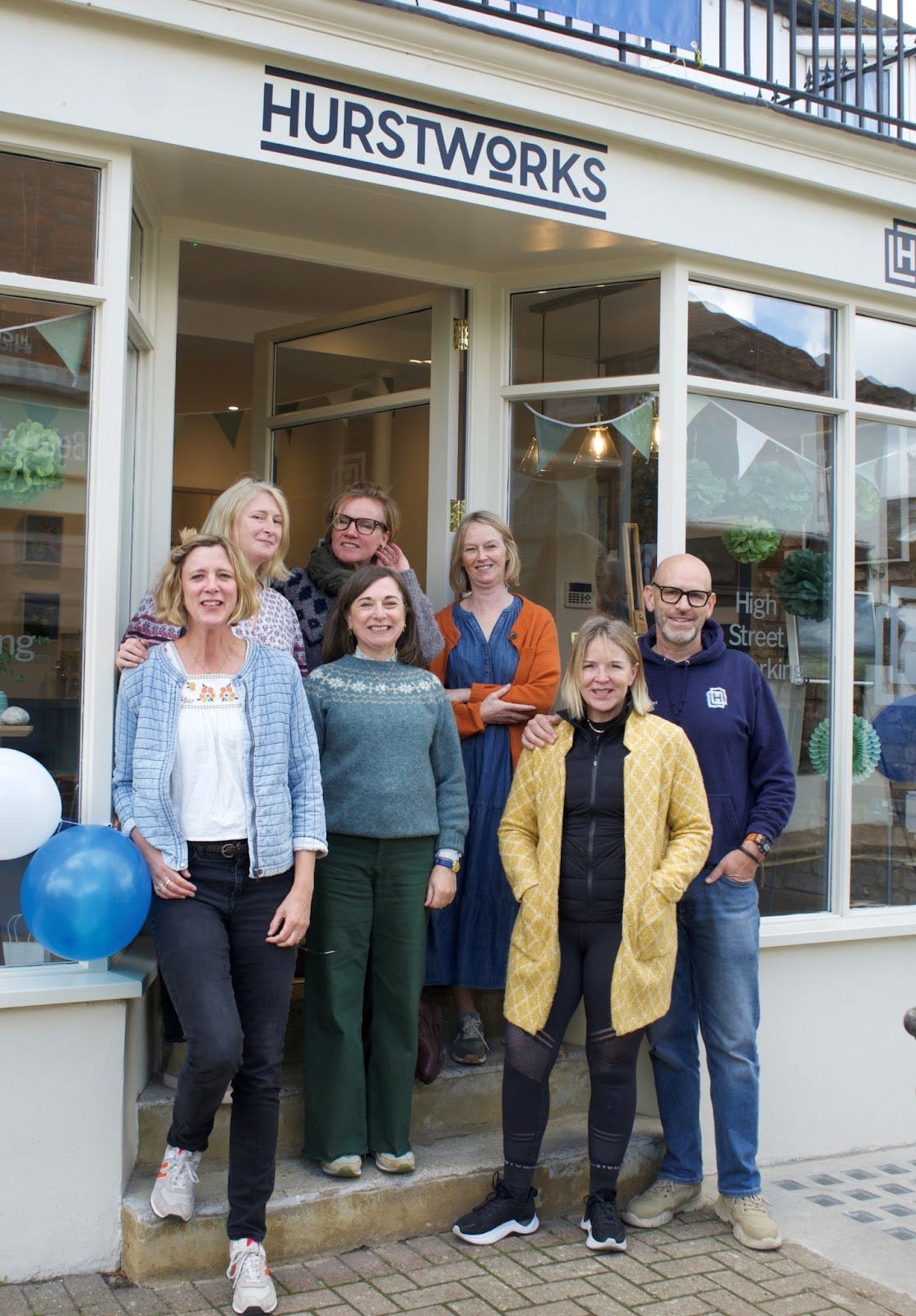
By day, we might have upwards of 14 people hot desking, coworking, having an off-site, doing an interview (all the usual coworking things). We also engage with the local community in many different ways.
3. Can you share some examples of how HurstWorks operates within your local ecosystem?
Rob: Having a building with a sole use case can be a struggle. For instance, Hurstpierpoint had an art gallery, but it didn't survive COVID. So, HurstWorks now doubles as a local art gallery where local artists exhibit their work, rotating every six to eight weeks. Again, we're lucky on the location front, as many fantastically talented artists are located in this region.
We also support local events. There's a famous and extremely old fair that's been going since the 1300s, attracting around 7,000 people to the village. We’re part of the committee — it’s an absolute minefield to organise, requiring the help of many volunteers. The coworking space facilitates our meetings and briefings; people can gather here, have a cup of coffee, and chat through plans.
At HurstWorks, we've also formed a running club and a cycling group where, every Saturday, I'll see if anyone wants to go for a ride. It's just another way to connect with people.
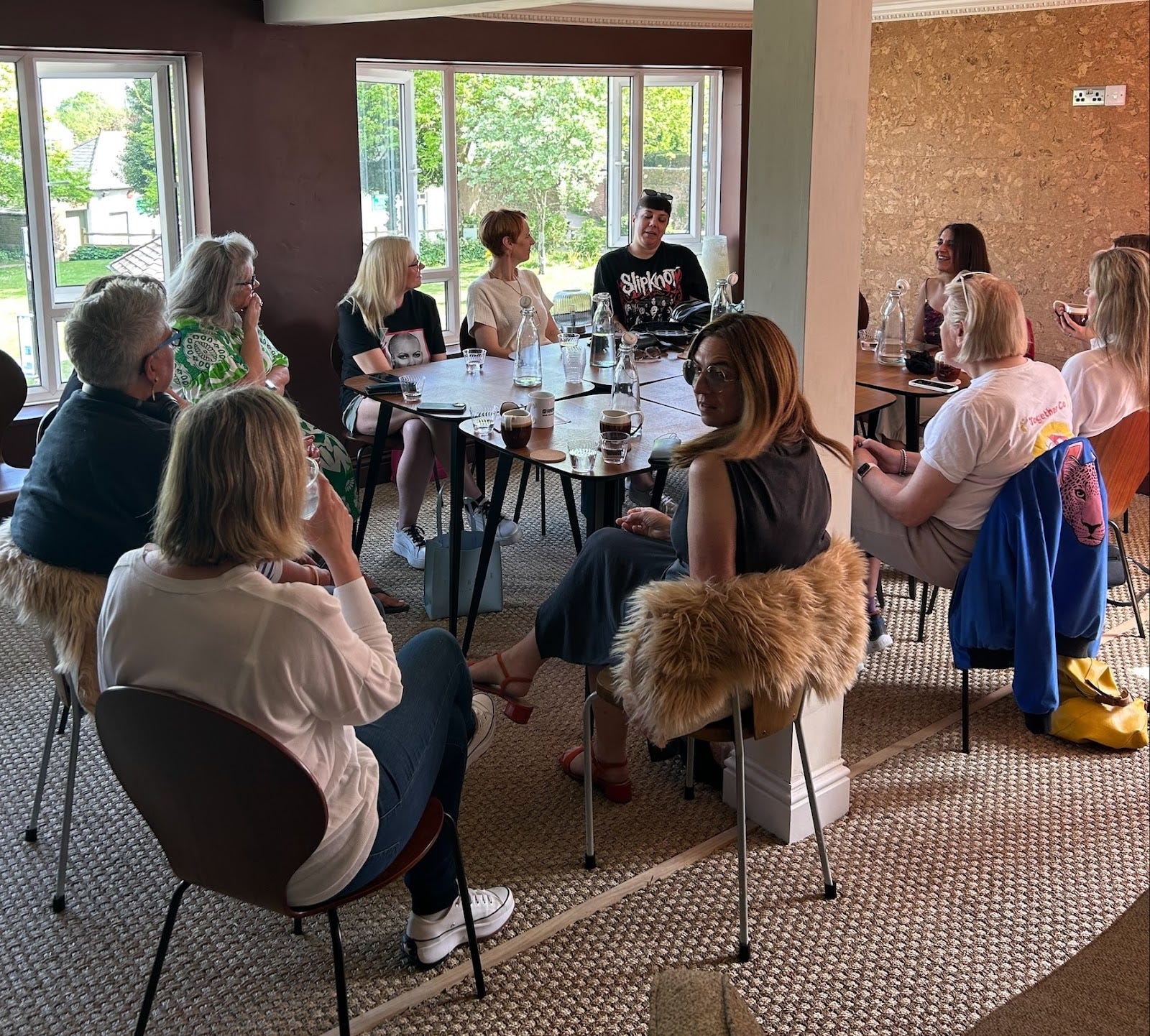
We’ve identified a gap for a men's wellbeing group too. We have male therapists and classes, have brought in a sobriety coach, and guys come together to talk and explore different topics. This week, we've invited someone to talk about anger management. As we're blessed to be close to the South Downs National Park, we organised a walk for the men’s wellbeing group and chatted away.
You can firmly believe that you just learn from everyone that you engage with here at HurstWorks. It’s great to watch when members and our pay-as-you-go customers collaborate on projects and experience serendipitous moments.
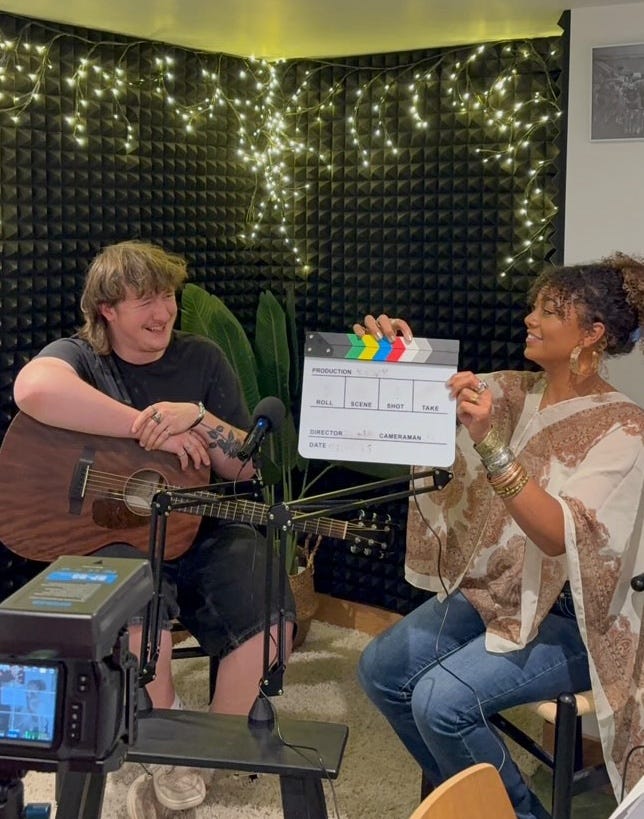
After joining HurstWorks and meeting our network, one of our members decided that recruitment sales just wasn't for him and started a content creation business. Nine months later, it’s flourishing. We now work closely together, he’s helped boost our social media presence, and given us valuable advice. Turns out, everyone needs a videographer in their lives!
4. What are the lessons you’ve learned from running HurstWorks, and what can you share with someone starting a coworking space in a small town or on the local high street?
Rob: There’s a cliché around coworking — that it's for young startups with the latest tech. Well, we serve many different age groups and profiles, and are split down the middle between female and male members.
People talk about the community side of coworking, but it's 100% true. You grow your presence and serve more people by engaging with a community in different ways.
You've got to put a lot of your energy into it and be patient with it. We've been going for over a year, and I think: “How much more could we have done to be visible in the locality?” So, patience is important.
In the UK, the running costs of any high street business are not insubstantial regarding business rates and navigating the cost of electricity, heating in winter, and cooling in summer. You have to know your numbers and be clear when you set out.
We’re a different model from some in that we don't lease the building; we own it as part of the business enterprise. That's brought us some security, as paying a commercial lease is challenging, and I don't think the economies of scale will work in a smaller location like we have just now.
As we think about another location, we would certainly welcome bigger premises. But, what we've been able to do is test most of the processes here — from reaching out to potential customers to how we onboard and manage them — and experience those sticky moments that you don't ever think to respond to until they arise. In the early days, we were probably a bit too organised for our own good as we’d both just left corporate (where you tend to think in terms of systems and risk logs).
My view on technology is: don't choose your software packages until you've opened them and had a few months to work through what you need. We use Nexudus; it’s a good, stable system. Although we’re quite small on the spectrum of users, coworking software tidies up the invoices, financing, and task management. As we’ve got to be careful when taking payments, we have external IT help from someone within our network.
We also offer a virtual office service. Some people have taken us up on that, and it struck me that I probably should have been given ‘the okay’ from HMRC as we were setting it up. I don't know how many other small local coworking spaces have HMRC coverage, but they should probably check that out, because it's definitely a requirement.
Ultimately, you’ve just got to learn week by week, and ask: ‘What can we do better next week?’
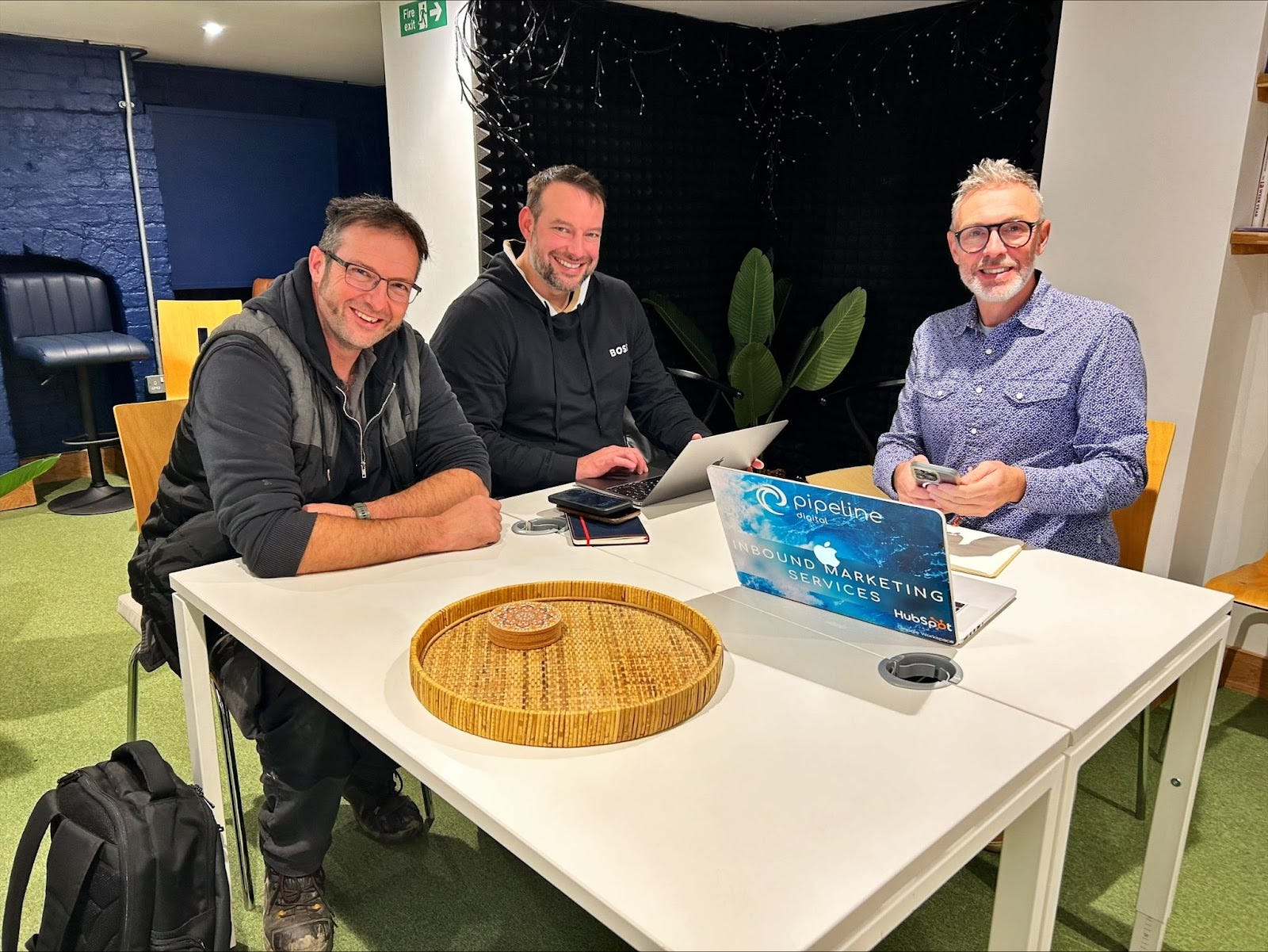
5. How do you go beyond providing workspace to support entrepreneurs and freelancers on their business journeys?
Rob: Rachael and I work together to provide coaching and courses to support businesses in the area. I'm a trained life coach, and Rachael, who was a business consultant working with big corporations, provides small business coaching alongside business startup support. So we walk the walk and help other people along the journey.
The life coaching piece is all about helping people rediscover their values, especially if they feel disconnected. We work on what's important, the wheel of life, limiting beliefs, those sorts of things. Rachael does much more around the business side of things, like the need to spend 90 minutes a day thinking about your business.
In a couple of weeks, we're hosting an all-day workshop on social media for small businesses. It's a challenge to stay on top of social media marketing, do it well, and still be human in your approach. Our workshop is all about resetting your social media. You'll come away with a 90-day content plan, ready to load it into a scheduler, and be much more disciplined.
The value of having a coffee shop as part of what we do means we end up having really interesting chats with people who give us inspiration for our workshops. But some of the practitioners, who are more directly involved with our business, are just starting out and trying to transform their health and wellbeing practice into a true career. They become too busy dealing with clients or feeling shy about developing a social media presence.
Being a small business owner and entrepreneur is a tough place to be right now. It can be very lonely, frustrating, and exhilarating – you can't sleep because you're really excited, or you’re worried about something. That's another reason why I find that coworking and wellbeing align quite nicely. Our lived experience of running small businesses enables us to help in that way.
Now and again, people ask me for help when they're thinking about their corporate careers. But there are fewer corporate workers here in Hurstpierpoint than entrepreneurs and freelancers. For our community, HurstWorks has become home.
About People Make Coworking
Celebrating the people who make up the fabric of the global coworking movement, People Make Coworking is a blog series that shares stories from catalysts of the coworking movement and community builders about the power of connection.
If you’d like to share your story in ‘co’, please get in touch. I’d love to speak with you for a future feature.