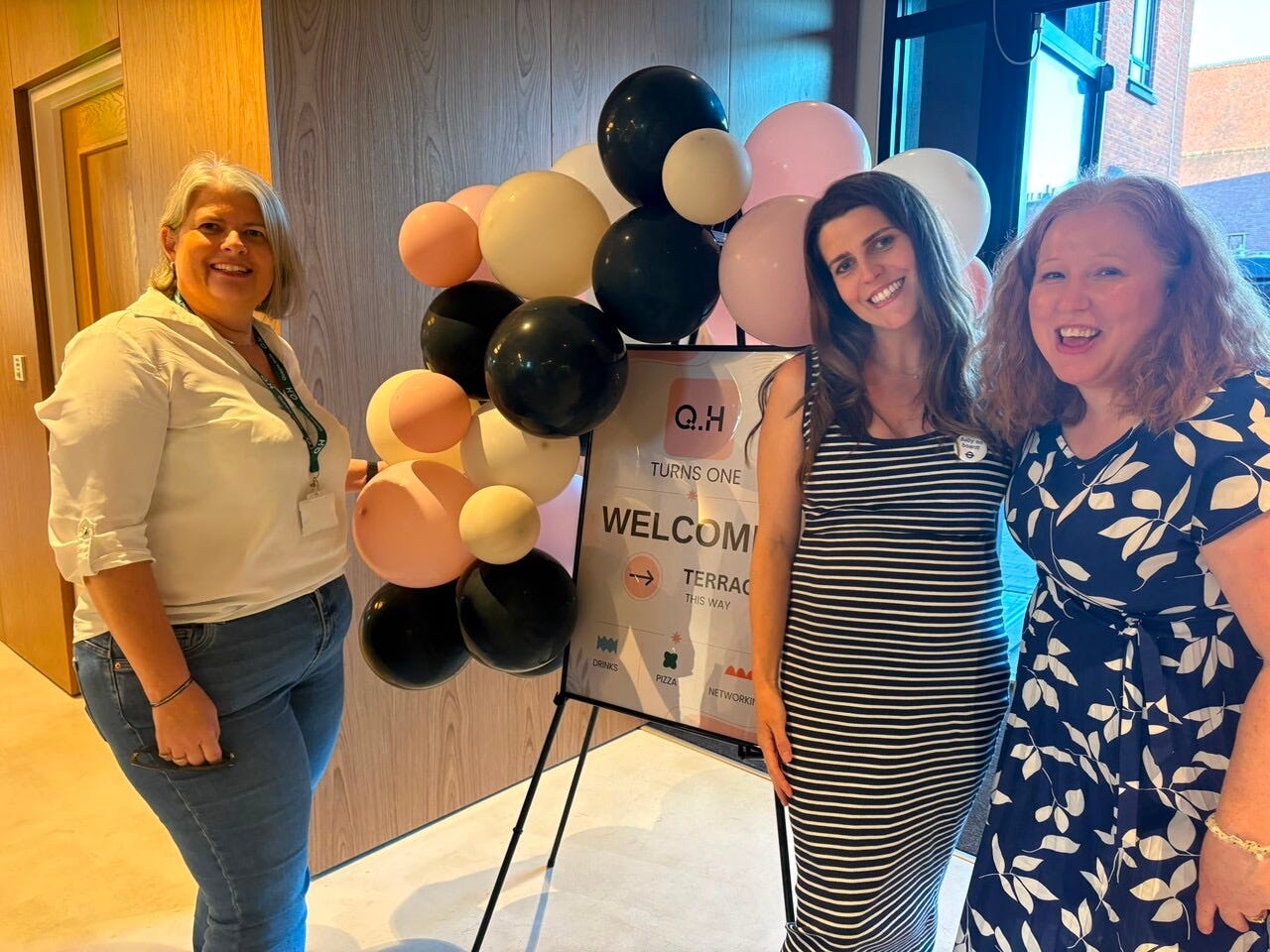
A week ago, I was back at Queens House in St Albans, to celebrate its first birthday. It seems like only yesterday I was attending the launch party in September.
What stood out most to me was the mix of people who came along to celebrate: members, local business owners, and visitors who were simply curious about what the workspace has to offer.
Someone commented that it was fantastic to have a hub in the community where local business owners could meet and connect. It’s a real pleasure to witness Queens House becoming the kind of place where those connections can naturally happen.
However, the real test of coworking isn’t filling a room for one evening. Seeing familiar faces return last week, alongside people discovering the space for the first time, indicates that the strongest coworking communities are constantly renewing themselves.
Let’s look at how Queens House is maintaining its relevancy as a coworking space serving a regional community in more detail.
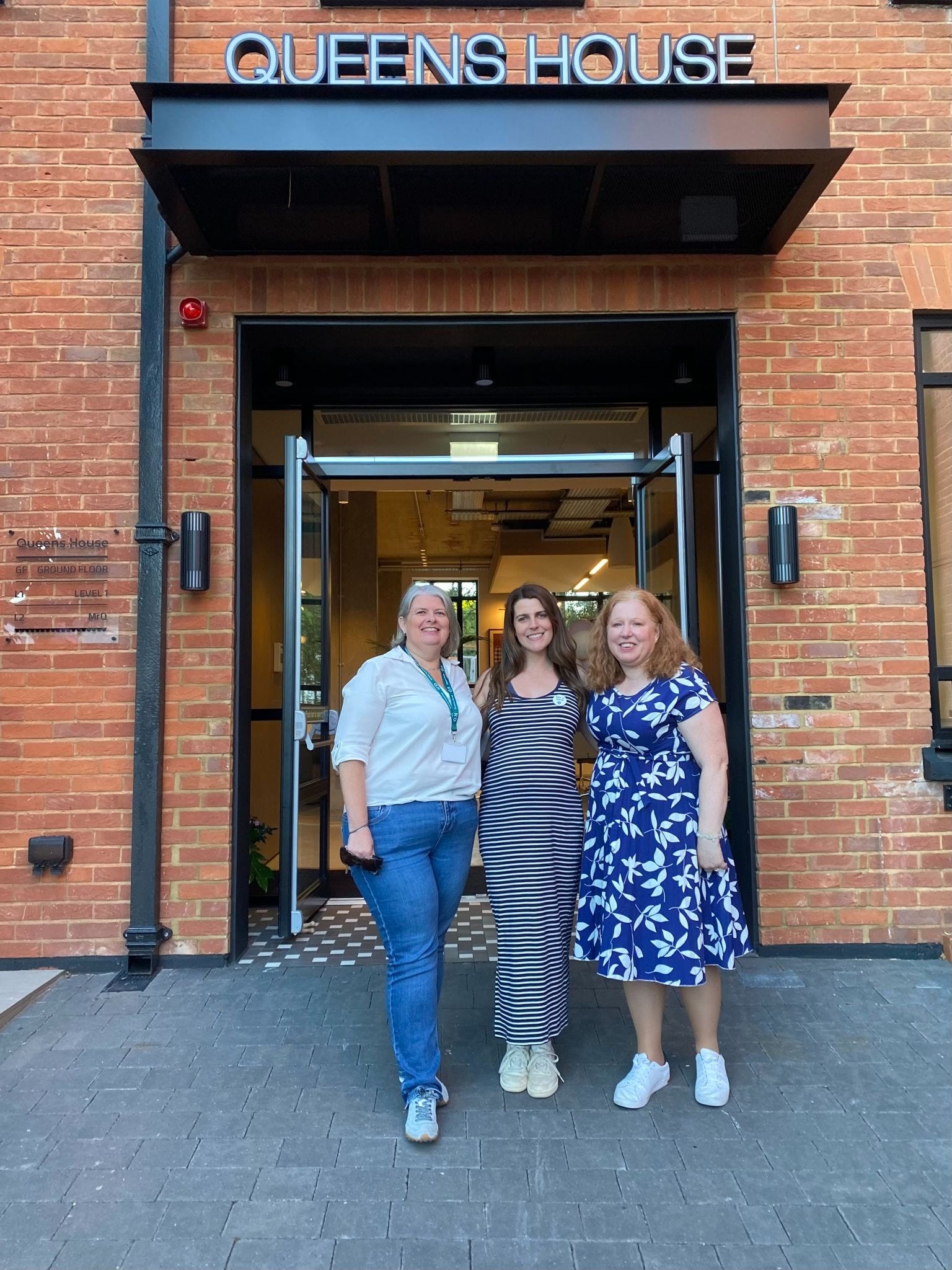
The Queens House story
I always love a space that has a story to tell, and Queens House has exactly that.
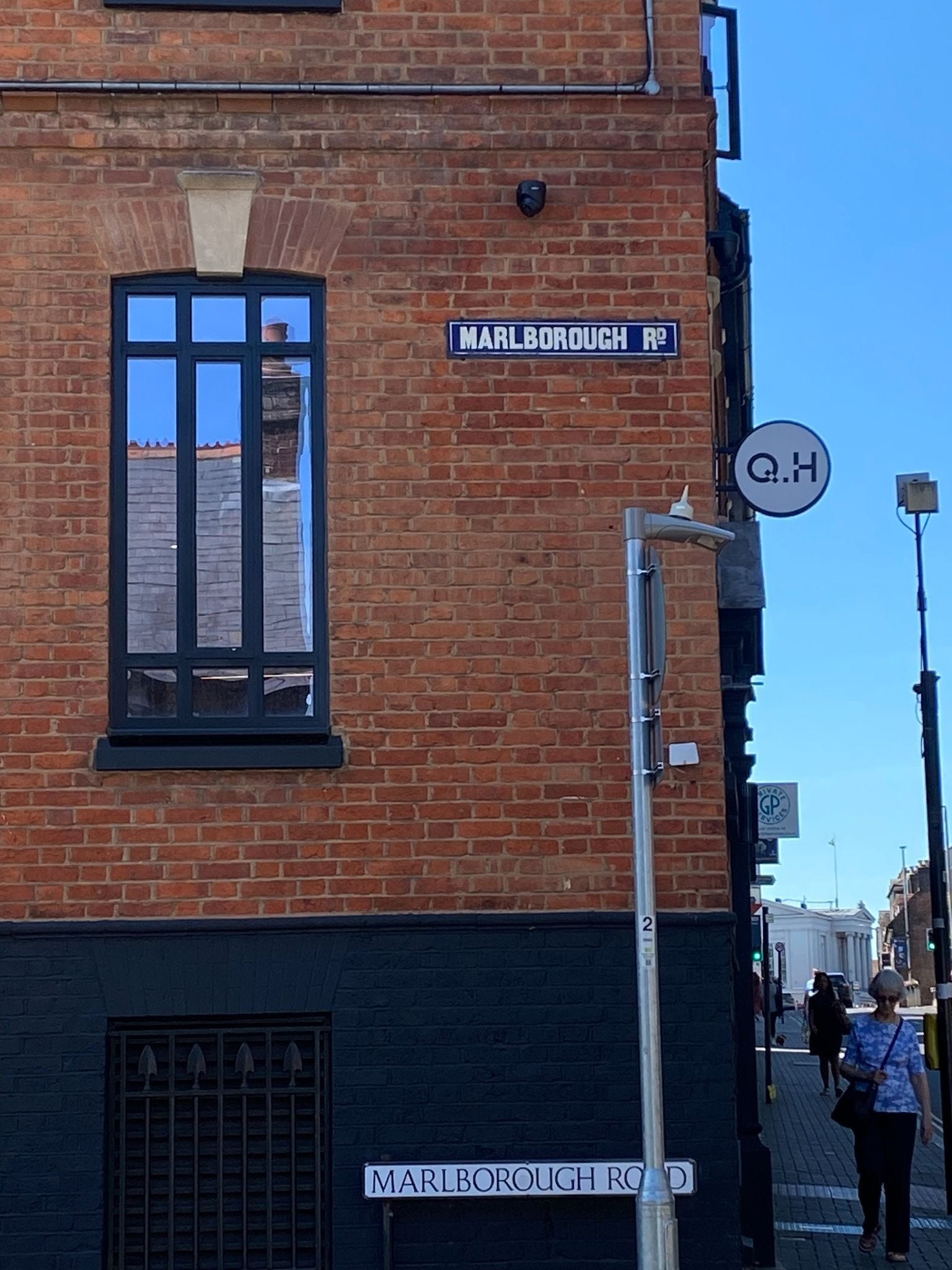
Located right in the heart of St Albans, between the high street and train station, Queens House is in the old Crown Prosecution Service offices, which was originally a hat factory.
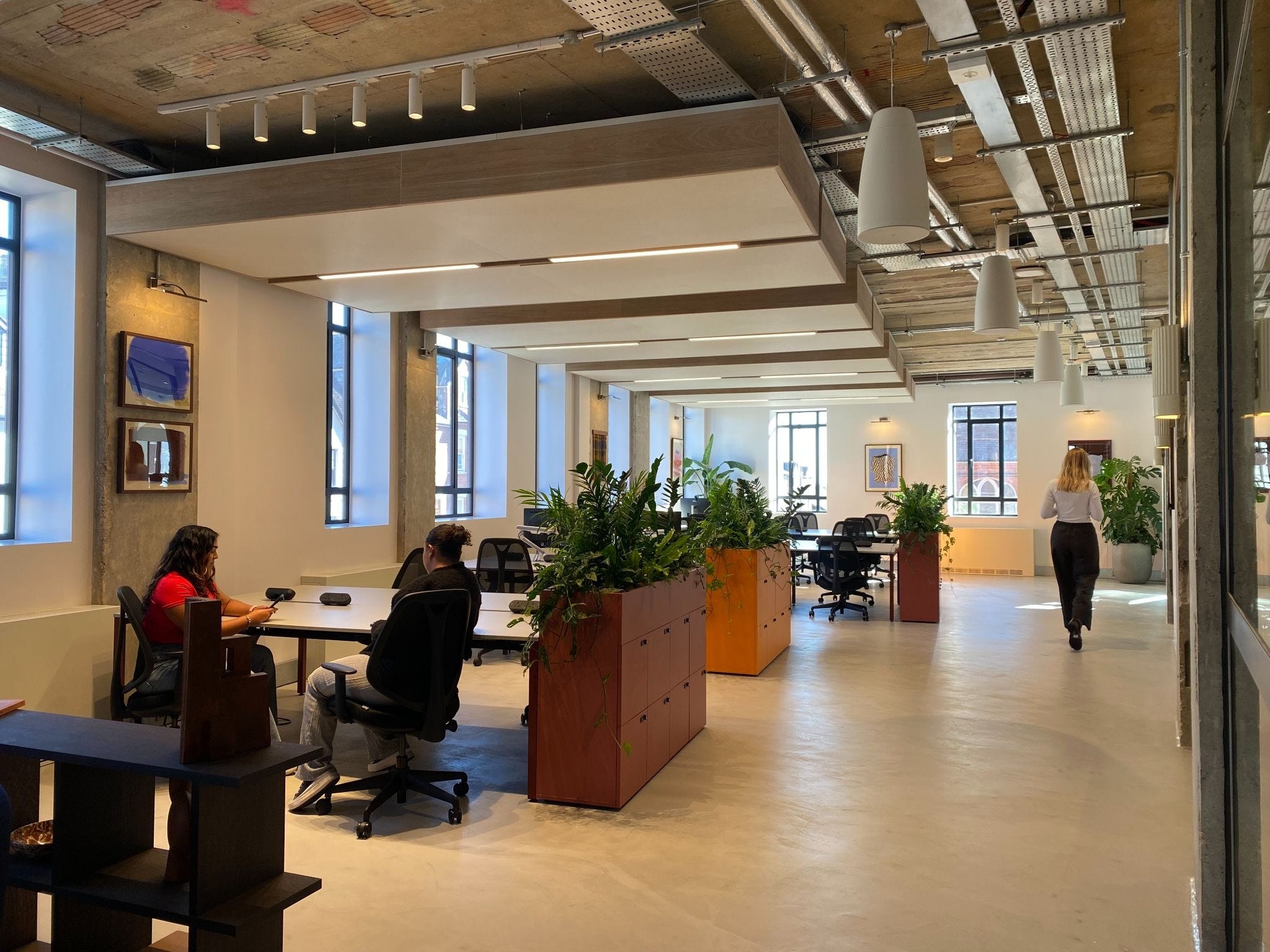
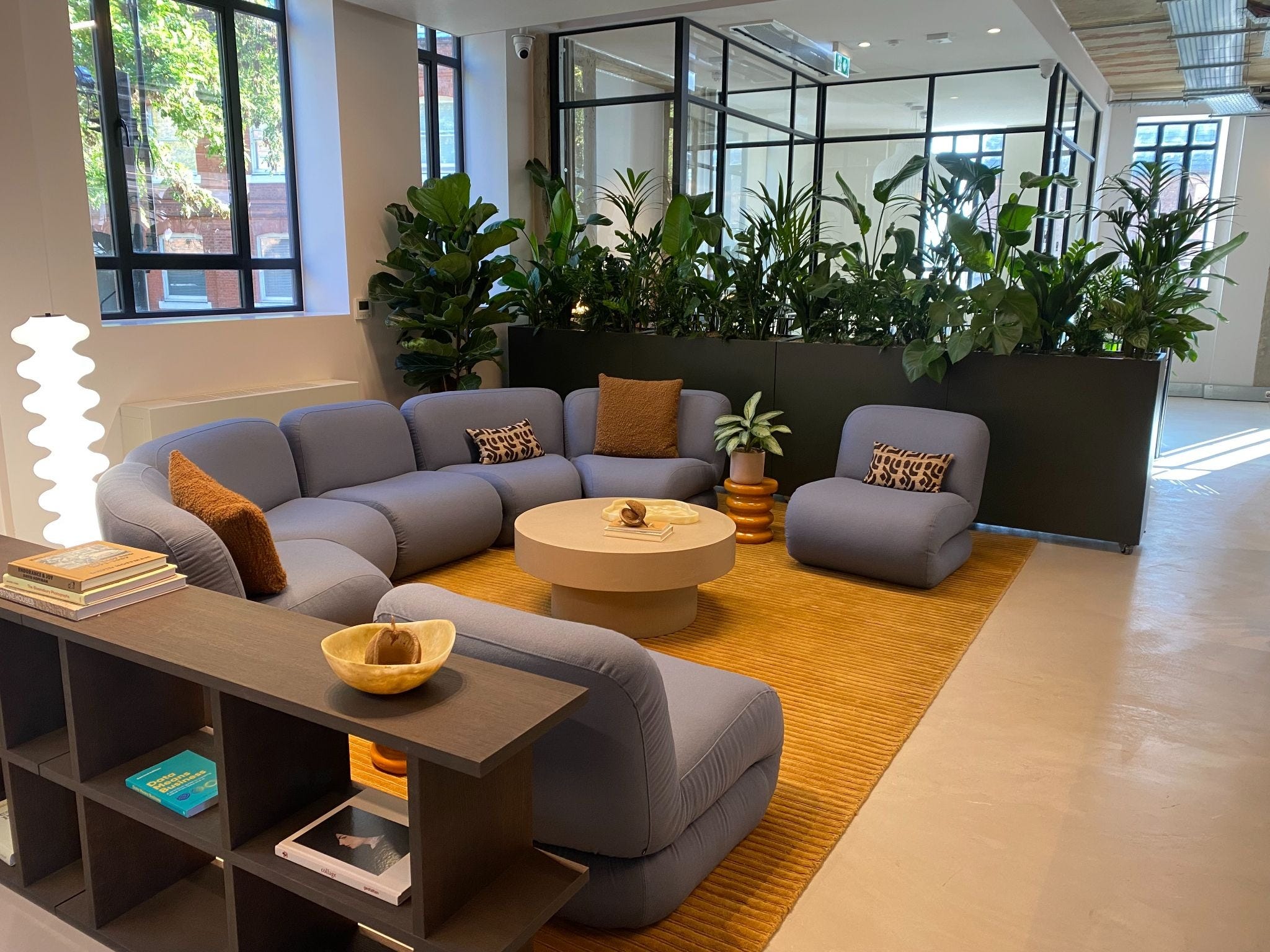
Having undergone a complete transformation before opening in 2025, the 20,000 sq ft building now boasts a ground floor coworking space, with comfortable sofas, state-of-the-art phone booths and the most innovative coffee straight-from-the-tap machine I’ve ever seen in its extremely well-stocked kitchen.
Private offices occupy the upper floors, with the top floor being home to MrQ — an online casino business and the company behind Queens House. Savvas Fellas is MrQ’s founder and CEO, who’s vision was to open a flexible workspace for the local community, while moving his company into the building.
Stepping into Mr Q’s office feels like walking into someone’s loft apartment. It’s comfortable, bright, and airy, with a party atmosphere, complete with a bar in the centre of the space, a rooftop terrace, and when I went in for the first time, the speaker was blasting Jamiroqui. Quite the vibe!
The rest of the workspace has a gorgeous design aesthetic: concrete floors, soft comfortable furnishings and an earthy colour palette of mustard yellows, forest greens, and peach tones. Impressive plants act as dividers, adding a certain peacefulness to the space (it’s something I don’t see very often in workspaces but it absolutely works).
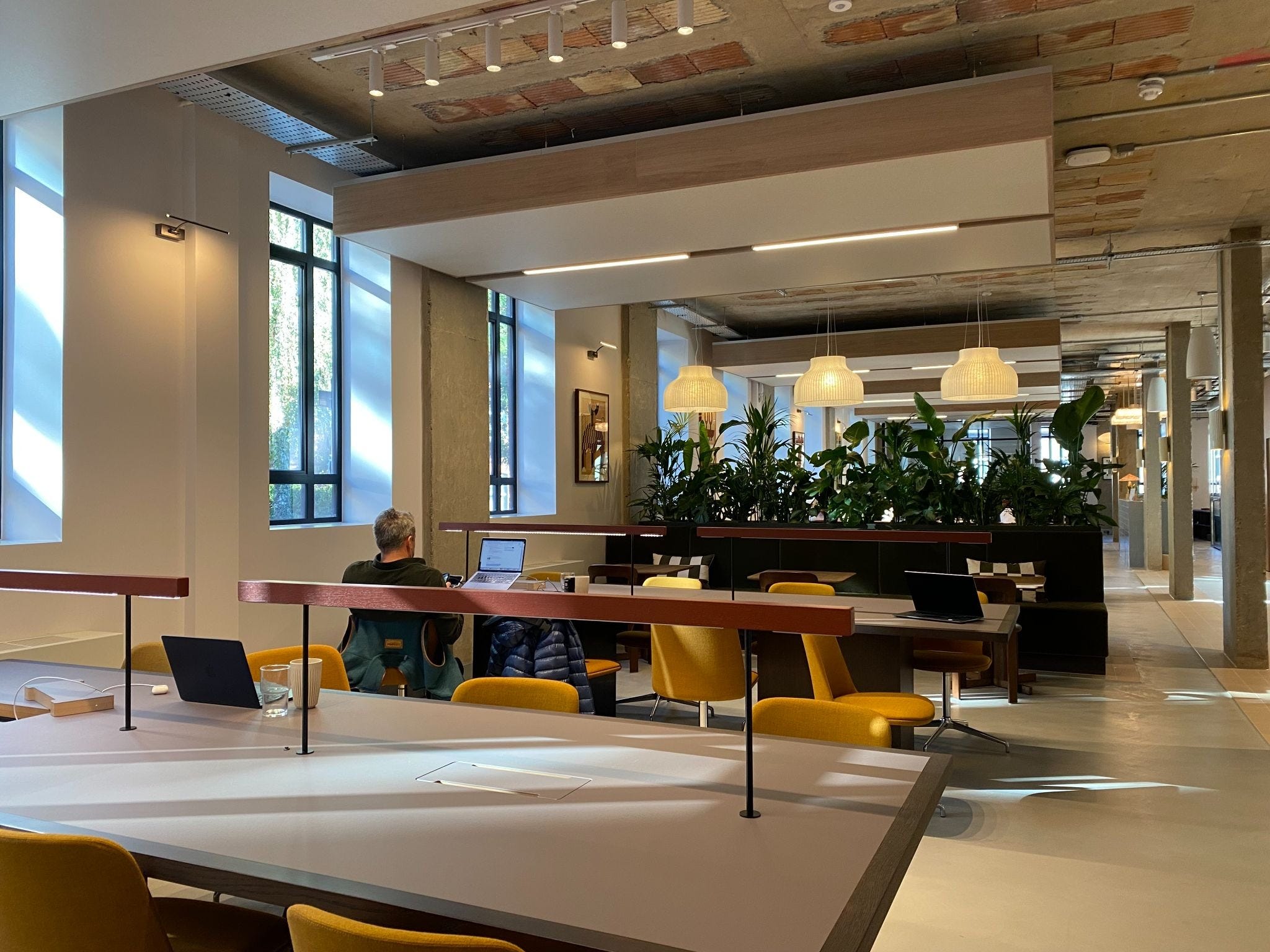
It’s easy to see why Queens House made such a strong first impression. But a year on, it wasn’t the design people were talking about but the community that has grown inside it.
Community is the key
I met Danielle Wallington at Queens House last year. She’s the founder of FlockHere — a platform for women and non-binary individuals, which hosts coworking meets up in restaurants and coworking spaces. The platform encourages people to work away from home, and build stronger communities.
Queens House is one of FlockHere’s host venues, and at last week’s event, I was introduced to a couple of inspiring female founders who regularly cowork together there.
While they aren’t necessarily members of the workspace itself, they demonstrate something I think coworking operators sometimes overlook: communities don’t exist in isolation.
Some coworking spaces talk about their membership base as one big community, but meaningful relationships rarely happen at that scale. Anthropologist Robin Dunbar’s research suggests there’s a limit to the number of relationships humans can maintain, with deeper connections forming in much smaller groups.
This is why the strongest coworking spaces aren’t building one huge, perfectly connected community. Instead, they create the environment for smaller groups to emerge: founders working together, wellness communities, or shared-interest meetups.
This brought to mind something author Peter Block said at the Coworking Alliance Summit last month:
“Community is made up of fragments.”
It’s worth thinking about your space as a home for several micro-communities, who arrive with their own relationships, interests, and shared experiences, enriching the wider culture of the space.
Seeing familiar faces indicates that belonging isn’t created overnight. It grows through repeat encounters, shared conversations, and the gradual weaving together of different networks. Perhaps that’s one of the main reasons that a coworking space remains relevant beyond its first year.
Rooted in local community
Micro-communities give people a sense of belonging within a larger ecosystem. They provide the familiarity and connection that makes a workspace feel less like a building full of strangers and more like a place where people know they belong.
The workspace is extremely rooted in the St Albans community. For instance, last week’s food was supplied by a local pizza company (who are back at the space this week to cater Mr Q’s summer party).
Last year, the event was catered by another local restaurant and drinks companies, and I remember chatting to a couple who had literally stepped into the workspace as they were passing by on an evening walk. They were getting married, and the restaurant catering the event was one of their chosen venues. This was a complete coincidence.
This example shows the value of being embedded in a local community. The relationships formed around a coworking space aren’t always transactional, but they create a sense of place and connection that makes a coworking space feel like a natural part of the neighbourhood.
As a commuter town, with trains reaching London in 20–30 minutes, St Albans may have traditionally been seen as a challenging market for coworking. But in the post-COVID era, the rise of the work near home movement has changed that dynamic.
Proximity to the city is no longer the deciding factor; instead, more people are looking for high-quality workspaces closer to where they live.

Working near home is a term penned by Freddie Fforde, the founder of Patch coworking spaces. It’s a way of life, supported by local, neighbourhood workspaces and third places. Freddie explains how this works:
“It’s a new category to describe what we can achieve by reinvesting our time, money, and talent into the places and people near where we live…the perfect alternative to commuting to the office.”
In fact, many companies are basing themselves beyond the capital, while hybrid workers and freelancers enjoy days where the commute looks like a 15-minute walk or cycle.
For Queens House, staying relevant isn’t just about attracting people away from their home offices or coffee shops. It’s about becoming a place that St Albans itself values.
This is how coworking spaces in regional towns provide unique opportunities. They don’t need to compete with central London offices on location; they offer something different. By becoming part of the local fabric, they provide more than just a place to work, as hubs where businesses, freelancers, and the wider community can connect.
The value of co
As a coworking space matures, the focus naturally shifts from introducing people to the space to understanding which parts of the experience make them want to stay.
At last year’s launch party, stacks of free coworking day passes were given out to guests on arrival. It’s a smart idea following a new opening, however, coworking day passes are a challenging offer to uphold.
On the one hand, the offer removes barriers to enter workspaces, providing people with a taste of what coworking is like. But in reality, many workspace operators want conversion, and freebies don’t always do that because people exploit the offer to the point where the workspace loses its value. They won’t pay for a membership when they associate a coworking space with being free.

This year’s decision not to offer freebies signals that the business has matured, shifting the focus from generating awareness to attracting people who want to become part of the workspace.
From what I saw last week, that’s really working. While members and those familiar with the space were outside chatting and basking in the evening sunshine, the team were giving visitors tours of the space. This gave them an opportunity to look around and get a sense of its vibe without any commitment.
There’s an important distinction between creating awareness and creating belonging. In the early days, getting people through the door is essential. But as a workspace matures, the goal shifts from convincing people to visit to giving them a reason to stay.
A real measure of success
A year on, Queens House feels more confident in what it offers. It’s no longer just introducing people to a new workspace; it’s inviting them into a community that already exists.
Opening a coworking space might create a moment but staying relevant means becoming part of people’s routines, relationships, and the wider community around it.
And that’s when a coworking space becomes more than somewhere people work, more about creating a sense of belonging and finding its place in the local community.
Thank you to Zoe and the team at Spaces to Places for the invite to last week’s event. I can’t wait to see where the next year takes Queens House!
Until next time,
Lucy