


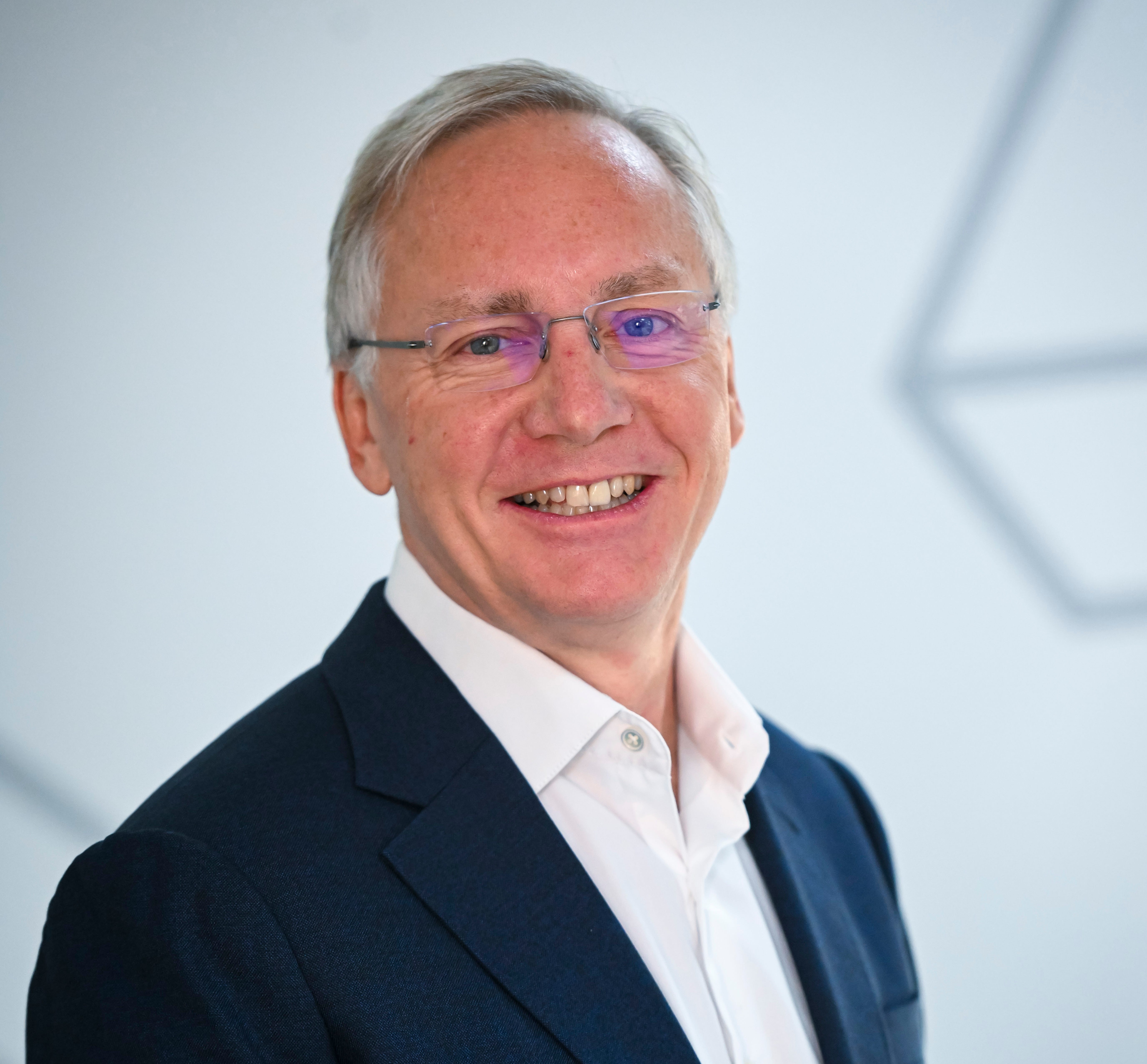
With over 30 years of experience in the property industry, Guy Baker is a veteran in creating spaces that serve evolving business needs. After starting his career running large development teams and refurbishing properties, Guy took a bold step at age 24 and started his own company, Mantle, with an ambitious vision.
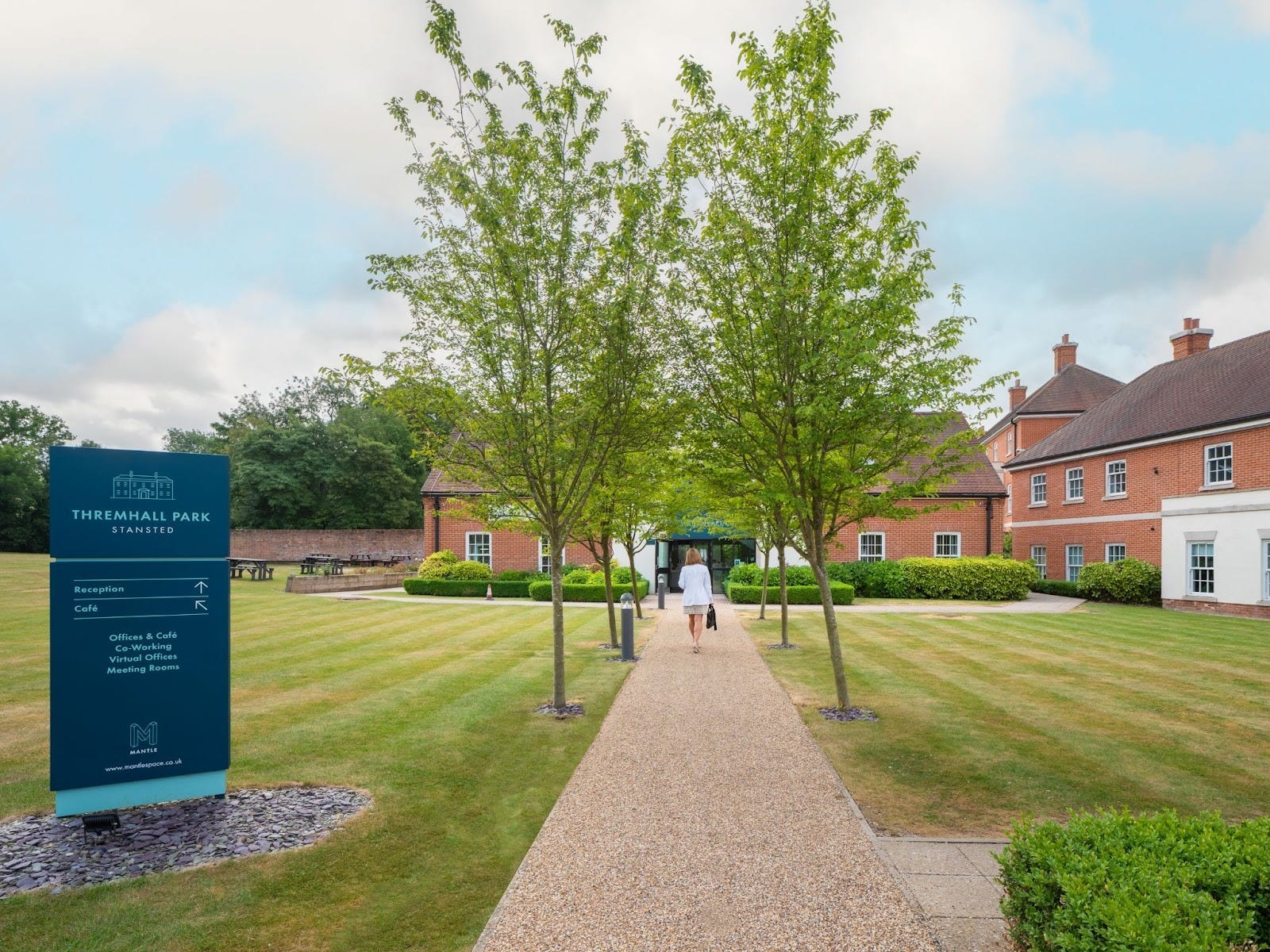
Mantle Space began delivering serviced offices twenty years ago, after Guy bought the derelict Thremhall Park, near Stansted, developing it into a thriving 25,000 square foot office hub, which has since expanded to over 40,000 square feet. Now, Mantle is an interconnected network of eight flexible serviced offices operating across the Southeast.
Mantle has weathered major geopolitical and economic shocks, from the credit crunch, through to Brexit and COVID, maintaining growth and profitability through steady leadership and a disciplined operational playbook. Central to this success is a commitment to customer care: Guy personally maintains relationships with long-term members, demonstrating genuine hospitality. The results speak for themselves: Mantle is now the largest flex operator by desk numbers in the Cambridge area.
In this interview, Guy shares why understanding the unique needs of members matters, how to deliver personalised, professional, yet cost-effective, fit-outs, and how to future-proof buildings while improving their sustainability. Beyond operational success, Guy nurtures a workplace culture recognised for transparency, engagement, and inclusivity, with Mantle Space repeatedly recognised as a ‘Great Place to Work’.
1. You’ve been active in the workspace industry over the last 30 years. What’s that evolution been like?
Guy: When I was very young, I graduated with a real estate degree from City University and went to work for a large property company. I qualified as a surveyor, working with the company to run large development teams and refurbish properties in new buildings. It was an incredibly steep learning curve, but an exciting time.
At 24, I made the interesting decision that I could do it better myself. I left the company to set up Mantle and came back to Stansted, the part of the world where I grew up.
Initially, Mantle’s objective involved looking for development opportunities arising from the recently opened Stansted Airport. We worked on industrial developments, bought the shopping centre in Bishop Stortford, and traded various things.
We started with absolutely no equity, so I built it up from scratch. By 2005, we reached a critical point and had enough equity to buy and hold assets to generate an income.
I bought a derelict former Franciscan priory called Thremhall Park, right next to Stansted Airport. It was a Grade II listed wreck with a walled garden and a listed facade. Everything else was falling down, but we developed it into 25,000 square feet of offices. We now have over 40,000 square feet on site.
Our initial intention was to let it and sell it. But instead, I decided we would move our offices here and start running serviced offices. Every agent said to me, “You’re barking mad to do that. Why would you do that?” But I was determined to do it.
We set up Mantle Space, our own flexible serviced office operator from scratch, without any industry knowledge or experience. At the time, startups and small companies used serviced offices, but they didn’t have much traction or credibility. You couldn’t really value them because of the short leases, and there was only really Regus in the marketplace, which catered to a slightly lower cost, lower value market.
Since then, we’ve built a portfolio of eight flexible serviced offices across our region with robust systems and structures, adopting a model that delivers excellent customer care. That’s a cultural thing for us.
We’re a property company but also a flexible serviced operator. That’s been quite an interesting journey, and a lot has happened since we started. For example, technology changes enable more people to adopt a flexible working model, so we support our members with cloud systems and video conferencing solutions. It means that everybody doesn’t need to be in the same room every day, which drives demand for flexible workspace. We’ve seen the industry mature and been part of that journey.
COVID was an interesting driver. It became the catalyst for making flexible workspace mainstream for larger organisations facing lease events and managing agile working. Instead of taking 10,000 square feet on another 10-year lease, companies took flex space.
We’ve seen the transformation of flex since the beginning of COVID. Before, we had no flexible serviced occupiers of more than about 20-25 desks. Post-COVID, we had six flex occupiers of over 100 desks, with five of those renewing. The number of corporates using flex space has grown exponentially in these last few years; it’s been a massive transformation, so we’re now seeing a maturing marketplace.
We’ve got a very broad range of occupiers. We’re seeing more professional operators and a stronger focus on service. We’re now the biggest operator by desk numbers in the Cambridge area.
2. What does it take to serve a regional market effectively?
Guy: We’ve steered clear of London, focussing on strong southeastern towns outside of the capital, where there’s a broad range of different models and a slightly different marketplace.
Outside of London, you tend to have a higher proportion of professional, mature businesses: independent financial advisors, accountants, lawyers. You need to deliver excellent customer care and a professional service; price is also important to these occupiers. They’re not in the capital, partly because it’s an expensive place; however, they’ll have business interests or spend some of their time in London, so accessibility is important.
Connectivity with the local market and other regional centres needs to be maintained, so we try to connect our centre networks in Cambridge, Oxford, Stansted, or Stevenage, so that our occupiers can move between our centres.
We have really excellent teams delivering great client engagement. We’re satisfying them by understanding their business needs. That incorporates member networking events, facilitating connections and engaging with the local marketplace.
3. Mantle Space is writing an operator playbook built on genuine relationships, sustainable growth, and spaces that truly serve evolving needs. How does this work in practice?
Guy: We’ve got nearly 20 years of experience in running flexible serviced offices, and have grown in a controlled and sustained way, retaining growth and profitability despite experiencing some geopolitical shocks. We’ve done that because we’ve progressed steadily, sensibly, and securely.
Why is that important as a playbook? It means that we’re secure, trustworthy, and reliable. We focus on developing and maintaining genuine long-term relationships.
Our first service occupier was an IT support organisation supporting the NHS, called HD Clinical. They turned up the first month we opened, and took four desks. Then they took two rooms, and then a floor. After that, we converted the Coach House for them, which was about 3,500 square feet, and they stayed there for about six years before we built them a 9,000 square feet building that they’ve just signed a new 10-year lease on.
That journey involved having several negotiations with them at various times about their needs. For example, they require strong connectivity. We understand those needs and have proposed various solutions.
We get to know and understand our members. I don’t spend my whole life talking to all of our members (we’ve got a big team of people, and most members don’t talk to me), but I do have conversations with some of our long-standing and valuable customers. We’ve nurtured genuine relationships with our members, which means we can anticipate their needs and help them.
That gives what I describe as stickiness – it means that people stay. Our retention rate is four to five years. So, we’re not paying four years of agency fees, we’ve got security of income.
We’re quite keen on the principle of sustainable growth. Over the last few years, we’ve carried out ESG interventions and improved all our buildings’ EPC ratings. If a building has a working mechanical and electrical system, the intelligent decision is not to rip it all out halfway through its life. But when there is an opportunity to change something, we do, such as EVs and solar. We choose the right utility supplier, we’ve changed all the lighting, and we’re intelligently managing voltage. Sustainability is important to us.
Financial sustainability is important, too. When we were first set up, we spent a fortune on a telephone system that we didn’t need. However, we also spent money on lots of desks that we thought would need replacing five years later, but lasted 12 years instead.
However, we’re also evolving our spaces to reflect changes in people’s needs and fashions, as well as the way people work. For example, we’ve recently brought in better breakout space and some smaller desks that look a bit trendier. We’ve gathered deep knowledge, understanding, and experience for laying out our centres and optimising fit-outs.
We do all our own fit-outs, delivering quality for the right price, which is important because we’re working to a price point. All of those things are part of the playbook. From buying a building, or taking on somebody else’s space, appraising, evolving, fitting out, operating, and running a space – we do our own property management.
This means we can deliver quality right the way through the process, and that feeds into sustaining high retention rates.

4. What makes Mantle Space a ‘Great Place to Work’?
Guy: We’ve been nominated as a ‘Great Place to Work’ three years in a row. This year, we were also nominated as a great place to work for women, for welfare, and a great place to work in the construction and property sector. Our staff surveys show me that our people are proud, enthusiastic, and excited about where we are and what we do. It’s a cultural thing.
It starts with the determination to deliver excellent customer care. We’ve all got internal clients — our accounts team, centre manager, and property management team — we’re all providing a service.
I feel very strongly that everybody within the organisation should feel valued. Their voice should be heard. They should feel comfortable, confident, and safe in their role. That requires respect across the whole company.
A number of people within our organisation have been with us for a long time. They’ve developed and been promoted – I think that’s very valuable.
We’re transparent and communicate very clearly and effectively. If you ask one of our centre managers, I hope they’d have a clear idea of where we are and what we’re trying to achieve.
While I’m working at the front end to grow the business, and may not see them every week, I always record a video of all the things going on in the business for our summer event, and I make a speech. That event is always great fun.
I also hope everyone can see that I’m open and enthusiastic, and that rubs off. I’m pretty confident that everyone’s getting on well; I can tell by listening to our staff here at lunchtime in the breakout space who are laughing with each other. That’s important.
5. Looking ahead, what changes or innovations would you like to see in the flexible workspace industry?
Guy: We’ve been doing lots of interesting things at a purpose-built tech hub we’ve operated since 2020, called the Bradfield Centre on Cambridge Science Park, owned by Trinity College Cambridge.
It’s different from the rest of our centres because everybody is, by definition, tech. They have a desire to interact with each other and bounce serendipitous ideas. It’s got an auditorium, and every year, we organise the Trinity Bradfield Prize for Tech.
In the flex sector, there might be more specialisation, such as more sector-specific centres, like biotech, in the Knowledge Corridor (the region between Oxford and Cambridge). As Mantle expands its portfolio, we’re thinking about whether to specialise in certain circumstances. The flex space is a fascinating marketplace that’s evolving, and driven by people – you’ve got to understand people.
Understanding your client base is important. For instance, if you’ve got four or five different businesses doing completely different things, there isn’t so much of an imperative to interact. There is diversity within the flex world where different centres or hubs have different needs, and it’s good for the space to reflect the client base, their tone and aspirations.
I can see integration within the flex industry happening, as there’s been a lot of rapid growth, particularly in London. You can’t have that without some kind of consolidation.
Different people have tried various strategies. For example, some focus on coworking, while others provide cellularised offices. There is a geography that plays to that; for example, what you do in the regions differs from what you do in London. One size doesn’t fit all.
COVID encouraged people to look at different operational strategies. That will mean larger organisations taking up flex space, but also organisations operating within different locations, which plays into the need for individuals to have a great work-life balance. Our centres outside of London can help with that.
I expect more diversity within the occupier base, in terms of how they want to occupy space. There is an impact question too: flexible serviced offices are inherently much more sustainable than traditional offices. Why? Flexible serviced offices offer more efficiency in occupied buildings, with flex being potentially more sustainable on many fronts.
Right now, there is an opportunity for multi-occupancy buildings to address and support the ESG imperative. It doesn’t necessarily mean having a gym in the basement, but it does mean addressing individual and business needs. Flex spaces can drive that.
On the other hand, the financial imperative is that you’ve got a building you either own or you’re paying rent on, and you need to generate an income. For the flex market, the challenge is identifying the optimum configuration for that building to generate maximum income.
To do that, you’ve got to make the right mix of space opportunities to suit that building in that particular location. That’s the one-size-doesn’t-fit-all.
As a flex operator, you’ve got to understand the granularity of your marketplace and optimise the space. That’s the challenge moving ahead.
About People Make Coworking
Celebrating the people who make up the fabric of the global coworking movement, People Make Coworking interviews coworking founders who share their journeys of building communities and workspaces.
Edition #18 of People Make Coworking interviews Guy Baker, CEO at Mantle Space.
If you’d like to share your story in ‘co’, please get in touch. I’d love to speak with you for a future feature.