


Take walking down a street, running through your local park, or using a community building for an event. These spaces are considered ‘public,’ but do you feel welcome and comfortable using them?
In the book Invisible Women, author Caroline Criado Perez talks about the way that many things, from our phones to our work uniforms, were designed by men, for men. Of the same token, this can be applied to spaces and places too.
In the UK, the public spaces we use every day have an interesting history, around who they’re for and why they’re designed in a certain way.
The historic use of spaces
In the Medieval period, community life took place within the walls of the thriving city and in the public eye, where merchants sold their wares, and buskers sang and played instruments within the hustle and bustle of activity. A CBD – central business district – originates from a commercial town centre.
The economic male activities of the city were separated from the domestic female interests of home life. Merchants, landowners, and clergymen, largely male, had a say on how space was used and by whom. Beyond the city walls, land was either occupied by the Church or owned by the monarchy and used for hunting and recreation.
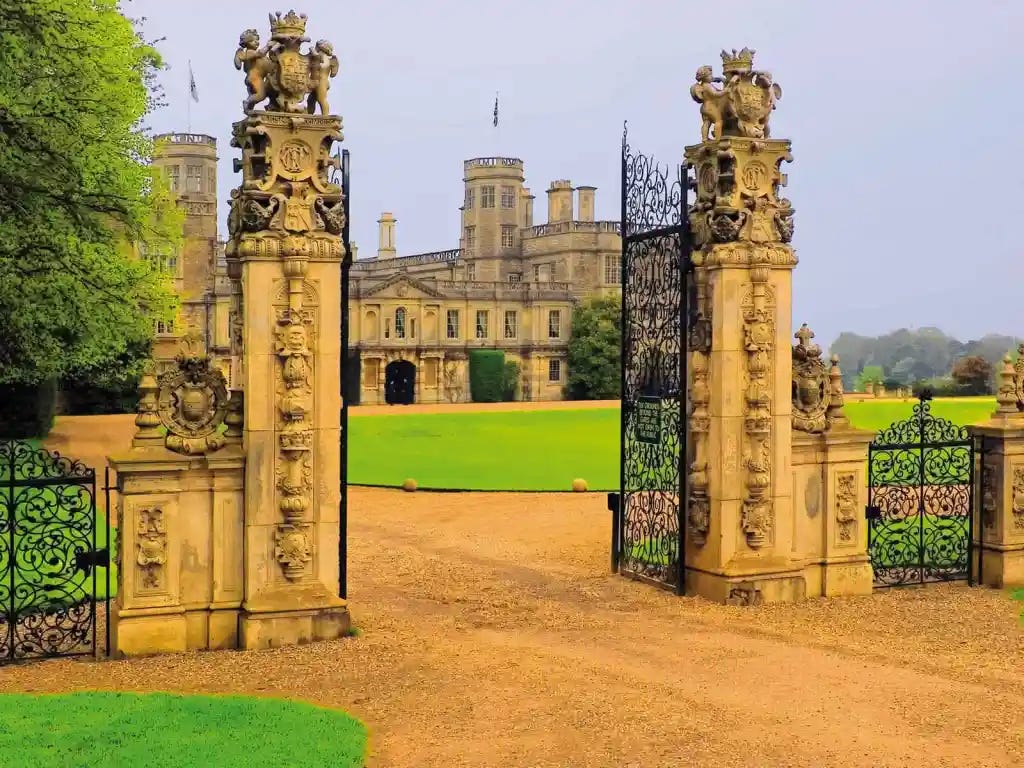
The 1604 Enclosure Act allowed greedy landowners to seize space on which they built impressive country dwellings that looked like Ancient Greek temples. The land surrounding it was cultivated to express the grand status of its occupants and marked by elaborate gates that controlled access.
It doesn’t belong to you? Then you shouldn't be here. These historic policies still govern some of the places we can and cannot access.
Source: Adobe Stock
By the Industrial Revolution, the British city became associated with technology and capitalism.
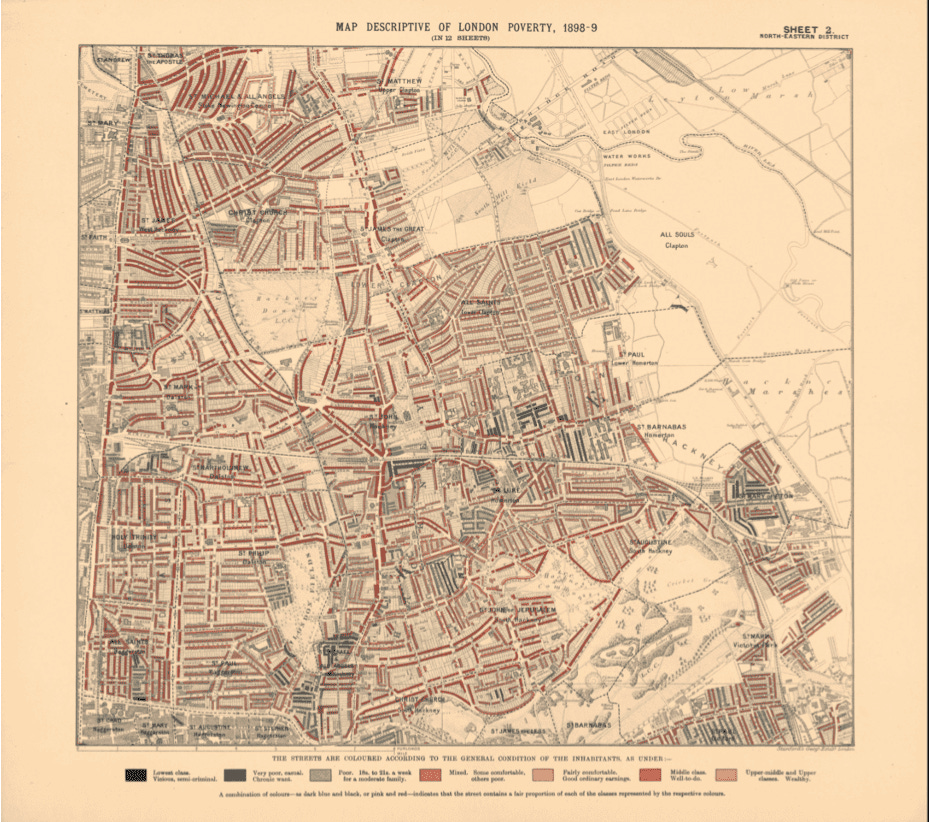
Urbanisation took off big time. Cities became dirty and overwhelmed, and many workers lived in slum-like conditions of squalor. Poverty became associated with criminality. The creation of London poverty maps categorised low-income families as “vicious,” and the ‘poor’ were labelled “immoral” by wealthy and emerging middle classes. Mapping was also a patriarchal tool used to control people and places, emerging during the Victorian period.
Source: London School of Economics (1898-99), North-Eastern District, London
The Victorian city became so unhealthy that in the mid-1800s, a series of reforms were introduced to try and alleviate health and social conditions. Britain’s first council houses were built in 1869. The 1830 public parks movement led to the creation of open green sites or: ‘The Lungs of the City.’
Parks were designed to control how people navigate space and interact with each other (ever wondered why pathways are so narrow?). Statues of glorified individuals popped up in public spaces, thought to enlighten the “common people” to improve their behaviours, statuses, and thoughts.
Britain’s New Towns
After the First World War, a pledge of 500,000 “homes for heroes” was agreed to reward the working class who defended their country. More reforms were introduced to provide wider accessibility to healthcare, education, and housing. The social housing schemes of the early to mid-twentieth century were designed to encourage human connection between neighbours.
Flats often surrounded a central court and were linked with external corridors known as “streets in the sky”. However, this utopian version of community life was most likely the middle classes forcing their own expectations onto the working class.
The formation of eleven New Towns surrounding London in the 1940s encouraged Londoners to leave the overcrowded city, with promises of access to nature and village-like neighbourliness. It was an attempt to mix different social classes together.
New Towns were originally planned around a village green – the centre of community life. Yet, budget constraints scrapped the green in favour of building more houses. Later, when cars became commonplace, these New Town families were reliant on their own transportation methods to get around and generally commuted to the city via public transport.
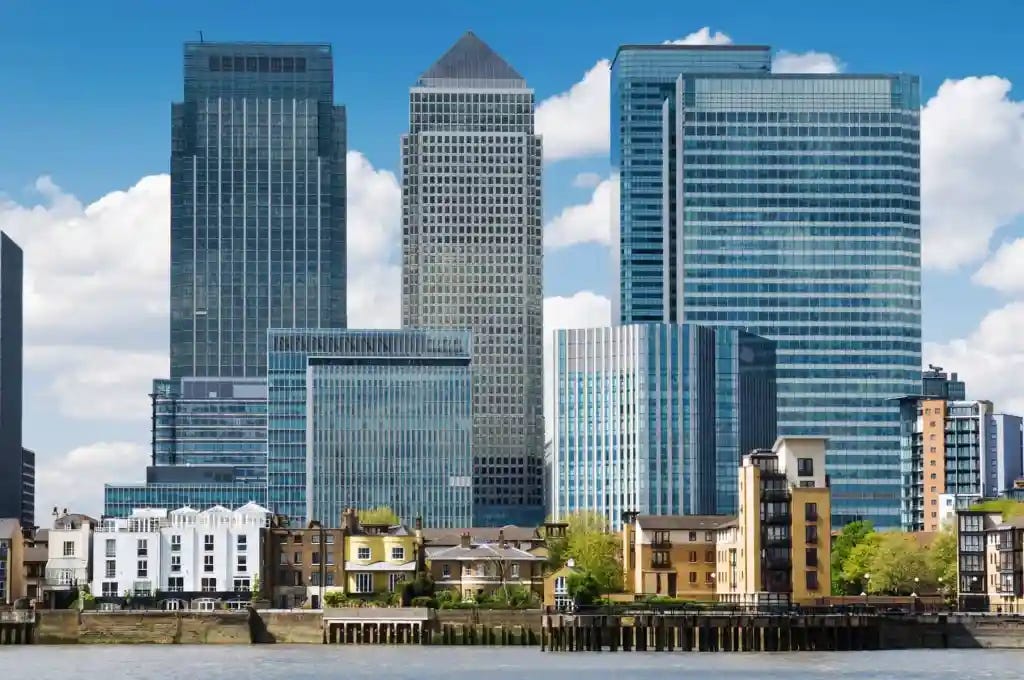
By the end of the 1970s, Britain’s industry was in turmoil. Factories shut down and ports were derelict. Thatcher deregulated the financial market, known as the Big Bang, and London became a global financial capital. Government and landowners sold space to private companies. Gated communities popped up in London’s financial districts, Docklands, and the East End, to safely house its well-paid workers, segregating neighbours of differing class status.
Source: Adobe Stock
Community displacement
As recent years have exemplified the development of multi-purpose spaces, private companies still hold power over space.
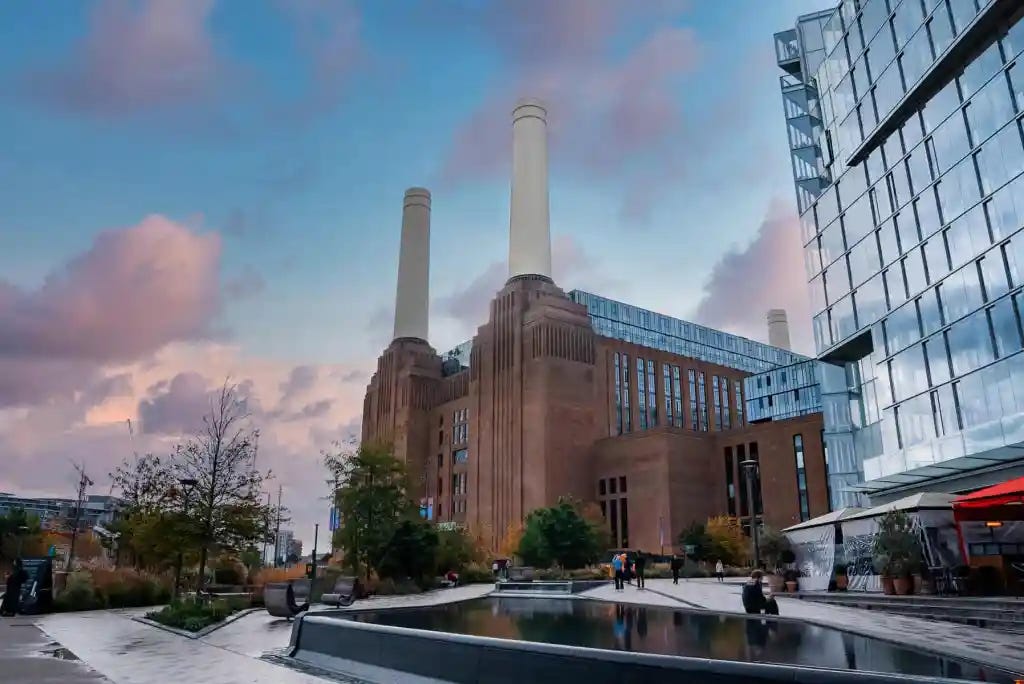
For instance, Battersea Power Station, which stood empty since 1980, was bought by a group of Malaysian investment companies forty years later. Although its restoration process was considerate in bringing the landmark back to its former glory, the treatment towards its community wasn’t. They’ve been priced out, and replaced by individuals who bring more wealth to the area. A smattering of celebrities has snapped up the multi-million pound sky villas that top the power station.
The revamped area includes a recently opened shopping mall, expensive restaurants and coffee shops, a pricey ice rink opening over Christmas, and a costly fireworks show in November. The community is hailed “an inclusive neighbourhood”, but the people who once lived here have been displaced and cannot afford to live in the area they once called home.
Source: Adobe Stock
Nonetheless, designers, developers, and architects of current and future projects should do better. 15-minute cities are paving the way for how we can all co-exist, but in many cases, urban planners are gentrifying neighbourhoods, like Battersea, and displacing communities in the process.
There’s a lot of work to be done. If we all work together, listen to one another, and understand every person’s needs, we could co-create and build a better future that’s truly inclusive to all.
This piece was originally published on the London Coworking Assembly blog in 2022.
Some of this research was gathered when I studied for a Master’s in interior design at the Glasgow School of Art, around the topic of co-designing urban public spaces.
I’ll be presenting my research at the RCGS Symposium at the Politecnico di Milano in January. Get in touch if you’d like to learn more.
Sources and reading list:
Roy Rosenzweig and Elizabeth Blackmar. The Park and the People: A History of Central Park. (1992, New York: Cornell University Press).
Tom Williamson. Polite Landscapes: Gardens and Society in Eighteenth-Century England. (1995, Gloucester: Sutton Publishing).
Tricia Kang. “160 Years of Central Park: A Brief History”.
Suzie L. Steinbach. Understanding the Victorians: Politics, Culture and Society in Nineteenth-Century Britain (2012, London: Routledge).
Maureen Flanaghan. Constructing the Patriarchal City: Gender and the Built Environments of London, Dublin, Toronto and Chicago. (2018, Philadelphia: Temple University Press).
John Broughton. Municipal Dreams: The Rise and Fall of Council Housing. (2019, London: Verso).
Anna Minton. Ground Control: Fear and Happiness in the Twenty-First-Century City. (2012, London: Penguin Books).
Lynsey Hanley. Estates: An Intimate History. (2012, London: Granta Books).