


The owner of Locus Workspace in Prague, Mathias Vanluchene, has taken a different path into coworking leadership. With a background in freelance marketing, Mathias first joined the space as a member in 2016 before taking over the running of Locus from its founder in 2020 at a moment of transition.
Mathias has continued to establish a community-led model at Locus, while gradually refining how the space operates. Central to this approach is a belief that coworking should be highly productive and deeply social, and that community works best when it’s self-regulated.
Rather than relying on top-down programming, Locus members are active creators of community life, supported by simple systems, such as WhatsApp groups and recurring weekly touchpoints. This philosophy allows the coworking space to scale its sense of community without losing intimacy.
In this interview, Mathias shares how Locus balances productivity with community and how its member-led structure helps members form connections within the space.
1. What’s the story behind Locus Workspace?
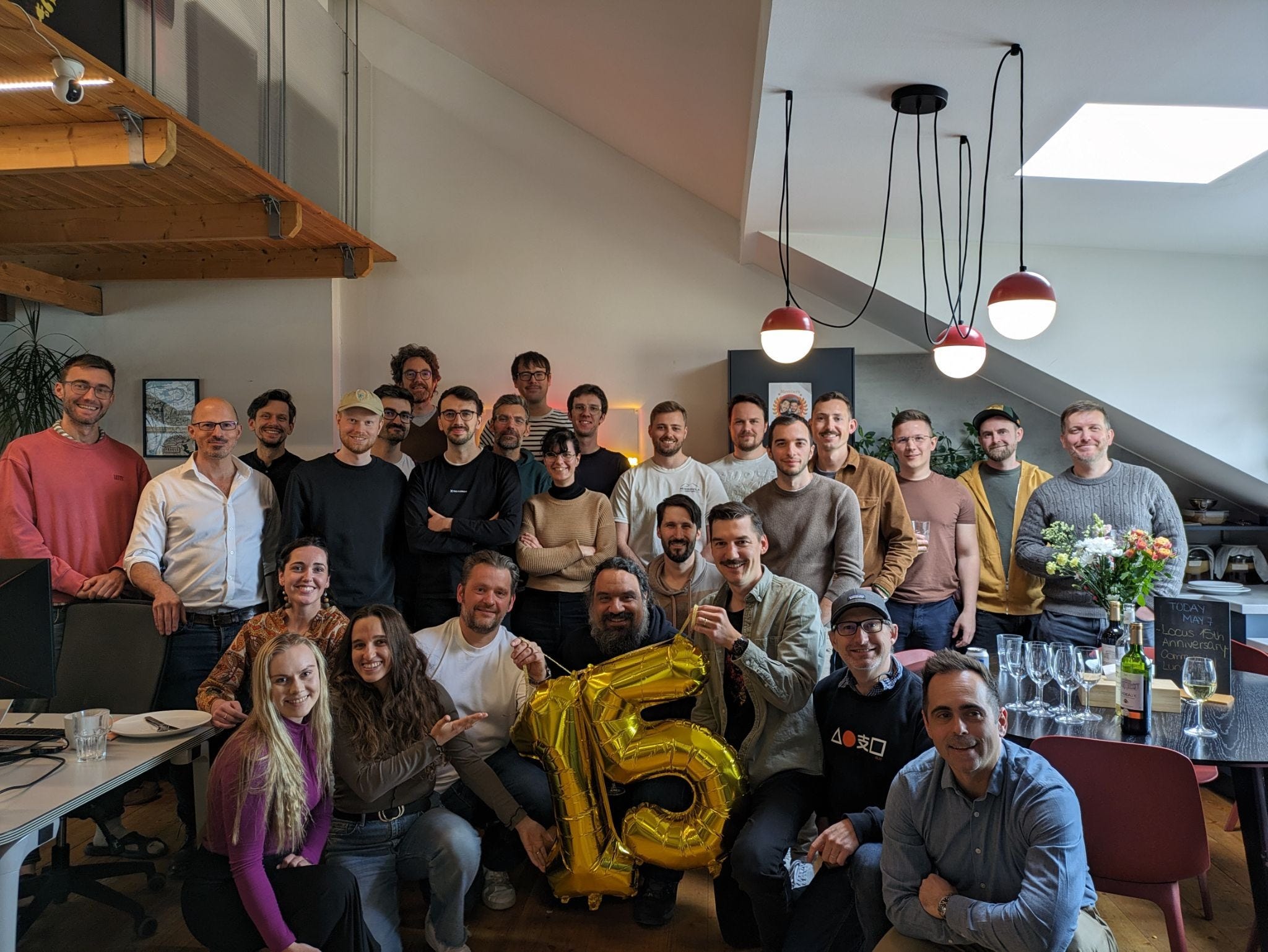
Mathias: Locus Workspace started 16 years ago in 2010, and was one of the first coworking spaces in Prague.
It was founded by an American academic who struggled to work productively. He wanted to be surrounded by people, so he formed a group here in Prague and then eventually opened his own coworking space.
Running a coworking space takes quite some work. The founder was always juggling operations with his academic work, so in 2020, ten years after Locus opened doors, he began looking for someone to take it over.
I joined the space in 2016 as a member while working as a marketing freelancer. When I heard the founder was moving on from the business, I made a decision to take over it from him. I knew the story behind the space, which gave me a lot of confidence to run it, with COVID being a driving factor.
The founder really wanted someone who knew the space and who could continue this place in the same kind of way as he originally started it. So when we came together, he was very happy for me to continue running the coworking space.
2. Community is at the heart of Locus. How do you create a coworking space where people genuinely connect and collaborate?
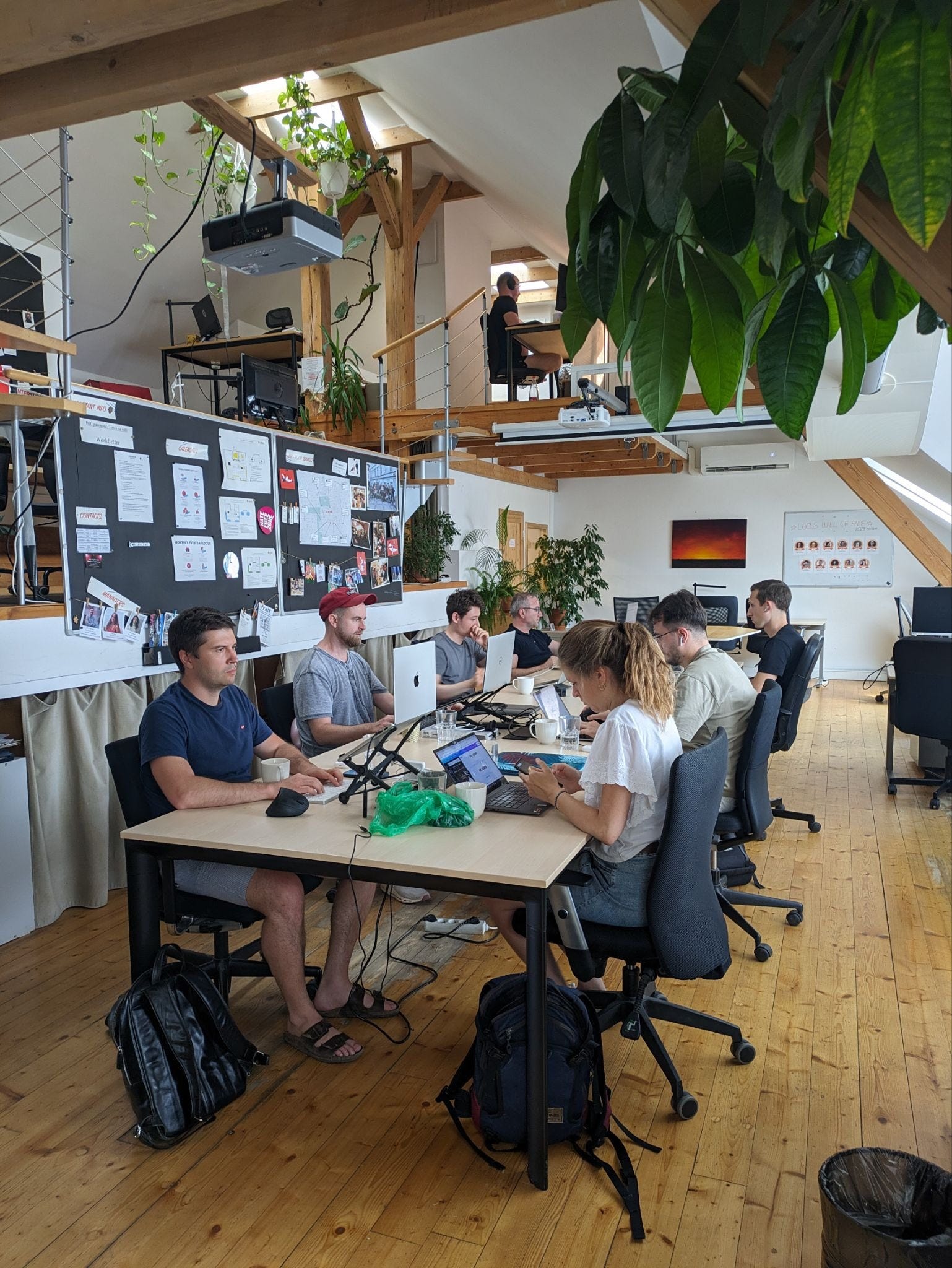
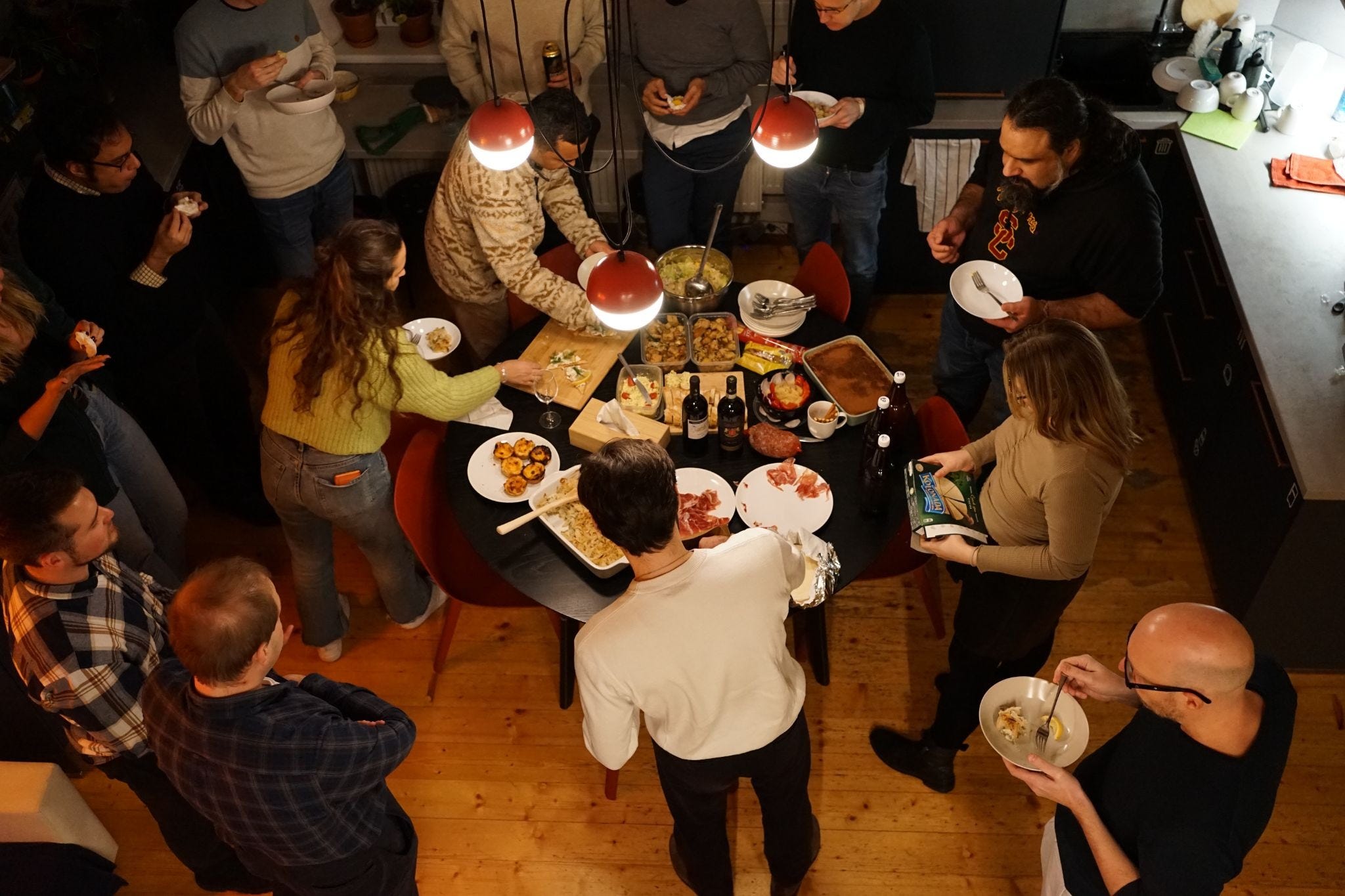
Mathias: There’s always been a good community here at Locus. The founder set up lots of regular weekly events, including a coffee break on Tuesday afternoons, and lunch at a nearby restaurant on Wednesdays. Everyone in the space is welcome to join.
I was part of that before I took it over, although I had two small children and didn’t have much time to join extra events. When I took over the space, we continued those events. Events are crucial to form connections and friendships. Many great relationships have been formed in our space.
Now we have over ten events per week that our team or members organise. Those self-regulated events give members a little more responsibility and the freedom to do their own things. We also have a WhatsApp community with lots of groups based on different interests, making it possible for everyone to join something they’re interested in.
The yoga group, for example, is running completely independently from us. Every week, they meet up to do yoga with a lead volunteer member.
Language lunches came about because we had more German-speaking people joining the space, and we knew that some of our other members wanted to improve their German speaking. So, we asked whether anyone would be interested in a German language group, and pushed it into our members’ hands to organise it.
These events are organised for and by the community, and they can join if they want to, but we’re not forcing it. We’re just creating friendly ways for everybody to join in, whatever interests them.
Our professional events include one where we invite a speaker or someone to lead a monthly workshop. The rest of our events are very casual; members can simply join the events that speak to them the most. By creating an atmosphere where socialising with others is easy, we hope to contribute to their happiness and general well-being.
We’re also working to improve the space bit by bit, like changing its design, features, and focusing even more on community. It’s still very important that our community has a good space where they can focus on their work, because their work pays the bills. At the same time, our casual events encourage them to stay after work, or they stay to get to know one another better.
3. How important is workspace design in shaping the way people work, interact, and feel day-to-day?
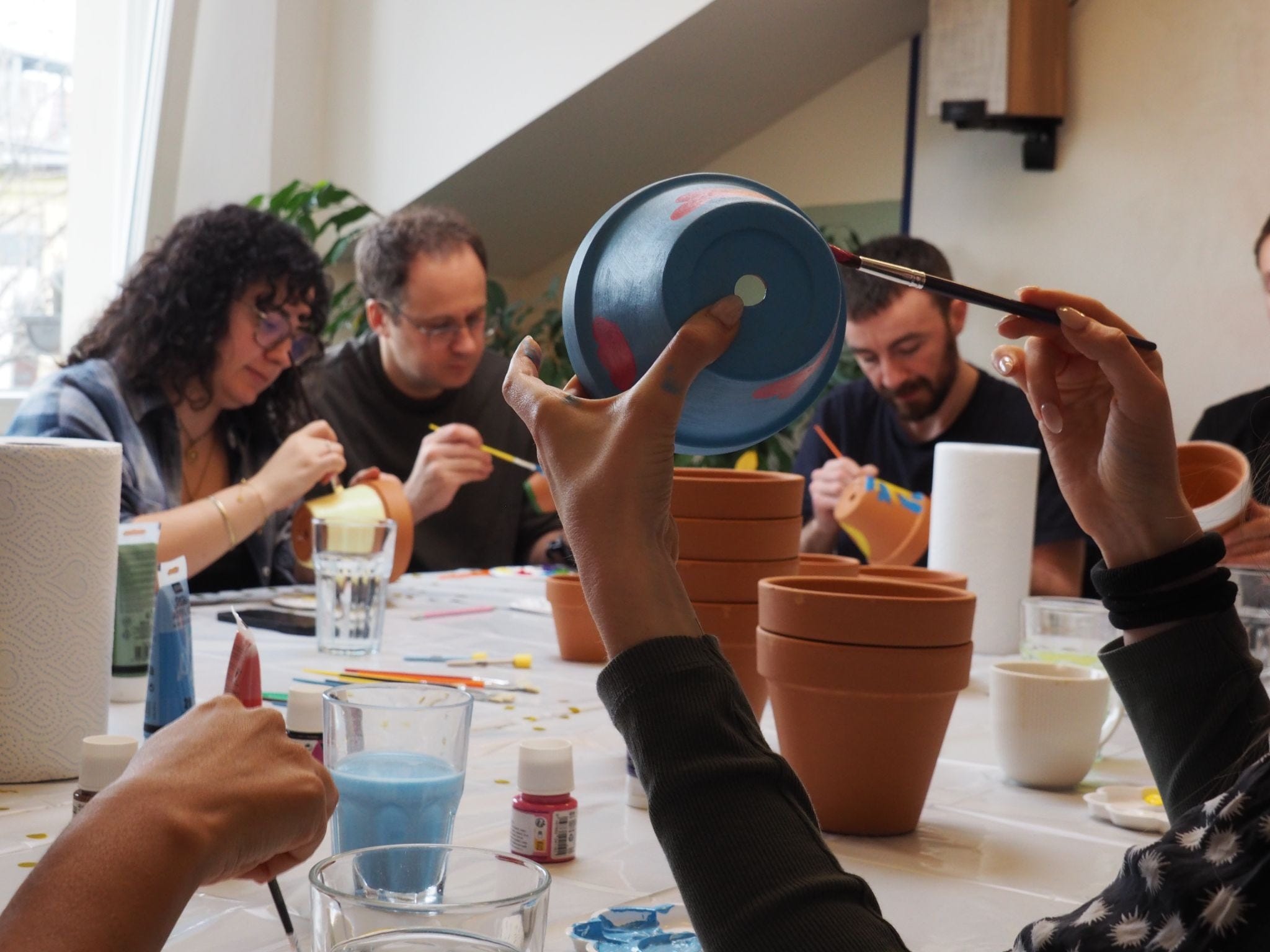
Mathias: Our community must have a productive place to work. We generally try to keep the main space quiet, which means asking members to drop out of the main space when they have calls.
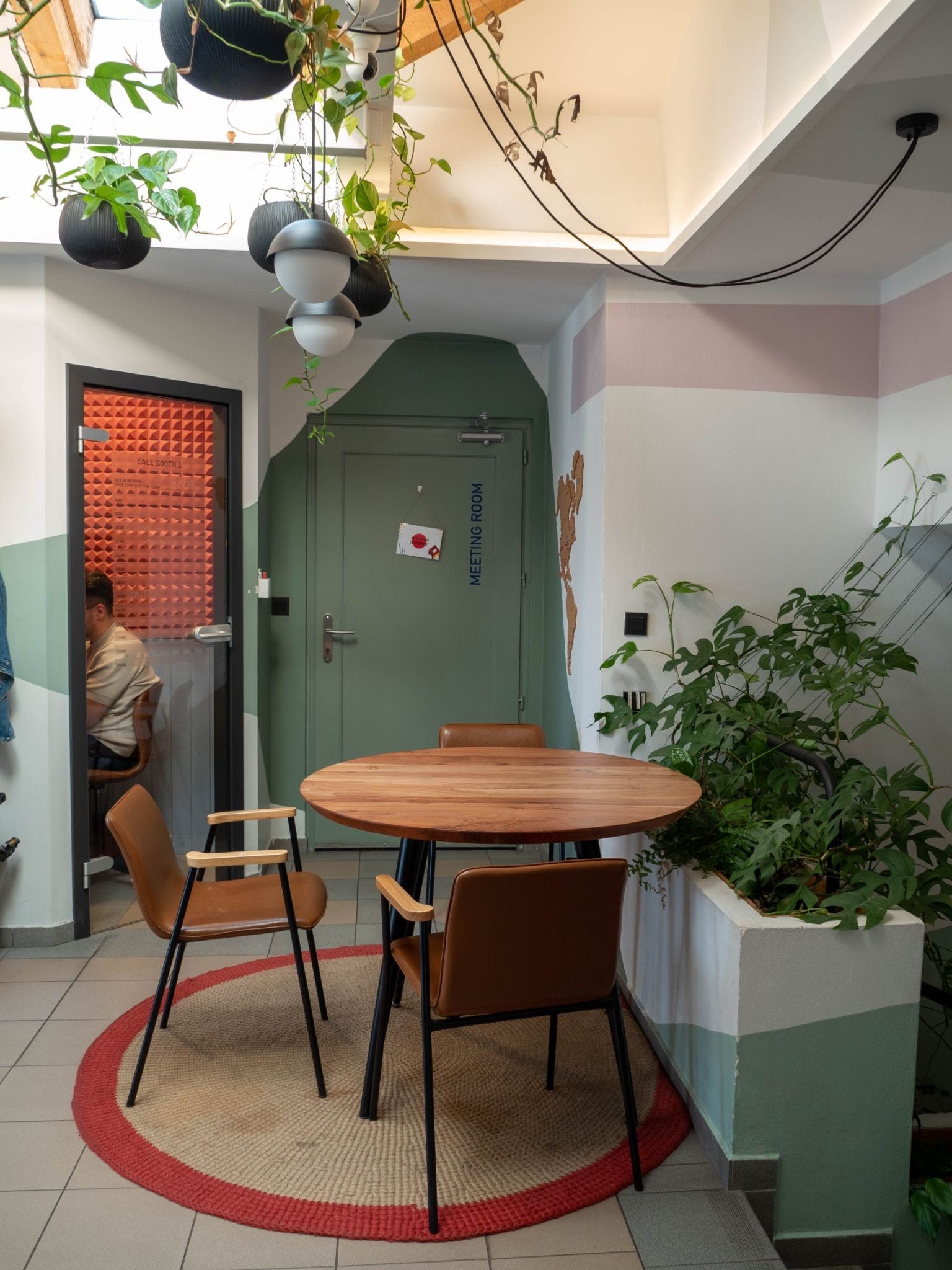
When I first took the space over, we only had one phone booth. Now we have four. We could have some more, but it’s quite expensive. We recently changed our big meeting room and use a dynamic display to show when it’s available or not, opening it up for people who have calls where they only need to chip in occasionally, as they can sit with other people.
We also changed the kitchen area, and designed it around one big, round table to make it more open, focused, and community-driven. We put a small table near the window to show off the amazing view from our space. We’re also live-streaming our pigeon nest from this spot.
Workspace design is very important. We’re lucky, as we’re located in the attic of a building where we have lots of natural wood and plants scattered around the space. Our members have told us that they enjoy working amongst wood, plants, and natural sunlight.
In fact, that’s why I chose this coworking space. Across Prague, there are some great and beautiful spaces, and many are focused on flexible offices, so we have a nice playground to offer where individuals and community come first.
We don’t have any flexible offices, although we’re looking to open a second location soon, because we understand that when our members grow, they have to leave Locus, even though they really want to stay here to be with our community. Our goal is to create more workspace for small teams and keep it limited, remaining focussed on individuals over large companies.
4. Locus attracts people from a wide range of backgrounds and industries. How do you make the space feel inclusive and welcoming to everyone?
Mathias: Our workspace is really set up for individuals and freelancers, but our community also includes entrepreneurs, architects, and writers. A few years ago, we brought in lots of digital nomads, but Prague has become too expensive for them now, so in the last couple of years, we’ve seen more remote workers join the space.
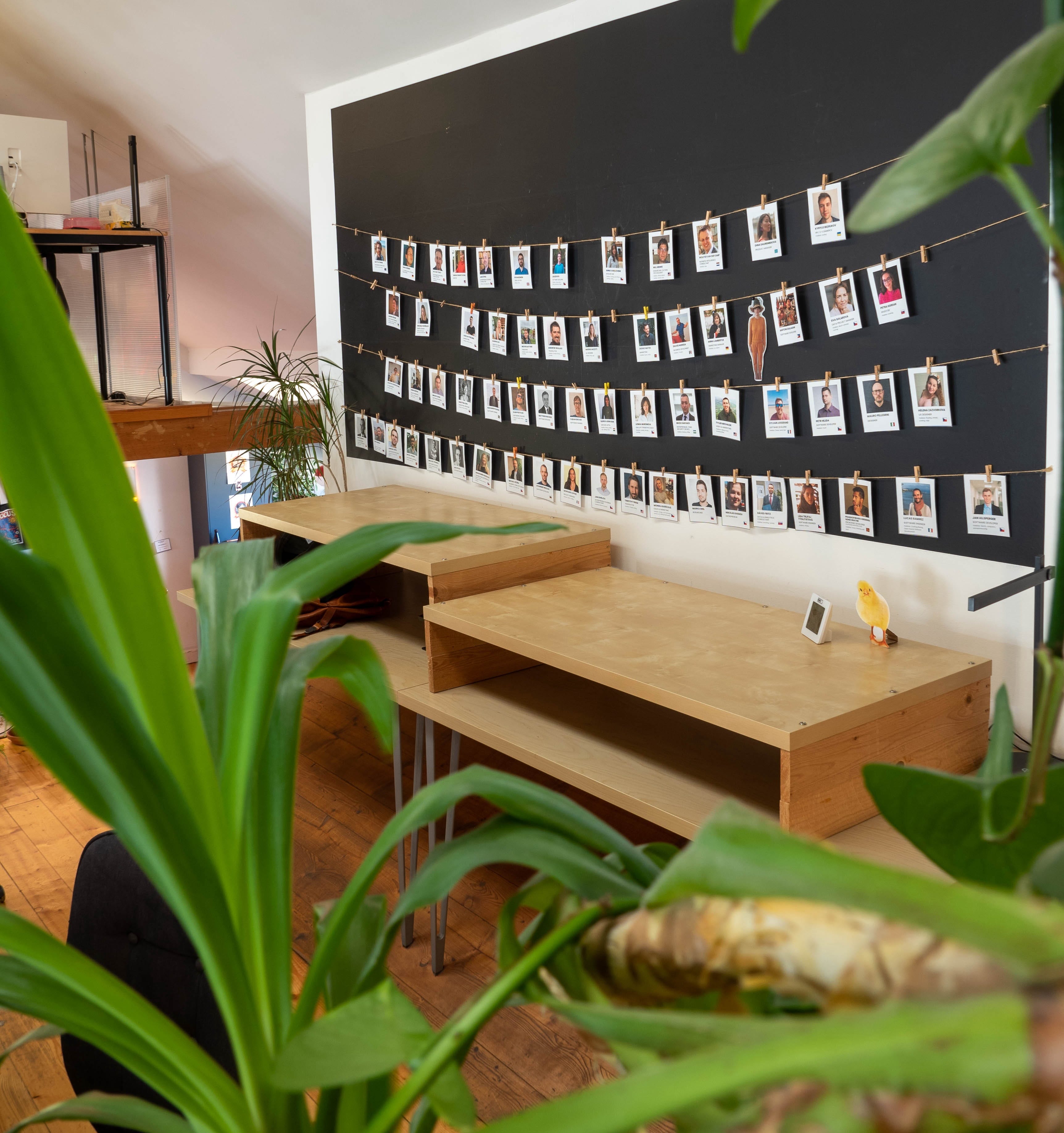
We’re also a very international coworking space with almost 30 different nationalities here. Czech people make up 30% of our community, but everyone is internationally minded. Often, they’ve lived abroad, and the international element attracts them to Locus.
We try to be as inclusive as possible and incorporate as many people and members as possible into our events. Some people are shy and don’t want to join any events, but we try to give them opportunities.
For instance, we’ll connect members from a similar background. By connecting two or more people in a casual way, they’ll have at least one person that they get to know in their first week as members.
Despite being in the Czech Republic, all our communication is in English. That’s a slight dilemma we’re facing right now, and we’re questioning whether we should open it up more in the future. Before, we communicated in both Czech and English, but it was difficult, especially because when I took it over, my Czech wasn’t sufficient.
Our main Community Manager, Eva, is Spanish, and we often work with other international interns. But that being said, we’ve had more Czech people than before, even though we were communicating in the Czech language.
I’m very grateful for the things that Bernie Mitchell and the European Coworking Assembly organise, and we’ve been involved in the alliances over the last couple of years.
It’s important for different coworking spaces to help each other out – we have so much to learn and be inspired by each other. At Locus, we’re open to contributing to that mindset by connecting with similarly minded coworking spaces.
We recently started partnering with other coworking spaces, the first being The Living Room in Malaga. The space is very similar to us, it’s very internationally minded and community-focused. Our partnership means that our members can go there for five days every quarter under our membership. We have a nice exchange with them.
5. What do you think people want most from a workspace today, and how is Locus evolving to meet those expectations?
Mathias: We often see new members who’ve come from working from home or a coffee shop. Although they see a lot of people, they don’t speak to them, so eventually, they decide to try out our workspace.
It’s really important that our community can use a focus zone to have a productive day. Then there are the small interactions between members, because everybody’s very open. We make sure that they have a better day when they work at Locus. They feel happier here than working from home, at the kitchen table, or in a coffee shop.
There’s something very powerful about seeing the same people regularly. Very often, you’ll see the same people here; even if you don’t talk the first two or three times, eventually, you start a conversation and, bit by bit, get to know other people.
People start building a supportive network and community, and because we have so many groups here, you can become part of a sub-community as well and take leadership. We try to give our members the tools they need to do that.
When people search for a good place to work, it’s the community that helps them the most. It’s so important to provide that network to people, and it’s something we’re focussing on all the time, even as we grow. It’s a game-changer for our members, providing an incredible experience.
About People Make Coworking
Celebrating the people who make up the fabric of the global coworking movement, People Make Coworking interviews coworking space founders and community builders who share their journeys of bringing people together.
Edition #31 of People Make Coworking interviews Mathias Vanluchene, Owner of Locus Workspace, an independent coworking space in Prague, Czech.