


The flexible workspace industry is often described as fast-moving, but few people have shaped, challenged, and redefined it quite like Zoe Ellis-Moore.
Following a 20-year career in commercial property as a Director at JLL, Zoe worked across the hotel, retail, industrial, and logistics sectors before launching Spaces to Places in 2019 to support flex operators and landlords with research, placemaking, and marketing services. At its core, Spaces to Places is about defining what a place actually is and making flexible working work better for everybody.
Building on that mission, Zoe launched a new venture earlier this year: Office Tier List — after identifying a lack of clarity and end-user focus in the coworking market. Office Tier List brings greater transparency to the flexible workspace sector, helping end users understand and compare different workspaces.
In this conversation, Zoe shares what people are actually looking for in their workspaces and how truly understanding end-user needs, rather than just second-guessing them, is the greatest flex of all for coworking operators.
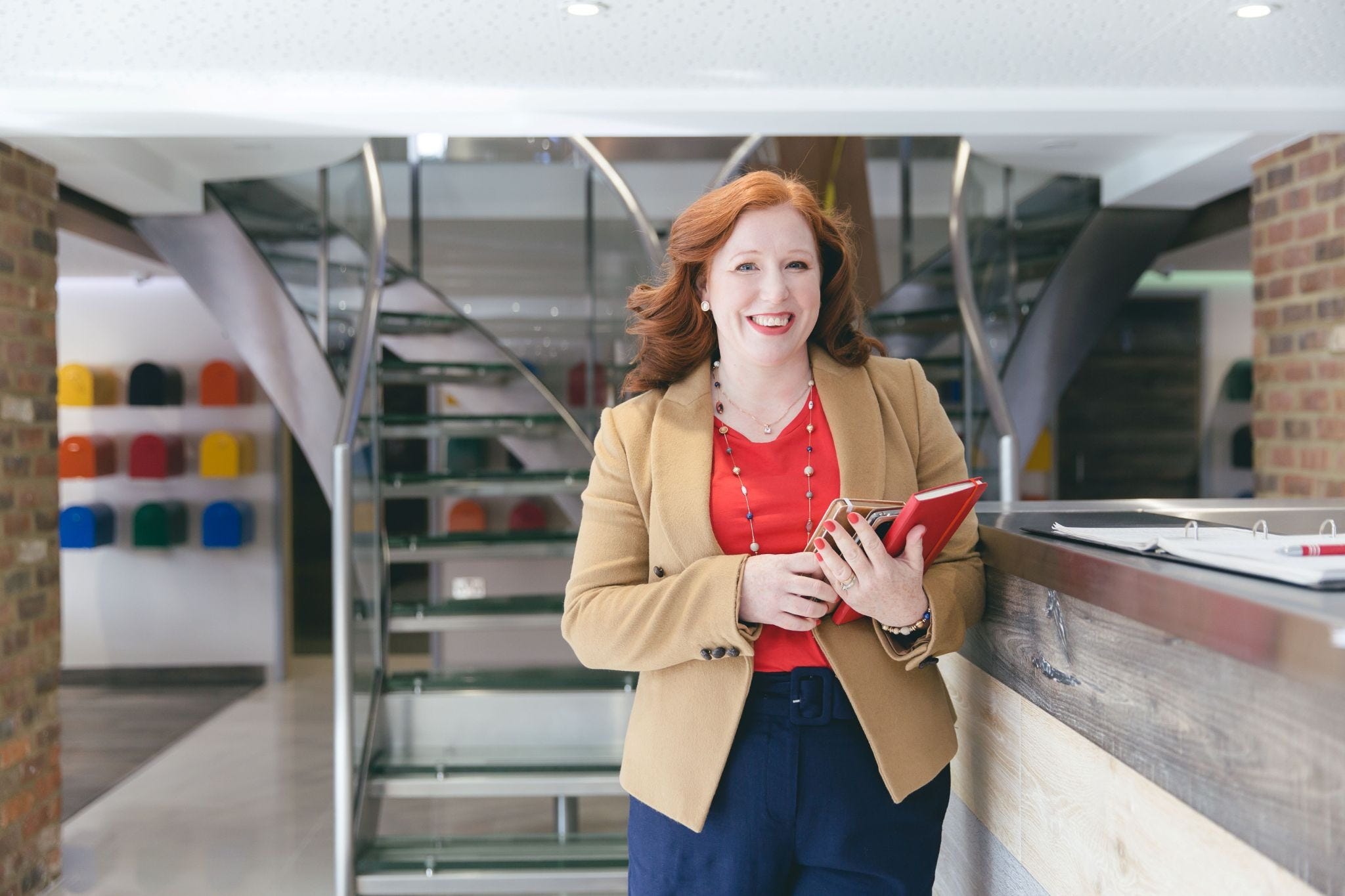
1. What first pulled you into the flexible workspace industry?
Zoe: What first pulled me in was a few different projects I was working on. I left JLL after a 20-year career in commercial property, working across all sectors: hotels, retail, industrial, and logistics. Lots of different things were happening, and having my son suddenly changed my perspective. I wanted to have some work-life balance and work closer to home.
The flex office sector was really changing the market; it was becoming more consumer-oriented and appealing. Having worked in hotels and retail, the office industry matched my skill set, and I started picking up contracts with large corporations. It was grassroots; that’s how Spaces to Places started.
Originally, Spaces to Places was going to focus on all property sectors, before I narrowed it down to the Build To Rent (BTR) and coworking industries. Everybody says the flex sector just draws you in; it’s fascinating. You start looking at the sector and understand the dynamics more and more.
My experience has always been place-making. That’s why my company is called Spaces to Places; I see spaces as empty and soulless in some ways. But a place has people, purpose, and meaning. It’s the difference between a house and a home. That’s where the big difference lies.
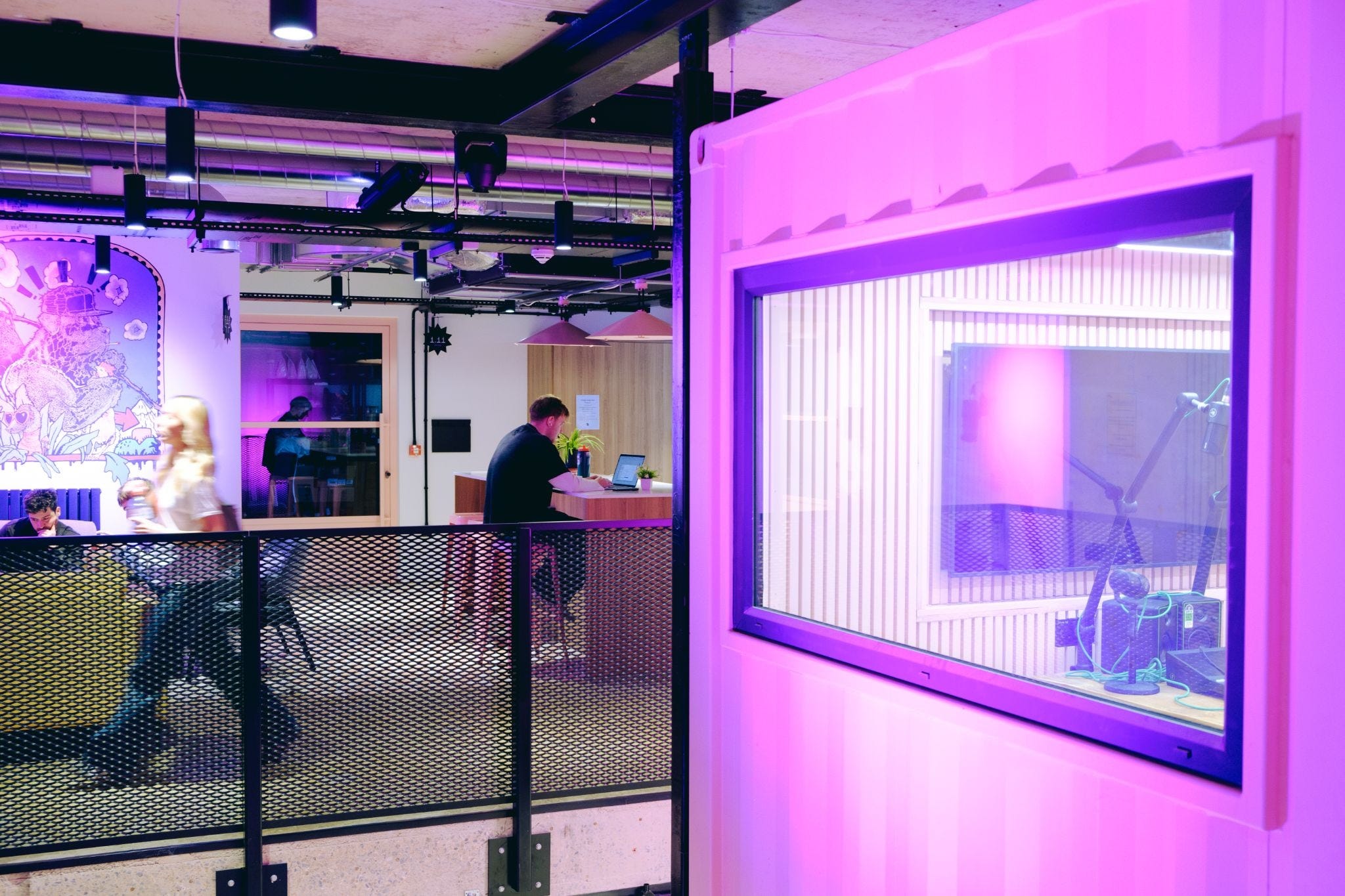
2. What problem were you seeing in the flex industry that made launching the Office Tier List feel necessary?
Zoe: In the commercial property industry, there’s a lot of ‘hope marketing’ (where time and money are invested in random marketing tactics in the hope that they bring in customers, with no underlying understanding of the location and demand drivers, and not enough focus on end-users).
I was constantly telling people you can’t just do ‘hope marketing,’ you need to understand your target market: who they are and their location. That’s coming from a much more end-user-centric perspective, and it’s exactly what we’re doing with the Office Tier List. We’re flipping it on its head.
Sometimes, I feel like the industry has been set up more for the property industry, not for end users. We’ve done quite a lot of research reports, including four last year, the last one being the ‘Voice of the Customer,’ which opened my mind up to the fact that we’re doing end users such a disservice.
There are so many wonderful workspaces, some are more industrial, others are more corporate — but there’s a flavour for everyone. Office Tier List is a matchmaking service connecting people with the right workspace for them.
We’re still using the same intelligence and know-how with Spaces to Places that we use with our clients’ workspace brands. But with Office Tier List, we’re targeting a different audience: end users.
Tier lists came from the gaming industry. You can decide who’s the fastest character or the strongest character. You can then put them in different tiers and decide which players you want when you’re gaming. Loads of people use tier lists, for example, children, to ascertain which is their favourite chocolate bar.
The whole purpose of Office Tier List is to celebrate the diversity of the market and help end users find great workspaces. We want everyone to be able to find the right workspace and understand the industry better.
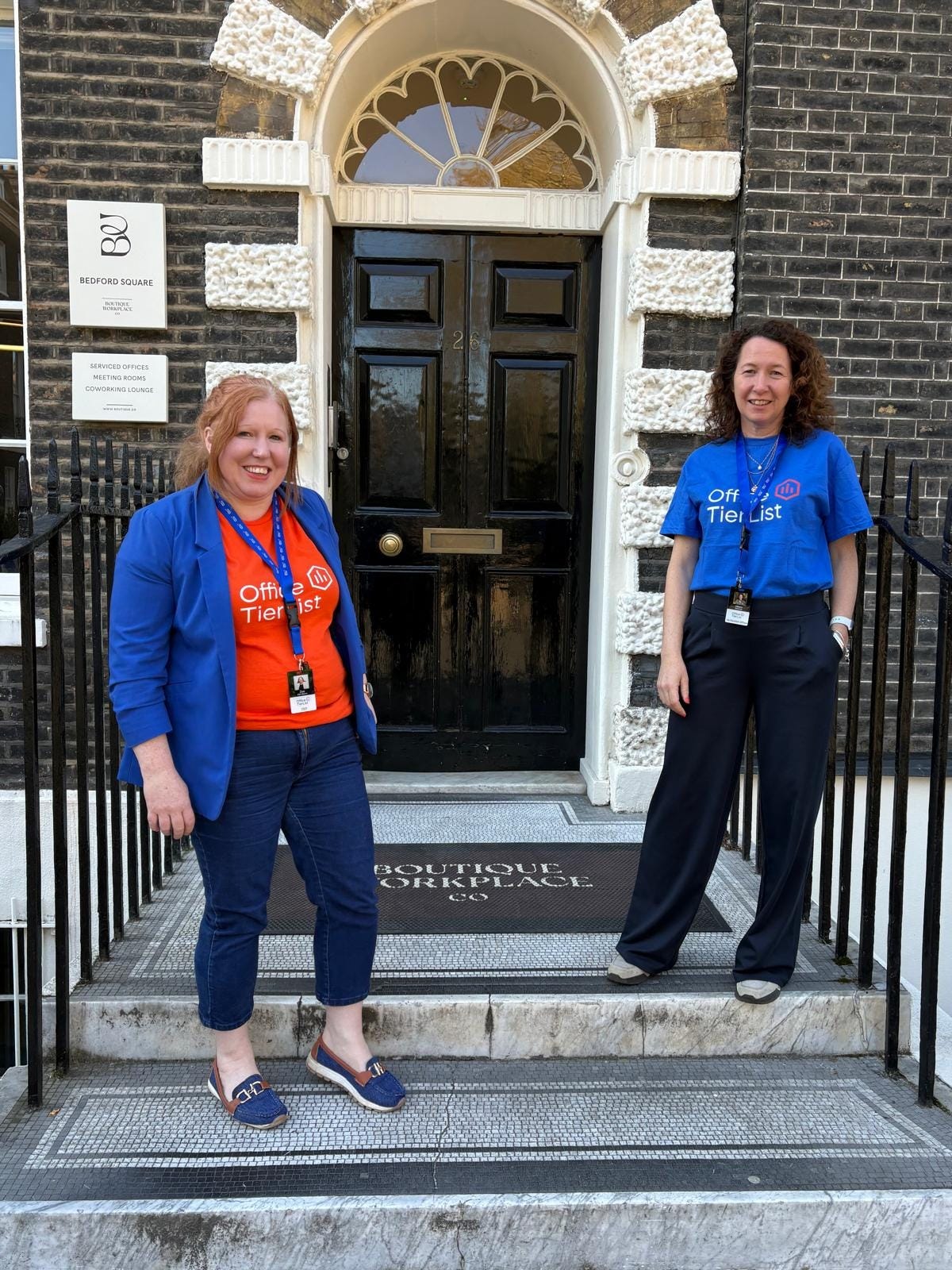
3. What are some of the key metrics or signals you look at when assessing a workspace?
Zoe: It comes back to what the end user wants from their workspace. They need to know their needs, whether they’re looking for other businesses and energy, community and support, or access to training programmes.
Some businesses want greater productivity; they’re looking for head-down space and time efficiency, but in other cases, they’re looking at CSR (Corporate Social Responsibility) factors.
We do a lot of work with brands. If you want productivity and control, and to access workplaces between regions, then maybe Regus is the place for you. Or maybe it’s WeWork — if you’re looking for a busy place. For fun and enjoyment, try Runway East. Meanwhile, Spacemade has a fashion and health business cluster, and Techspace is a tech-focused space, where you’ll meet other ambitious businesses in that sector.
To understand workspaces better, the easiest way to think about them is with a four-stage model:
You look at physical properties first: the building and location. That’s the key one, because you’re always going to want to work out the location. But what type of location – is it city centre or out of town? They all have different nuances.
Then you look at the intangibles of the service element, such as the people, processes and placemaking. That’s always our second level.
The third level is much more about your perception – is the price high or low, compared to what value it’s offering you? Pricing is always subjective because it comes down to customer value.
The final one is analysing workplace performance – is it constantly evolving? Are they looking after their assets? Who are their property partners? Who are they working with? Sometimes we see brand-new, shiny office buildings come up, but after five years, some still look brand-new, while others look tired.
Our ‘Voice of the Customer’ report uncovered that people and businesses are searching for Wi-Fi and meeting rooms. While we might assume they’re looking for gyms and other amenities, it turns out most people are thinking about the basics.
The other thing people are searching for is whether a workspace is furnished. That’s where the end customer doesn’t realise some of that is a given in coworking, although there are spaces where you take an empty shell.
Partly, that’s because they don’t understand this industry. We’re all constantly trying to educate, but it’s not always landing. That’s when we find people asking what’s included in the cost of coworking. We tend to overthink things in this industry, so we’ve got to go back to the basics.
Once people get into this sector and understand it, they’re blown away by these places. We want to get people to spend more than a day or a week, to really ingrain themselves in a community, and see what it means.
Overall, we make too many assumptions about what people want. That’s what the ‘Voice of the Customer’ research really showed us. Most people have worked in an office and have expectations, but as operators, we don’t do the research to find out what those expectations are; we think we know already.
Recently, I went to a student accommodation conference. That sector spends a lot of time understanding their end customers, like what students want in their accommodation, and their expectations. They’ve got phenomenal data and didn’t assume anything.
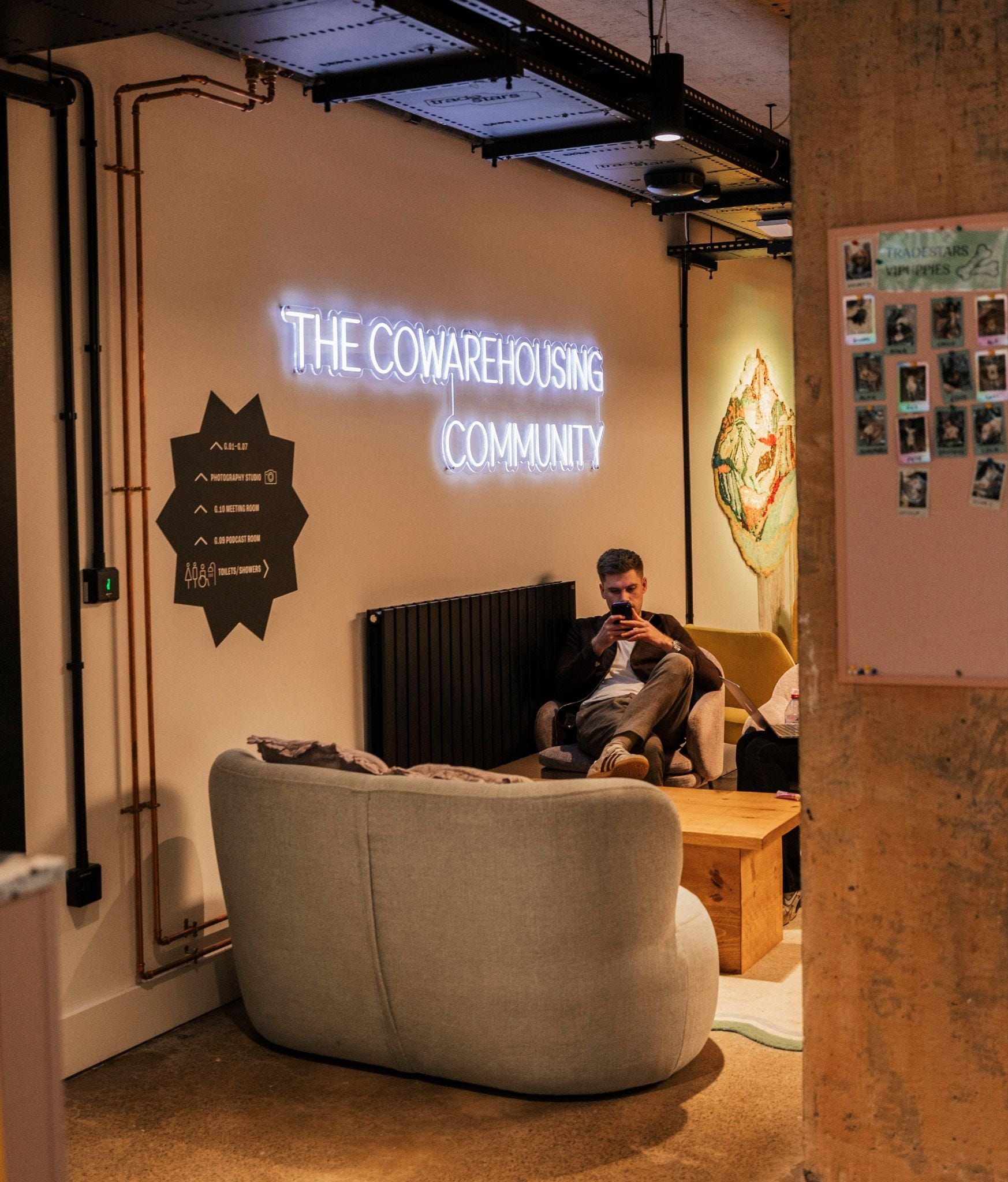
4. How do you factor in the human side of a workspace: community, belonging, or day-to-day experience?
Zoe: It depends on the end user. Neighbourhood workspaces are for people looking for a sense of belonging, especially the sole entrepreneur, who we’ve seen a rise in recently.
But the only thing about community is it’s two-sided, and you have to work at it. I see some amazing places, but you need the right culture to keep on inviting people, even if they say no.
Our research revealed that people want to feel like they’re a member – they want to be invited and know they could go to events even if they don’t attend. It’s nice to be invited and feel included. It’s the same with gym memberships. People like being part of a gym and knowing it’s there, even though they might not use it that much.
Sometimes, I find community is a trade-off. People are really drawn in by a community, but don’t necessarily get involved. For example, larger businesses tend to have their own culture, meeting rooms, and office space, but they try to get the best of both worlds by joining a coworking community. Having their own company culture makes it harder, though.
Meanwhile, other companies choose more managed space to meet their size requirements. They’re not looking for community beyond that. And some people’s prime need is head-down space. If it’s noisy at home, or they’re constantly out and about selling, they need a quiet space for work. That’s a different need.
Other people with a competitive nature like to see others working around them. Or businesses in growth mode have a work culture where everyone comes in and works late or on different hours. They need micro moments more than community – rather than having long conversations, it’s more about seeing other people working, and feeling part of something bigger, so you don’t feel lonely.
When people look at workspaces, a good question to ask is: What are the other businesses in the building? Generally, the people coming to the community are the ones who can go up and ask others what they think, who are open and transparent.
5. Which coworking trends are you excited about, and which ones make you a bit sceptical?
Zoe: I’m excited about the industry maturing. Today, brands are focusing on their customer and doing persona work — knowing who they’re for and who’s not right for their community.
That’s where we really see the big players in the market grow their locations. Those brands are tuning into the right buildings, locations, and attracting the right people. Some offer coworking, serviced offices, enterprise suites, or virtual memberships exclusively; others provide the full spectrum — supporting businesses from one desk to 100. That’s where I’m seeing much more diversity coming into the industry.
We’ve also got more niche coworking spaces: maker spaces, health tech centres, a vibrant mix of creatives, or people in the music industry. That’s where we’re seeing these specialists coming together and evolving their models.
The brands with more locations know what works for them and who they connect with. They’ve built tribes. What excites me is seeing the evolution of elevated standards in flex.
The industry has been constantly progressing since COVID, but it’s always disheartening to see the other side when spaces close down. They’ve built up a community and want to get that mix going, but haven’t been financially viable. Creating a great end-user customer experience is one thing, but it must be commercially viable.
The misconception is that you can set up a workspace and make huge amounts of money, but there’s more to it than that. The service element is particularly hard work.
This industry has been around for a long time now — 50 years for the serviced office sector. But it’s only starting to really mature, that’s the joy of it. As the industry progresses, I’m seeing more people benefit, which brings more investment to the industry and helps it evolve even further.
In the UK, over 70% of workspaces have one to three locations. While it’s always been quite fragmented and location-oriented, we’re now seeing some bigger brands with greater size and scale. We also still have the small independents. That’s where I’m celebrating diversity across the board.
About People Make Coworking
Celebrating the people who make up the fabric of the global coworking movement, People Make Coworking interviews coworking space founders and community builders who share their journeys of bringing people together.
Edition #27 of People Make Coworking interviews Zoe Ellis-Moore, CEO and founder at Spaces to Places and Office Tier List.