


We all have individual preferences about what makes us feel good and ‘thrive’ in environments – whether our workplace, a public space, or our very own homes.
At the Workspace Design Show (held in Islington two weeks ago), Bernie Mitchell organised a brilliant workshop about supporting neurodiversity in coworking spaces, hosted by Amy Morgan from 360 Workplaces.
Check out my event recap on the Nexudus blog.
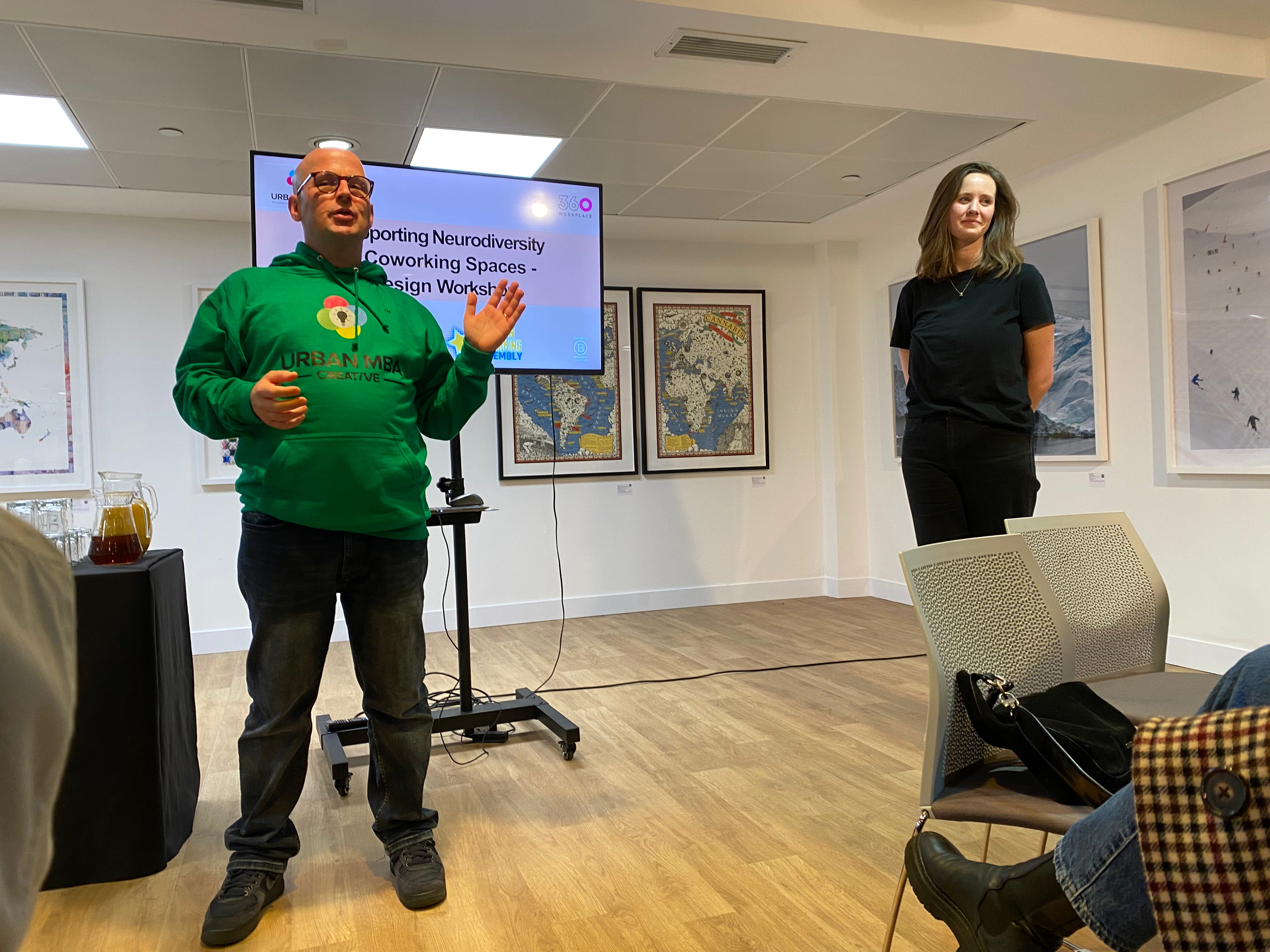
Opening with a definition of neurodiversity, Amy explained what the workspace design features of an inclusive workspace can look like. Out of these options, she asked us to individually choose an element that we felt restricted our ability to thrive in shared workspaces.
One option stated: ‘Distracted by other people,’ it instantly caught my eye.
Love coworking, can’t help being distracted
While I’m a huge advocate for the power of coworking and have benefitted greatly from the sense of belonging and community that comes with it, I struggle big time to focus in shared environments.
I adore the connections and conversation that come with coworking, often to the detriment of getting my work done. The comings and goings, particularly in open-plan spaces, take me out of any deep workflow and distract me endlessly.
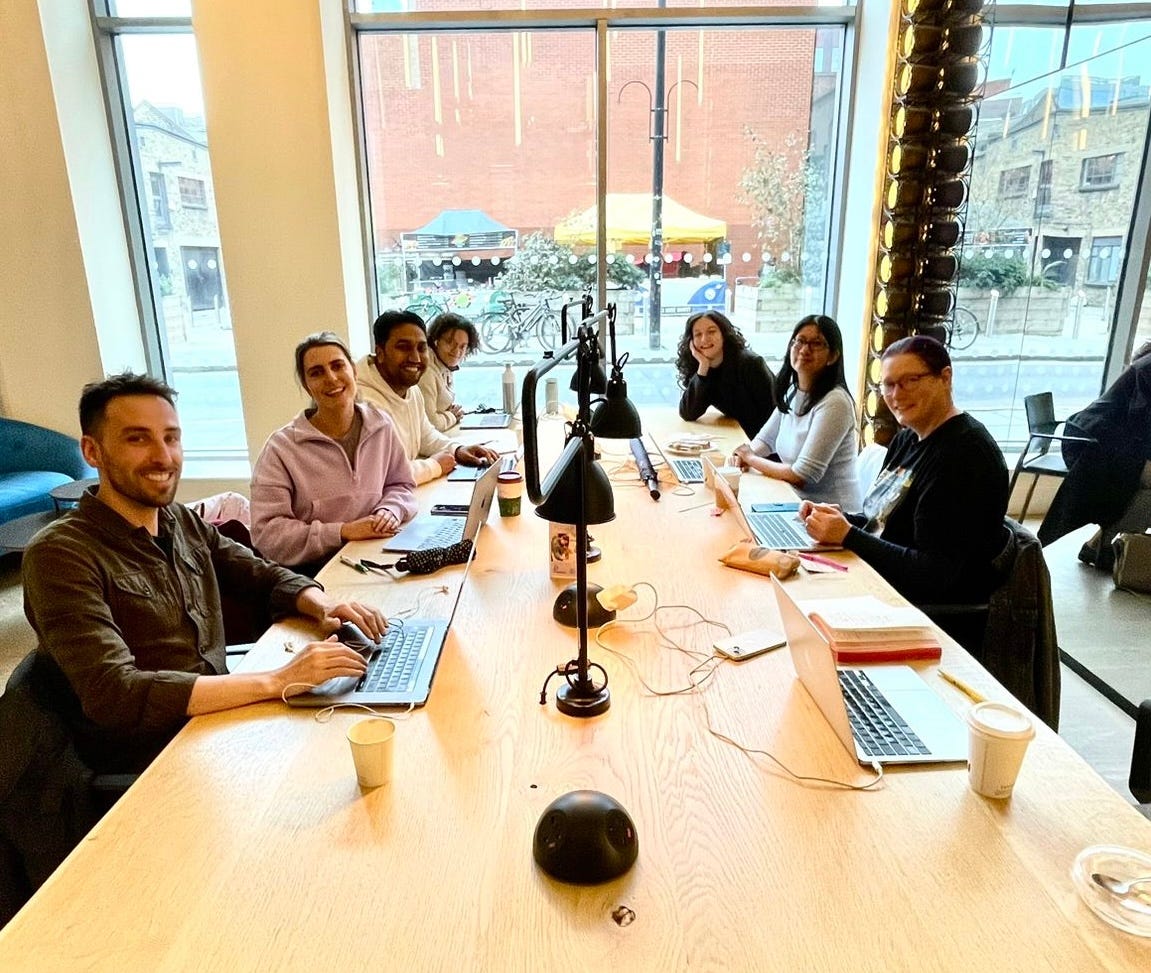
But, it’s not only workspaces that impact my ability to focus. Recently, I was working from a Black Sheep cafe at Waterloo Station…while a speaker above me blasted music, a group behind me loudly chatted away, and the cafe, which was effectively designed in a glass box, meant that there was movement from all different angles as I looked out of the window. I simply couldn’t focus there.
However, I’m not the only person who struggles in these environments. In Stephen Shedletzky’s recent talk on Workplace Culture, he shares that 40% of people in the workplace are introverts. Even more so, it’s estimated that up to 25% of the global population is neurodivergent.
Making coworking spaces more neurodivergent-friendly
Unlike neurotypical people who thrive in open-plan spaces and often have no limit to their social skills, neurodivergent people can feel overwhelmed in busy and loud work environments.
This might impact someone to the extent that they withdraw from your workspace entirely. This is one of the reasons why we must strive to create more inclusive workspaces, especially spaces catering to the neurodiverse community.
However, there certainly isn’t a one-size-fits-all approach, and transforming a workspace can be costly. Nonetheless, here are a few things to consider when you’re designing for neurodivergent individuals:
Natural lighting: Any bright, white, harsh lighting can cause headaches and even migraines in some folks. This type of lighting can be very off-putting, especially if someone is looking to use a space for long periods (I have friends who’ll check photos of a workspace before going along, to ensure that the space doesn’t have this type of lighting). For neurodivergents, natural lighting is preferred, or at least warm and ambient lighting for a calmer ‘vibe.’
Signage: Wayfinding was a big topic of discussion during the workshop. Amy pointed out that to make coworking spaces more accessible, clear signage should be visible, from toilet signage to information about hopping onto the WIFI.
Workstations: A huge challenge for neurodivergent individuals is open-plan space, causing overwhelm and stress because of the sensory overload that comes with bigger spaces (think, everyone chatting simultaneously makes a space pretty noisy). Neurodivergent individuals thrive in more private spaces, like booths, pods, and nooks, tucked away in a different part of the workspace. Zoning spaces can separate open-plan space from private focus workstations.

Colour choices: Equally to the overwhelm of open-plan spaces, bold and vibrant colour choices can be really ‘in your face’ and stressful to be around. When you choose your colour tones, consider tones we see in nature – neutrals, whites, and browns. These choices will invoke feelings of relaxation.
Acoustics: If you’re limited in bringing in additional workstations or closing off some of your open-plan space, consider bringing in noise-reduction materials, such as soundproofed booths, noise-dampening curtains, and noise-absorbing tile ceiling fixtures.
At the workshop, Kofi Oppong, founder of Urban MBA, shared how the EdTech hub is being transformed into a more inclusive environment by implementing some of the above workspace design elements.
Learn more about what he said in the recap.
Getting started with designing a neurodivergent-friendly workspace
If you’re ready to assess the inclusivity of your workspace, here are a few ways you can go about it:
Audit your workspace: Begin the process by reviewing every touchpoint in your coworking space to identify changes for improvement.
Hire a design consultant: The workshop showed the strengths of design consultants. If you lack time, this is a good route to go down.
Run co-design workshops with your coworking members: There’s no better feedback than talking to your members!
At the Workspace Design Show, a portion of the workshop included a co-design session, where we were split into groups to design an inclusive coworking space. Co-design is an equitable process, requiring the group to listen, respect, and value one another’s thoughts and opinions openly.
The end result, or output, enables everyone to feel like they contributed, and participated in the design process.
In November, I issued a Coworking IDEA challenge to design coworking spaces for diverse personalities using co-design frameworks. Check it out.
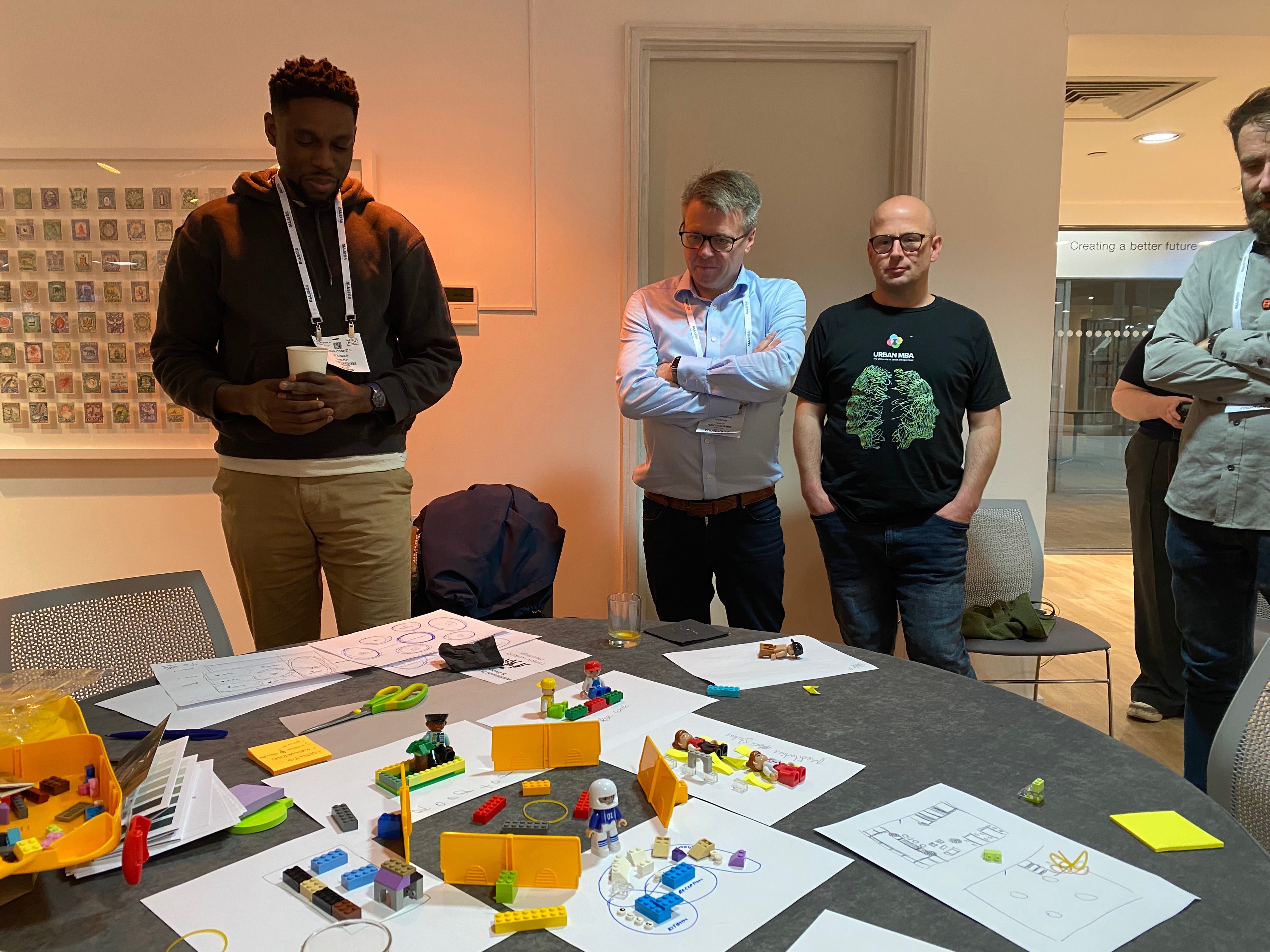
Calling our hypothetical coworking space Venn Space, after the Venn diagram we’d produced to plan the concept, our group’s inclusive coworking space was centred around a community pit area for activities defined by the community (who could work there, connect there etc).
We developed spaces for different activities, including a wellness space, podcast studio, and library. The space was topped with a rooftop garden as we strongly believed in the importance of access to nature for greater well-being.
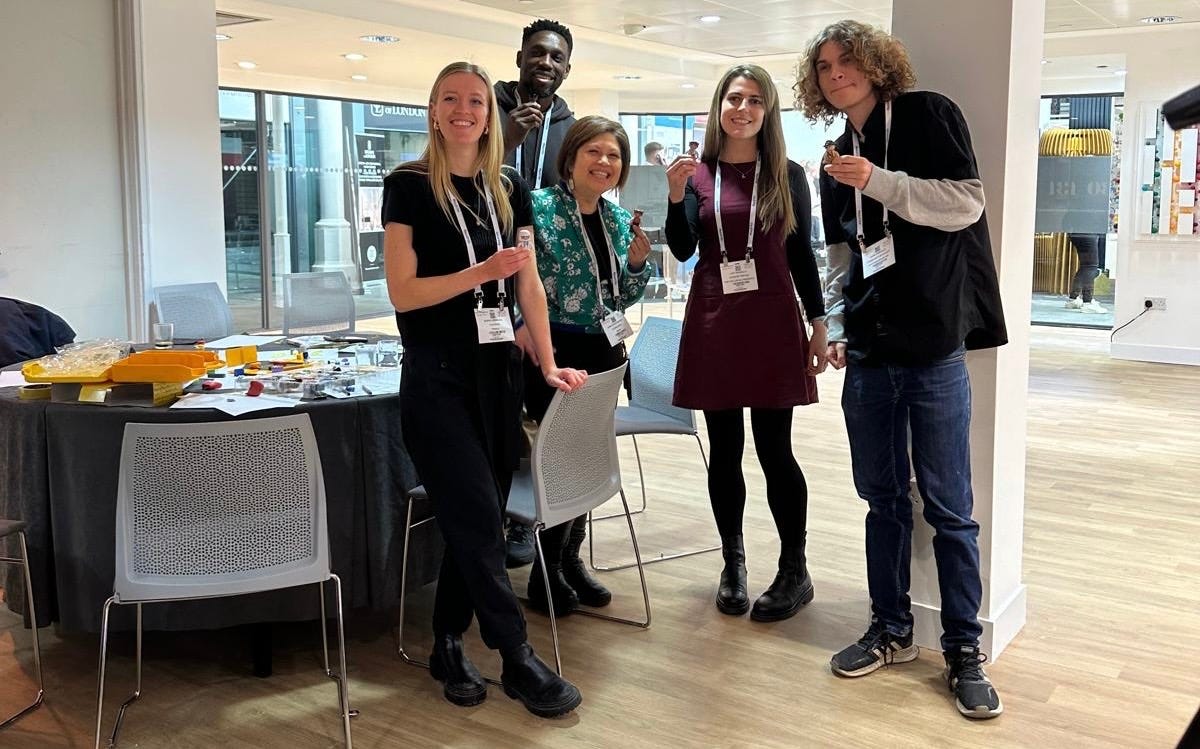
Our concept was a huge win — we were voted the best coworking space concept at the workshop. However, I can’t take much credit because our team included Dean Connell, former WeWork interior designer! The session made us think more deeply about designing neurodivergent-friendly and inclusive workspaces.
Embracing neurodiversity in coworking
By being more inclusive of your neurodiverse community, you can truly transform your coworking space, not just in terms of the way it looks or feels, but how your community interacts with your workspace. Small adjustments, such as introducing sensory-friendly lighting, private workstations, and noise-absorbing acoustics, can make a significant difference.
When coworking spaces meet the needs of neurodivergent individuals, they benefit everyone: creating stronger connections, improving productivity, and becoming environments where all your members feel valued and supported. These changes aren’t just accommodations, they’re investments in the future of work.
How are you making your coworking spaces more inclusive? I’d love to hear from you, get in touch!
People Make Coworking
Do you share the same values of community, connection, and collaboration?
I’m writing a blog series called People Make Coworking, celebrating the people who make up the fabric of the global coworking movement. Currently, I’m looking to connect with coworking space founders and community builders for this series.
If you’re interested in sharing your coworking story, please reach out, I can’t wait to learn about your journey in ‘co.’