


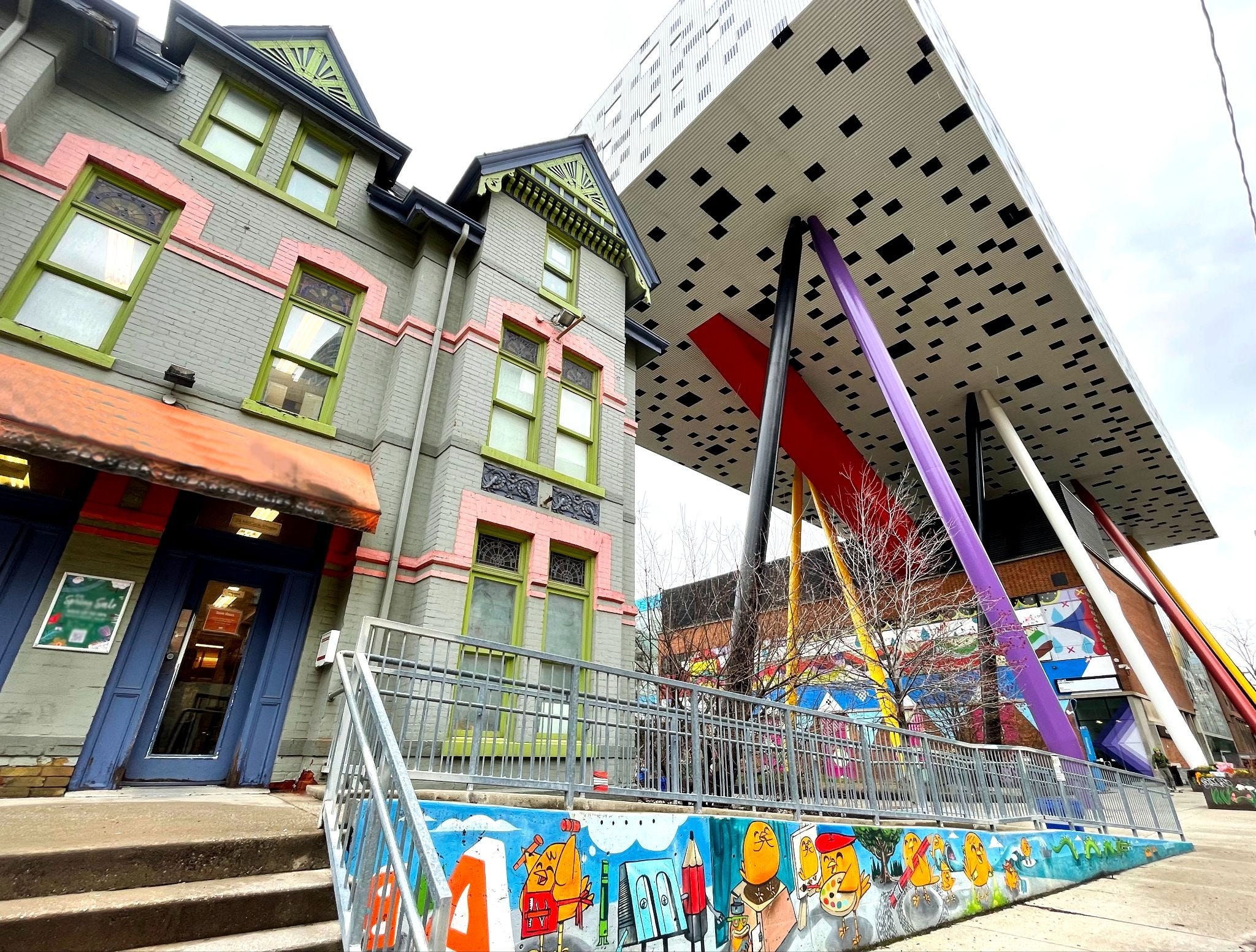
Few people have influenced the coworking movement more than Ashley Proctor. Her journey in co began back in 2004, when Ashley helped launch a student-run space to support artists, entrepreneurs and the wider community in Toronto’s Kensington Market, while studying at the Ontario College of Art and Design.
That experience would go on to shape much of Ashley’s work in the coworking industry over the last two decades. Working under her consultancy, Creative Blueprint, Ashley has worked with countless coworking operators to launch spaces and hubs that serve community needs.
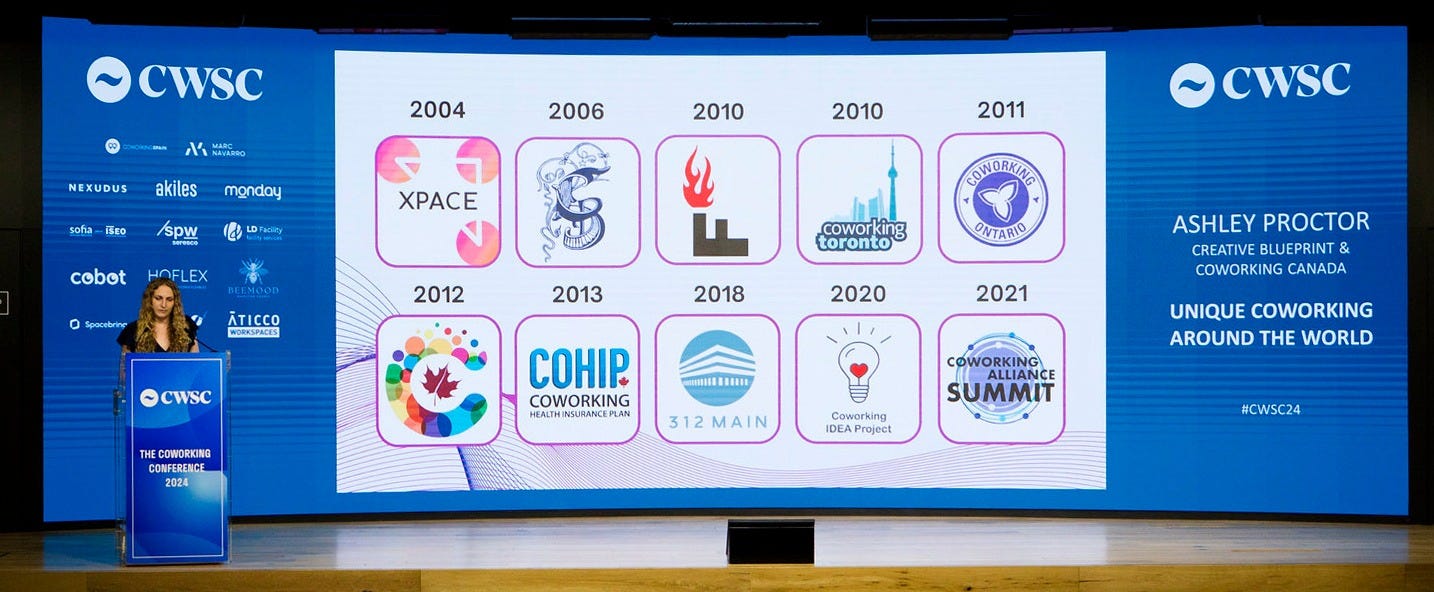
But Ashley’s impact within the movement stretches much further. She’s a co-founder of the annual Coworking Alliance Summit and the Coworking IDEA Project, and founder of the Coworking Canada Unconference and the Coworking Health Insurance Plan; initiatives that prioritise the collaboration over competition spirit of coworking.
Ashley is also a passionate advocate for the values behind the coworking movement: giving people more agency over where and how they work, creating accessible spaces for independent workers, and building communities where people can learn from and support one another.
Ahead of this year’s Coworking Canada Unconference between 19-21st October, Ashley takes me back to the early days of the movement, and explains why she thinks its next chapter could be about something much bigger than workspace.

1. You’re one of the original voices of the coworking movement. How did you first get involved in coworking, and what were some of the projects and communities that impacted your journey?
Ashley: While studying at the Ontario College of Art and Design, I was elected to represent the students as part of the student union. One of our first projects involved finding ways to create a sustainable space that was external from the campus to serve the students during a massive renovation project.
The students had lost access to all of their collaborative space, including their student union offices, the outdoor courtyard, auditorium and cafeteria. There was nowhere to meet with other students in the community, even though those spaces attracted students to the Ontario College of Art and Design in the first place.
We worked to create a sustainable student-funded and student-run model, independent of the administration, an event and exhibition space, a studio space and a retail space – providing all the different opportunities that artists or artists as entrepreneurs needed.
We launched in Toronto’s Kensington Market; the location had a huge impact on the space and the amount of access and opportunity we could provide. It taught me how essential that was for small and local businesses. We were learning from other entrepreneurs and family-run businesses in the Market about how to position ourselves, sell our work, and operate as independent entrepreneurs and emerging artists.
The theme throughout was that we were better together. The market itself was better because there was a diversity of independent local shops, food, flowers, art, creativity, vintage clothing and everything you could imagine. But it was all family run – that was truly valued by the community.
I noticed how the artist community really came to lean on each other. One of the best values that people received out of it was the opportunity to work together, collaborate, and create partnerships. That really inspired and informed my approach in leadership as well.
I valued the collaborative aspects, and that we were doing everything in partnership. It wasn’t a hierarchy or that we were building it for the students. We were building it with the students. Our job was to represent them, and their interests, and I took that very seriously.
I’ve continued that through all of my other projects. I feel like we carry those values of partnership over hierarchy, and collaboration over competition. We really believed that what we could create together would be better.
2. Your manifesto talks about making entrepreneurship and distributed work more accessible. What role do coworking spaces play in making that happen?
Ashley: When I wrote the manifesto, I was really inspired by the values held at the very beginning of the coworking movement, and so they’re not only my thoughts, but a voice that represents the thoughts that I’m hearing from thousands of coworking operators and community leaders around the world.
We’re creating spaces where people live, instead of asking people to commute into the city, another town or area to go to work. We’re giving people opportunities to work where they live. We’re also providing affordable and accessible spaces with flexible terms that support remote work and new ventures.
So, it could be nonprofit organisations starting out or small businesses, but they’re local. This opportunity didn’t exist before coworking. Many of us might forget about it, but there was a time where you could only get a commercial lease if you were signing for a long term, and agreeing to make tenant improvements to the space which required a lot of investment. It just wasn’t accessible or affordable for small businesses to start out.
Rather than folks starting in garages, we asked them to trust in this new model. It’s been proven over and over again that when we come together in coworking spaces, it empowers new business growth, entrepreneurship, and local organisations to sprout.
Coworking spaces support entrepreneurship and distributed work in their programming. It could be by providing ongoing services and support, like business development opportunities or workshops that continue people’s learning and growth, while they’re expanding or maintaining their businesses.
Sometimes, coworking offers connection either by colocation or through intentional programming around funding, funding connections, or assistance, startup loans, which helps folks refine their resume, or even just by providing mentorship and peer support through the coworking community. All of that really helps to support entrepreneurship.
There are also the benefits of coworking for larger corporations. Aggregators or subscription based platforms encourage that kind of agency for employees, who mostly don’t have the opportunity to work from where they want to. However, more companies now are giving their employees access to these platforms, paying for space, and allowing employees to make decisions about when and where they work, when they work together or from home; or when they work alone or with a community.
This connection that we offer in coworking spaces is being recognised more widely, which is essential for collaborative tasks, and making distributed work more accessible for those companies and workers.
All these models are reinforcing what coworking operators already know: it’s important to give people agency and choice over where and and when they work. I encourage remote work, even if it’s not directly a coworking model, because people work best when they have agency, flexibility and access to a network of support, belonging, and safety.
In the earliest days of coworking, we used to say things like: “Work for yourself, not by yourself,” and that our organisations or collectives were shaping the future of work. Now, I feel we should update this to: “Shaped the future of work,” because coworking truly has.
I’m so proud of what the movement has been able to achieve.
3. What does a healthy workplace look like to you, and how can coworking spaces lead by example?
Ashley: As I see it, a healthy workplace comes from a couple of different angles.
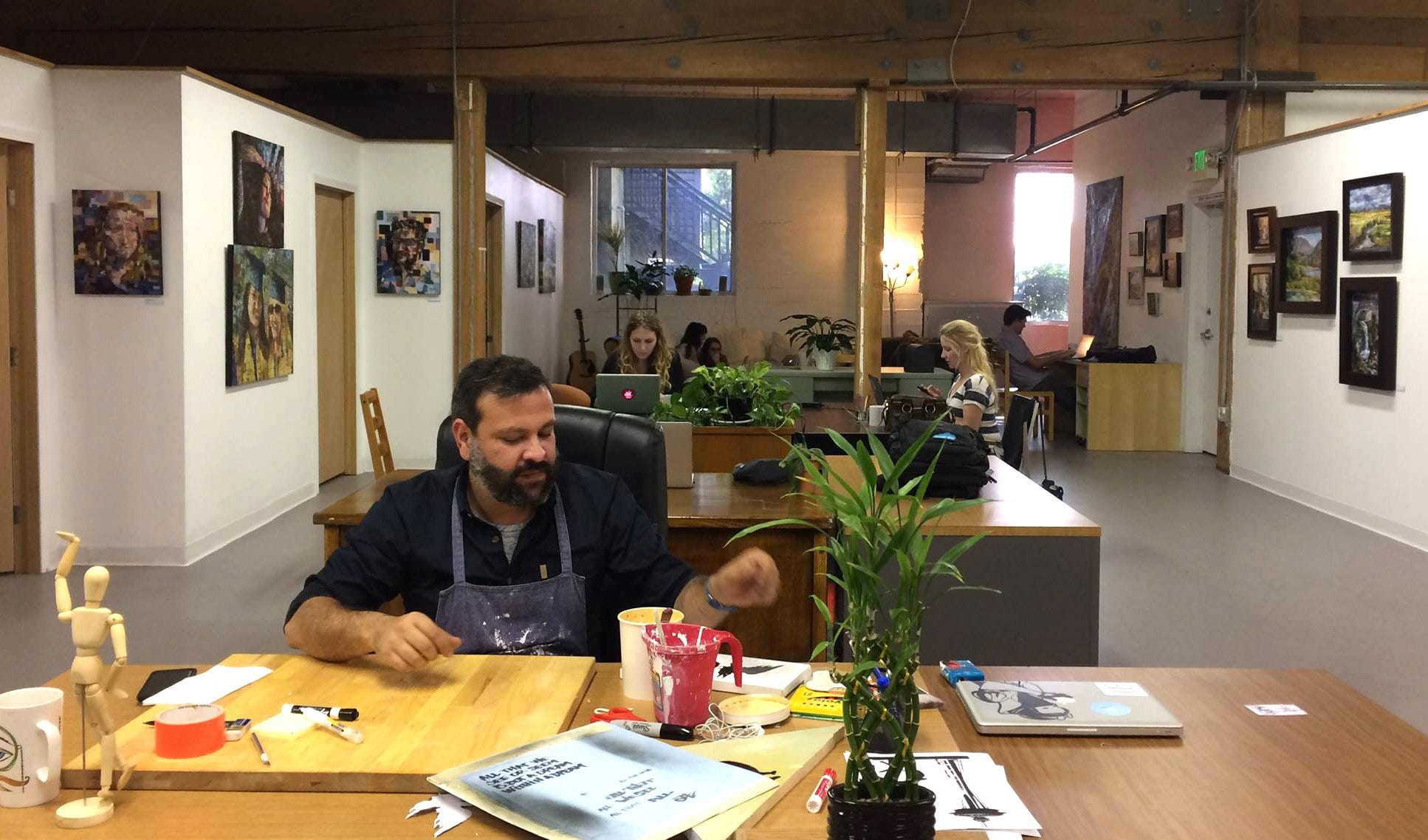
You start with the physical building – that’s the most obvious — the design, biophilia and plants, air quality, the materials, and natural light. In a healthy space, the design also considers accessibility, neurodiversity, providing different options for lighting and different work styles and various zones.
For a very long time, coworking operators have known that they need to create a quiet space and an active, animated social space, a lighter space and a darker space, as well as an acoustically sound space.
There are all kinds of spaces we think about in coworking, but those all create a healthy workplace, and they give people agency to choose their own experience or to go where they need to work best when they want to. That’s really essential but in most traditional offices, the difference between cubicles and coworking has been really obvious.
A community of support also creates a healthy workplace; having peers or that feeling of friends or family, neighbours, and social connection; folks who really want you to succeed.
That can be quite different from a traditional office, as folks in a coworking space aren’t traditionally competing with each other. Many of them don’t work for the same organisation, and aren’t in the same line of work, so there’s a lot more inclination to be supportive, lifting each other up, and teaching each other what they know.
That ties into the most important part of healthy culture: a safe space. It’s a space that operates with the values of respect, care for each other, and equality. That culture is seen very clearly in the members, the people in the space, and the leadership. It ripples throughout the entire community.
I’ve always been really inspired by the quote that the true measure of a space is how it makes you feel. That comes from the culture, but it’s a combination of the physical, the culture, the agency, the flexibility, and that community of support.
4. You’ve helped launch important initiatives, including Coworking Canada, the Coworking Alliance Summit and the Coworking IDEA Project. Why should coworking operators come together rather than work in isolation?
Ashley: In the earliest days, our alliances, like Coworking Toronto and the Seattle Collaborative Space Alliance, came together because there wasn’t anyone else doing this kind of work, and we really didn’t have any peers or public champions to look to. WeWork didn’t exist and there were very few of us around the world doing this work.
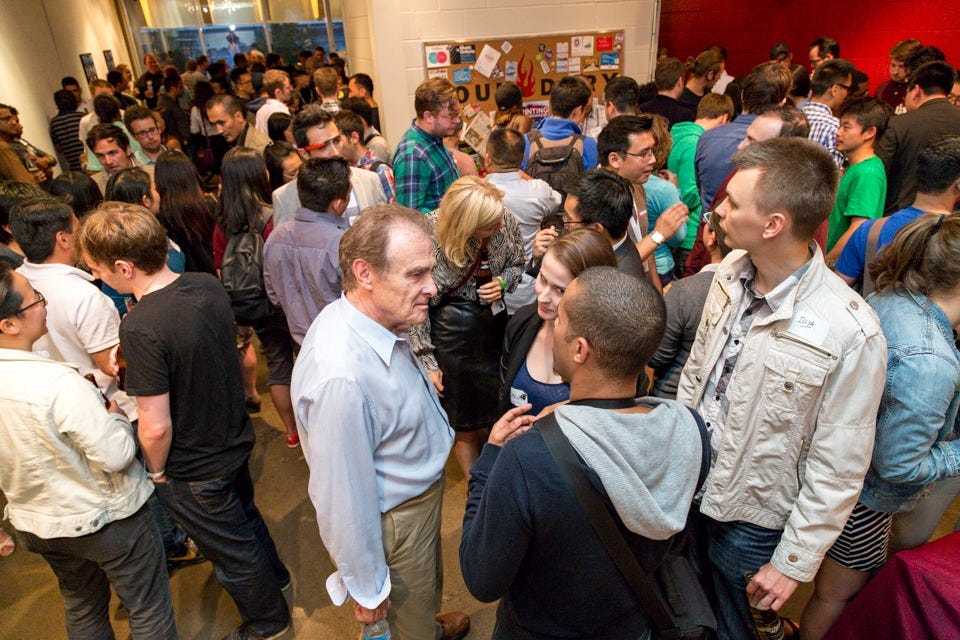
When more spaces opened, we flocked to each other rather than competed to ask questions, like: “How are you handling this? Have you created software to manage these things yet? Do you know what to do when this happens, or where do you buy these things?”
Those alliances were providing a community of support for each other. Most of us came to coworking, or found it, because we were solving problems that we or our peers were facing. We have direct experience with the challenges, and we knew that folks needed collaboration. That support and access to resources is valuable.
It’s true for coworking operators, too. If we think of them as entrepreneurs and local business owners, they need the same kind of group support or access to insurance or that real peer to peer support from people who really understand.
A lot of my work is about providing opportunities for operators and community leaders in other realms, about community land trusts, community hubs, and social purpose real estate. I really believe that we have a lot to share and learn from each other.
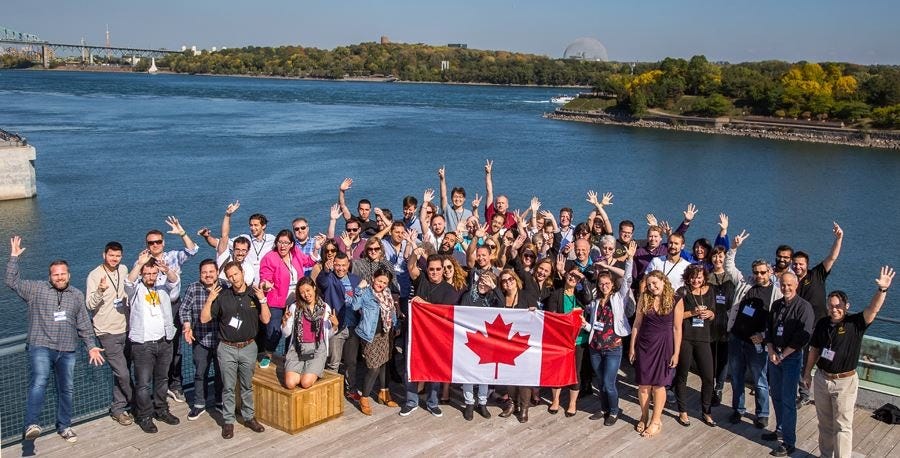
That’s why Coworking Canada has always been an unconference model. We all have expertise in our own unique areas. It’s very valuable to each other, and when we come together, we bring all our voices to the movement, rather than having just one leader or a couple of original voices. It’s a way to continually elevate everyone’s voices.
The Coworking IDEA project is an international project. Coworking Canada is a national organisation with an international event. There are many people who participate, lead, speak, and direct the coworking movement, and we want to make sure that they’re recognised and known in the community.
The work is also designed to support the movement so that we continue to focus on our original values and on the impact that we could be creating with these models. They’re really special, and I don’t want that to get lost in the noise of the industry and the capitalist ventures that get layered upon some of our coworking models.
I’m not opposed to making money, to be clear. You need to make money to be sustainable, and you’re no good to anyone if your organisation isn’t sustainable. But, some of the most impactful models I’ve seen have been nonprofit or cooperative models – and that’s how I think about the future too.
Nonprofit isn’t a dirty word. It just means that you reinvest in the community rather than extracting from it.
5. Where do you see the coworking movement heading in the next 5 years and what are you most looking forward to?
Ashley: The coworking industry will keep looking for more ways to make more money, to sublet real estate, or reuse office space, and that’s their prerogative. There can still be collaboration and community in some of those models.
But what I really care about is the coworking movement, which will double down and refocus on those original values. This is always my prediction: the folks who really care about the people at the core of this movement keep coming back to serve the people that we have access to impact.
There’s a lot of threats to workers on the horizon, in terms of AI, inflation, a recession, and a lot of uncertainty in the world. We tend to see this before there’s a great upheaval, and coworking has been through many great upheavals — financial, banking, and mortgage crises.
The coworking OGs have been through several different recessions and we recognise that even in the darkest times for the economy or the larger community, coworking spaces are absolutely essential community infrastructure in supporting workers who are retraining, workers looking for jobs, upskilling or developing new skills through workshops or support.
Coworking spaces are there for community neighbours through transitions, and oftentimes, we provide a lot of support and services that become really essential in these times. We need to continue focussing on coworking spaces and community hubs as essential community infrastructure; these adaptable multi-use spaces for community needs as they change. That’s really the way forward.
I also see coworking spaces taking a front row in terms of advocating for workers; not necessarily as the traditional union model, but when there’s been a great need. For example, I launched the Coworking Health Insurance Plan to provide health insurance to independent workers across Canada.
In the next five years, more folks will come to the realisation that everything co is really the only way to survive. Everything we do needs to be in collaboration, in community; thinking about the greater good, and the collective.
If we’re thinking about climate resilience, the economy, supporting workers through an AI transition, and the health of the planet or the people, it all comes back to the only way forward is together.
I’m seeing a lot more cooperative movements thriving, like coworking, coliving, and cohousing, because people are taking the solution into their own hands. Coworking spaces and community leaders are already in the perfect position to support this larger movement, and I don’t see this as an agenda. I just see this as a natural evolution when times are tough.
If you see communities in emergencies or navigating natural disasters, like when there’s been a tragedy in their community, they come together because that’s the way forward. If tough times are on the horizon, that’s the result we’re going to see.
I hope to see coworking communities and community leaders at the forefront of that movement to support people through a challenging time, just like we did during the pandemic.
6. What sorts of projects are you currently working on?
Ashley: Back in 2001, my original vision for a community hub or coworking space was a multi-use hub with an event space, workspace and cafe.
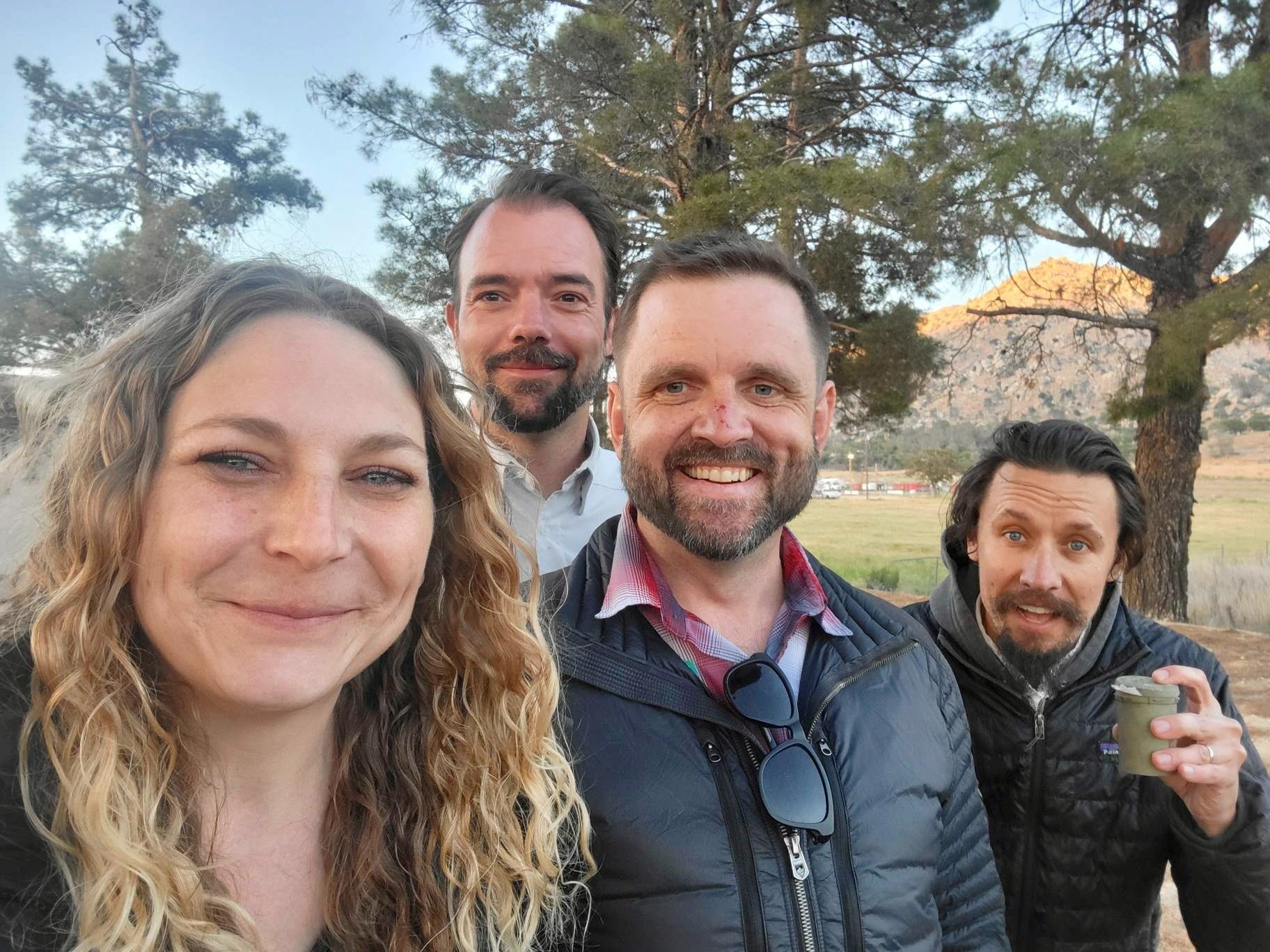
I’m on the tenth one right now, working with Sierra Shared Spaces on the Lake Isabella Community Hub (a rural community in California), which is being intentionally modelled as a resilience hub for folks impacted by climate issues, wildfires, floods, and that are also in an isolated rural community where, if something happens, they’re the ones that have to take care of it. They’re the first responders, as it can take up to an hour before anyone else gets there to help.

Even as we’re building the resilience hub in California, I’m thinking about what it might need to be and what it could be used for in the future. I’m making sure that we’re meeting today’s needs now, while making sure it could still be used for something else later.
The most effective and sustainable projects are ones that meet really essential, direct needs that the community has expressed through co-creation.
We did that at 312 Main; it was the project I did the most in-depth and ongoing consultation and engagement work with the community, because they have many complex and diverse needs.
This sometimes makes the project slower, or more expensive, but more impactful – that’s the model that I stand behind now. It’s having an impact in the community, and I hope it will for many years to come.
Co is not just for working. I truly believe the only way forward is together. We all need each other, and we’re better together.
Coworking Canada Unconference 2026 | 19-21st October
The Coworking Canada Unconference brings together people working across coworking, community, placemaking and the future of work, with inspiring conversations, tours of Montréal’s collaborative spaces and plenty of opportunities to connect.
If you’re thinking about going and haven’t got your ticket yet, use the code: COWORKING for $99 off yours. Or please contact Ashley if you’d like to know more about the scholarship programme.
About People Make Coworking
There are many incredible people who make up the fabric of the global coworking movement. People Make Coworking spotlights coworking space founders and community builders as they share their journeys of how they bring people together.
Edition #35 of People Make Coworking interviews Ashley Proctor, founder of Creative Blueprint consultancy, Coworking Canada Unconference and the Coworking Health Insurance Plan, and co-founder of the annual Coworking Alliance Summit and the Coworking IDEA Project.