


I left Unreasonable Connection Live! on Tuesday thinking about something heavier than coworking trends. If traditional employment continues to break down, coworking spaces may become one of the few physical places where people can reorient themselves.
The event kicked off with an introduction by Kofi Oppong (founder, Urban MBA) of a startling reality of the future of work: automation and AI could reshape around 400 million jobs globally.
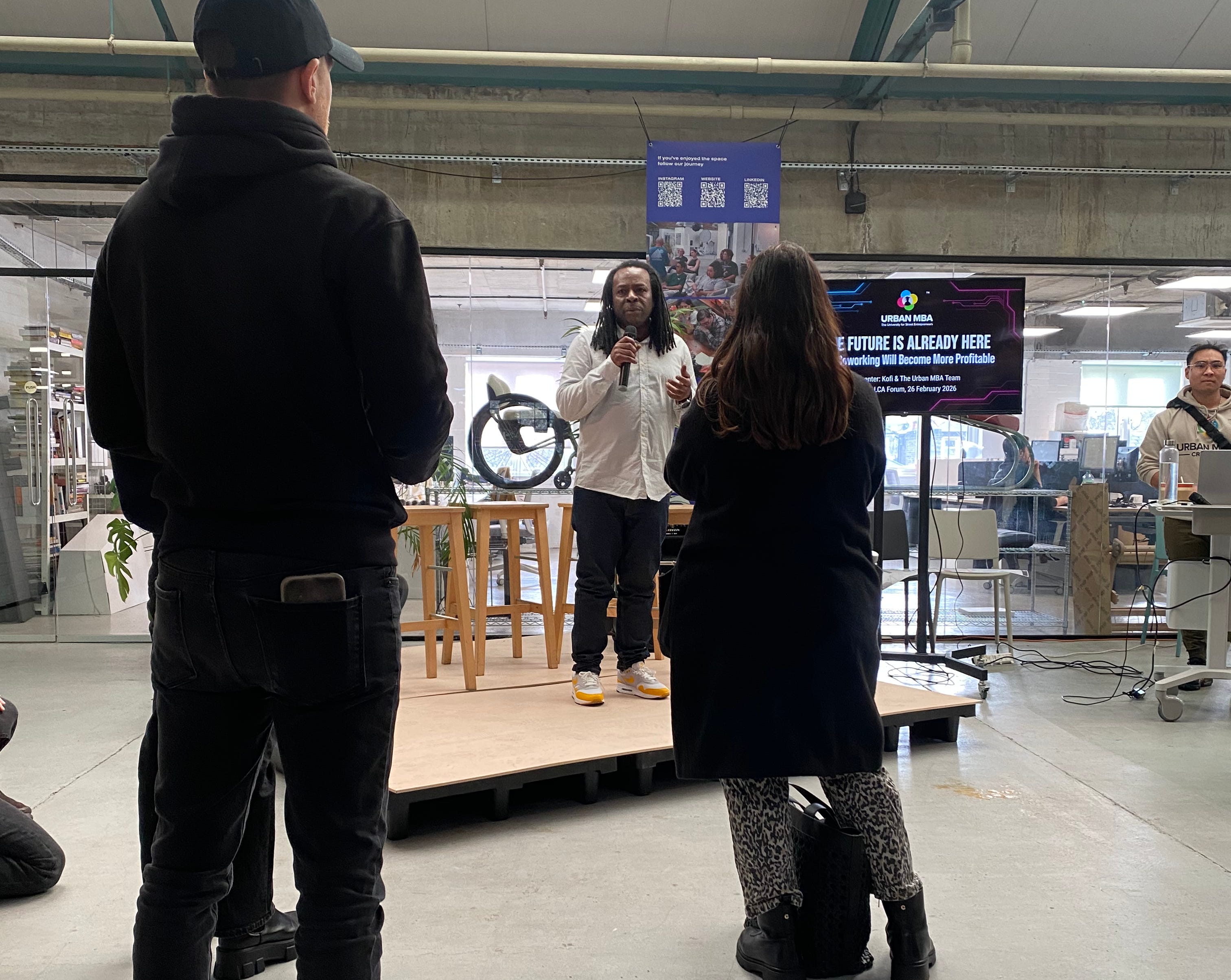
You might think this is a challenge for the distant future, but according to Kofi, “the future is already here.” Layoffs are pretty constant, companies are facing economic pressures, and AI is streamlining entire roles. As a writer, I’ve been pretty shaken by how quickly businesses adopted AI tools, like ChatGPT, replacing human writers.
The central question is: how do coworking spaces play a role in the new world of work? This event recap dives deeper into some of the discussions that took place at Unreasonable Connection Live!
From employee to entrepreneur
There is an assumption that if employees are laid off, they’ll simply start something of their own and become entrepreneurs. Call me cynical, but that assumption feels wildly optimistic.
We’ve started using ‘entrepreneurship’ as a kind of catch-all solution to economic instability, as if starting a business is a natural next step for anyone whose job disappears. But strip the word back and what we’re really talking about is this: generating your own income, from scratch, in a competitive market, without the structural safety net of employment.
Additionally, starting a business is so often inaccessible to the people who might need it most. This is where the conversation around neighbourhood coworking gets interesting.
When I recently spoke to Stacey Sheppard, founder of The Tribe, a women’s coworking space in rural Devon, she articulated a similar point:
“If you’ve been employed your entire life and aren’t born with an entrepreneurial spirit, or that feeling that you’ve always wanted to start your own business, you’re going to struggle to navigate that journey.”
Coworking spaces can provide real-time support for people transitioning to running their own businesses. Rather than waiting for formal programmes or council initiatives, the everyday interactions that happen within coworking spaces do more to build entrepreneurial confidence than a quarterly workshop ever could.

Coworking not only increases access to entrepreneurship but also to freelance and gig-based models. On Tuesday, we talked about the rise of content creators and side hustles — people who have created security for themselves and are well-positioned to adapt to new ways of working.
By embracing flexibility and independence, coworking spaces can support these evolving working lifestyles, empowering people to choose how, when and where they work, while providing vital networks for connection and community.
The profitability question
It’s all well thinking that coworking spaces are going to fix things for people affected by future workforce changes. However, coworking operators are experiencing their own challenges, with uncertainty around profitability and unease about the future of their workspaces.
Coworking businesses are facing crushing business rates, and relying on one income stream from the coworking desk model feels increasingly fragile. At Unreasonable Connection Live!, one of the exercises involved exploring how coworking spaces can become truly profitable.
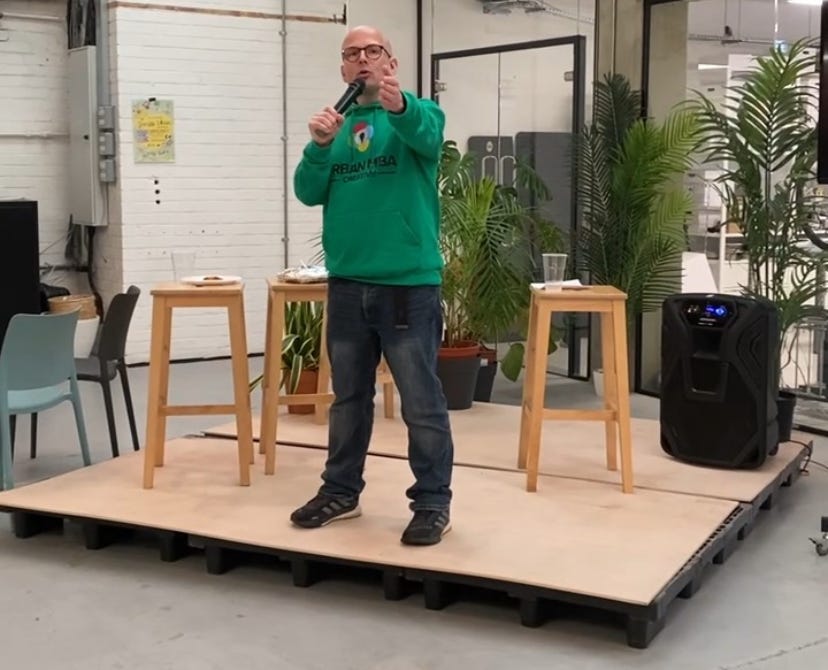
Reaching profitability takes time, with new coworking businesses riding out over the first few months to years, before seeing a return on investment.
In my group, I met two people running a new coworking space in Old Town Tallinn, Estonia. Instead of securing the lease, fitting out the space, and then building community (while covering the overheads), they did the opposite: spending months hosting community events in local cafés before finding and opening their building.
It’s proof before risk, and testing the market before going all in. I love that they focussed on people first, recognising that coworking is about community. When the space opened, it already had a solid community.
Of course, many coworking operators are years into running their businesses. They survived the pandemic, but have since experienced financial difficulties — punishing taxes, the energy crisis, or the loss of members as remote workers return to their full-time place of employment.
How can you adapt your business model to increase profitability? One solution, as suggested by the Estonian guys, is hiring out event space. It’s their most profitable revenue stream.
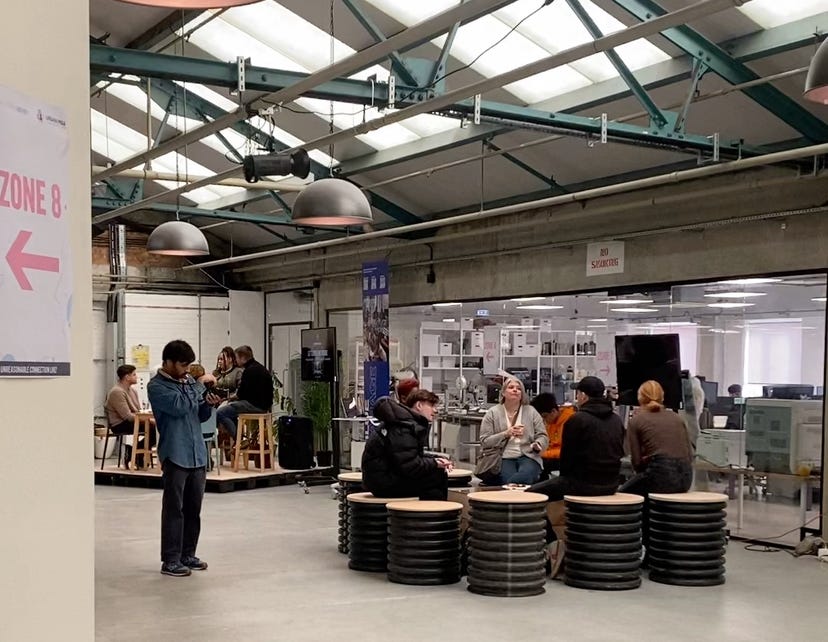
On Tuesday, it also felt particularly apt that we were having this discussion at an event space within a workspace – Blue Garage, in Lewisham. The room itself proved the appetite for event hire, hosting 150 people during the day, while its community members milled around the workspace areas.
Why neighbourhood workspaces matter
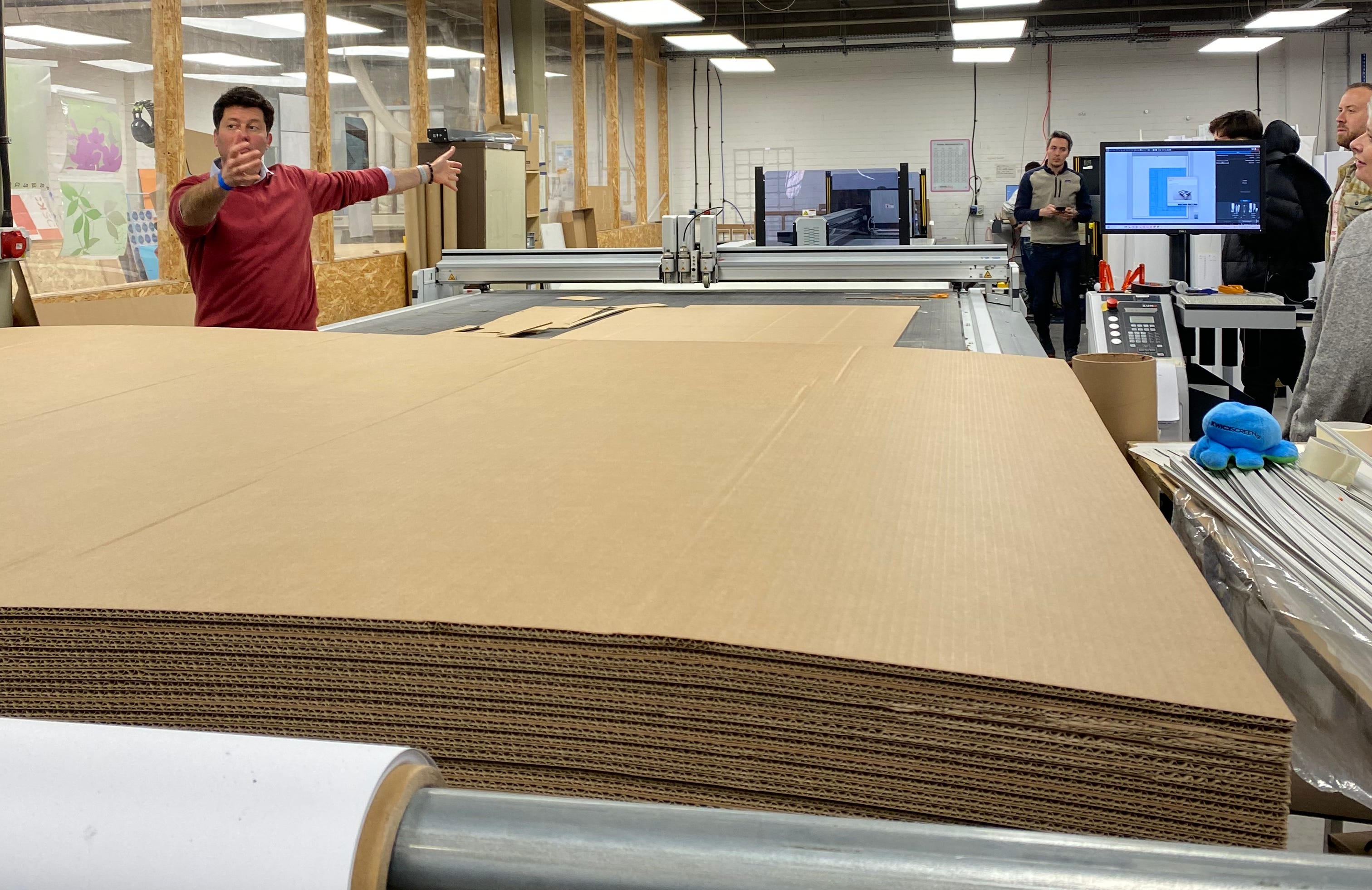
Blue Garage isn’t coworking in the clean, laptop-and-flat-white sense. It’s a makerspace with industrial workshops, sewing rooms, fabrication equipment, and private offices housing sustainability-focused innovators. Founder, Michael Korn, runs his own manufacturing company from one of the floors, opening up the building for sharing – space, resources, ideas, knowledge, the list is endless.
We were introduced to Koder, founder of Undeniable Music Studios and Lewisham resident, who began his career by building relationships and credibility within the local creative scene. Following Koder’s momentum and the idea that providing pathways into niches, such as music production, has a huge impact on the local neighbourhood, Blue Garage is converting one of its meeting rooms into a music studio.
Coworking becomes most powerful when it’s deeply embedded in place. Not just serving people who already identify as entrepreneurs, but widening who gets to participate in something.
Despite this potential civic role of coworking, there is wider frustration about how little recognition or structural support coworking businesses receive from the UK government. We’re more than two decades into this movement, and yet, many people still don’t fully understand what coworking is, let alone what it can unlock.
If coworking spaces operate as small business incubators and community anchors (essentially the lifeblood of the future of work), why are they still treated as niche hospitality businesses rather than economic infrastructure?
Coworking operators are also constrained by high upfront risk and inflexible lease terms. On Tuesday, there was talk of forming more creative partnerships with landlords, structures that acknowledge that a thriving operator ultimately benefits the building owner too.
Ultimately, coworking and neighbourhood spaces are building critical long-term community value, directly addressing the future world of work.
“The engine room of the future”
At times, the topics that came up at Unreasonable Connection Live! were impossible to respond to. There are still lots of unanswered questions, with our group particularly struggling to answer how coworking spaces can find a permanent home in London. Given how expensive the city is, we couldn’t agree on the right approach, with our group questioning the nature of permanence.
Nonetheless, Unreasonable Connection Live! gave us so much food for thought around the future of coworking. I thank Bernie Mitchell, the London Coworking Assembly team and Urban MBA for all the hard work they put into organising such a thoughtful and impactful day. It’s always a pleasure connecting with this community.
Coworking spaces have incredible potential for people. They can act as places for people to test ideas, build businesses, improve confidence, find collaborators, and learn how to sell skills. That’s a huge responsibility beyond simply providing desks.
But when coworking businesses aren’t supported, or their potential isn’t recognised, it can be incredibly difficult for operators and communities to keep going. Unreasonable Connection Live! introduced some real conversations about the future of work and coworking. I wonder if you’ve had similar discussions with your communities.
There’s a lot of work to be done still, so I’ll leave you with Kofi’s prediction:
Coworking spaces will become “the home for the displaced, the creators and the future.”
Until next time,
Lucy