


Community is one of the defining features of coworking spaces, but the question of who actually builds and looks after it is less straightforward than it sounds.
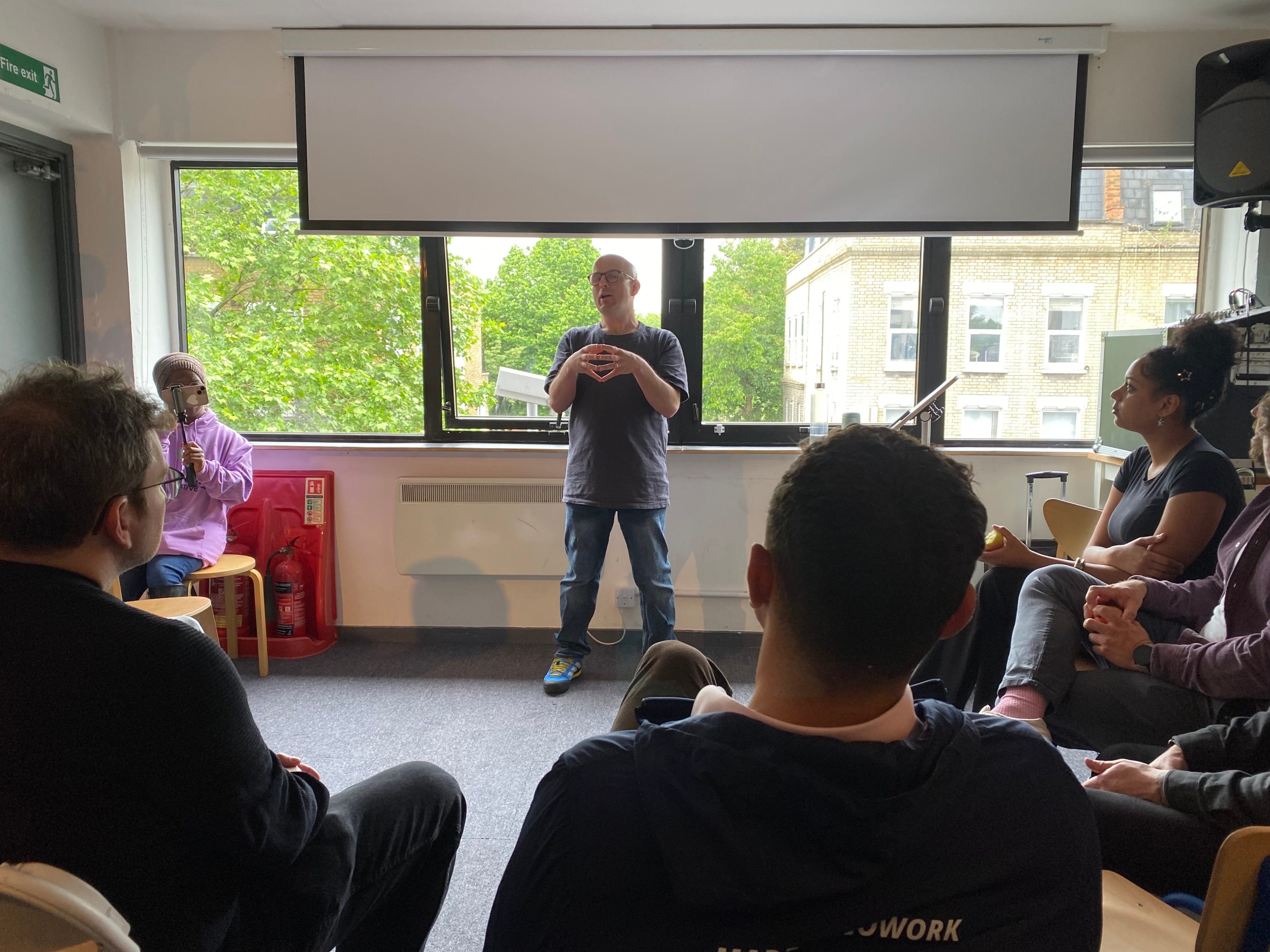
In fact, it was a topic I picked up on while attending Unreasonable Connection Live! last week at Space4 in Finsbury Park.
We started discussing how some workspaces are striving for BCorp accreditation or similar to demonstrate their social impact. But the conversation turned into who is responsible for delivering it day to day, and what can community managers do.
One of the themes that kept coming up wasn’t just social value in theory, but something much more operational around bandwidth.
Reflecting on the conversations that took place last week led me to think about a set of questions that sit underneath this:
Should you have an individual who builds community in your coworking space?
Or can you do it yourself (as an operator) and rely on your community to self-organise?
And is there a right time to hire a community manager?
That’s what I’m going to dive into today.
What we mean by “community manager”
I don’t necessarily want to start this newsletter by describing what a community manager is. I’m assuming you already know their important role in coworking operations, of building a sense of community.
However, it’s interesting to note that the community manager, as a defined role, is relatively unique to coworking.
In many other industries, elements of the job exist across hospitality, workplace experience, and office management, but coworking has arguably been one of the few sectors to formalise it into a standalone role with its own expectations, salary band, and responsibility for shaping the day-to-day member experience.
Community management exists in many different forms. I’ve joined coworking spaces where the community manager is completely embedded in the community. They float around the space, speaking to everyone, helping to set up events, and going above and beyond as a constant presence in the workspace.
I’ve also joined a coworking space where I have no idea who the community manager is. Possibly, they’re hiding in a back office somewhere, only popping out to take tours (although this is very rare in coworking).
There are also many coworking owner/operators who, along with running every operational aspect in their spaces, are also the community managers.
And, in the first workspace I joined in Edinburgh, the coworking space didn’t actually have a community manager but a community assistant/receptionist, who manned the front desk, greeted people as they walked in, and took enquiries.
The zero-hour contract dilemma
A few months after I joined that workspace, the community assistant left, and a temp agency was used until the workspace found someone more suitable to replace her permanently.
For a time, we were greeted by a different person every day. That made it difficult to connect with them and other community members who joined the workspace during that period.
Last week, I thought about this scenario when a coworking operator brought the following question to the table: could a community manager role be structured as a zero-hour contract?
He’d just spoken to another manager in the room, who is part of a more hospitality-led coworking concept where they hire community managers on zero-hour contracts.
While it’s cheaper to do this, and cost certainly comes into the equation as many coworking spaces face skyrocketing business rates and other eye-watering overheads, zero-hour contracts come with a great deal of nuance beyond finances.
I’ve worked in several retail and hospitality roles on zero-hour contracts. These positions were ideal when I was between studies or looking for more permanent roles. That’s a common situation for someone who signs up for zero-hour roles: they’re more transient.
Like the workspace using a temping agency, you can’t really expect someone to come into a workspace every few days and remember everyone’s name and what they do for work.
Even more, unless you hire through a coworking specialist agency (which I’m not sure many, if any, exist), your zero-hour community managers might not truly understand what coworking is all about.
In this industry, community management is a very delicate role that requires deep knowledge of your space and members, along with a personable nature that fits well with the level of service expected in coworking.
It also relies on continuity. Community management is built through repetition and seeing the same person, and building trust over time. When that continuity is fragmented, it becomes much harder for those relationships to form.
What good community management looks like
A community manager should be more embedded in your business because they literally make the member experience. They often do the tours, send contracts, and create unforgettable member experiences every single day.
At the last workspace I joined, the community manager was an essential part of everyday life. She’d ask us how our day was, encourage us to join and organise events that would benefit our personal development, and was very active in after-work events.
She also sat with us in the space, or at least at one of the workstations with another coworker. There wasn’t a front desk, which, although it’s a traditional welcome point in public spaces, can be a source of friction.
In Will Guidara’s Unreasonable Hospitality, he explains that when there’s a physical object between a customer (or member) and the team member, it can restrict connection. Remove that barrier, and the experience instantly feels more personal.

The last workspace I joined was one of several coworking spaces under a coworking brand. It meant that the founder was never present in the space or took on the community manager role himself; he was focussed on scaling the coworking brand.
This is when hiring a community manager for your space makes sense. You can offload tasks, such as splitting the physical presence in the space, managing members, doing tours, and sending communications, including sales emails and newsletters.
Community management burnout
A community manager can really help you run your space, but there’s a risk when the role becomes too broad. In some spaces, it expands to cover marketing, events, reception, member support, and general “keeping everything together,” all while maintaining a constant physical presence in the workspace.
That combination is exactly what makes it so demanding. Burnout in community management often doesn’t come from one big issue, but from the accumulation of constant context switching.
Community managers are expected to be on all the time: available to members, reactive to problems, and proactive in shaping the community experience, often without much separation between operational and emotional labour.
It’s quite ironic, given that coworking literally supports the hybrid and remote work lifestyles many people have stepped into, that community managers are expected to be in the same space every single day.
I’m not entirely sure what the alternative is, but it’s something to consider. For instance, at the last workspace I joined, the community manager lived right around the corner, making physical presence a good fit.
Community management is also a role where success is hard to quantify. When things are going well, it can look invisible. But when something goes wrong, it’s immediately felt by members.
And it’s not just burnout that leads to turnover. Community managers often leave when there’s no clear progression path, either within the space or beyond it.
In smaller independent coworking spaces, that can be especially difficult, because there may not be another role for them to grow into. That can create a knock-on effect for operators too. If you’ve been through that cycle before, you may be hesitant to hire again.
Equally, community is often something very personal. Handing that over to someone else can feel like losing a direct connection to members, even if operationally it makes complete sense.
But when it works well, a community manager creates space for operators to step back from day-to-day delivery and focus on growth, while still ensuring the member experience is actively held.
When community becomes infrastructure
The conversation around community managers is less about job titles and more about how coworking spaces function day to day.
Community is often talked about as something that naturally emerges in coworking spaces. But in reality, it usually relies on quite intentional design, and someone consistently holding it together day to day.
Perhaps that’s been you since the day you opened the doors. That’s an impressive undertaking.
But maybe, you’re starting to think about whether now is the right time to take someone else on, and focus on something else, without disrupting your community.
What have your experiences been with community managers? I’d love to know!
Until next time,
Lucy
See you at the Coworking Alliance Summit next week!
I’m conscious that many of the coworking events I share tend to be London-based, so I’m really pleased to say that the Coworking Alliance Summit is happening online on Wednesday 3rd June.
Organised by coworking leaders Ashley, Hector, and Bernie, the Summit brings together coworking alliances, community leaders, collaborative organisations, and industry professionals from around the world.
I’ve attended in previous years and always come away full of ideas and inspiration. I can’t wait to attend, and hope to see you if you’re going too.
Grab your ticket now. If the cost of a ticket is holding you back, please reach out, and I’ll see what I can do.