


In hospitality circles, Will Guidara’s “Unreasonable Hospitality” has become a manifesto for creating experiences that surprise, delight, and transform customers into loyal advocates.
While the book was born in the world of fine dining, its lessons of connection, experience, and creativity reach beyond restaurants. “Unreasonable Hospitality” is a book for anyone who is activating a space and creating a sense of belonging.
If you haven’t got round to reading the book yet, I’ve pulled 8 key ideas from its philosophy and reimagined them for coworking operators looking to elevate your community member experience.
Let’s go!
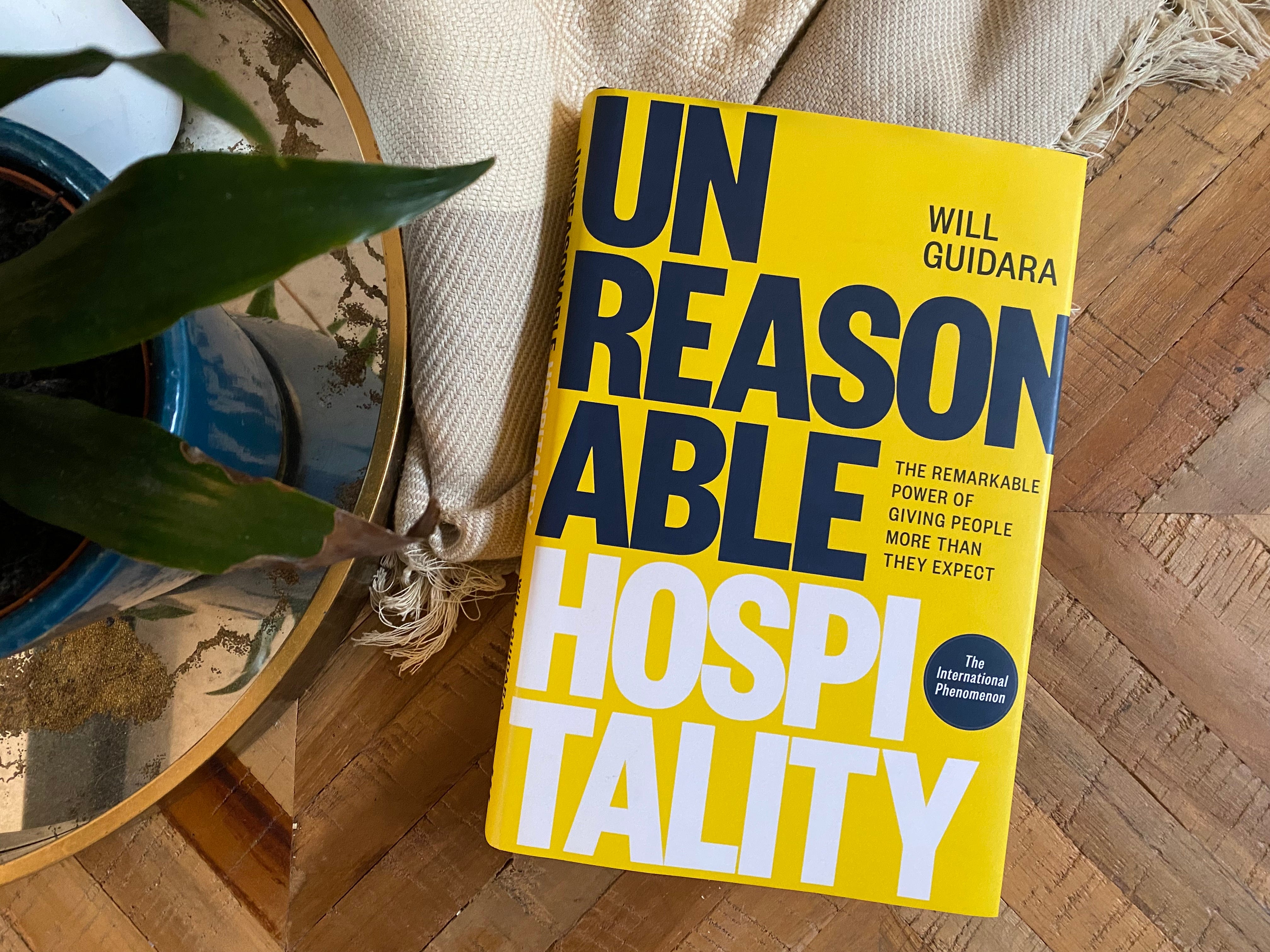
1. The unreasonable hospitality concept
We’ve established that “Unreasonable Hospitality” has become a manifesto for the hospitality industry, but what exactly does the concept mean, and how can coworking operators bring it to life in their spaces?
Will Guidara often asked job candidates a deceptively simple question:
“What’s the difference between service and hospitality?”
The best answer he ever heard was:
“Service is black and white; hospitality is color.”
That distinction captures the heart of Guidara’s philosophy. Service is about doing your job well – competently, consistently, and efficiently. Hospitality, on the other hand, adds colour: it’s about how you make people feel while you do it. It’s not just the execution of a task, but the creation of an emotion.
And that’s exactly what unreasonable hospitality is all about – going beyond expectations to create authentic, memorable connections through every interaction. In the book, story after story brings this concept vividly to life, showing how small, thoughtful gestures can transform ordinary moments into unforgettable experiences.
For coworking operators, the opportunity involves moving from providing a workspace to delivering a feeling that makes members feel seen, valued, and delighted to belong.
2. Culture comes first
One of the best jobs I’ve ever had was working as a sales assistant for Ted Baker’s most profitable global store in Bicester Village. What made it so memorable wasn’t the brand or the buzz of the store; it was the team.
We were genuinely close: the friendliest, most welcoming, and joy-filled group of people, who not only worked hard together but also spent plenty of time socialising after hours (there were lots of nights out together).
When new people joined the team, we were asked to introduce ourselves to them with an ‘interesting fact.’ It was a simple ritual, but it broke the ice instantly and helped everyone feel seen and connected. That small moment of inclusion set the tone for how the team functioned: open, warm, and curious about one another.
Likewise, in one of Will Guidara’s earliest hospitality jobs, every new hire began their first meeting by sharing a few lines about themselves. This small but powerful moment was a signal from leadership that people mattered.
Guidara described this as “enlightened hospitality”: the belief that taking care of one another comes before everything else.
When your team feels supported and valued, they’re naturally more empowered to take care of your guests. It’s about intentionally building a work culture, one human connection at a time.
In coworking, the member experience starts with the team experience. If your community managers, leadership teams, and front-desk staff feel cared for, recognised, and trusted, that energy radiates outward. A culture of internal hospitality becomes the foundation for everything your members feel when they walk through the door.
3. The power of ownership
I asked Charlotte Kirby, founder and CEO at The Village Hive, which events stood out most for her community. Charlotte didn’t hesitate: their annual Oktoberfest party.
What makes this event so special is the people behind it. The celebration is organised by Monica, Charlotte’s incredible community manager, whose German heritage gives the event authenticity. It’s a true team effort, with Charlotte’s husband even taking on the role of barbecue king.
Interestingly, Monica has a background in hospitality. It’s something Charlotte recommends for hiring community managers. As she told me:
“Community managers need to be more than just organised – they must be warm, outgoing, and excited to bring people together. It’s about creating an atmosphere where members feel welcomed, engaged, and like they’re part of something special.”

Charlotte’s story came to mind when I read the chapter on creating a culture of collaboration in “Unreasonable Hospitality.”
A meticulous note-taker, Will constantly reflected on ways to improve his restaurant, Eleven Madison Park. He noticed that while fine dining restaurants excelled at food and wine, they often dropped the ball on the smaller details, like after-dinner coffee or cocktails.
To raise the standard across the board, Guidara introduced what he called the Ownership Programme: passionate team members were invited to take responsibility for specific areas of the restaurant: beer, tea, and coffee. They researched, sourced, and refined each element as if it were their own.
By giving his team this autonomy, Guidara found that people felt “elevated by trust.” They stepped up, became more invested, and that sense of pride and ownership spread throughout the restaurant.
In coworking, we see the same magic when operators empower their teams to take ownership. Just as Monica channels her passion and heritage into Oktoberfest, giving your community team the freedom to lead initiatives – whether it’s events, partnerships, or sustainability efforts – creates energy that members can feel.
When people are trusted to bring their ideas to life, they help shape them, and that’s where the real spirit of hospitality thrives.
4. People and place, the neighbourhood way
“The spirit of collaboration that came out of the Ownership Program was inspiring to all of us,” Will Guidara recalls.
That energy led Will and his team to create a weekly meeting known as Happy Hour, where staff would give short presentations on topics that inspired them (usually food or drink-related).
Over time, though, the presentations began to evolve. Team members started sharing about the history of Madison Square Park — the neighbourhood surrounding the restaurant.
Curious to build on this local connection, Will invited an expert in New York history to tour the team around their block. Learning about the area’s past allowed the team to have richer, more personal conversations with guests, grounding the restaurant in its neighbourhood story.
Many coworking spaces are also steeped in history. When I toured Walworth Town Hall by General People earlier this month at GCUC UK, I was struck by how deeply the building’s past was woven into its design.
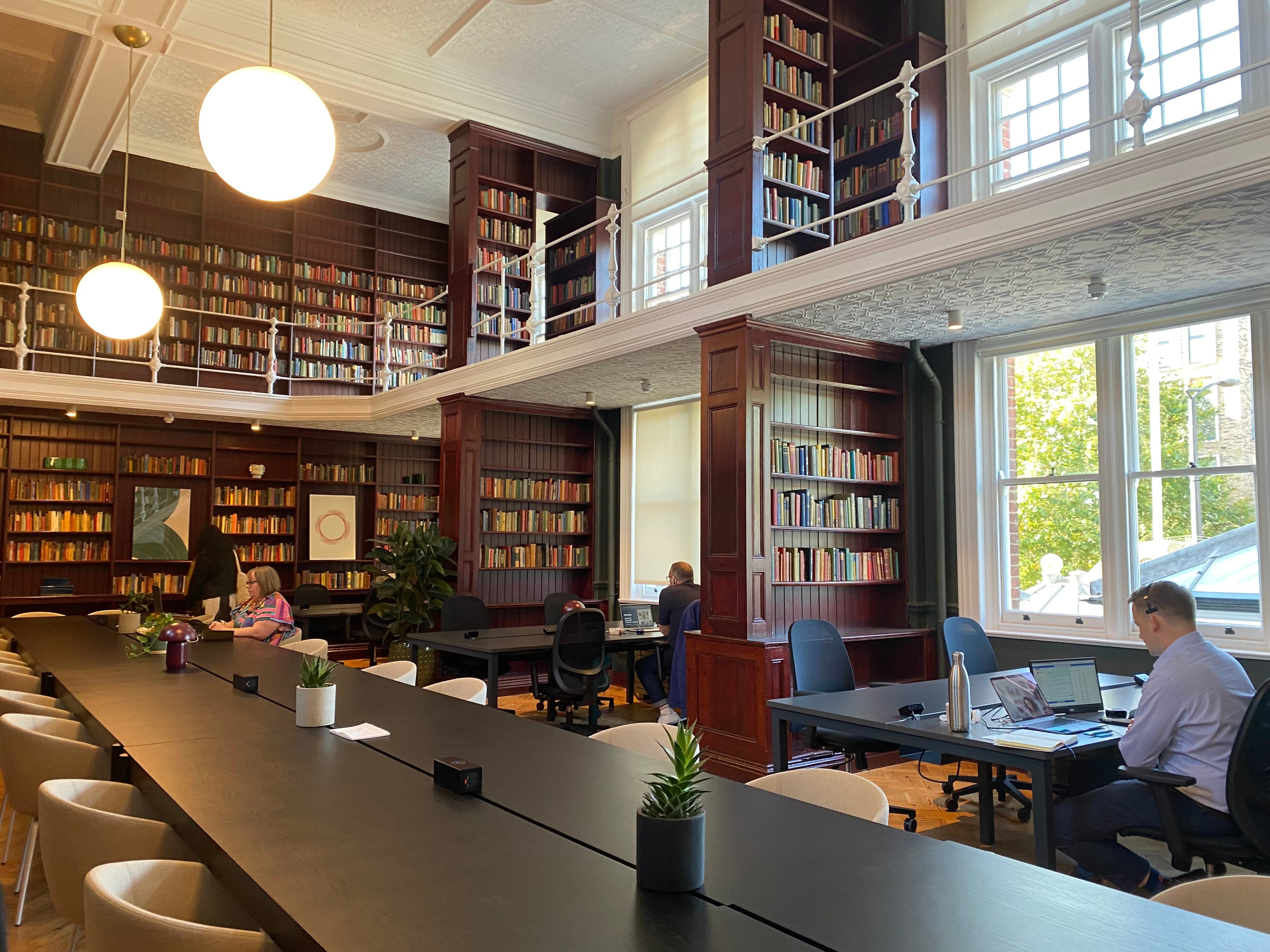
Our host shared stories that brought the space to life: the library built as a philanthropic effort to encourage literacy in the late 1800s, the hall where soldiers enlisted during the First World War, and the devastating fire in 2013 that left the building in ruins for years. (I’m recalling these from memory because they left such a strong impression on me.)

So, how is your space rooted in its local neighbourhood and community, and how might you share those connections with your members? When people understand the story of a place, they feel part of something bigger than just a workspace – they feel part of its legacy.
5. From friction to connection
When my husband and I were staying in Harrogate last month, we booked a restaurant for our Saturday night date. We were genuinely looking forward to it, but the first impression fell flat as soon as we arrived.
We were met by the host, standing behind a podium, tapping away at a tablet. Without looking up, he asked for our name, muttered a quick “follow me,” and led us (without a smile or eye contact) to a table tucked at the back of the restaurant. The experience never recovered from that opening moment.
Will Guidara describes these types of interactions as “transactional.” The podium and smart device are literal barriers between hosts and guests: a symbol of service that’s efficient but entirely devoid of warmth.
He contrasts it beautifully:
“When you go to a friend’s house for dinner, they throw open the door, look you directly in the eyes, and welcome you by name.”
In a bold move, Guidara removed the podium entirely, instructing his team to greet guests personally by name. The impact was immediate and transformative: people felt seen, welcomed, and cared for from the moment they stepped inside.
In the coworking world, our maître d’ is the community manager. (I’m pretty sure Dean Connell introduced me to this idea).
Think about the difference between walking into a workspace where a receptionist sits behind a desk versus one where the community manager is right there, among the members, greeting you by name, offering a coffee, and giving you a tour of the space.
It reminds me of my last coworking space, where our wonderful community manager, Anna, would sit amongst us. Anna would greet every new person in the workspace personally, and her warmth, smile, and openness would immediately result in connection.
In coworking, unreasonable hospitality isn’t grand gestures, but about removing the barriers (literal and emotional) that separate your team from your members, and making every welcome feel personal.
6. Surviving (and thriving) through crisis
Alongside the many extraordinary and joyful anecdotes in “Unreasonable Hospitality,” there are also moments of real struggle. Will Guidara took over Eleven Madison Park in the years leading up to the 2008 global recession. When the downturn hit, tough decisions had to be made.
At the time, the restaurant was seen as a destination for corporate diners, many of whom relied on expense accounts for long, leisurely lunches. When those budgets disappeared, Will needed to act fast. He decided to reduce the average $35 lunch spend by introducing a $29 two-course menu, aiming to fill the room again and restore its energy.
“We made sure our guests were getting outrageous value for their twenty-nine bucks. If you’re giving a gift, it should be awesome.”
Coworking operators know this feeling all too well. The pandemic and cost-of-living crisis have resulted in tighter margins, and members are questioning whether their workspace is still an essential expense.
In these moments, it’s not just about cutting prices but about adding value in creative ways that reignite engagement. Free trial days will bring new people into your coworking space, but how do you turn that introduction into a lasting relationship?
Like Will, start by studying behavioural patterns and look at your data:
Have member habits shifted in the past few months?
Are certain days consistently quieter?
What perks or price points spark the most engagement?
Use those insights to design offers that activate your space, support your community, and protect your bottom line.
7. Writing legends – and unforgettable moments
You’ve heard the story about the New York hot dog, right? Where Will Guidara overheard a group of guests mention they’d missed the chance to try one during their trip to NYC.
Instead of just bringing them the menu, Will slipped out of the restaurant, bought a hot dog from one of the neighbouring stands, and asked his chef to slice it into four, plating it beautifully for the guests to share.
What a legend.
“First, they put you right back in the moment, so that you’re not just recounting the experience, but reliving it. Second, the story itself tells you that while you were having the experience, you were seen and heard.”
These legends are exactly what he wanted to inspire among his team and guests: unforgettable moments of surprise, care, and connection.

The same kind of stories are written every day in coworking spaces.
I vividly remember the Murder Mystery Party at the workspace I was part of a couple of years ago, where we all dressed up as famous characters to act out a script written by one of our coworkers. Or the Christmas Quiz, which descended into joyful chaos during a round where we had to sing Christmas tunes instead of naming them.
Those stories weren’t forced or scripted; they emerged naturally because the environment encouraged people to connect and play.
That’s the essence of what Will teaches. He didn’t orchestrate the guests who regretted missing a New York hot dog, or the couple mourning a cancelled holiday (for whom he later transformed a private dining room into a beach). He simply listened, noticed, and acted with heart.
In coworking, it’s the same: you can’t manufacture magic, but you can create the conditions for it to happen by listening to your community, understanding what matters to them, and being ready to turn small moments into unforgettable ones.
8. The gift of thoughtful hospitality
Paula Madrid, founder and director at Blue Panda Office Spaces, was inspired after reading Will’s book to start gifting plants to members who had been with her for a few years. She shares:
“‘Unreasonable Hospitality’ blew my mind! It’s so basic and simple, that’s it’s become almost like a bible for me, and I think: how can I translate it into what I do?”
These small gestures have become a bigger part of how Paula celebrates renewals and anniversaries, turning ordinary milestones into thoughtful, memorable moments.

The idea of thoughtful hospitality can exist in any industry.
If you’ve ever bought a house, you probably know the “traditional” welcome gift from an agent: a bottle of bubbly. But, as Will points out, an estate agent spends a lot of time with a client who is making one of the biggest decisions of their life. A measly bottle of bubbles hardly reflects the financial and emotional investment of the process.
What really makes an impact is noticing small, personal details along the way. The agent could learn a client’s favorite music and surprise them with a vinyl of that album when they first step into the house — or, in today’s digital age, even a turntable.
When you’re in the business of selling offices or coworking memberships, the lesson is the same: what thoughtful, personal gestures can you leave for your customers when they move into a new workspace?
You can borrow ideas from the book (page 214), but even better, like the previous example, listen to your customers and create something meaningful based on what you learn about them.
Bringing unreasonable hospitality to your coworking space
From restaurants to coworking hubs, it’s easy for people to feel like just another customer or member. Will Guidara flipped that on its head, seeing every person as someone to connect with, welcome, and include, and viewing the space itself as full of possibilities and creativity.
At its core, “Unreasonable Hospitality” is about connection, collaboration, and belonging: values that resonate in coworking and any people-focused environment.
The magic happens when you:
Prioritise your team so they feel supported and connected to their role.
Empower people to take ownership, creating energy and pride that radiates outward.
Connect your space to its story and neighbourhood, giving people a sense of belonging.
Remove barriers and personalise every interaction, making members feel truly seen.
Respond creatively in moments of challenge, turning obstacles into opportunities for delight.
So whether it’s gifting a thoughtful plant, throwing an incredible party, or offering a perfectly timed welcome, the takeaway is simple: create moments that matter.
That’s the essence of unreasonable hospitality – and a huge lesson in building coworking spaces people love to be part of.
Grab your copy of Will Guidara’s “Unreasonable Hospitality”— the book the coworking industry can’t stop talking about.
I use affiliate links to help fund this newsletter and support indie bookshops. Thanks for reading and for supporting both!