


During my time in a previous coworking space, the community manager asked me to run a freelancer meetup one morning.
We expected a small turnout, especially because we didn’t market the event much. Instead, over 20 London-based freelancers showed up to meet like-minded people and access a shared workspace.
That day, energy filled the room. That’s when it became clear to me that something like this was needed. So, I launched it as an event series that lasted about 18 months.
It was a way for me to build a freelance community. For the workspace, the events demonstrated clear social value: activating the community, creating learning opportunities, providing access to a professional workspace, and creating meaningful connections between people who might not otherwise have met.
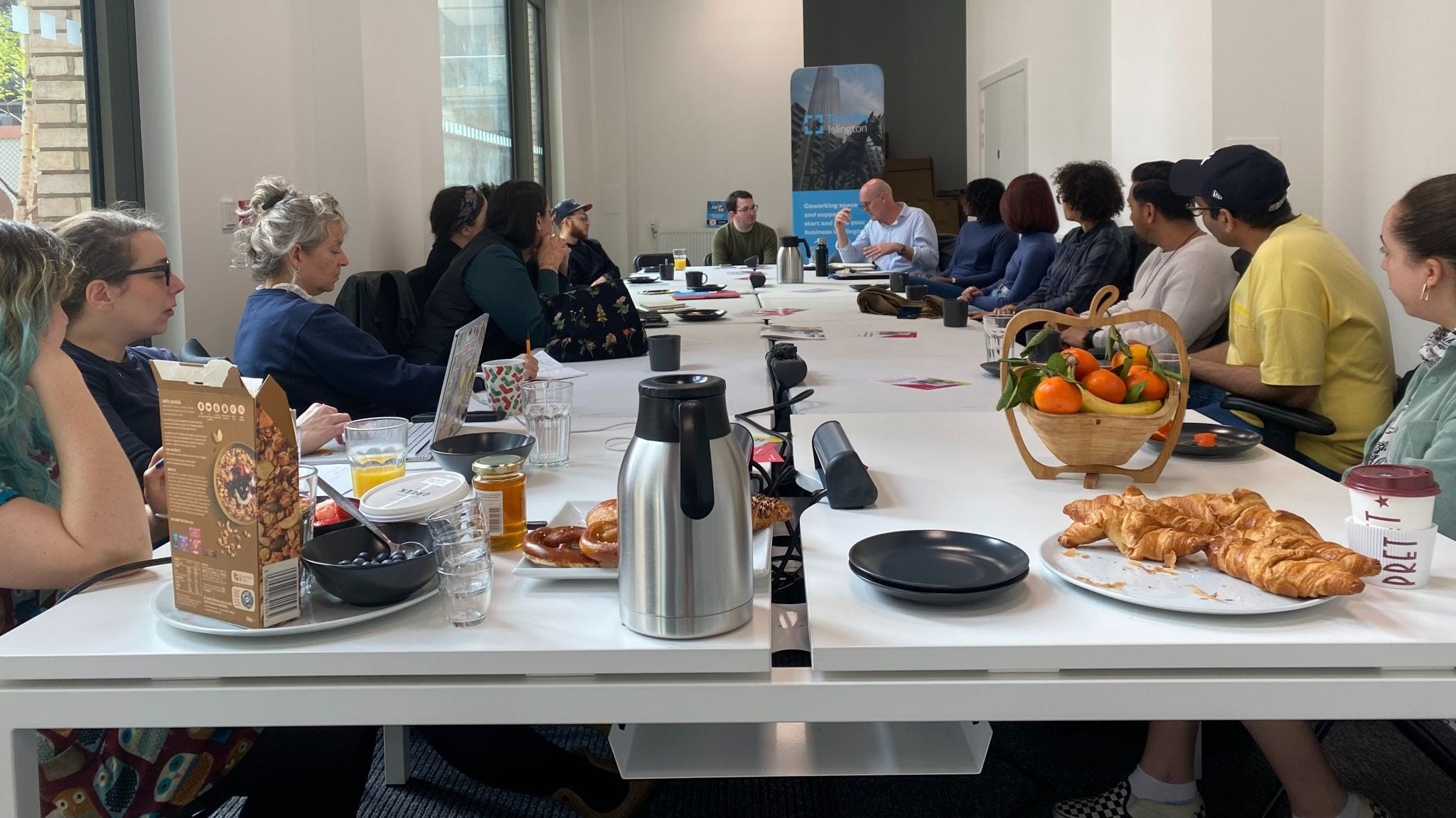
Sometimes, the term ‘social value’ can seem a little abstract, despite it being absolutely central to the coworking offering. This came up at last month’s Unreasonable Connection Live! event as we explored how much time operators should spend on social value activities.
But what does social value really mean for coworking spaces, and how can we measure it? Let’s explore this further.
What’s social value?
In a nutshell, social value is the benefits for people, communities, and their local ecosystem beyond just generating profit.
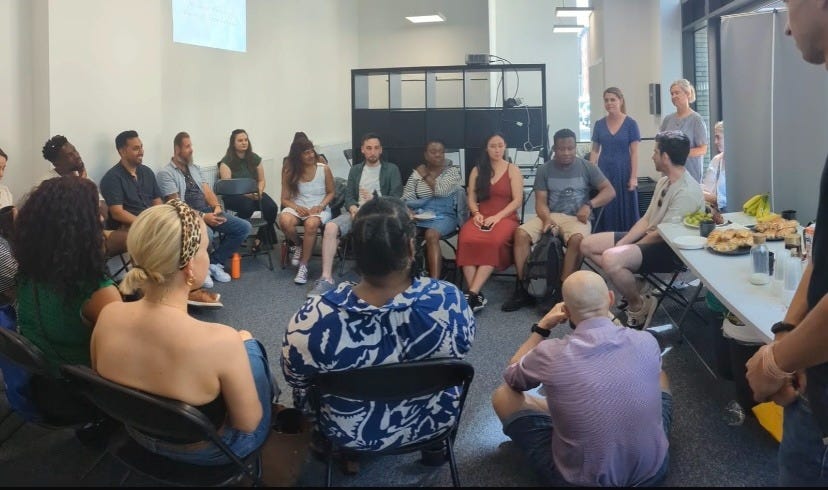
Community breakfasts, networking events, learning opportunities, and informal support systems have long been part of what makes coworking spaces valuable beyond simply providing workspace.
But a few years ago, social value became a major talking point in coworking, with LinkedIn posts celebrating impact initiatives and industry panels exploring how workspaces demonstrate impact. A growing number of spaces pursued B Corp certification and published public-facing social impact reports.
Lately, however, the discussion around this topic has been a little quieter. This was recognised when, at Unreasonable Connection Live! a few weeks ago, it was asked: Do people still care about B Corp? And how can we protect our bottom line and bandwidth when measuring it?
To B Corp or not to B Corp
B Corp certification is one of the most widely recognised ways coworking spaces demonstrate their commitment to social value. Awarded to companies that meet high standards of social and environmental performance, transparency, and accountability, the small ‘B’ logo is often proudly displayed across workspace websites as a form of social proof.
Completing the B Impact Assessment (BIA) and scoring at least 80 out of 200 points is a core requirement, which is then verified over a call with B Corp. The assessment measures performance across five areas:
Governance (ethics, transparency, accountability)
Workers (pay, benefits, wellbeing, culture)
Community (local impact, hiring, supplier relationships, civic engagement)
Environment (energy use, waste, sustainability)
Customers (how your product/service benefits users)
Hub Australia was the country’s first coworking operator and one of the earliest adopters of B Corp, achieving accreditation in 2013. Maintaining this status for 13 years now, its incredible social impact initiatives have included:
Making every single location carbon neutral since 2020
Launching a Reconciliation Action Plan, pledging to build meaningful relationships with indigenous-led businesses and communities.
When I spoke to COO John Preece last year, he explained the positive impact of B Corp accreditation on the business:
“[It] provides a really good framework for operating an impact-driven business, and holds you to high standards of social and environmental performance, transparency, and accountability…that’s something we’ve maintained year on year since 2013.”

The cost of certification
Return on investment is proven, as B Corp certification attracts new members and talent to workspaces. However, the cost of achieving B Corp status can be a barrier for some independent coworking spaces.
If your business revenue is between 0-£149,999, for example, entry pricing includes a one-off submission and verification fee of £560, and an annual certification fee of £1,000. That’s at least a grand every single year to maintain BCorp certification, and more if your annual revenue is higher.
Coworking businesses are currently being squeezed by extortionate overheads and uncertain business rates. So, the cost of going after and renewing B Corp certification might not seem worth it.
The other challenge is time. Application processes for B Corp status are rigorous, requiring annual renewal. For operators doing it all, this could be stretching your bandwidth quite considerably, and you might question whether members truly see it as a differentiator.
However, for a larger workspace brand with multiple sites, the Hub Australia example shows how going after B Corp status makes more sense for your business, leading to positive ROI. You might also hire someone who is specifically focussed on your social impact activities, and who’ll take ownership of accreditation renewals.
B Corp certification may also help secure partnerships with landlords. It demonstrates that you deliver on initiatives, especially environmental-related outcomes that are necessary to future-proof buildings today.
Measuring social value
Much of what happens in a coworking space is relational and long-term, such as confidence built through conversations, collaborations formed over coffee, or opportunities created through informal introductions.
These outcomes can be visible, although not always immediate, but are difficult to quantify neatly in a spreadsheet or annual report. This may explain why some coworking operators feel conflicted about measuring social value.
At last month’s event, we were introduced to a useful toolkit: the Social Value TOM System – the UK standard for measuring social value. It covers six principles:
Themes, outcomes, and measures: community, work, economy, and planet.
No double-counting: organisations sometimes accidentally report against the same target twice, which should be avoided when measuring social value.
Attribution: social value ought to be attributed to something (ie, contract, division, business).
Relevance: to the core activity or contract.
Additionality: social value should be achieved in addition to business as usual or legal requirements.
Transparency: essential to social value reporting.
The Social Value TOM System framework helps organisations think more intentionally about impact, accountability, and outcomes.
But while measurement can provide structure and credibility, it can also risk reducing deeply human community outcomes into metrics alone, which is another aspect of going after accreditations that might be holding operators back.
Does social value still matter?
The bigger question is whether every act of social value needs to be formally measured, accredited, or turned into a report in order to count.
B Corp certification undoubtedly provides a useful framework. For some operators, it creates accountability, strengthens operations, attracts members, and demonstrates impact externally. But for smaller, more independent spaces, the time, cost, and operational bandwidth required can feel difficult to justify.
And yet, social value still exists in those spaces. You might be hosting regular member workshops or events for upskilling opportunities – that’s social value. Or maybe you open up your space for use by a wider community – that’s also social value.
Social value exists in the freelancer who meets a future collaborator at a community breakfast. Or in the founder who gains confidence through a workshop. In the local resident who accesses a professional workspace for the first time, and in the relationships, opportunities, and support systems that coworking spaces facilitate every day.
Perhaps the real challenge facing the coworking industry is how we can recognise everyone’s contributions to social value, without reducing it to a badge alone.
What are your thoughts around this topic – have you gone after BCorp status in the past, only to not renew it later? I’d love to hear from you.
Until next time,
Lucy