


It’s absolutely sweltering here in the UK right now, and although a four-day heatwave like this one is quite infrequent, the days (and nights) feel seriously uncomfortable.
The main issue is that the majority of UK homes aren’t built for the intense heat. Which means that when a heatwave strikes, those who typically work from home, such as remote and hybrid workers and freelancers, start looking for a place to work that’s cool, comfortable, and productive.
We all know coworking brings incredible benefits to peoples’ lives but the ability to help us stay cool during the hotter months? This shouldn’t be underestimated.
The question is whether your workspace is equipped with what coworkers are looking for most during the summer months. Let’s get into it.
Why air-con is a game-changer
Although some would love to sack off work and spend time outdoors during the summer months, firstly, we can’t always match our time off with the good weather, and secondly, it’s far too hot this week. Staying indoors is a must right now.

Most of us are probably keeping the windows open and using fans this week to cope in the heat, but we all know that air conditioning is the only way we can stay cool in these temperatures!
Surprisingly, not all spaces have air conditioning. For example, the coworking space I was once part of moved to a brand new building on the ground floor of a residential tower in Islington two years ago. Despite being in a new development, it wasn’t equipped with AC.
So, when the city got warm two summers ago, the space was pretty unbearable. Although the community manager brought fans in to manage the heat, there’s only so much a fan can do to help you stay cool, especially when it’s shared between 20-30 members.
It actually got to the point where some members decided to cowork elsewhere, and picked up day passes at neighbouring workspaces with AC.
Although no-one left the workspace permanently because of the lack of AC, this example really shows the consequence of not having a sufficient cooling system in your space. Sadly, it might mean you’ll lose business.
What else can you do to keep your community cool?
With the summers continuing to heat up in the years to come, installing an air conditioning system in your space might be the differentiator that coworkers and companies will look for when shopping around for a coworking space.
However, installation can be hugely expensive. A recent article published by Money Week indicates that installing a wall-mounted split-system AC costs between £1,580 and £2,300, including the system and labour costs during installation. That’s before adding the increased utility bills when using AC.
As an alternative, portable air conditioners typically cost a few hundred pounds rather than the thousands required for a fixed installation, making them a useful stopgap during periods of extreme heat.
However, portable units do have caveats, such as:
Increased noise levels: Unlike a fixed split-system AC, where the compressor sits outside, a portable unit has most of the machinery inside the room. In a coworking space, the constant hum can be distracting.
They need a window vent: Hot air has to be exhausted outside through a hose, which usually means sacrificing a window or using a window kit. In some buildings, this isn’t practical.
Reduced energy efficiency: Portable units generally use more electricity to cool the same area than a properly installed split-system AC.
They’re only effective for smaller areas: One unit might work well in a meeting room or a small coworking zone, but it won’t comfortably cool a large open-plan space.
Taking up floor space: In a coworking environment, where every square metre counts, a bulky unit can be awkward to position.
When I spoke to Sarah Greene and Phil Fisk, the founders of Buro Coworking in Brockley last year, they shared how they initially rented an AC unit during heatwaves. Although a great short-term solution, Sarah explained how it would lead to higher running costs.
After realising it was getting difficult for members to work in hot conditions, and that they needed a permanent AC unit, Buro was given a small green grant from Lewisham Council to install one last year.
Now, the AC at Buro is viewed as a key selling point for the coworking space, especially in the summer. I’m loving all their Instagram marketing, where they mention having it!

The energy efficiency question
AC units do, however, have quite considerable environmental impacts, as they use a significant amount of electricity and contribute to emitting greenhouse gasses.
Yet, when more people purchase an AC unit for their homes, it contributes to the ‘urban heat island’ effect – the phenomenon where cities become noticeably warmer than the surrounding countryside, especially during the evening and at night. It’s a vicious cycle when we all feel we need AC to feel comfortable in the higher temperatures.
This makes a huge case for coworking because, as we know, coworking encourages the sharing of resources. Instead of everyone purchasing an AC unit, we can all share one in a workplace.
Another way to manage your AC’s energy efficiency is to only turn it on when necessary. Perhaps that’s when it reaches a certain temperature outside, or you have a large number of coworkers in your space.
If you’re having a quiet morning or day, turning on a fan as an alternative may suffice, although check with whoever is in that they’re happy with this, because they might have expected AC.
When I was travelling around Southeast Asia a couple of years ago, for example, I visited a coworking space called The Desk in Luang Prabang, the ancient capital of Laos. The temperature there frequently exceeds 30 degrees (making AC a must in any workspace in those regions).
However, as there was only one other coworker in the space when I arrived, the workspace founder decided not to turn the AC on. It was so hot, but luckily when asked, he did switch it on which made a massive difference, especially for me being not acclimatised to such hot conditions.
For the coworking operator, it was about being smart with his energy usage.

So, how else can you keep your community cool?
Air conditioning might be a solution if you’re city based; whereas a coworking space in the UK countryside might have less of a need for one. If you’re running a rural workspace, temperatures may rarely exceed thirty degrees, and you might have more natural shade or other solutions that keep your community cool.
Still, we all like to be able to cool down when a heatwave arrives. Here are a few additional tips to manage your coworkers’ comfort over the summer:
Having a freezer and/or the ability to make ice drinks. I’m currently writing this newsletter while sipping on an ice latte. It’s exactly what I need when it gets super hot, and I know other many others feel the same way. Giving coworkers the ability to make an iced drink is a great perk, which they’ll appreciate over the summer months.
Improving the airflow. Sometimes heat feels worse because the air is stagnant. Opening windows early in the morning, using fans strategically, and creating cross-ventilation can make a surprising difference without the cost and environmental impact of AC.
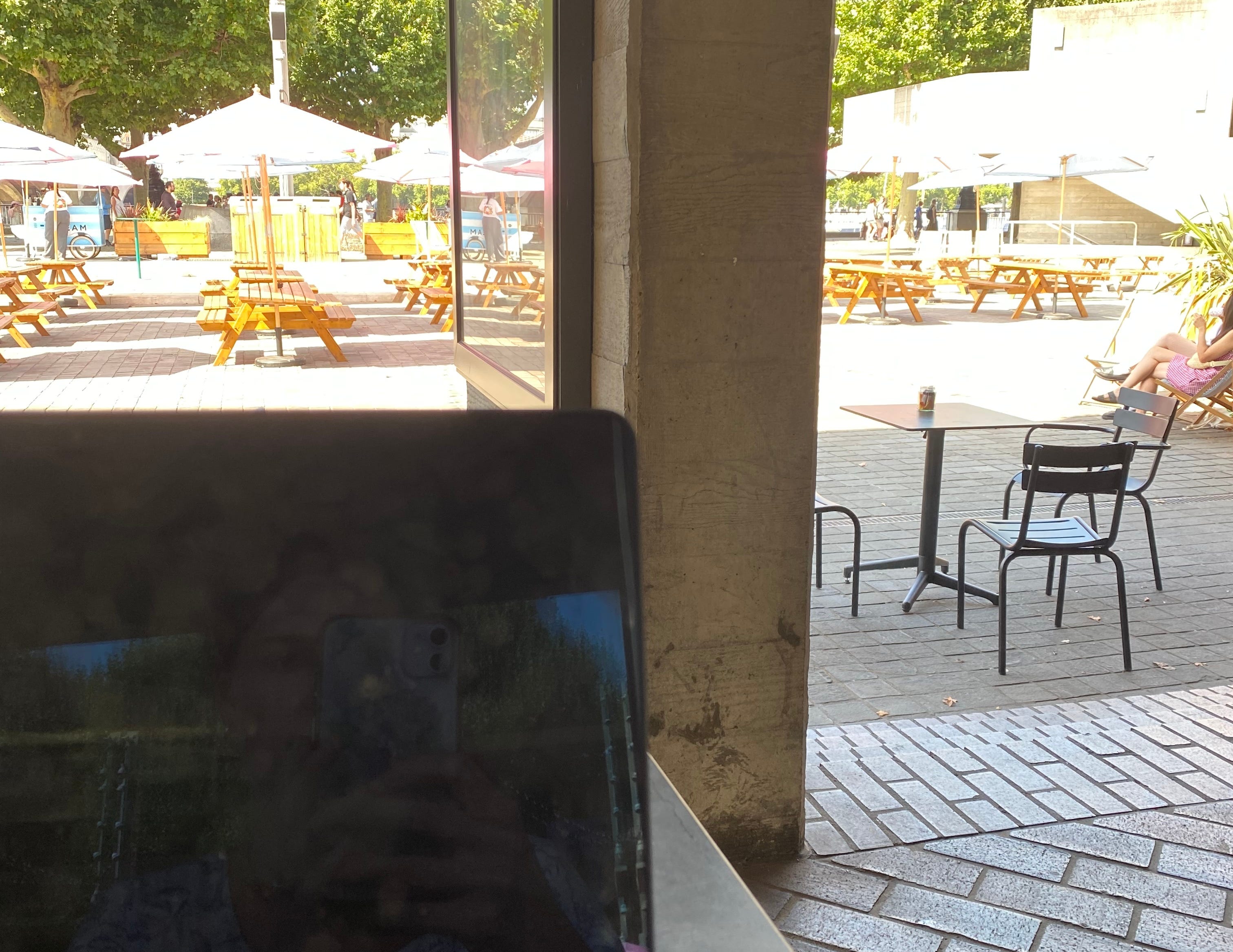
Offering shaded areas. Whether it’s awnings, umbrellas, pergolas, or simply planting more trees, shade can significantly reduce temperatures and make outdoor spaces usable, even on hot days.
Rethinking the workspace layout. If certain areas of your building stay naturally cooler, consider creating flexible work zones during hot weather. Not everyone needs to sit at the same desk all year round.
Future-proofing your coworking space
As temperatures continue to rise, keeping your community cool is becoming less of a nice-to-have and more of an expectation.
The good news is that coworking is uniquely positioned to respond. Rather than every remote worker trying to cool their own home, coworking allows us to share resources, create comfortable environments, and provide a place where people can stay productive, even when the weather is working against us.
The coworking spaces that think proactively about comfort are likely to stand out, whether that’s because you invest in air conditioning, improve airflow, serve iced drinks, or make better use of outdoor spaces.
Because when the next heatwave arrives, your members will remember whether your space was somewhere they could actually work.
How is your coworking space preparing for the hotter summers? I’d love to hear what’s working for you.
Until next time,
Lucy
A glow up for The Inclusive Coworker
The Inclusive Coworker has had a little glow-up! While the People Make Coworking blog series has always had its own page, I’ve decided to segment some of my other content pieces on general coworking tips and insights from industry events.
Have a look round the new site, and let me me know what you think.