


Coworking brings amazing benefits – a professional work environment, a friendly and buzzy space, business and networking opportunities but also a place where friendships and ideas can form.
Yet recently, coworking leader James Panepinto questioned why people will happily pay more than £4 for a coffee, while coworking operators struggle to justify increasing the price of a £25 day pass, and often discount it instead.
In James’ words:
“I’ve always found it fascinating how much confidence hospitality businesses have in what they’re selling, while our industry seems determined to negotiate against itself before the customer even opens their mouth.”

If coworking offers so much more than a desk, why can it be so difficult to convince people that it’s worth paying for?
This seems to be the challenge many coworking operators face around communicating and selling the true value of coworking. So, let’s explore whether operators are undervaluing what they offer, and what it takes to persuade people that a coworking space is worth paying for.
The value beyond the desk
James’ point about discounting got me thinking about my own experience as a coworking member. I’ve seen how generous offers can attract people into a space, but also how they can end up undermining what operators are trying to sell.
At one workspace I belonged to, this played out through a series of deals designed to encourage more people to give coworking a try, such as first-time freebies and a Freelancer Friday initiative where the workspace opened every Friday to anyone claiming to be a freelancer.
They chose Fridays because it was their quietest day of the week. But once this offer was promoted, Friday became so full because members would invite all our friends to cowork with us (for free!).
There wasn’t much room for members in the space, who struggled to find a workstation and ended up sitting at the kitchen breakfast bar instead.
After only a few weeks of this offer being in place, management realised it wasn’t going to work. They replaced it with a ‘Five Days for £5’ deal, allowing visitors to use the space for five consecutive days. But it valued the workspace at only £1 per day.
The intent is evident: the team wanted to bring new people into the space so that they would convert to members. While they provided some generous ways to do it, the offers ended up devaluing the product, especially for full-paying members.
They also didn’t give non-members a reason to become members and some people used the deals to get a cheaper workspace for a few days before hopping to another space in town.
Looking back, this feels like an example of the point James makes. When operators struggle to communicate the value of what they offer, discounting can become the default way to get people through the door.
But if we keep reducing the price of coworking to get people to try it, are we making it harder for them to understand what makes it worth paying for in the first place?
Coworking is difficult to sell in the first place
Part of the challenge is awareness. Coworking still isn’t well understood by people outside of the industry, with some people viewing coworking as a fancy café. The misconception is that coworking spaces are noisy, open-plan places filled with people chatting.
It makes some people reluctant to pay upwards of £25 for a day pass when they could spend £4 on a coffee, and sit and work for hours in a café instead.
So rather than competing with the workspace down the road, many coworking spaces are competing with places where people know they can take their laptop and get on with their work, such as cafés.

Last year, after the coworking space I belonged to closed down, I started using a coworking café as my primary workspace. But this experience opened my eyes to the fact that having somewhere to work isn’t quite the same as having a workspace that works for you.
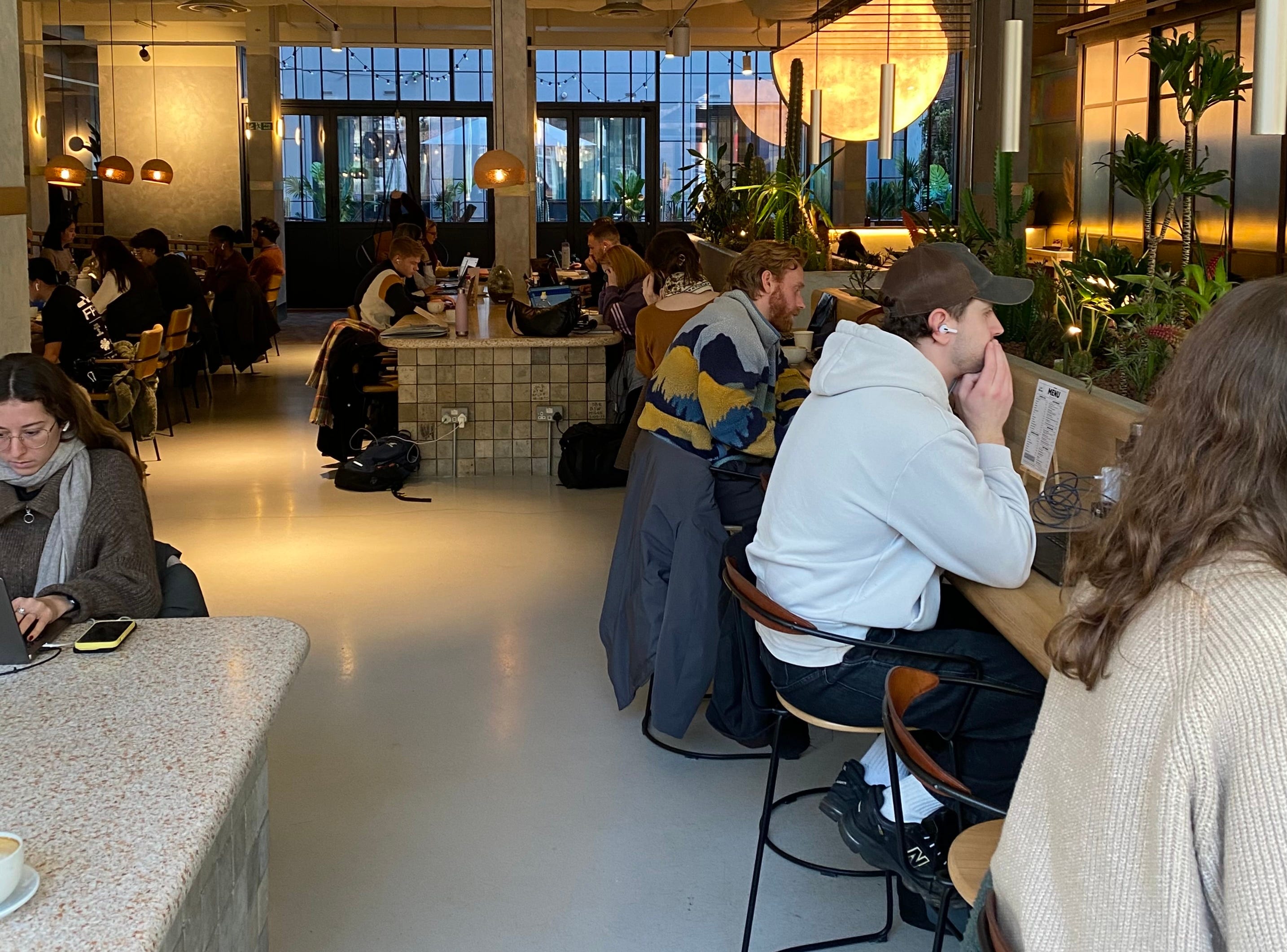
The coworking café was a busy, social space with a reliable Wi-Fi connection, but it was also a public space with lots of comings and goings. This meant I couldn’t freely walk around or leave my laptop at the table for more than a few minutes at a time while I popped to the loo.
The workspace design was great, but impractical for a long workday, with bar seating and a table filled with people that didn’t give much room to spread out or be comfortable for long stretches. There were no phone booths to take private calls nor printing facilities either.
Most importantly, while I was in the presence of others in the café, I never saw the same person twice nor spoke to many people. We were all heads down, getting on with our work or meeting friends for coffee.
Ultimately, a café is a room that you share with other laptop users. A coworking space is one you share with your community.
I felt this immensely after being such a core part of the community at my previous workspace.
Making the value of co tangible
If the community is such an important part of coworking spaces and their value, how do operators introduce people to that experience without compromising the sense of belonging they’ve built among their members?
Day passes give people an opportunity to experience a coworking space and its community before committing to a membership. But they also encourage one-off visits without giving people a reason to return, potentially undermining the sense of belonging that makes coworking valuable in the first place.

This makes day passes a double-edged sword; if you don’t give people the opportunity to try your space out for the day, then they might never get to experience it at all.
Equally, people don’t necessarily decide to join a coworking space because they’ve found a desk they like. They might come back because someone remembers their name, they enjoy the conversations over coffee, or they’ve started to feel part of something.
And the people who never intended on coming back, or paying for your space, might be the ones you wouldn’t want to join your community anyway.
However, it’s not enough to tell people that coworking offers more than a desk. Operators need to show what that difference looks like, and why it matters to the person considering a visit.
A day pass, or even paying by the hour, might be one way to do that, but it isn’t necessarily the answer for everyone. Other people might be persuaded by an event, an invitation from a member or simply a visit that gives them a feel for the space and its people.
Whatever the approach, giving people a meaningful experience of coworking, rather than relying on discounts to get them through the door, will help them understand what makes coworking worth paying for.
Selling the value, not the desk
As James explained, coworking operators have something to offer beyond the practicalities of a desk, Wi-Fi and a phone booth.
But if people outside the industry don’t understand that difference, and aren’t given an accessible way to experience it, they may not fully recognise its value.
Perhaps it isn’t about how to sell coworking, but to help people understand what they’re paying for, and give them a reason to come back.
I’d love to hear your thoughts on how you navigate day passes, discounts, and the coworking experience in your workspace.
Until next time,
Lucy