


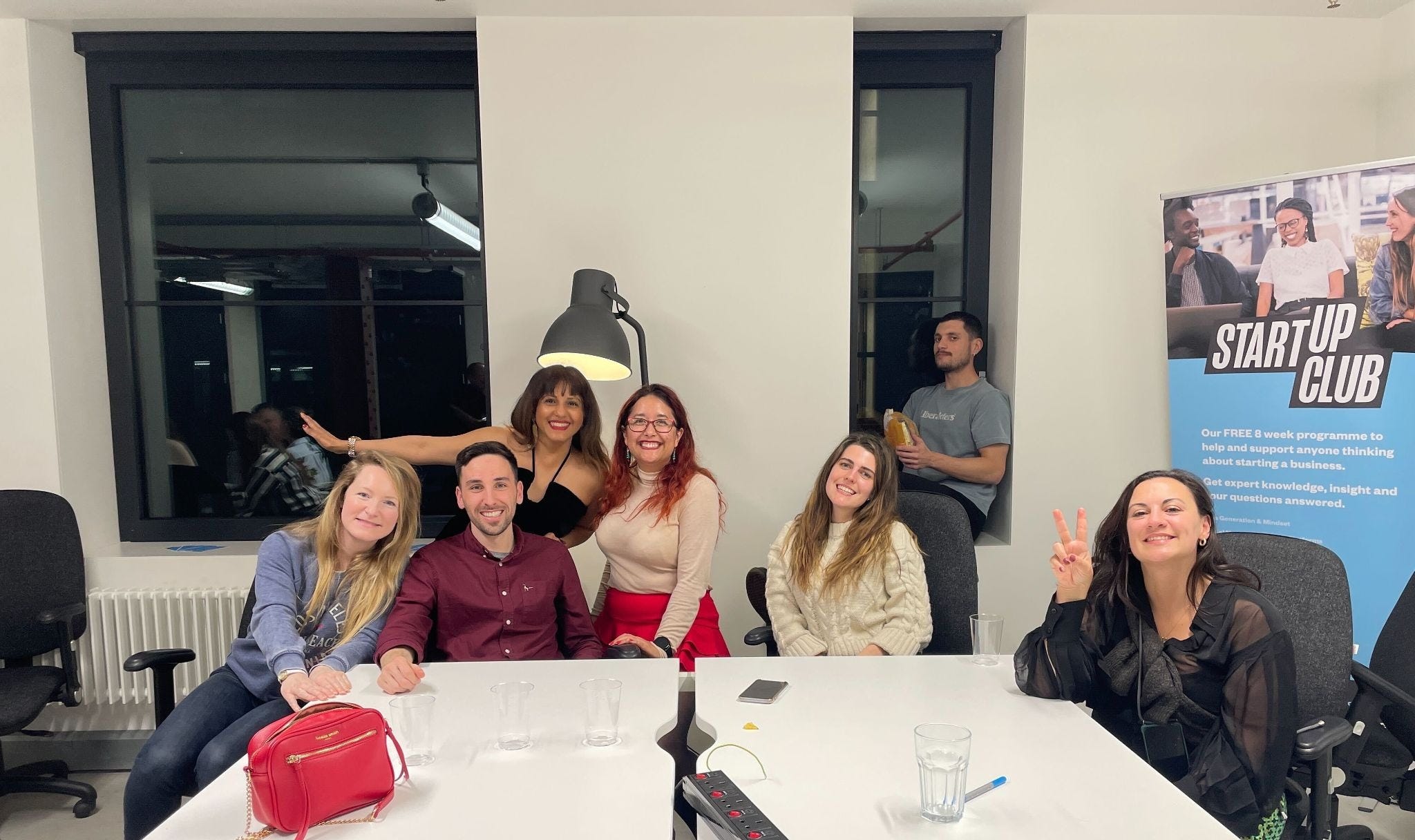
Four years ago, I joined a coworking space in London.
On my very first day, I was introduced to two people in the community, who came up and just started chatting to me. In the first week, I went for lunch with someone. By the end of my first month, I’d been going to the workspace several times a week and felt a true sense of belonging.
But when that coworking space sadly closed down, I decided not to join another workspace straight away. Instead, I started working regularly from a coworking café in Bermondsey.
Although it was conveniently located close to my gym, with fast WiFI and a bit of a buzz, and was perfectly fine for getting work done, it was completely different from the coworking space. And despite calling itself a coworking café, it wasn’t really “coworking” in the traditional sense.
While I had the odd conversation with someone sitting next to me, I never saw that person again, nor did I ever get invited to a social or get properly friendly with someone.
It felt like a distanced version of coworking where people shared space, rather than time. Not only that, but the coworking café didn’t provide the conditions for people to flourish. There weren’t the same opportunities offered at my coworking space, yet I still went along.
I’m now starting to unpack why.
In fact, this situation raises a bigger question for coworking operators: What are people choosing when they decide not to join a coworking space?
Let’s dive into this.
The real choice isn’t coworking vs coworking
When we talk about competition in coworking, it’s easy to assume that workspaces are competing with other spaces opening nearby. Another operator launches down the road, or a new workspace enters your area, and you worry about the impact on your space.
But the new workspace down the road isn’t the real competition, because people are still choosing between their local cafe, library, or hotel lobby. In some cases, they’re not leaving their homes at all, preferring the comforts of working from home rather than being out all day.

This is in part due to the large number of people who still don’t know what coworking is, or don’t understand its value. I’ve heard people misunderstand coworking as a private office, or on the other end of the spectrum, an expensive, noisy café.
But the true power of coworking is a place where connections form, businesses develop, ideas spread, and new opportunities happen.
Without stepping into a coworking space first, many people won’t understand its value. So they continue to pop into cafes and lobbies, thinking that’s the best place to get their work done.
Making your coworking space truly welcoming
How do we go about spreading awareness of coworking so that people not only learn that your coworking space exists, but that they understand the power of coworking?
I’m not suggesting that you offer a free day pass. Although some spaces choose to provide day passes, it can devalue a workspace as community managers spend valuable time with prospects who never return again.

But don’t discount (pun intended) giving people ways to access your space. You could host out-of-hour events at your space in the evenings or on weekends, or offer a short free session that just opens the doors on a quiet morning.
When I recently spoke to coworking expert Maggie Terhune, she told me about Baltimore Coworking Week – an incredible programme she co-created, where the local workspaces will open their doors across one week in August.
They also hosted events, with one on the topic of how those coworking spaces were supporting people’s businesses. The inaugural event was such a success that Maggie and her team ran it again last year, coinciding with International Coworking Day.

Baltimore Coworking Week reflects the industry’s collaboration over competition mindset; the Baltimore coworking spaces came together to provide workspace for the same prospects.
We must remember that we don’t compete with other spaces, but appreciate that every player adds something special to the ecosystem. A neighbourhood workspace may be best suited for a creative or a parent with fragmented time, whereas a branded workspace in the city centre attracts start-ups and business owners.
Each coworking space brings something different to the table.
The true power of coworking
When people choose third spaces (cafés, hotel lobbies etc.) over a dedicated workspace, or they don’t discover coworking spaces, they’re missing out on the power of coworking.
I’ve seen a really great example of this from the workspace I joined, where two members have just launched a brand new cafe in Chingford together. Their launch party was last weekend.
Without the coworking space, they wouldn’t have met. But it goes deeper than that, because there were certain conditions in the space that deepened our connections, such as:
The community manager facilitated connections between members
Regular workshops and social events held at the space brought the community together to share ideas (and have fun)
The design of the workspace enabled serendipitous connections, such as the kitchen area in the middle of the space
Community members were awesome, extremely friendly, and welcoming to everyone
This is where coworking spaces totally differ from third spaces. Though ideal for short bursts of activity, third spaces don’t facilitate the conditions for development beyond that.
You wouldn’t really move around a cafe quite so freely, or be introduced to someone without building a relationship first. Some cafes run events (my ex-coworkers are doing that), but most people are coming into a third space to work, and won’t necessarily participate or be aware that those events exist.
That’s not how a community is built.
In coworking, your core service is the service (or hospitality). That’s what brings people back into your space day after day, signing up for membership, a desk or a private office.
The more people show up and engage with a space, the stronger those connections are — building a true sense of belonging. It’s such a powerful differentiator for coworking spaces.
Why belonging is the real competitive advantage
More often than not, people are deciding between paying for a coworking space or defaulting to something that’s already available to them for free: a café, a library or even their kitchen table.
All of these places offer somewhere to sit and work, but they don’t create the same outcomes, and that’s where coworking is fundamentally different from other spaces you can cowork. It creates the conditions for people to return, recognise one another, build relationships, and, over time, to feel part of something.
Those moments of connection, the conversations, and the collaborations rarely happen by accident but are shaped by the environment, people, and the way a space is run day to day.
For operators, your task isn’t simply to compete on space, price, or amenities. It’s to think more deliberately about how welcoming your space actually is in practice, rather than how it looks or feels at first glance, but what happens after someone walks through the door.
To get started, ask these questions:
Do you introduce new members and visitors to someone when they first come in?
Do they then go and speak to people of their own accord?
Have you seen any serendipitous moments, events, or workshop requests coming out of member interactions?
What feedback are you getting from members when they move on to somewhere else about the level of hospitality in your space?
I’d love to know what you find out! Don’t hesitate to reach out.
The true power of coworking is no longer just about finding somewhere to go. It becomes about finding somewhere to belong.
Until next time,
Lucy