


I wasn’t planning on writing a newsletter this week.
I’ve been stretched with client work and other personal situations, and I haven’t spent much time at my desk. This also meant I didn’t get a chance to celebrate European Coworking Day yesterday (6th May); however, I’ve absolutely loved seeing all the updates from the coworking spaces in my network – keep them coming!
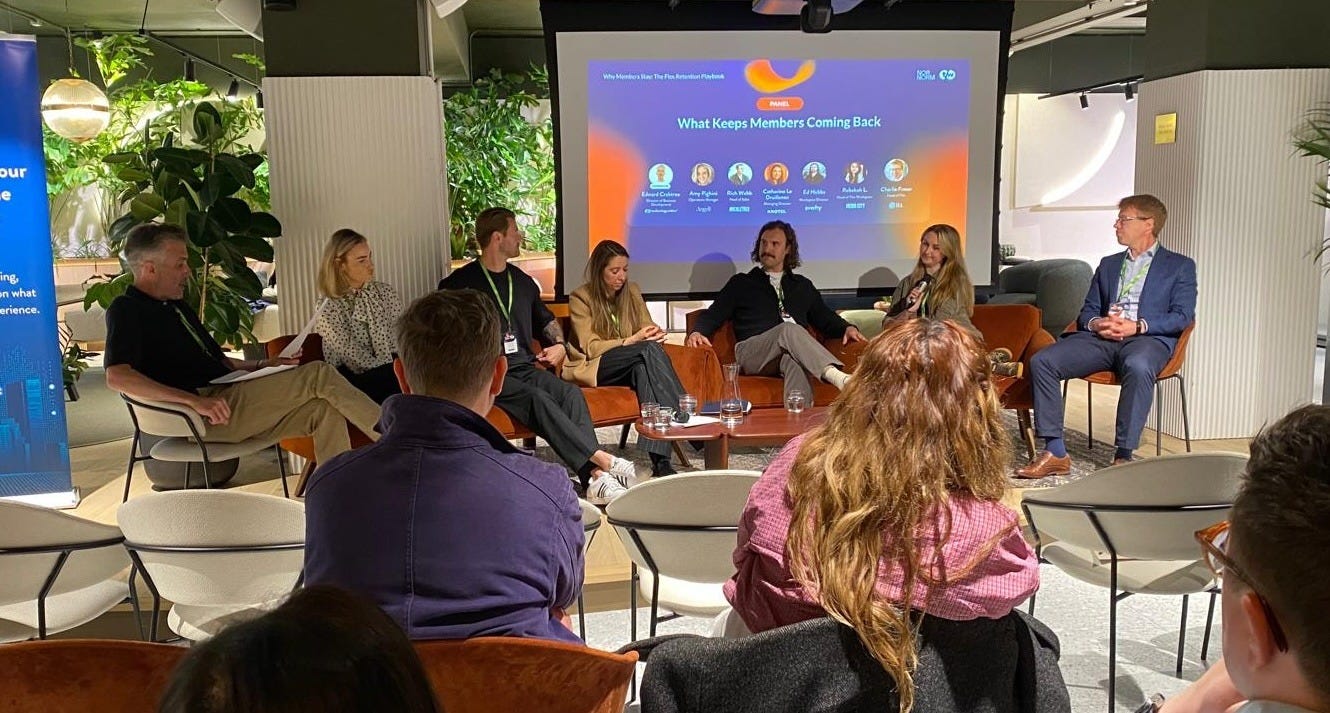
Despite the busyness of this week, I did attend a thought-provoking panel breakfast event on why members stay in flexible workspaces, hosted by technologywithin and NORNORM at Uncommon Holborn on Tuesday.
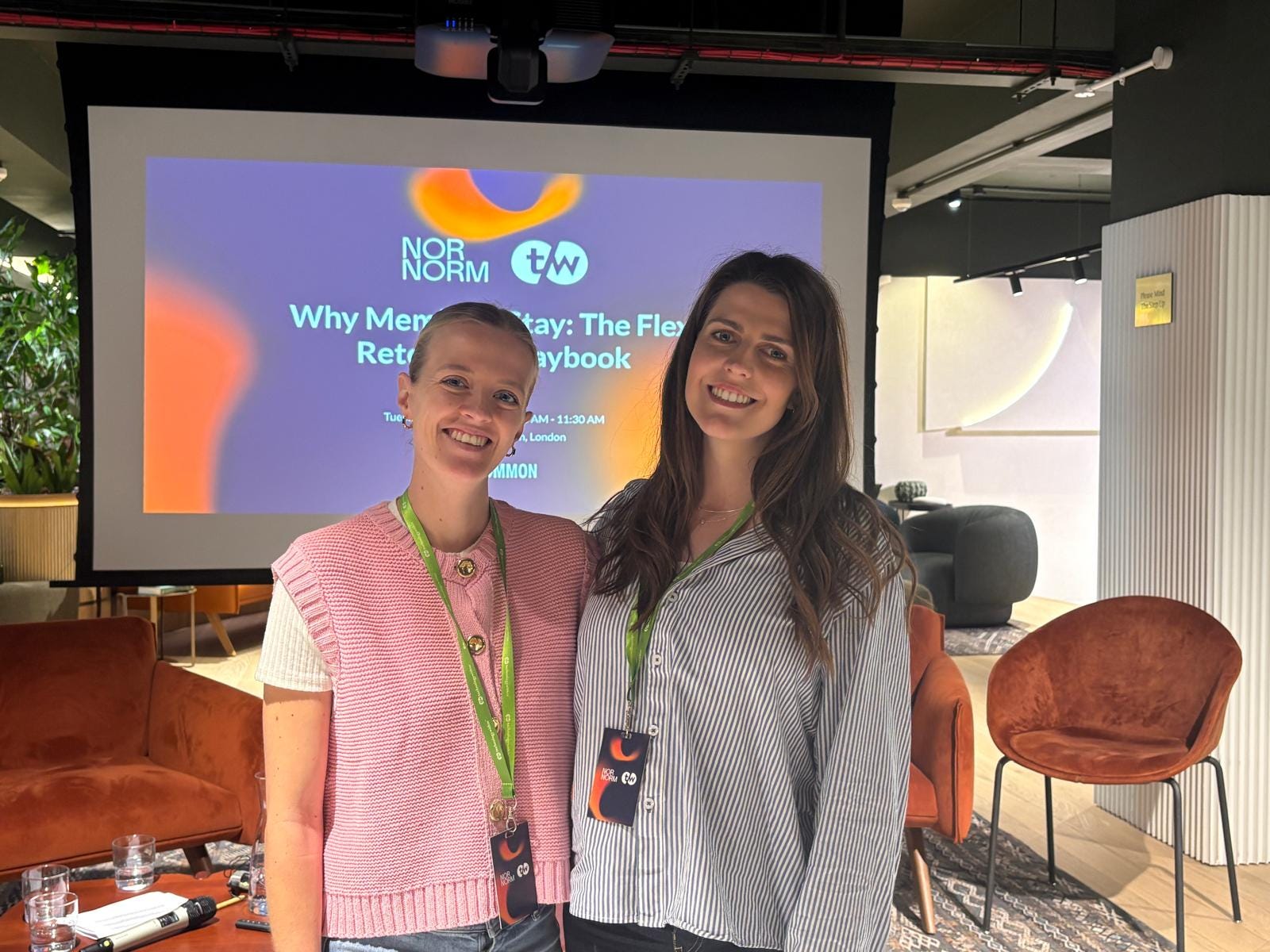
After reflecting on the panel discussion takeaways, I realised that some of the insights were too important not to share with you…
Member retention is perhaps the most essential aspect of running a coworking space. But why members stay — or leave — can be due to a combination of factors, some that keep cropping up, others that are unique for each member.
Landing on what impacts member retention can really help operators focus on the right things when running a workspace.
Tuesday’s panellists, whose job titles ranged from managing directors to heads of sales at some of the big flex players, including JLL, Huckletree, and x+why, shared various anecdotes from their own experiences.
As ever, these insights made me reflect on my coworking experiences. So, let’s get into it.
Why do people leave coworking spaces?
No matter how much work you put into delivering the best possible member experience, people terminate their coworking membership for a variety of reasons that may be beyond your control. These range from financial challenges to simply outgrowing a workspace.
If one of your members grows their business beyond the scale of your workspace, see this as a positive reason for their departure. It shows that your workspace did its bit in supporting an entrepreneur and/or business.
But if a member needs more space, and if you have your own growth plans, then perhaps forming a partnership can help retain that member and grow your coworking business.
This is exactly what happened at Mantle Space. When I spoke to CEO Guy Baker, he shared how one of their members only started with four desks the month the workspace launched. Soon after, the company needed two rooms and then upgraded to an entire floor.
Mantle Space even converted a 3,500 square feet office, which their member occupied for six years, before having a 9,000 square feet purpose-built office that the company have recently signed for a new 10-year lease.

One of Guy’s secrets to retaining coworking members was around engagement. Even though he’s the CEO, he wouldn’t hesitate to pick up the phone to a loyal member, and prides his team on their active engagement with members.
This was also discussed at the event. You can get ahead of your members’ growth plans by asking them regularly how their business is doing. That way, you can forecast whether they’ll likely stay, leave, or need something that requires more investment, such as a purpose-built office or floor.
Members may also leave when small frustrations build up over time. Often these issues are fixable, such as an unreliable internet connection. Catching issues early makes all the difference.
The last workspace I was a member of was an open-plan space. Everyone needed to respect one another during phone conversations; however, one particular member took multiple phone calls throughout the day and was extremely loud.
Eventually, we vocalised our frustrations to the community manager. She took the feedback on board, quietly taking said member aside to speak about the issue, which he received well, and we didn’t have many problems after that.
Of course, the reason this issue cropped up in the first place was that the space didn’t have any private areas, such as phone booths, for taking calls. Identifying issues early on can avoid friction points. In this case, that would involve purchasing a few phone booths for the space early on.

The essential role of community managers
In the example I just shared, the situation was handled really well, mainly due to our relationships with the community manager. We felt comfortable enough to share our frustrations with her; equally, the member causing the issue received feedback well. Essentially, no one left the space.
The event also highlighted the essential role of community managers in maintaining member satisfaction. It’s often the people closest to your members who truly understand what’s going on in the space. Community managers are typically in the workspace every day — they’re the ones nurturing and building relationships.
Meanwhile, general managers, operators, and owners might maintain a distance between members (although I’ve spoken to many operators/owners who are extremely close to their members).
One recommendation included: establishing an open-door policy to encourage members to come and talk about anything they need. Having regular check-ins with members helps the team learn what’s working and what needs improving in the space.
Community managers are usually on the ground, but in some cases, they also operate as receptionists and are therefore tied to a front desk. This means they can’t be as personable with members or see everything going on.
Although the recommendation was to have both a community manager on the ground and a host at reception, sitting behind a front desk can actually create a physical barrier between a team member and a customer, which isn’t the most welcoming first impression.
It’s something that Will Guidara wrote about in his bestselling book, Unreasonable Hospitality – the idea that these interactions come across as transactional.

When you ditch the front desk, podium, or the physical barrier between your team member and community member, you can provide a more personal and welcoming experience.
Remember: that’s the welcome your customers receive every time they walk into your space.
Does cost matter?
Workspace design impacts member experience, but when the audience was asked what they felt was the most important factor influencing member experience, the answers were split between two factors that arguably matter more: team and price.
In terms of price point, managers are sometimes in danger of prioritising new leads over retaining existing members. They create exceptional introductory offers while neglecting members who’d been part of the space for years.
It made me think back to the same coworking space I joined, where, only a year and a half into my membership, we were informed of a membership price increase in the coming months. This news wasn’t received well, and some of our group started looking for a new workspace.
The problem was that there was nothing to justify that pricing. It wasn’t a significant amount (something like £25 extra per month), but we didn’t feel like we were getting any additional value from the space, which was actually due to relocate up the road, to somewhere less desirable, in a building that wasn’t being managed in the same way. The space was becoming less premium, yet we were expected to pay more.
The coworking space also continued to offer incredible discounts to new members, including a free trial day and a ‘5 for £5’ offer, inviting non-members to work from the space for five consecutive days for only £5.
Although it was sold as an introductory offer, it cheapened the space. People would come and go, trialling it without sticking around. Transient ‘clients’ can be challenging, but it’s because of freebies and low-cost offers that don’t convert them into longer-term members.

At the event, it was discussed that the same discounts for new leads could be applied to existing members, but why offer a discount in the first place? If you know your pricing and you understand what members are prepared to pay, stick with that and increase pricing for new members as your overheads rise.
That way, you hopefully won’t run out of money and make panicky decisions, causing members to leave en masse.
What makes a coworking member stay — or leave
Ultimately, the panel reinforced something I’ve believed about coworking for a long time: members rarely stay because of one headline feature, such as internet connectivity or workspace design. It’s because of how a space makes them feel over time.
Members stay in spaces where they feel listened to, looked after, and understood. They stay where problems are addressed early, where teams notice when something feels “off”, and where operators build genuine relationships instead of transactional ones.
Perhaps that’s the biggest takeaway from this week’s discussion. Retention isn’t really about convincing people not to leave, but about consistently giving them reasons to stay.
The operators who do this best aren’t necessarily the ones with the fanciest fit-outs or the biggest discounts. They’re the ones who keep talking to their members, adapting as their needs evolve, and understanding that community experience is shaped in hundreds of small interactions every single day.
Until next time,
Lucy