


International Women’s Day always brings up a familiar conversation. We start to see companies shouting loud and proud about the women on their teams, marking the date with a group photo, and sharing how “inspired” they are by them.
But International Women’s Day isn’t something that should be celebrated once a year.
A single day of panels, LinkedIn posts, and branded campaigns can’t possibly capture the reality of women’s experiences at work and in the world. The conversations we have in March about bias, leadership, care, safety, and opportunity are the same conversations that shape women’s lives every other day of the year.
Progress doesn’t come from a moment of recognition, but from redesigning the systems that were never built with women in mind.
In her bestselling book, Lean In, Sheryl Sandberg recalls struggling to walk across the large office car park during the later stages of her pregnancy while working at Google. Eventually, she asked whether the company could introduce parking spaces for pregnant employees closer to the entrance – something they quickly agreed to.
But what struck her was that no one had thought about it, even though pregnant employees had certainly worked there before. The decision-makers simply hadn’t experienced that need themselves, so the problem never appeared on their radar.
She uses the story to illustrate a broader point: when the people designing systems all share similar experiences, entire groups of needs can remain invisible.
The distance between women and work
We experience one of these systems in our everyday lives – cities, office districts, and traditional workplaces are largely designed around a worker who can commute long distances every day, stay late, and organise their life around the office.
But for people with more fragmented time, such as caregivers of children or ageing parents, people with disabilities or those in ill health, the separation between work and home can completely ostracise a portion of our society.
It’s not always women bearing the invisible load, but in today’s world, women are typically the default caregivers.
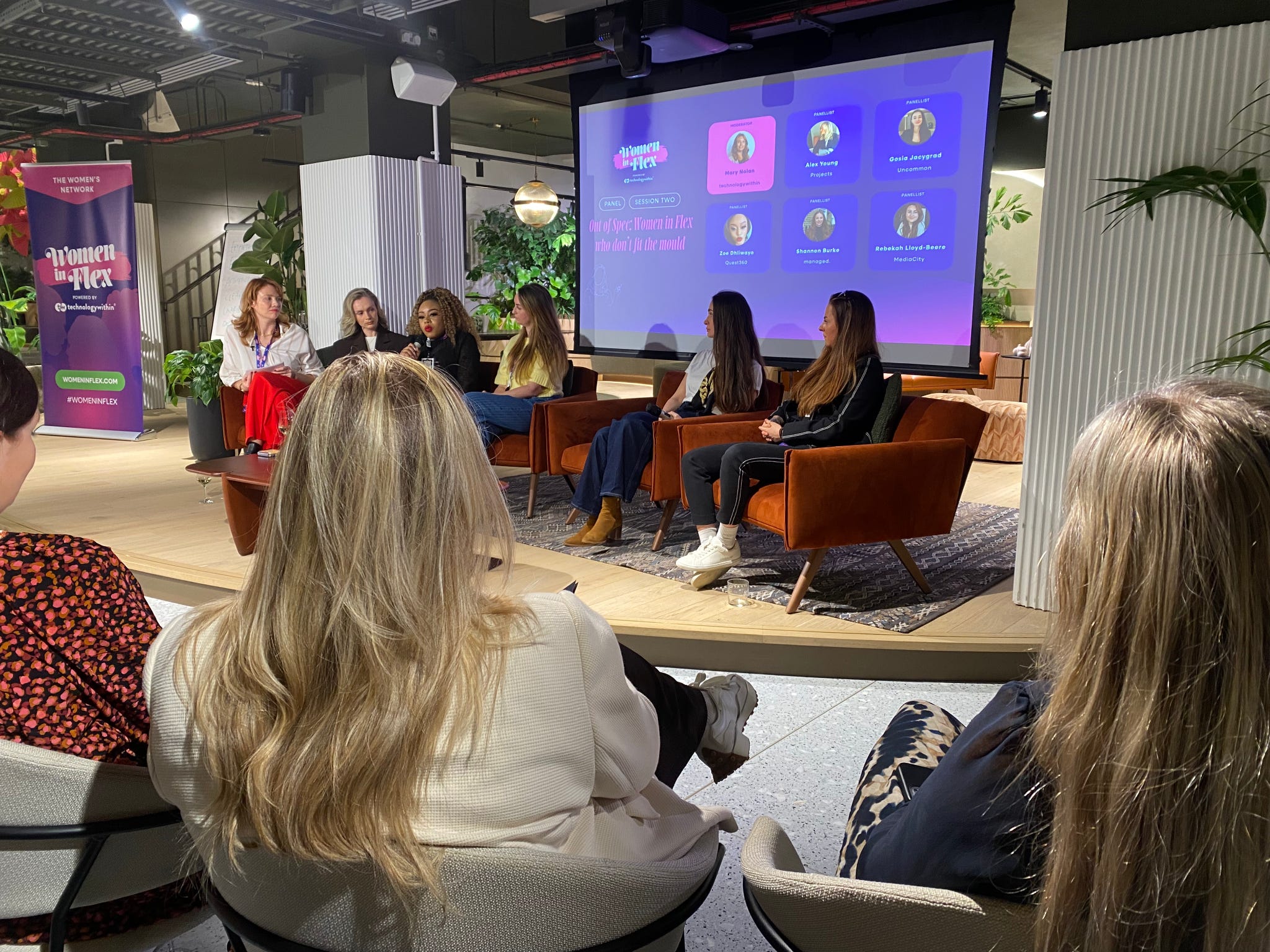
At last night’s Women in Flex event hosted by technologywithin, one of the speakers shared how having a son with autism meant she wasn’t always able to stick to a routine, requiring an extra hour or so in the mornings, which can change the nature of her workdays.
Examples like these make it frustrating when companies enforce office mandates, reducing worker flexibility. Some people genuinely need a level of flexibility to carry everything in their lives – work, family, and additional responsibilities. If they can’t access hybrid work, then they are often forced to reduce hours or step away from careers entirely.
Flexible working supports people with fragmented time, and local coworking spaces support people who work flexibly, improving proximity to a professional workspace while giving access to a supportive community – or a village, if you will.
When I spoke to Sarah Greene and Phil Fisk, the founders of Buro Coworking in Brockley, one of London’s neighbourhoods, they explained how a coworking space on their community’s doorstep works in practice:
“Our neighbourhood coworker is typically someone in their mid-thirties with two young kids. They’ve got to drop off and pick up, so they need a place where they can work intensely for about 6.5 hours before running out the door to get to school in 5 minutes (without hopping on a hot bus). They might come back to the space after putting the kids to bed, or come in on Saturdays.”

As I expressed in last week’s newsletter, independent coworking spaces deserve greater support and recognition as lifelines for people across intersectionalities (in more ways than just proximity).

When care isn’t taken seriously
While many of the decision-makers at the top in coworking are still men: investors, landlords, and shareholders, we’re seeing more female-founded spaces, and women running operations or working as community managers.
But it’s worth asking, are some people placed in these roles because what they naturally bring to the role – empathy, attentiveness, emotional intelligence (also known as “soft traits”) are undervalued elsewhere, yet expected and relied upon in community-focused work?
Coworking expert, Maggie Terhune shared a fascinating observation with me recently: many community managers she meets are eldest daughters. Maggie is one, so am I, and the connection is clear. Eldest daughters often grow up shouldering family responsibilities, managing emotions, and carrying the invisible weight of care.
But as Maggie puts it, community leaders are people “where community is ingrained into their personal ethos.”

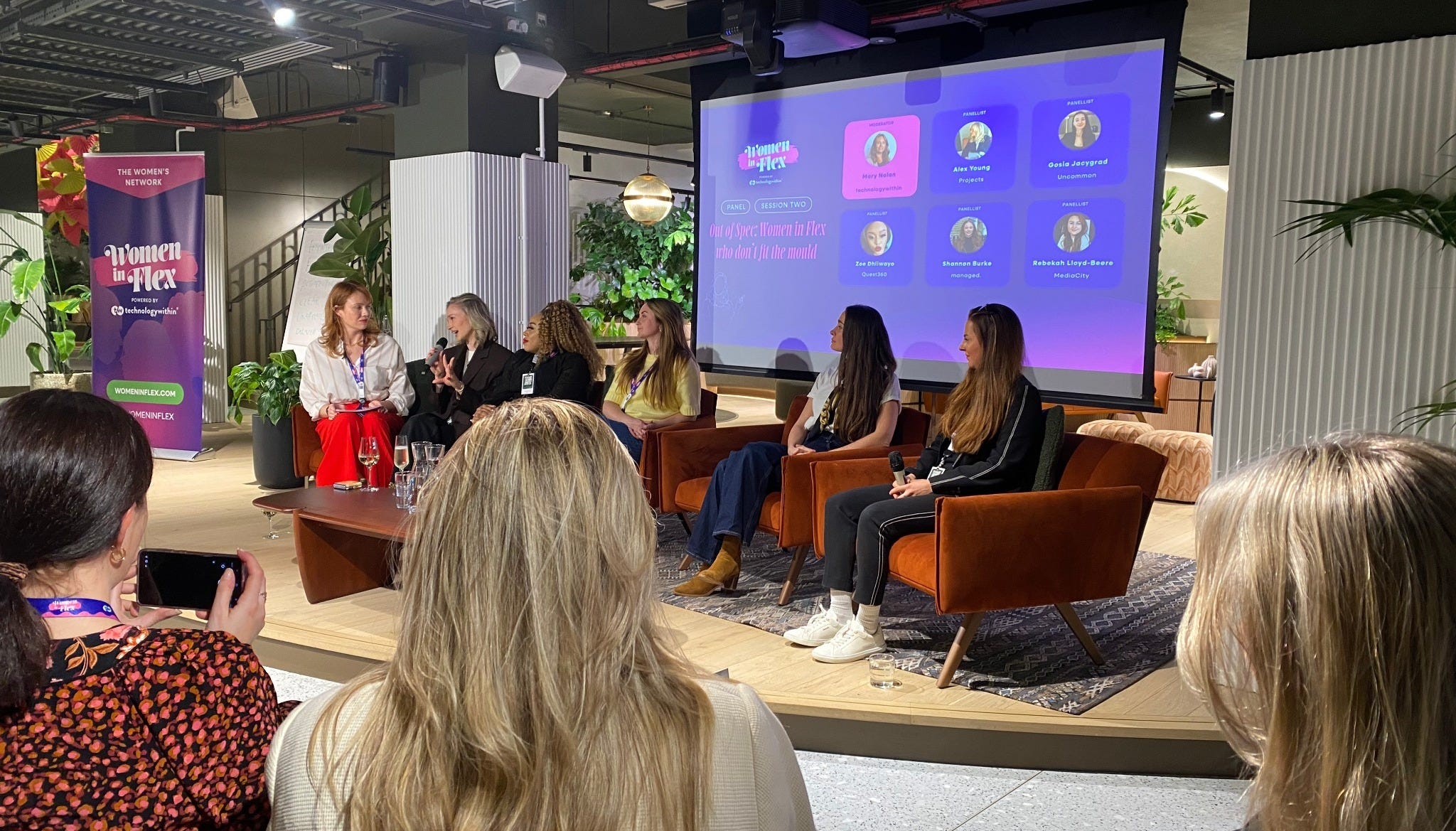
Caring about your community is a superpower. Last night, one of the speakers, a coworking director, shared a time when shareholders expressed their dislike at how close she had become to her team. But I saw this as evidence she cares deeply about them.
Likewise, another panellist reflected on her time working as a community manager in a flexible workspace. She was constantly undermined by her (male) managing director, who once called her “meek,” and when he praised her, used phrases like “good girl.” The whole room gasped when she said that.
Words might seem small, but they carry weight. Language shapes how authority is granted, so when women are described as too loud, too emotional, too assertive, or simply too much, yet those same traits in men are often framed as leadership — confident, decisive, ambitious — it can erode self-confidence.
Last night’s stories reminded me of a moment last year when a prospective client told me over the phone that I was “too cold.” In fact, the event sparked so many conversations, with people being open and honest about their experiences in a safe environment.
Moments like these are incredibly powerful for women at every stage of their careers because they remind us we’re not alone, our experiences are valid, and there is strength in shared understanding.
Questions to ask before, during, and after IWD
As we gear up for International Women’s Day on Sunday, it’s worth reflecting on what this day should really mean.
Workplaces should celebrate women, but recognition alone isn’t enough. True progress comes from asking difficult questions:
Do I provide meaningful support for the women in my team and community, beyond a single photo or LinkedIn post?
Do I truly value the skills and traits – empathy, attentiveness, emotional intelligence – that are often overlooked yet essential to leadership and community-building?
Am I building community programmes and flexible systems that recognise and value women’s contributions every day, not just on International Women’s Day?
I’d love to know what you’ve got planned for International Women’s Day, but we must also remember that it shouldn’t be a moment. Women’s contributions matter every day.
From workspace design to community culture, our systems ought to reflect that. Because when we do, we don’t just support women – we build workplaces and communities that work better for everyone.
Until next time,
Lucy