


Hospitality has become one of the biggest talking points in the coworking industry, with many coworking operators and community managers focussing on how delivering thoughtful service can help retain members and strengthen coworking communities.
But others aren’t so convinced that coworking and hospitality cross over. Instead of it being about the relationships between team members and community members, there’s an argument that coworking should just be about the connections between community members themselves.
Although this might sound like a subtle difference, it raises a significant question around whether hospitality and coworking strive for the same thing, or they stand for two completely different experiences.
So I thought I’d explore why hospitality can be such a divisive topic in the coworking industry.
Questioning hospitality in coworking
A recent conversation questioning whether we should embrace hospitality in coworking laid down the argument that hospitality ultimately serves the relationship between the business and the customer.
Hotels and restaurants are designed around delivering a great service for individual customers, often in high volumes and for one-off experiences. Meanwhile, coworking spaces are for longer-term community members.
This take comes from Angel Kwiatkowski, founder of Cohere Coworking in Fort Collins, Colorado. Her opinion is that the value of coworking should be about the relationships and conversations that happen between members, rather than from the space itself.
Angel joined the coworking movement back in 2009, when she began hosting weekly meet ups in a reception space. The meet ups got so popular that five weeks later, she found a commercial lease on a building down the road and launched Cohere Coworking. Angel’s been operating Cohere ever since.

As an industry OG, Angel’s take on hospitality in coworking goes way back to its origins, when coworking was more of a self-organised concept, where people chose to come together in third spaces to work and connect.
However, coworking has come a long way since then. What began as a grassroots movement has evolved into a more mainstream real estate segment, and coworking operators are intentionally designing spaces, experiences, and environments that help people connect.
Today, people aren’t just looking for a desk and reliable Wi-Fi. They’re choosing spaces based on the value they provide beyond the physical workspace.
Inevitably, it involves elements of hospitality to welcome members, nurture communities, and create opportunities for connection.
A good cup of coffee doesn’t build a community
That being said, a coworking space can’t be completely reliable on the hospitality principles that are plucked from restaurants and hotels alone, because they serve different types of customers.
When we eat at a restaurant or stay at a hotel, we’re not there to meet other people. When we enter a café, we might have a quick chat with the person serving us, but we don’t typically sit down and start talking to the person on the table next to us.
This argument makes me think about when I was working from a coworking café in Bermondsey, a space on the ground floor of an aparthotel. There’s vibey music, beanbags, and delicious coffee. But the community? Practically non-existent.
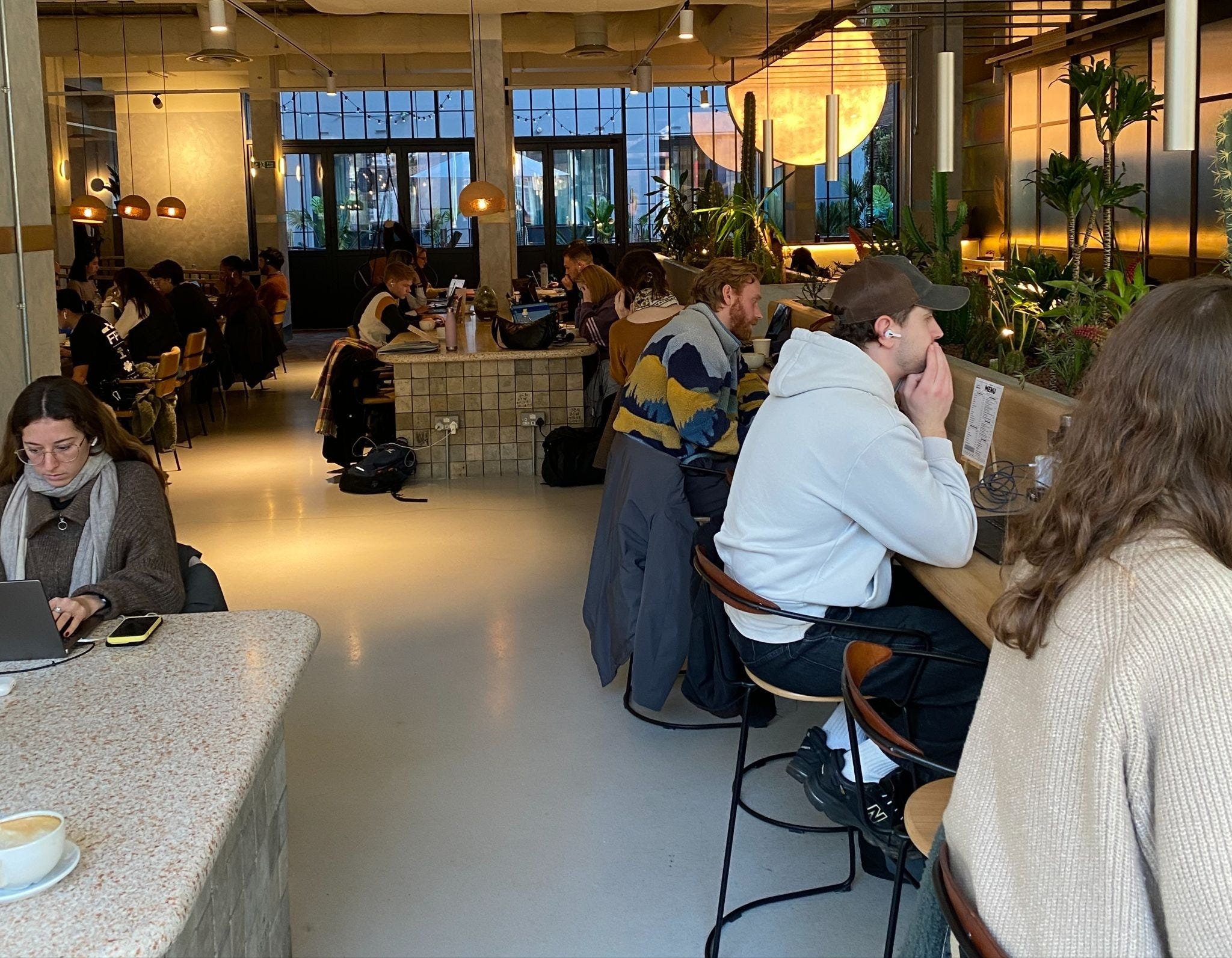
Going into the workspace, I hardly saw the same person twice and although I got chatting to the person next to me on occasion, I never bumped into them again. Those conversations were typically with transient coworkers who were staying there for business.
This isn’t to slate that space. You can’t deny its convenience for people like myself who were dropping by for a few hours before a gym class, or someone who needed a social space with reliable Wi-Fi on a business trip.
The coworking café provides decent customer service and a useful space for productive work. It just isn’t coworking in the traditional sense.
Hospitality unlocks the door to community
A friendly welcome, good coffee, and a beautifully designed space won’t automatically make people connect with one another. But these small moments of care can break the ice for interaction.
So on one hand, coworking perhaps shouldn’t be placed in the same box as restaurants and hotels. However, I know many coworking operators have lifted the principles shared in restauranteur Will Guidara’s bestselling book Unreasonable Hospitality.
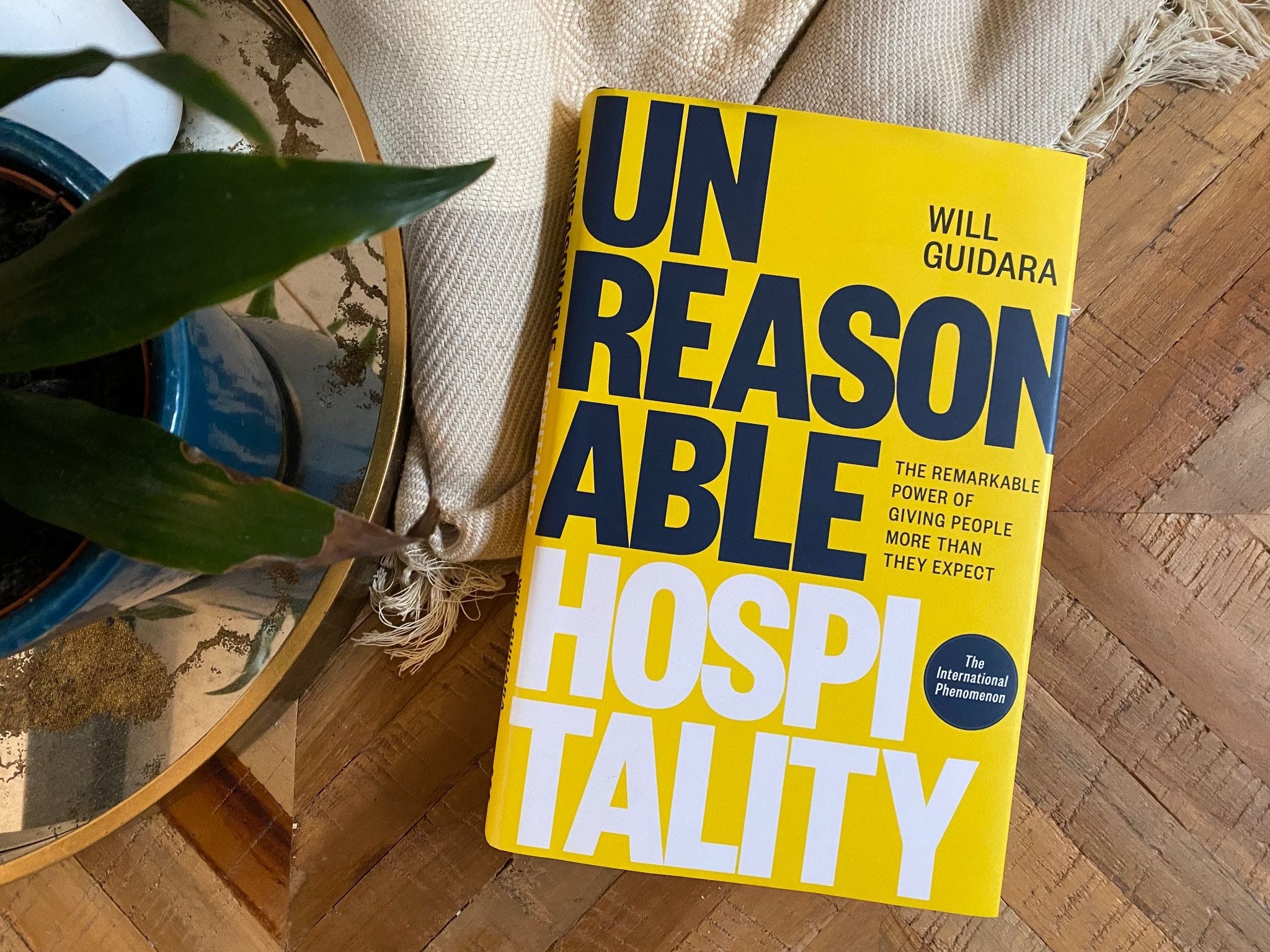
Having read this book myself last year, one of my favourite examples of unreasonable hospitality was when Guidara identified that the podium where the maître d’ typically greets customers often acts as a physical barrier between the host and guests, and it shapes their first impression of the experience.
By removing the podium in his own restaurant, Guidara reduced the transactional interaction on arrival to feel more like entering a friend’s house for dinner. He compared it to when someone would “throw open the door, look you directly in the eyes, and welcome you by name.”

Guidara’s underlying principle is relevant to coworking: providing above and beyond service, or in his words, unreasonable hospitality, helps make people feel seen, valued, and cared for.
The community manager as the connector
In the coworking world, our maître d’ is the community manager. They wear many hats — welcoming new members, answering questions, organising community events, making introductions, solving day-to-day problems, and helping the workspace run smoothly on a day-to-day basis.
Above all, the community manager is responsible for creating an environment where people feel comfortable enough to connect with one another.
At the last coworking space I joined, we had an incredible community manager who didn’t hide behind a reception desk (the podium in coworking spaces) but who chose to work alongside us, was visible, and got to know members personally. She understood her role in bringing people together.
So, when a visitor walked into the workspace, she immediately noticed them, introduced herself, offered them a drink, and started creating those small moments of connection within the community.
Those interactions built up over time, and without any of us really noticing, we formed a coworking community that had a strong sense of belonging.
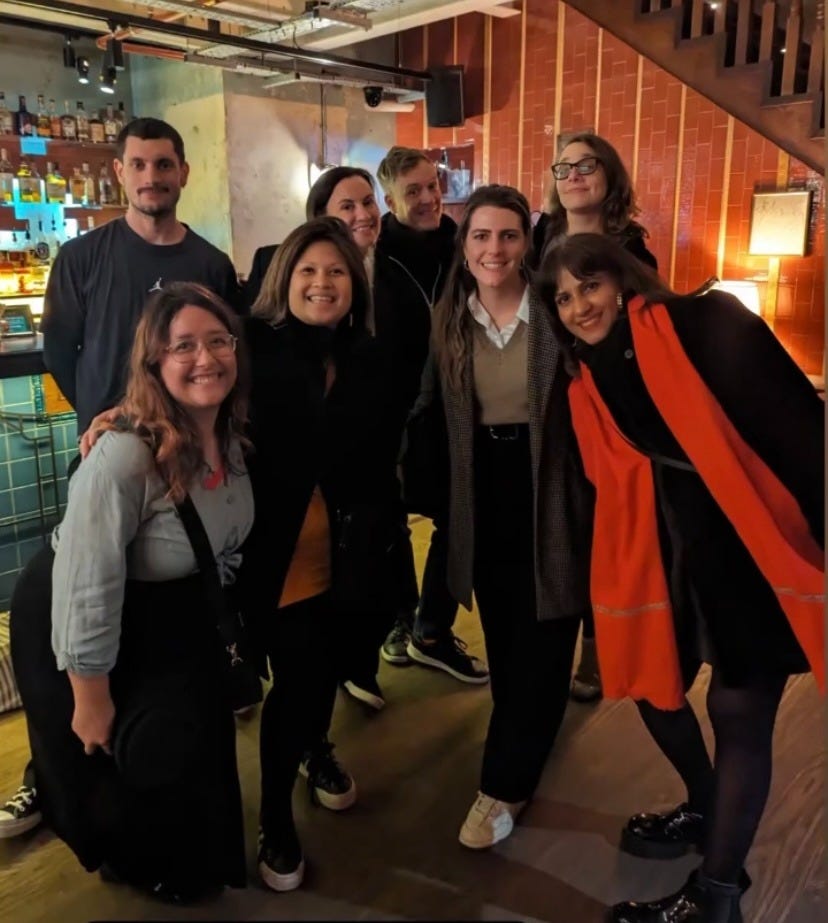
I was part of that workspace for two years before the space sadly shut down. But the community still exists today four years after meeting one another. We all keep in touch and celebrate one another’s wins.

So while coworking spaces are more about the connections between members, it’s often the community manager who encourages those member-to-member bonds to form.
For me, this is where hospitality and coworking meet. Hospitality is the invitation; community is what follows, especially if you become an active participant in the coworking experience.
Coworking is about belonging
So, is coworking hospitality? Perhaps the answer is much more nuanced than this, from space to space, and from community to community.
Hospitality creates the conditions for people to feel welcome. It removes friction, builds trust, and gives people a reason to return. But community happens when those people start forming relationships with one another.
A community manager can introduce two members, but they can’t force a friendship. A beautiful space can encourage connection, but it can’t manufacture belonging.
The magic of coworking happens in those in between moments, such as the serendipitous conversation that starts at the coffee machine, or the introductions that lead to a collaboration.
Perhaps the future of coworking isn’t about choosing between hospitality and community, but understanding the role each plays.
Hospitality opens the door. Community invites people to stay.
What do you think – do you agree that hospitality plays a key role in coworking operations, or do you believe the two are dissimilar? I’d love to hear your thoughts.
Until next time,
Lucy
I use affiliate links to help fund this newsletter and support indie bookshops. Thanks for reading and for supporting both!