


Before Brooklyn Beckham broke the internet, everyone online was throwing it back to 2016. As the ten-year nostalgic trend gathers pace, it feels like a good moment to reflect on what coworking looked like back then, too.
In 2016, coworking was becoming an established movement, but for some of us (myself included), it was something we were participating in before we had the language for it.
A decade ago, I was a second-year Art History student. My first experiences of coworking involved meeting friends in the student union, pulling all-nighters in the library, and working to deadlines in our department’s workspace — fondly known to us as ‘The Pit.’
The department building is the Sainsbury Centre in Norwich: a vast, aircraft-hangar-style building designed by Norman Foster, with a contemporary art gallery on one side and the university department on the other.
We were incredibly fortunate to have a dedicated workspace exclusively for Art History students. ‘The Pit’ earned its name partly as a nod to our studies (archaeology was part of the curriculum), but also because the space sat a level below the ground floor. It felt quietly separate from the rest of the building — a little removed, and calmer.
What made the space special wasn’t just its openness, but how well it was zoned. The ceilings were enormous, and the workspace was set against huge windows overlooking the university grounds.
I didn’t explicitly know I was coworking — I hadn’t heard the term yet. But the experience taught me something essential: coworking is about togetherness.
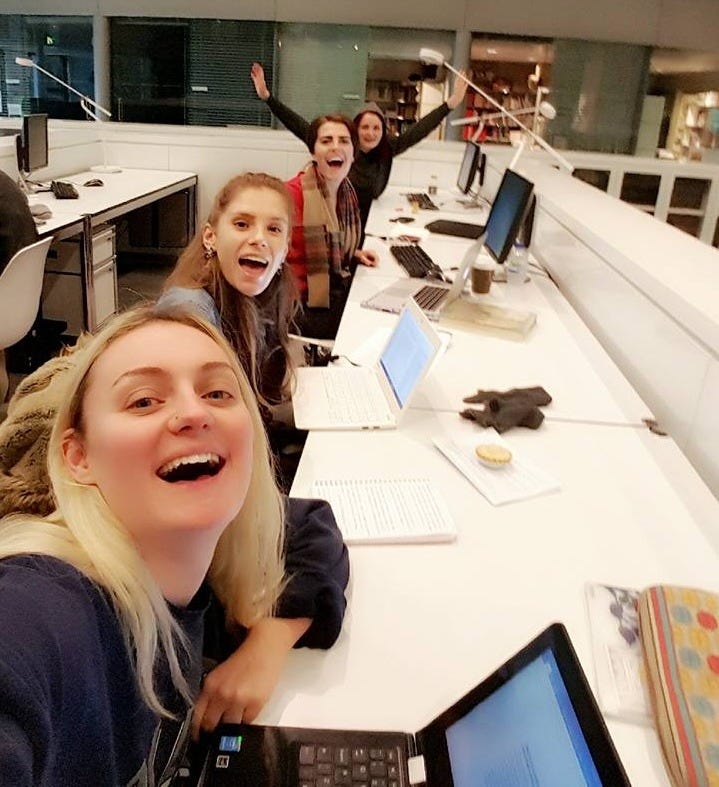
Working alongside my peers strengthened our relationships, and our work improved because we were constantly sharing ideas and supporting each other.
My love for coworking started there, but it grew over the years through exposure to different spaces and communities. The first coworking brands I heard of were Impact Hub and WeWork, around 2017.
More importantly, the coworking values of connection, collaboration, and belonging continue to shape how I work and live today.
Coworking spaces in 2016
Of course, if you’ve been a longstanding player in the coworking industry, you’ll know that coworking was in full swing back in 2016.
Deskmag data shows that in October 2016, 11,300 coworking spaces existed worldwide, and 2,600 opened during that year.
So, let’s have a look at some of the workspaces in operation back in 2016:
The Melting Pot, Edinburgh
One of Europe’s first coworking hubs, which opened in 2005, The Melting Pot in Edinburgh was launched by Claire Carpenter, who was inspired by spaces for changemakers. The coworking space is still in operation and recently celebrated its big birthday.

The Hub Newry, Northern Ireland
Suzanne Murdock co-founded The Hub Newry in 2009 – a network of award-winning, flexible workspaces in Newry – shortly after moving to Northern Ireland with her family. Back then, coworking was almost non-existent in Ireland, but Suzanne has grown her spaces and community over the years.

The Village Hive, Markham, Canada
2016 was the year that Charlotte Kirby opened The Village Hive in Markham, Canada. Charlotte’s coworking journey came about after she visited the Center for Social Innovation coworking space to watch a broadcast of the TED X Toronto event in 2015, and it sparked the idea of launching a coworking space to bring people together.

Third Door, London
Shazia Mustafa had been running her award-winning family-friendly coworking space, Third Door, for six years by the time 2016 came around. She launched the coworking space in Wandsworth following her maternity leave and need to keep working close to her children without compromise.

Hub Australia
Launching with humble beginnings in 2011, Hub served a new wave of freelancers in a modest Melbourne building known as Donkey Wheel House. WeWork entered the Australian market in 2016, allowing investors to see the opportunities of coworking, and for Hub to raise capital to start its growth trajectory across the country (it now operates 16 locations).

Mantle Space, Cambridgeshire
In 2016, Mantle Space was growing and growing, after launching in 2005, when its CEO, Guy Baker, bought a dilapidated Franciscan priory near Stansted Airport, renovating it into 25,000 square feet of serviced offices. Now, Mantle is an interconnected network of eight offices operating across the Southeast.

BLANKSPACES, Los Angeles
One of the oldest coworking spaces in the US is BLANKSPACES, launched by architect Jerome Chang, as a workspace where he could share space and resources with others.

By the end of 2024, coworking expanded to around 42,000 spaces worldwide, underscoring just how dramatic the growth has been.
What’s in store for coworking in 2026?
Looking at who was operating in 2016 got me thinking about what the next decade might bring.
Coworking has come a long way from being ‘just a space with four walls.’ I heard this at yesterday’s NORNORM event at Sustainable Ventures on the Southbank, which focused on the new workplace norms for the year ahead.
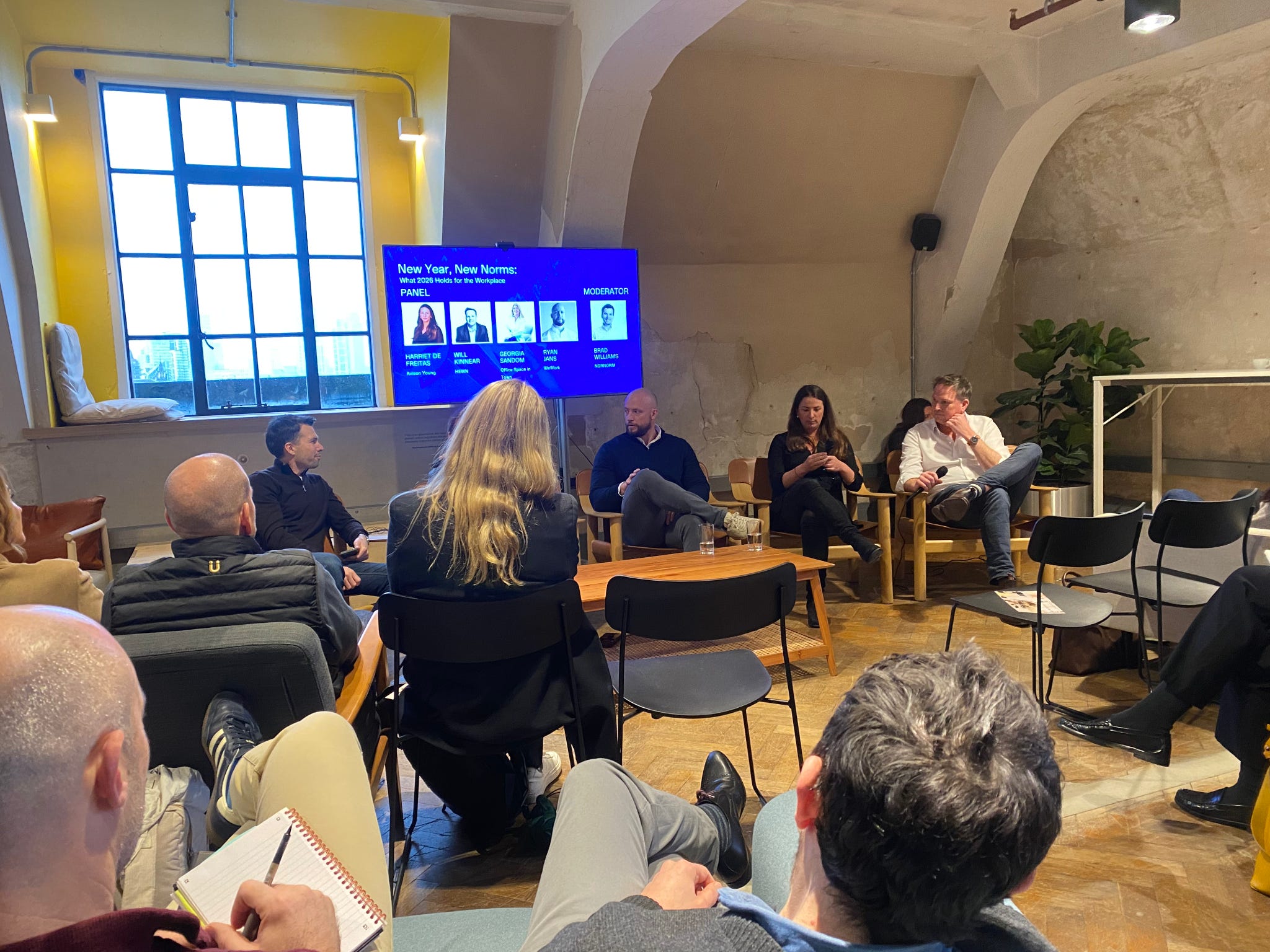
The panel emphasised how listening to community members matters. Operators want to give their members the right spaces, the right amenities, and the right support. But the question is which ones actually matter.
One prediction I heard was that amenities are possibly a fad that won’t last. What will endure, they argued, is experience: how a space feels, how it functions, and how it makes people feel supported.
The keyword that kept coming up at the event was community (it always does in this industry!).
It’s what makes coworking more than just desks and Wi-Fi, and as the panel reflected, community and retention were what separated successful workspaces from unsuccessful ones.
It’s the connection, the collaboration, and the sense of belonging that turns a workspace into a place people want to return to.
I realise it’s difficult to chase trends right now. Financially, running a coworking business is tough, and it’s hard to predict what your members will do next, how long they’ll stay, or how your overheads might change.
So while amenities and trends may come and go, the future of coworking will be shaped by the people inside the space — and by the operators who listen, adapt, and prioritise community even when the market is tough.
See you next week,
Lucy
Love this Lucy. 2016 seems like yesterday but so much has happened since then. We were just opening our second location and coworking was becoming a real concept, it started to feel like I didn’t have to explain this weird concept ‘sharing a workspace’ and ‘collaborating under one roof’. Look how far it’s come and us neighbourhood spaces might still be small but we’re mighty 💪