


Every coworking space has a story to tell.
It’s often one about how someone stumbled upon coworking and fell in love with it, or they realised that coworking could solve a challenge they were personally experiencing. Others wanted to bring coworking to their local town or city.
Through my blog series, People Make Coworking, I’ve had the privilege of speaking to over 30 coworking founders and community builders across the world about their journeys in coworking.
So, I thought what better time to reflect on some of those conversations than in the lead up to International Coworking Day this Sunday.
The origins of International Coworking Day
On 9th August 2005, U.S. programmer Brad Neuberg published a blog post announcing that he was setting up coworking.
He invited creatives and “free spirits” to connect at Spiral Muse, a feminist collective in San Francisco’s Mission District. Neuberg’s intention was to bring people together and embrace community.
However, it’s disputed whether Neuberg actually did set coworking up, because several industry OGs were around long before Neuberg’s blog post, and had already began making waves for the coworking movement.
What we do know is that over the last 20 years, coworking has grown from a little-known concept of people working together to a major real estate segment. Coworking has firmly entered the mainstream.
On 9th August each year, many global workspaces celebrate coworking’s beginnings by opening their doors to give more people the coworking experience, or hosting community events with their community.
Back in 2023, I hosted a Bake Off competition at the workspace I was a part of. We welcomed new people into the space, and it became such a fun day.
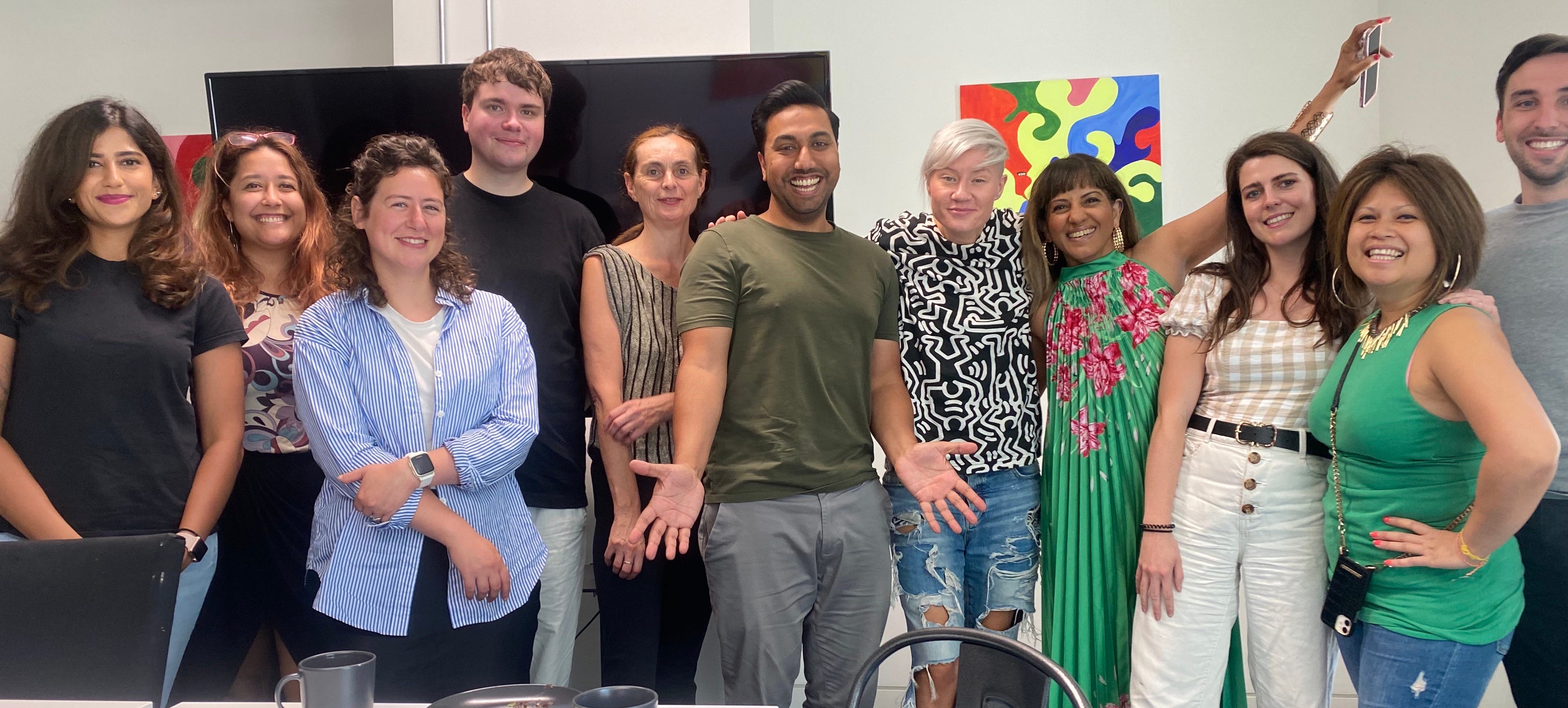
This International Coworking Day 2026, my situation is a little different — I’m waiting for my baby to enter the world! So, I won’t be coworking nor organising any coworking events for the time being.
However, I’ve taken this opportunity to look back at ten conversations I’ve had with international coworking leaders as part of my blog series: People Make Coworking. Let’s go!
Michael Sternberg, Green Room JBay (Jeffrey’s Bay, South Africa)
Growing up near Jeffrey’s Bay (JBay) along South Africa’s famous Garden Route, surfing and the ocean were central to Michael Sternberg’s life. After moving abroad for work and launching Angola’s first coworking space in 2015, Michael found himself back in Jeffrey’s Bay during lockdown.
It was then that, quite serendipitously, he stumbled across a huge building facing the ocean that can only be described as a surfer’s utopia.
Michael founded Green Room JBay — a coworking space for digital nomads, tech entrepreneurs, ocean conservationists, and creatives who all share a passion for surfing, sustainability, and the ocean. This influences everything the space does, from being surfer-friendly with all the amenities you could ask for, to supporting initiatives that protect the ocean and coastal ecosystems.
Michael shares his story of starting Green Room JBay, what an “ocean-minded” culture looks like in practice, and how the workspace gives back to the local community.

Suzanne Murdock, The Hub Newry (Northern Ireland)
After moving to Northern Ireland in 2009, Suzanne Murdock co-founded a network of award-winning, flexible office workspaces in Newry on the border between Dublin and Belfast.
Since launching The Hub Newry in 2011, Suzanne has watched coworking evolve from an unfamiliar concept into a vital part of regional communities. As a great believer in building relationships, belongingness, and inclusivity, Suzanne advocates for the role of smaller operators, local ecosystems, and the relationships that make coworking meaningful.
In this conversation, Suzanne shares why community can’t be built by operators alone, how regional coworking spaces are woven into the fabric of their towns, and why finding your own “tribe” is just as important as creating one.

Michael Korn, Blue Garage (Lewisham, London)
After graduating from the Royal College of Art, Michael Korn built and spun out a hardware company. While designing and selling it was assumed to be the hardest part of running the business, the real challenge was manufacturing in the UK.
Looking around, Michael saw countless other inventors and innovators struggling with the same barriers: brilliant ideas constrained not by creativity, but by infrastructure. That became the foundation for Blue Garage, an affordable makerspace houses in a rare industrial building on Lewisham high street.
In this interview, Michael shares how Blue Garage flips the traditional coworking model on its head, supports companies that struggle to access affordable manufacturing facilities, and the exciting opportunities the makerspace brings to Lewisham.

Charlotte Kirby, The Village Hive (Canada)
Charlotte Kirby is the entrepreneur behind The Village Hive, a community-focused coworking space that Charlotte launched after a chance encounter with a coworking space ten years ago.
While attending a TEDx event in Toronto, she found herself watching the talks from the Center for Social Innovation (one of the city’s first coworking spaces) and discovered a completely different way of working. Now, Charlotte is managing three coworking locations in Canada and partnering with landlords to bring vibrant coworking spaces into communities where people crave connection.
In this article, Charlotte shares The Village Hive’s growth journey, her outlook on hospitality (and the importance of hiring the right community manager), and what she finds most rewarding in running a coworking business.

John Preece, Hub Australia
Before John Preece joined Hub Australia, he built a career in traditional real estate and was one of the early voices researching and writing about the emerging coworking movement. This laid the foundations for his eventual move in 2018 into an industry he became passionate about.
As Chief Operations Officer (COO) at Hub, Australia’s leading flexible workspace operator, John’s focus is on scaling nationwide as a hospitality-first model that blends premium design, thoughtful amenities, hospitality-led service, and a strong sense of community and brand. While the buildings and services are important, John is clear on what makes Hub thrive: their people.
In this interview, John shares how Hub scaled nationally without losing the essence of hospitality and community, implements important environmental and social impact initiatives, and what’s next as the workplace continues to evolve.

Cristina González Fernández, Fento Coworking (Vigo, Spain)
Community comes first at Fento Coworking, a workspace in Vigo, Spain. It was founded in 2020 by Cristina Fernández González and Rubén Zapata Fernández to satiate their own need for a coworking space.
Fento Coworking doesn’t just serve its coworking community. Its built a symbiotic bond with its local neighbourhood, operating within a thriving ecosystem of independent businesses and people of different generations in its village-style surroundings on the outskirts of the city of Vigo.
In this interview, Cristina shares her journey of building a coworking space from the ground up, the unique ways Fento integrates with its local environment, and the key to nurturing community.

Alistair Starling, Fraqmented (Tallinn, Estonia)
Alistair Starling’s career has taken him from academia to diplomacy and into the people-first coworking industry. He’s worked for the University of Cambridge, served as a British diplomat with the Foreign and Commonwealth Office, and built a strong foundation in international relations.
From his own experience of navigating a new city in Tallinn, Estonia, Alistair recognised a common challenge among expats around finding meaningful connections in a quieter society. In response, Alistair started hosting informal networking sessions at a trendy cafe every Friday.
For two years, these sessions brought together business, academic, and government people before it became clear that the community needed a more permanent home. That new home became Fraqmented, a coworking space in Tallinn that Alistair set up with two entrepreneurs, Cagatay and Markus, whom he met through his networking sessions.
Alistair’s journey reflects a consistent thread: connecting people across boundaries. Fraqmented is a space where meaningful relationships and impactful ideas can flourish. This conversation shares how the coworking space came to be.

Melissa Richards, Buick Mackane (Newbury, UK)
When Melissa Richards was craving more than kitchen-table isolation and uninspiring office options, she set out to build a workspace that worked for her. Buick Mackane, based in Newbury, Berkshire, was founded four and a half years ago, as an extension of Melissa’s personality and creative spirit.
What began with just one member has since grown. Last January, Melissa opened a new site dedicated to longer-term offices and meeting rooms in a historic building infused with a bold, creative touch and brought to life by a vibrant community of local professionals – plus Rey, Melissa’s much-loved dog, and Buick’s official mascot.
In this interview, Melissa reflects on her coworking journey, the inspiration behind Buick Mackane’s distinctive branding (any guesses where the name comes from?), and what Melissa believes is the best part about coworking.

Jerome Chang, BLANKSPACES (Los Angeles)
Jerome Chang has been part of the coworking movement since its inception. He opened BLANKSPACES in 2008, when fewer than a dozen coworking spaces existed in the U.S.
From those early days of exchanging tips online with fellow coworking space founders, Jerome has influenced the coworking movement into what it is today. BLANKSPACES is now one of the oldest coworking brands in the U.S.
With a background in architecture, Jerome brings a unique design sensibility to coworking, blending functionality with user experience. BLANKSPACES cater to a wide range of members; entrepreneurs, freelancers, and corporate teams seeking flexibility. This embodies Jerome’s ethos: “Work for yourself, not by yourself.”
In this interview, Jerome shares his journey from architect to coworking founder, the evolution of BLANKSPACES, and insights into the future of coworking for community, choice, and entrepreneurial spirit.

Claire Carpenter, The Melting Pot (Edinburgh, UK)
Before coworking became a global industry, Claire Carpenter was already exploring what happens when physical spaces and communities come together. In 2005, she launched one of Europe’s first coworking hubs in Edinburgh: The Melting Pot, Scotland’s Centre for Social Innovation.
Claire has been at the heart of the coworking movement for twenty years, witnessing its evolution from humble beginnings, through to the model’s wider adoption and mass expansion, first in international cities, before its hybridisation into coliving, then the turmoil and refresh of the COVID years, and currently the mass adoption of hybrid and flexible workspaces.
In this conversation, Claire reflects on the early days of the coworking movement, why community has always been at the heart of the sector, and how coworking spaces can become more than workplaces – becoming important parts of the ecosystems and places they serve.

Spotlight your coworking space
Are you building a coworking space, community, or project that’s changing the way people work?
I’d love to hear your story. I’m always looking to feature inspiring people and ideas through the People Make Coworking series – get in touch if you’d like to be part of it.
And do let me know your plans for International Coworking Day - it’s such a joyful time for the global coworking community to come together!
Until next time,
Lucy